The purveyors of climate doom will not tolerate the good news of our planet thriving because of modest warming and increasing atmospheric carbon dioxide. However, a recent scientific paper concludes that an optimistic vision for Earth and its inhabitants is nonetheless justified.
Widely accepted data show an overall greening of Earth resulting from a cycle of natural warming that began more than 300 years ago and from industrialization’s additions of CO2 that started in the 19th century and accelerated with vigorous economic activity following World War II.
Also attributed to these and other factors is record crop production, which now sustains 8 billion people—ten times the population prior to the Industrial Revolution. The boost in atmospheric CO2 since 1940 alone is linked to yield increases for corn, soybeans and wheat of 10%, 30% and 40%, respectively.
The positive contribution of carbon dioxide to the human condition should be cause for celebration, but this is more than demonizers of the gas can abide. Right on cue, narrators of a planet supposedly overheating from carbon dioxide began sensationalizing research findings that increased plant volume results in lower concentrations of nutrients in food.
“The potential health consequences are large, given that there are already billions of people around the world who don’t get enough protein, vitamins or other nutrients in their daily diet,” concluded the The New York Times, a reliable promoter of apocalypse forever. Among others chiming in have been The Lancet, Harvard T.H. Chan School of Public Health and the National Institutes of Health.
Of course, such yellow journalism lacks context and countervailing facts —elements provided in “Nutritive Value of Plants Growing in Enhanced CO2 Concentrations” published by the CO2 Coalition, Arlington, Virginia.
Any deficiency of nutrients from the enhancement of plant growth by elevated carbon dioxide “are small, compared to the nutrient shortages that agriculture and livestock routinely face because of natural phenomena, such as severe soil fertility differences, nutrient dilution in plants due to rainfall or irrigation and even aging of crops,” says the paper.
And while there is evidence of marginal decreases in some nutrients, data also show that higher levels of CO2 “may enhance certain groups of health-promoting phytochemicals in food crops” that serve as antioxidants and anti-inflammatory compounds, says the paper, which lists seven authors and more than 100 references. The lead author is Albrecht Glatzle, a member of the Rural Association of Paraguay and a former international researcher of plant and animal nutrition.
Among other points made by the paper are the following: Throughout a majority of geological history, atmospheric CO2 concentrations have been several times higher than today’s, which are less than optimum for most plants; atmospheric warming from even a quadrupling of CO2 concentrations would be small compared to natural temperature fluctuations since the last glacial advance more than 10,000 years ago.
Having virtually no scientific basis, the “green” movement’s hostility to carbon dioxide seemingly ignores the gas’s critical role as a plant food. As the paper notes, “CO2 is the only source of the chemical element carbon for all life on Earth, be it for plants, animals or fungi and bacteria — through photosynthesis and food chains.”
The so-called greenhouse effect of carbon dioxide— perversely exaggerated to support climate fearmongering— is a life-saving temperature moderator that keeps Earth from freezing over.
The obvious benefits of CO2 is “an embarrassment to the large and profitable movement to ‘save the planet’ from ‘carbon pollution,’” write the authors. “If CO2 greatly benefits agriculture and forestry and has a small, benign effect on climate, it is not a pollutant at all.
The whole “net-zero by 2050” narrative that cranked up in earnest in early 2021 has now become a public relations problem for the climate-alarm movement, according to a senior official at the United Nations.
Chris Stark, the outgoing chief executive of the UN’s Climate Change Committee (CCC), said as reported by the Guardian: “Net zero has definitely become a slogan that I feel occasionally is now unhelpful, because it’s so associated with the campaigns against it. That wasn’t something I expected.”
As seems to always be the case among the globalist sponsors of this government-subsidized rush to saddle the world with unreliable power grids and short-range electric cars, the conversation among the leaders of the movement immediately moves not to perhaps reconsidering the approach to address public concerns, but to rejiggering the narrative. Stark recommends shifting the label and the narrative to more of a focus on investment and how renewables and EVs somehow improve energy security.
“We are talking about cleaning up the economy and making it more productive – you can call that anything you like,” he said.
That would be a neat trick, inventing a narrative about benefits that don’t really exist. But it wouldn’t be the first time it’s been tried.
At last November’s COP 28 conference, UN Secretary General Antonio Guterres floated the term “climate collapse” as a new name for what the climate alarmists have successively called “global warming,” “climate change,” “climate crisis,” and “climate emergency.” Each successive label has been replaced as its cache’ with the public has faded; and apparently the whole “climate emergency” has lost its punch, so another fright narrative must be concocted.
The trouble there, of course, is that the climate is not collapsing. But then again, it isn’t in any sort of an emergency, either, or a crisis.
The climate is always changing, though, so at least the long-abandoned “climate change” label had the ring of truth to it. Maybe let’s go back to that and try to deal with something that is at least a real thing? But, no, that would cut down on the alarm and make it harder for political leaders to enact bad “solutions” and subsidize them with debt combined with skyrocketing utility bills for average citizens.
So, as Stark says, call it anything you want, just so long as it is alarming. Stark’s boss at the UN, Guterres, used the term “global boiling” to describe the current climate situation. So, maybe we change “net-zero by 2050” to “no bubbles by 2050.” That would at least have the advantage of some semblance of consistent thought.
A colleague suggested that we simply change the problematic label to “Stone Age,” since that is where we are heading if the alarmists continue to get their way. She has a point.
The most amazing thing about Stark’s concerns is that anyone is really surprised that “net-zero by 2050” has become a problematic term. How else would officials at the UN and other governments expect the public to react to what has become the umbrella label for a set of authoritarian government actions that have destabilized power grids, caused the cost of living to rise rapidly, reduced consumer choice, and begun to rob citizens in nominally “free” countries of their individual rights?
The central problem today with this climate change narrative is that it has gone on for so long that is has become a bit of a joke with an increasingly aware and skeptical public. And the reason they’re skeptical is not due to any disbelief in science, as the alarmists invariably claim, but because they have seen nothing but bad outcomes and personal deprivations from the alleged solutions being subsidized into existence.
Stark assures us that, “the lifestyle change that goes with this is not enormous at all,” but painful results to date tell another story.
If Stark were truly thoughtful and serious about wanting to deal with the increasing unpopularity of the “net-zero by 2050” construct, he would suggest that everyone take a step back and re-evaluate the nature and effectiveness of the solutions being pushed.
By merely advocating for the concoction of yet another shift in the narrative, a troublesome lack of sincerity is laid bare.
David Blackmon is a contributor to The Daily Caller News Foundation, an energy writer, and consultant based in Texas. He spent 40 years in the oil and gas business, where he specialized in public policy and communications.
The Great Climate Change Revolution is headed for failure. You can tell because it was already in big trouble before the ultimate heavy lifting even started.
International accords, (i.e. Paris Agreement) passed with great fanfare to ensure cooperation on emissions reductions, are ignored by most of the signers, notably China. Consumers worldwide are balking at increased energy prices. Unsold EVs are piling up.
All this resistance is occurring well before the full rollout of the regulations and restrictions needed to achieve zero net carbon emissions by 2050, the agreed-upon goal of climate activists worldwide.
It may not seem at first glance like the climate change movement is struggling. After all, mainstream dogma still holds that man-made warming has us careening toward disaster, possibly an uninhabitable planet. The only solution is to “just stop oil” along with coal and gas.
As John Kerry explains, there is no alternative. Biden’s proposals have nothing to do with politics nor ideology. “It’s entirely a reaction to the science, to the mathematics and physics that explain what is happening.”
It was no surprise, then, when Biden officials recently rolled out new CO2 emissions requirements, maintaining the same endpoint by 2032. The only way for auto makers to comply would be for gas-powered cars to comprise only 30% of new car sales.
But there’s a telling detail. The 2030 requirements have been relaxed, which means that they’re still going to put the squeeze on to force more EV sales, just not right now. But what’s going to change to make regulations more palatable in 2032 than in 2030? There’s no evidence that the demand for EVs will be greater or that consumers will be more interested in purchasing them.
EVs were envisioned as the cutting edge of the “zero by fifty” campaign. If we could replace the outmoded, smoke-belching anachronisms on the roads with sleek new vehicles lacking tailpipe emissions, the new atmospheric standards would be a piece of cake.
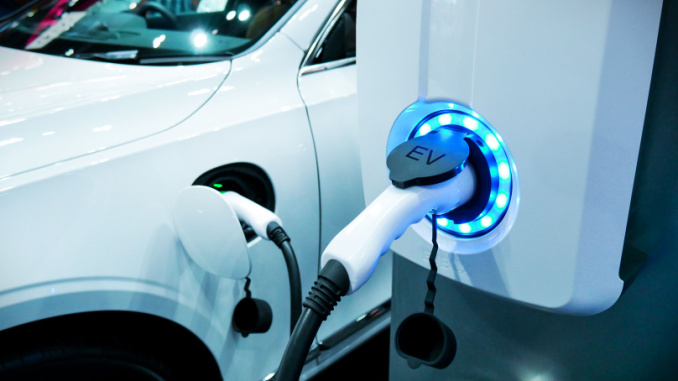
But there are problems. Consumers aren’t wild about EVs. After years of the feds promoting them and subsidizing them in every way thinkable, they still account for just 8% of new car sales.
They are still too expensive, refueling can be difficult and they have poor resale value. Moreover the giant batteries are a disposal nightmare. EVs increase soot pollution. Depending on the fuel source used to produce the electricity, they may produce no net carbon reduction anyway!
Yet the Biden administration soldiers on, insisting EVs can capture 70% of all sales within eight years. Hint: they can’t. Look for other accommodations to reality to be made. Meanwhile they are doing a lot of economic damage, for no possible benefit.
Americans are less caught up in climate panic than ever. Surveys revealed that of all the issues in this year’s election, voters rank climate change 10th in importance. “We’re number 10” may not make an inspiring campaign slogan, but the massive media, academic, and governmental infrastructure dedicated to its promotion means the climate change industry won’t disappear anytime soon.
As Swedish economist Björn Lomborg points out, climate change is a problem but only one of several mankind must grapple with. Meta-analysis of all scientific estimates shows climate change costs will likely average one percent of GDP across the century, a figure sure to be dwarfed by anticipated economic growth. Meanwhile, the proposed solutions insisted upon by the panic advocates will average $27 trillion annually or seven times more than the problem itself.
Costs aside, we lead better lives because of fossil fuels. Abundant energy has more than doubled lifespans, dramatically reduced hunger, and increased personal income tenfold. Climate related deaths from droughts, storms, floods, and fires have declined an astonishing 97% over the last century.
The worst thing we could do is to drive ourselves into poverty by “following the (false) science.” We need to stay economically and technically strong to be able to accommodate change as needed. Human beings do that, you know.
Dr. Thomas Patterson, former Chairman of the Goldwater Institute, is a retired emergency physician. He served as an Arizona State senator for 10 years in the 1990s, and as Majority Leader from 93-96. He is the author of Arizona’s original charter schools bill.
A new survey conducted by Bain & Co. finds a rising percentage of energy executives willing to recognize the reality that the world will fail to achieve the “net zero by 2050” drop-dead goal pushed by the globalist community.
Bain & Co. surveyed more than 600 executives in oil and gas, utilities, chemicals, mining, and agribusiness during last November’s COP28 conference in Dubai and over the weeks following that event.
2050, of course, is the alarm-driven drop-dead date given to us by the UN Intergovernmental Panel on Climate Change (IPCC) as the year we must achieve global net zero carbon emissions to prevent disastrous levels of global warming. But everyone knows that such alarmist projections have always been quite malleable and tend to shift to later dates in time once it becomes clear that the predicted disasters by certain dates aren’t actually coming about. You know, like all those alarms about the end of snow, the melting of the polar ice caps, Greenland’s ice shelf sliding off into the ocean, and Manhattan being inundated by rising sea levels. Al Gore kind of stuff.
Similarly, Bain & Co. finds that a rising percentage of energy executives now expect the ballyhooed “net zero” date to be pushed well past 2050, with fully 62% now anticipating it won’t be reached before 2060 or even later. That number is up from just 54% expressing the same opinion a year ago, and we can be sure it will keep rising in every subsequent year as the impossibility of reaching that 2050 goal becomes increasingly obvious to even the truest of true believers.
Here is how Bain puts it in its press release: “Clearly, the longer that executives on the front lines of the energy transition grapple with the challenges of putting decarbonization plans into action, the more sober they’re getting about the transition’s practical realities.”
Yes, pesky practical realities do have a way of intruding on the fantasy thinking that underlies so much of the energy transition’s prevailing narratives. In its next paragraph, Bain cites factors like rising interest rates and growing concerns about lack of “policy stability” in the US and other western democracies, i.e., democratic elections, as factors causing more and more of these executives to become skeptical about achieving the alarmist goals.
But weren’t those and other factors completely foreseeable to anyone who understands how the world really works? Of course, they were, but we must recognize that the key decisions related to this heavily subsidized transition are not being made by such people, but by politicians and bureaucrats. And therein lies the real trouble. Politicians look at impractical “solutions” like wind, solar, and electric vehicles and see shiny objects that they might be able to leverage with voters. Whether or not the solutions have any practical value is a secondary thought if they consider it at all.
We see this survey’s findings now reflected in remarks by industry executives at this week’s CERAWeek conference in Houston. CEOs from companies like Saudi Aramco, ExxonMobil, Shell, and others stated their views that the world will require more and more oil, natural gas, and coal for decades to come, and discussed their plans to rededicate more of their capital budgets to their core businesses and less to pleasing ESG investors by throwing away money at unprofitable green ventures.
Reality is setting in, slowly but surely. When Energy Secretary Jennifer Granholm tells an interviewer from E&E News that the Biden administration is trying to bring about “a managed transition,” as she did this week, more and more smart people in the energy space are coming to realize the threat that really represents.
Speaking to the CERAWeek audience Monday, Granholm claimed strong public support for the Biden Green New Deal agenda, saying, “Consumers are calling for change. Communities are calling for change. Investors are calling for change.” Again, Bain finds a rising percentage of executives actually in the business increasingly skeptical any of that is accurate.
What we are seeing here is a return to energy realism in the business community. That’s good news for everyone, whether the Biden administration and its alarmist supporters approve of it or not.
David Blackmon is a contributor to The Daily Caller News Foundation, an energy writer, and consultant based in Texas. He spent 40 years in the oil and gas business, where he specialized in public policy and communications.
Imagine this: You invest a couple of hours towards watching “Juice: Power, Politics, and the Grid,” the excellent new documentary produced by Robert Bryce and Tyson Culver.
It’s a documentary that advocates for greater use of nuclear energy, but also has positive things to say about the need to continue using natural gas and coal to maintain stability in our energy grids. Or, you read the outstanding book by author Alex Epstein, “Fossil Future,” which advocates for the proposition that oil, natural gas, and coal will play significant roles in the global energy mix well into the future.
But then, you wake up the next morning only to find that these three men have been arrested and charged with the crime of, well, of saying nice things about fossil fuels.
Don’t laugh: If one Canadian member of parliament has his way, that will become law up in the Great White North. That MP, Charlie Angus of Timmins-James Bay, Ontario, introduced a bill Monday that would invoke criminal penalties for saying positive things about oil, natural gas, and coal, even when those things are manifestly true. The bill reads, in part, “It is prohibited for a person to promote a fossil fuel, a fossil fuel-related brand element or the production of a fossil fuel.”
The Toronto Sun reported this week that Angus made repeated promises to treat the oil, gas, and coal industries in the same way western governments went after the big tobacco companies in the 1990s. The liberal member of Justin Trudeau’s New Democrat Party claimed his bill was about stopping the spread of falsehoods about these fossil fuels, which the climate alarmist movement has done its best to turn into global boogeymen to which every environmental and weather ill is to be ascribed.
“The Big Tobacco moment has finally arrived for Big Oil. We need to put human health ahead of the lies of the oil sector,” Angus told the House on Monday.
So, Angus says the bill is about “stopping the spread of falsehoods by the oil industry,” but the bill actually says it is about making it a crime to “promote a fossil fuel, a fossil fuel-related brand element or the production of a fossil fuel.” The actual language in the law would make it a crime to advertise the price of gasoline on gas station billboards or for Chevron to run TV ads bragging about the additive it calls “Techron.”
The language in the bill would make it a crime for advocates like Bryce and Culver to produce their documentaries and for Epstein to publish his books. All these would be deemed illegal and indeed heretical to the doctrines of the climate alarm religion under Angus’s bill.
The actual language, in other words, has nothing to do with objective truth. It has to do with banning speech this Canadian MP doesn’t like.
For several years, the great standup comic Jeff Foxworthy hosted a TV show called, “Are You Smarter Than a 5th-Grader?” Obviously, MP Angus would flunk that show since every 5th-grader who ever appeared on it would immediately notice the logical conflict between the bill’s language and the promotion of it by its author.
The simple truth is that Bryce, Culver, Epstein and many other advocates who try to bring some level of sanity to our energy and climate debate are right about the future for fossil fuels and nuclear generation. Those energy sources currently supply roughly 85% of the primary energy mix, a level that has been intractably consistent for the past quarter century despite the spending of trillions of dollars on subsidies and tax breaks for wind, solar and electric vehicles.
Indeed, the nuclear renaissance advocated for by Bryce and Culver could even cause that percentage to rise in the coming decades.
Here’s a thought: Perhaps a better approach here would be for Canada’s Parliament and America’s congress to enact laws making it a crime for MPs or members of congress to spread falsehoods about the bills they’re trying to pass.
That would be a real public service, which of course means it can never happen.
David Blackmon is a contributor to The Daily Caller News Foundation, an energy writer, and consultant based in Texas. He spent 40 years in the oil and gas business, where he specialized in public policy and communications.