Arizona State University (ASU) President Michael Crow called for a globalist revolution to counter climate change in a recently published book.
In the book published last week, “Democracy in a Hotter Time: Climate Change and Democratic Transformation,” Crow declared that the principles of the Founding are no longer sufficient.
“Although the philosophical underpinnings of our democratic experiment were pragmatically balanced by the founders, the pivotal formulations of the U.S. Constitution failed to protect nature,” wrote Crow.
Crow’s remarks echoed the sentiments made by the principal author of the book, ASU Professor David Orr, who wrote in his foreword that the time is ripe for a bold experiment in a new kind of democracy worldwide.
“Against all odds, [our Founders] imagined and launched the first modern democracy. Imperfect though it was, the fledgling nation had the capacity for self-repair evolving toward ‘a more perfect union,’” wrote Orr. “Our challenge, similarly, requires us to begin the world anew, conceiving and building a fair, decent, and effective democracy, this time better fitted to a planet with an ecosphere.”
Unlike the Founding Fathers — who founded this country on self-evident truths of equality and God-endowed inalienable rights of life, liberty, and the pursuit of happiness — the globalist revolutionaries in this latest book declared that a new form of governance must serve the environment alongside mankind.
The ASU president also lamented that the current system of representative democracy has allowed for “scientific[ally] or technological[ly] illitera[te]” elected officials who oppose progressive climate initiatives.
“It is, after all, the deficiencies of the democratic process that have allowed the election of unscrupulous politicians who deny climate change or obstruct efforts to combat environmental degradation,” stated Crow. “Scientific or technological illiteracy among policy-makers and elected officials is matched by a growing affluent class that valorizes individualism over civic engagement and is insulated from complex sociotechnical issues.”
Crow also criticized individualism and Enlightenment philosophies as a threat to natural resources, indicating the need for limitations on personal freedoms in a climate change revolution.
“[T]he principles of capitalism as articulated by Adam Smith in ‘The Wealth of Nations’ imposed no limits on economic individualism or the inclination of societies to exploit natural resources capriciously,” said Crow. “Approaches that ameliorate the interrelated conundrums that now plague the Earth’s systems will require systems-level thinking that challenges the reductionist assumptions of the Enlightenment.”
As part of the new democracy, Crow proposed that contemporary research universities such as ASU be the entities responsible for the social, economic, cultural, political, scientific, and technological well-being of local communities. In order to fulfill this responsibility, universities’ institutional design would be reworked to facilitate transdisciplinary research rather than individual attainment.
“Approaches that ameliorate the interrelated conundrums that now plague the Earth’s systems will require systems-level thinking that challenges the reductionist assumptions of the Enlightenment,” said Crow. “[T]he preservation of our democracy amid the emerging global crisis of rapid climate change requires that we recalibrate our academic culture.”
Orr clarified in the introduction of the book that Crow intends to reform higher education so that students are indoctrinated in climate change activism.
“The five-alarm nature of climate chaos requires revising curriculum, research, and innovation throughout higher education and changing requirements for graduation so that every student in every field knows what planet they’re on, how it works, and why such things are important for our public life and for their own lives and careers,” wrote Orr.
This envisioned role of higher education corresponds with the Democracy Initiative of the College of Liberal Arts and Sciences, whose express goals within its inaugural Democracy and Climate Change Conference last year inspired the headline of Crow’s chapter and the book.
One conference panel questioned the Constitution as a hindrance to climate change solutions.
The conference’s keynote speaker was Al Gore, former President Bill Clinton’s vice president, failed 2000 Democratic presidential nominee, and longtime environmental activist. Gore said that government response to COVID-19 provided a model for response to climate change.
“[I]t’s up to us to muster the political will to implement those solutions and restore the integrity of our democracy,” said Gore.
Gore’s 2006 award-winning movie warning about the dire consequences of climate change made many predictions that failed to come true, such as higher sea levels, increased temperatures due to rising CO2 levels, more tornadoes, extinction of the polar bears, the complete melt of the Arctic, total drought of the Sahel, and the polluting effects of CO2.
In March, Capital Research Center documented how Gore has consistently failed to issue accurate advice or predictions on climate change over the last 30 years. Yet, Gore was awarded the Nobel Peace Prize for his work in 2007.
Also present at the conference was Obama’s maternal half-sister and Obama Foundation consultant, Maya Soetoro-Ng.
Crow co-authored his chapter with William B. Dabars: a research professor for the ASU School for the Future of Innovation in Society, senior global futures scholar for the Julie Ann Wrigley Global Futures Laboratory (GFL), and senior director of research for the New American University.
The GFL engages in Crow’s proposed transdisciplinary research core to the envisioned new democracy. The laboratory serves as a global hub of scientists and scholars working to “establish a new equilibrium between humankind and the dynamic Earth system.” The GFL work covers the depletion of natural resources, degradation of the environment, water scarcity, food security, energy systems, environmental and public health, and governance and policy.
GFL’s transdisciplinary design comes from its coordination with the Global Institute of Sustainability; Consortium for Science, Policy, and Outcomes; Rob and Melani Walton Center for Planetary Health; and the Innovation and the College of Global Futures along with its three Schools of Sustainability, Future of Innovation in Society, and Complex Adaptive Systems, respectively.
The New American University is Crow’s novel model of higher education designed to serve the public interest and societal well-being.
The Fifth Wave refers to the idea that American higher education progressed in waves. The Greek academies constituted the First Wave, state colleges constituted the Second Wave, land-grant colleges constituted the Third Wave, research universities constituted the Fourth Wave, and national service universities constituted the Fifth Wave. In addition to itself, ASU classified Penn State University, the University of Maryland system, and Purdue University as Fifth Wave institutions.
Corinne Murdock is a reporter for AZ Free News. Follow her latest on Twitter, or email tips to corinne@azfreenews.com.
As host of the Sept. 9 G20 summit, India is ready to defend its use of fossil fuels despite the hostility of some of its guests toward the energy source.
Speaking at a pre-summit conclave organized by local media, Union Power Minister R.K. Singh answered criticism that his country is a large emitter of carbon dioxide from its use of fossil fuels, particularly coal. Calling the criticism ridiculous, he said that “you don’t decide on the emissions depending on the size of the country. A small island will be consuming huge quantities of energy per capita, yet its total emissions will be less. You have to talk about it in per capita terms … The narrative has to change.”
India’s per capita emissions are lowest among the top users of fossil fuels and much lower than the global average. This means many Indians continue to consume energy at a rate well below levels reached decades ago in the developed West.
G20 attendees will include the U.S., U.K., Canada, Germany and others, whose leaders seek to eliminate the use of fossil fuels in developing nations even though coal and oil helped to produce western wealth in the Industrial Revolution.
“If you have an economy that is growing at 7%, electricity from coal will also grow,” the minister said. “We will meet the energy requirement for our growth because we have a right to grow. The hypocrisy of developed countries is amazing.”
Mr. Singh pointed out the inconvenient fact that renewables are not a realistic alternative to fossil fuels for generating large amounts of electricity. The requirement to back up wind and solar with batteries increases their cost by nearly fivefold, he said.
The cost of renewables is not just an issue in developing economies. Even in the wealthiest countries, wind and solar are notorious for increasing the overall cost of power.
Writer Michael Shellenberger argues that consumers have been bearing much of these costs. For example, he says that “renewables had contributed to electricity prices rising 50% in Germany and five times more in California than in the rest of the U.S. despite generating just 17% of the state’s electricity.”
Availability and affordability of raw materials for batteries are also a growing concern. Contrary to popular claims that the prices of storage systems have declined, data show that their raw materials are becoming more expensive.
According to Energy Storage News, “Lithium-ion battery pack prices have gone up 7% in 2022, marking the first time that prices have risen since BloombergNEF began its surveys in 2010. The finding that average pack prices for electric vehicles and battery energy storage systems have increased globally in real terms … confirms the consequences of what the industry has been confronted with in recent months.”
Given these uncertainties, countries like India will not commit to any ambitious renewable transition goals. This is evident, given how India has been increasing its dependency on fossil fuels while simultaneously increasing its renewable capacity.
While India may give outward signs of interest in renewable energy installations, it will not risk the cost of risking blackouts or stunted economic growth by overreliance on high-cost wind and solar energy.
Vijay Jayaraj is a contributor to The Daily Caller News Foundation and Research Associate at the CO2 Coalition, Arlington, Virginia. He holds a master’s degree in environmental sciences from the University of East Anglia, UK.
Maricopa Association of Governments (MAG) may oversee up to $4.6 billion in federal funding to implement emissions reduction plans.
The billions cover the second of two phases required by the Environmental Protection Agency (EPA) under the Climate Pollution Reduction Grant (CPRG) Program. That phase concerns implementation grants for greenhouse gas emissions reduction policies, programs, and projects. The preceding phase covers planning grants for the development of regional climate plans.
For phase one, the EPA gave Maricopa Association of Governments (MAG) a $1 million CPRG Program grant to serve as the lead planning organization for the Phoenix-Mesa-Chandler metropolitan statistical area. This grant requires MAG to develop a priority climate action plan due next March, comprehensive climate action plan due in 2025, and a status report due in 2027 after the four-year grant period expires.
MAG accepted the $1 million during a meeting on Wednesday, amending their 2024-2025 Biennial Planning Work Program and Budget to do so.
The priority climate action plan is a prerequisite for the $4.6 billion implementation grant. As part of this plan, MAG must issue a benefits analysis for how their plan produces the most significant benefits to low-income and disadvantaged communities, which the Biden administration refers to collectively as “LIDAC.”
The EPA emphasized arranging all three CPRG plans around LIDACs. Tribes and territories won’t be required to include special LIDAC provisions in their plans.
The EPA guidance on LIDACs explained that the equity lens for the CPRG funding constitutes a greater pledge by the Biden administration per the Justice40 Initiative to issue 40 percent of federal investments to those marginalized, underserved, or overburdened by pollution.
LIDACs are determined by federally defined burdens concerning climate change, energy, health, housing, legacy pollution, transportation, water and wastewater, workforce development, low median income, and poverty. The agency recommended the use of the Biden administration’s Climate and Economic Justice Screening Tool (CEJST).
The billions for energy and climate initiatives may address something advocated for greatly by Democratic leaders like Phoenix Mayor Kate Gallego and Rep. Ruben Gallego (D-AZ-03): extreme heat and urban heat island effects. The EPA cited both on page 8 of their LIDAC guidance.
Public comment during Wednesday’s meeting largely represented opposition to the federal funding to implement net zero goals. Members of the public warned that such climate agendas would result in energy poverty tantamount to shortages and scarcity experienced in third-world countries.
Last year, China permitted coal burning plants at the rate of two new plants every week. High costs with lower supply, as seen in Germany, which resulted in an energy crisis last winter that plummeted the population into the freezing winter temps.
Members of the public also expressed concerns over the financial impact on taxpayers, citing woes faced by the taxpayers of neighboring California. Despite all public comments expressing opposition during the meeting, MAG approved the EPA funding as one part of its consent agenda.
The EPA received $5 billion for the CPRG Program through the Inflation Reduction Act (IRA): $250 million for noncompetitive planning grants, and $4.6 billion for competitive implementation grants.
The White House issued a comprehensive, searchable guidebook on the IRA funding for “clean” energy and climate change initiatives. IRA funding to reorient the economy for “clean” energy totals around $369 billion.
Of the planning grants, states received $156 million, local governments received $67 million, tribes received $25 million, and territories received $2 million.
Corinne Murdock is a reporter for AZ Free News. Follow her latest on Twitter, or email tips to corinne@azfreenews.com.
How much do you like to walk in 110-degree heat? If you’re a resident of the city of Phoenix, you may need to start getting used to it if the city council gets its way.
A proposed ordinance in Phoenix is looking to significantly reduce the minimum number of parking spaces it requires for apartments. Currently, Phoenix requires a minimum of 150 parking spaces for every 100 one or two-bedroom apartments. Under the proposed ordinance, that number would decrease to 125 spaces. But that’s not the end of it. For new affordable apartment complexes near light rail stations, the requirement for most would be reduced to zero! Yes. Zero parking spaces at an apartment complex. Have you caught on to their agenda yet?
If you’ve been keeping score, you already know that—in just this year—climate change zealots have been seeking to prohibit gas stoves; put limits on things like lawn and garden equipment, motorized boating, and water heaters; and ban the internal combustion engine. Now, this latest attempt to reduce parking spaces makes it clear. They want to force you out of your air-conditioned car to walk in 110-degree heat with your reward being to wait for a bus or light rail. But that’s not all…
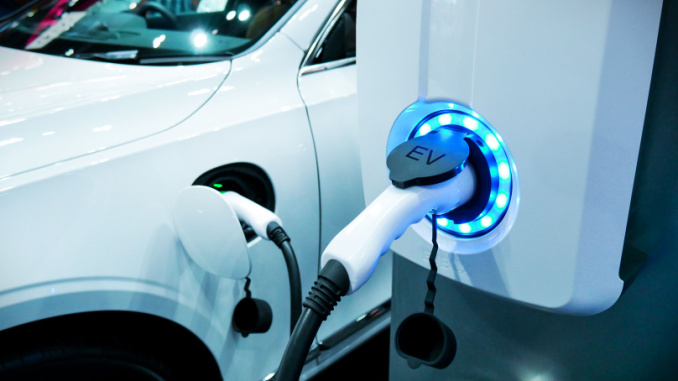
Electric vehicles have become the centerpiece of the plan to ward off climate change by drastically reducing greenhouse gas emissions. The Biden administration seems to feel that if we can just get people to plug in their cars to a non-emitting electrical socket instead of filling up with carboniferous fossil fuels – voila! By 2050 we’ll be at zero-carbon emissions, no problem.
That would be a nice world, but it’s not the one we live in. In fact, EVs check virtually every box indicating an unrealistic policy bound for failure.
For starters, personal vehicles aren’t even the right target, despite the claim of the Union of Concerned Scientists that they are a “major cause of global warming.” The New York Times agrees that cars are a “major driver of climate change.”
Really? Transportation globally accounts for 20% of total emissions, but cars and vans are only 8% while personal vehicles, because they accumulate less mileage, generate just 3% of all emissions. But the U.S. owns just 12% of the world’s cars. That means that just 0.36% is the global carbon reduction we would achieve if every American car were electrified and if all carbon emissions were thereby eliminated.
But it gets worse. EVs don’t necessarily reduce carbon emissions at all. Energy must still be produced to power them, like any other car. It just happens in a different location.
The net emissions of an EV depend on how its electricity is generated. Since fossil fuels still generate the bulk of our power, many EVs are a little more than carbon neutral. Moreover, the manufacture and eventual disposal of the required batteries are intensely energy consuming.
California, New York, and other states plus the EU have promised to be fully EV by 2035. But these states are already straining under the increased demands of a power-hungry world even without EVs.
The task of fueling all these EVs would be overwhelming. According to one estimate, achieving a “net-zero economy” for New York would require building 2,500 giant, 680-foot tall turbines, which would hopefully generate electricity 40% of the time.
The turbines would require 110,000 tons of copper alone, for which 25,000,000 tons of copper ore would have to be mined and processed, after removing 40,000,000 tons of overlaying rock. Then, birds, bats, and endangered species would be regularly massacred by the millions. And that’s only for one state.
The unwelcome fact is that sustainable fuel sources have received massive subsidies for years to “help them get started.” Yet wind, solar, and other minor sources of energy still produce just 12% of global demand and have yet to demonstrate the potential to replace fossil fuels in the future as the main source of energy for EVs.
EVs are more popular with green activists than with drivers. They accounted for just 5.8% of all auto sales last year, despite being heavily subsidized. Buyers benefit from generous production subsidies, from fueling subsidies, from special driving privileges such as use of HOV lanes, and are unfairly excused from participating in the fuel taxes which fund road construction and repair.
Yet most consumers still find the extra cost of an EV is not justified. Automakers, with the notable exception so far of Tesla, are beginning to feel the pinch. Many were bull rushed into EV production by government pressure and subsidies as well as fear of getting left out of the presumed coming boom market.
But now Ford, for one, expects to lose $3 billion on EV production this year. Volkswagen is cutting back on EV production as well, stating that “we are noticing customer reticence quite vehemently in the electric world.” It’s going to take a mountain of subsidies and mandates to get anywhere near 100% EVs by 2035.
There are other big problems too. The batteries average 1,000 pounds or so in weight, resulting in excessive wear to roads and bridges. Collisions are more damaging – for the other guy. There are not nearly enough mines, metals, and minerals on earth to supply EV battery manufacture. EVs are an ineffective solution to an exaggerated problem. We can only hope environmental alarmists come to their senses before their unrealistic dreams bankrupt us all.
Dr. Thomas Patterson, former Chairman of the Goldwater Institute, is a retired emergency physician. He served as an Arizona State senator for 10 years in the 1990s, and as Majority Leader from 93-96. He is the author of Arizona’s original charter schools bill.