by Staff Reporter | Nov 13, 2025 | News
By Staff Reporter |
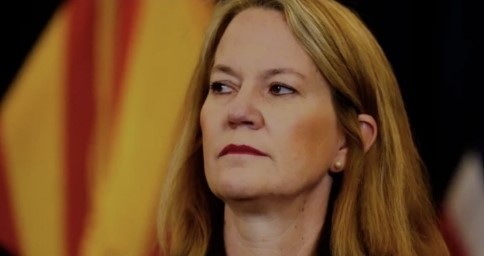
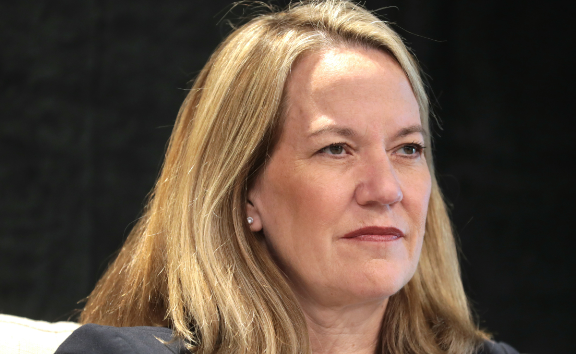
A recent whistleblower filing alleges Attorney General Kris Mayes was paid to prosecute President Donald Trump’s supporters.
According to the whistleblower, Christina Bobb — one of the indicted former Trump lawyers and current senior elections counsel for the Republican National Committee — Mayes inadvertently disclosed in filings her receipt of $200,000 from a Democratic Party offshoot founded in the 2020 election cycle for the purpose of defeating Trump and his allies.
The funds came from States United Democracy Center (SUDC), which the complaint alleged was payment to grant the organization prosecutorial influence over Mayes’ case against Trump’s 2020 attorneys, allies, and electors. The payment came in two allotments: $50,000 and $150,000.
“Prosecutors claim on the record and in emails that States United represents their office,” stated the complaint.
SUDC delivered a document to Mayes in the summer of 2023 proposing the charges to be brought against Trump’s foremost 2020 supporters. Mayes’ chief deputy attorney general, Dan Barr, told Capitol Media Services last December that the SUDC document “did not have a significant, if much, impact at all” in their case against the Trump 2020 electors.
Consistent with Mayes’ ongoing resistance to disclose further details of their working relationship with SUDC as related to the prosecution of Trump supporters, Barr declined to “get into the inner workings” of their relationship with SUDC.
Two key participants within SUDC involvement in Mayes’ prosecution have a history of high-profile actions taken to undermine Trump.
SUDC founder Norm Eisen was co-counsel for the House Judiciary Committee during the first impeachment of Trump in 2020.
The attorney on SUDC filings, Marc Elias, was counsel for former presidential candidate Hillary Clinton’s campaign. Elias also coordinated the Steele dossier that would serve as the basis for the falsified allegations of Russia interference in the 2016 election. In recent years, Elias has been the left-leaning legal bully stick ensuring the success of Democrat-led election reforms and demise of Republican-led election reforms.
The whistleblower complaint also questioned whether Mayes would receive a third payment upon a successful conviction.
Bobbs’ complaint was filed alongside a motion to disqualify Mayes and SUDC from continuing prosecution.
The motion came shortly after a Maricopa County Superior Court remanded Mayes’ case back to the grand jury for violating due process.
In September, several months after this motion was filed, Mayes lost her bid to continue prosecution with the court of appeals.
Mayes not only has these recent court outcomes stacked against her case — she has federal pressures as well.
Last Friday, President Donald Trump pardoned his key 2020 supporters through a proclamation — including those whom Mayes seeks to prosecute.
“This proclamation ends a grave national injustice perpetrated upon the American people following the 2020 Presidential Election and continues the process of national reconciliation,” stated Trump.
Pinal County Attorney Brad Miller responded to the pardons with the prediction that Mayes would drop the case, saying she had “no choice” in a Tuesday interview with The Gateway Pundit.
AZ Free News is your #1 source for Arizona news and politics. You can send us news tips using this link.
by Staff Reporter | Mar 28, 2025 | News
By Staff Reporter |
The Arizona Court of Appeals judge in the “alternate electors” case donated to Attorney General Mayes when she was campaigning on prosecuting President Donald Trump’s 2020 electors.
On Wednesday, the day after Attorney General Kris Mayes asked the court to reject the lower court’s ruling, the appeals court held oral arguments in the alternate electors case.
The appeals court judge on the case, Andrew Jacobs, was appointed by Governor Katie Hobbs in February 2023. Jacobs donated $500 to Mayes’ campaign for the office in 2022. At the time, Jacobs was an attorney with Snell and Wilmer.
Several days after Mayes promised publicly to investigate the 2020 electors, Jacobs submitted his first donation to her campaign.
“I would have immediately investigated the alternate electors as Attorney General,” said Mayes. “Arizona needs a #LawyerForthePeople.”
Jacobs submitted his second donation to Mayes’ campaign the day after an Arizona Republic article emerged highlighting the differences between her and then-opponent (now congressman) Abe Hamadeh.
A source that observed the emergency hearing described Jacobs as “hostile” to the electors. During oral arguments, the conflict of interest was raised, however, Jacbos still voted on an issue in the case, the decision to grant a stay.
Last month, Maricopa County Judge Sam Myers ruled the 2020 electors, 16 in total, provided sufficient evidence that Mayes’ case against them may be dismissable for violating Arizona’s Anti-SLAPP law.
Anti-SLAPP, or “strategic lawsuits against public participation,” imposes civil liability against any state actor that brings or maintains a legal action substantially motivated by a desire to deter, retaliation against, or prevent free speech and association.
Myers said the 2020 electors demonstrated their actions to comprise “at least in part some arguably lawful speech.” Myers cited Mayes’ remarks announcing the indictments as potential proof of a political motivation behind her prosecution.
Mayes disagreed with the ruling. The attorney general said the 2020 creation of an alternate elector slate didn’t constitute free speech and shouldn’t be afforded constitutional protections.
“It is not the lawful exercise of free speech to file forged slates of electors to deprive Arizona voters of their right to vote,” said Mayes.
In order to counter Myers’ ruling, Mayes had to prove in a brief due earlier this week that she wasn’t motivated by a desire to retaliate or deter the 2020 electors’ free speech rights.
The outcome of that motion to dismiss the case remains pending.
Myers did deny motions to dismiss Mayes’ case last week, however. The motions claimed Mayes lacked authority to bring the case to court and failed to allege crimes committed.
Last November, the first judge on the case, Bruce Cohen, recused himself after emails emerged in which he ordered his fellow judges to come to the defense of then-presidential candidate Kamala Harris.
The defendants in the case include former AZGOP Chair Dr. Kelli Ward, Dr. Michael Ward, former executive director of the AZGOP Greg Safsten, former Arizona State Senator Anthony Kern, former Senate Candidate Jim Lamon, former Cochise County Republican Committee chair Robert Montgomery, former Cochise County Republican Committee chair Samuel Moorhead, Arizona State Senator Jake Hoffman, Turning Point USA COO Tyler Bowyer, and attorneys John Eastman, Rudy Giuliani, Christina Bobb, as well as President Trump’s Chief of Staff Mark Meadows, Campaign Aide Boris Epshteyn, and director of Election Day operations Mike Roman.
AZ Free News is your #1 source for Arizona news and politics. You can send us news tips using this link.
by Matthew Holloway | Feb 15, 2025 | News
By Matthew Holloway |
The 16 prominent Republicans prosecuted for their participation in creating an alternate Electoral College slate for the 2020 presidential election are one step closer to having their charges dismissed. Earlier this week, a Maricopa County Judge ruled that Attorney General Mayes may have been politically motivated to charge them.
On Monday, Maricopa County Judge Sam Myers ruled that the defendants successfully demonstrated that the charges against them could comprise an attack on what he deemed is “at least in part some arguably lawful speech.” This ruling could trigger a dismissal through Arizona’s Anti-SLAPP law, a statute designed to prevent legal action launched to suppress free speech. In the text of Arizona’s Anti-SLAPP law, the prosecution must now establish “the legal action on which the motion is based is justified by clearly established law and that the responding party did not act in order to deter, prevent or retaliate against the moving party’s exercise of constitutional rights.” As reported by Courthouse News, Judge Myers said that a statement from Arizona Democratic Attorney General Kris Mayes, while announcing the indictment of the 16 Republicans that “this should never happen again,” could potentially show a political motivation to the prosecution.
As the outlet noted, Arizona prosecutors led by Mayes, have 45 days from the date of the ruling to respond to the judge’s ruling and prove to the court that the charges were brought in order to enforce existing Arizona laws and not to suppress the freedom of speech under the First Amendment. Myers said he will rule on the motion to dismiss once he’s received and considered the response. Responding to the ruling, Mayes promised an appeal in a press release saying, “We disagree with this ruling, and we will pursue an appeal.” She reiterated her claim adding, “It is not the lawful exercise of free speech to file forged slates of electors to deprive Arizona voters of their right to vote.”
The defendants in the case include former AZGOP Chair Dr. Kelli Ward, Dr. Michael Ward, former executive director of the AZGOP Greg Safsten, former Arizona State Senator Anthony Kern, former Senate Candidate Jim Lamon, former Cochise County Republican Committee chair Robert Montgomery, former Cochise County Republican Committee chair Samuel Moorhead, Arizona State Senator Jake Hoffman, Turning Point USA COO Tyler Bowyer, and attorneys John Eastman, Rudy Giuliani, Christina Bobb, as well as President Trump’s Chief of Staff Mark Meadows, Campaign Aide Boris Epshteyn, and director of Election Day operations Mike Roman.
Following the ruling, Eastman posted to X, “Major ruling in the Arizona electors case this a.m. The new judge just ruled that I met the prima facie case required to dismiss under the anti-SLAPP statute — that is, 1st Amend. rights implicated, & substantial evid. that the prosecution was to retaliate or deter those rights.”
Eastman added, “Just to clarify. The AG now has to prove that she wasn’t motivated by desire to retaliate or deter 1A rights. Their brief is due March 25. The judge also rejected the AG’s claim that the anti-SLAPP statute is unconstitutional.”
Fellow defendant Dr. Kelli Ward explained on X, “The court found sufficient showing in the defense’s arguments to warrant moving to stage 2 of the process in AZ’s criminal anti-slapp statute. Now the state has to prove that this case was not politically motivated and they must show that they’re using established precedent and not interpreting the law in new ways.”
Matthew Holloway is a senior reporter for AZ Free News. Follow him on X for his latest stories, or email tips to Matthew@azfreenews.com.
by AZ Free Enterprise Club | May 26, 2024 | Opinion
By the Arizona Free Enterprise Club |
Nobody likes a bully, and yet some people relish playing such a role. Here in Arizona, perhaps no person has taken on that persona quite like Kris Mayes. When she began her political career with the Arizona Corporation Commission, Mayes quickly gained a reputation for bullying other people around, but since becoming Arizona’s Attorney General (AG) in January 2023, she has taken it to a whole other level.
Within months of occupying the AG office, Mayes began using her post to target and investigate the very people and entities she is constitutionally obligated to defend. First in her crosshairs was the Arizona Department of Water Resources (ADWR), a state agency she is legally obligated to represent and provide legal advice to. But because she wants to score political points with her radical environmental allies, she decided to threaten legal action against ADWR unless they provide her with documentation showing that the agency is in compliance with its water management responsibilities.
Mayes then turned around a few weeks later and went after the Empowerment Scholarship Account (ESA) program at the Department of Education. In a public tirade, she falsely claimed that the budget agreement that protected universal school choice would bankrupt the state, despite the expenditure data showing that the ESA program actually saves the state money. When that didn’t stop the Republican budget bill from being signed by Governor Hobbs, Mayes doubled down on her ESA assault by threatening legal action against her own client, the Arizona Department of Education, over the program.
And now that she has had more time to get comfortable in office, Mayes is discovering new and creative ways to abuse her power, including collusion and the usage of dirty tactics to target political opponents…
>>> CONTINUE READING >>>
Page 1 of 11