by Staff Reporter | Aug 31, 2024 | News
By Staff Reporter |
Arizona voters will decide this November whether to require the diversity of geographic distribution for ballot initiative signature gathering.
The legislature passed this proposal last year along partisan lines (Senate Concurrent Resolution 1015), now on the ballot as Proposition 134. Per the proposal, signature gatherers would have to gain support across all 15 counties for ballot initiatives, rather than focusing on the most populated ones.
The law currently allows signatures to be gathered from any area within the state. Proponents of Proposition 134 hope to ensure representation from the more rural areas of the state.
Proposition 134 would require 10 percent of registered voters from each of the state’s 30 legislative districts for statewide initiatives, 15 percent from each legislative district for constitutional changes, and five percent from each legislative district for referendums.
Current law only requires 10 percent of registered voters for any statewide initiative, 15 percent of registered voters for any constitutional changes, and five percent of registered voters for any referendums.
Per the secretary of state’s latest voter registration data, there are over 4.1 million voters in the state. Nearly 60 percent of voters live in Maricopa County (over 2.4 million voters).
Under current requirements, signature gatherers only have to obtain about 411,000 voter signatures for statewide initiatives, 616,400 voter signatures for constitutional changes, and 205,500 voter signatures for referendums.
Among those in favor of the proposition are the Arizona Farm Bureau, Arizona Free Enterprise Club, and the Goldwater Institute.
The Goldwater Institute operates the organization AZ Ballot Fairness in support of Proposition 134.
In a press release, AFB said that allowing “one big county” to pass initiatives without input from rural residents was unfair and could impose unintended consequences.
“Right now, rural Arizonans are completely ignored in the process. It is easier to sit on college campuses and densely populated areas like downtown Phoenix to collect all the requisite signatures than to get the buy-in from the diverse interests of Arizonans in other parts of the state,” said the Farm Bureau. “These diverse interests have a right to a voice in determining whether an issue will appear on the ballot.”
Those opposed include the Arizona Forward Party (AFP) and the Arizona Public Health Association (APHA).
AFP argued that the burden for signature gathering would be too great, citing the hypothetical of initiatives dying for a shortage of signatures in even one district.
“If only one district fails to collect enough signatures, the referendum, initiative, or amendment will fail to appear on the ballot no matter how popular or relative it is to the rest of the state,” said AFP.
APHA argued that the proposed signature gathering requirements would hinder and delay health campaigns as well as critical interventions.
“Public health advocacy often relies on the ability to mobilize quickly and effectively to address emerging issues,” said ADH.
Opponents argue that the measure would actually decrease representation by requiring its diversification.
Not every state has a citizen initiative process, but for those that do, around half have a signature distribution requirement.
AZ Free News is your #1 source for Arizona news and politics. You can send us news tips using this link.
by Staff Reporter | Jul 24, 2024 | News
By Staff Reporter |
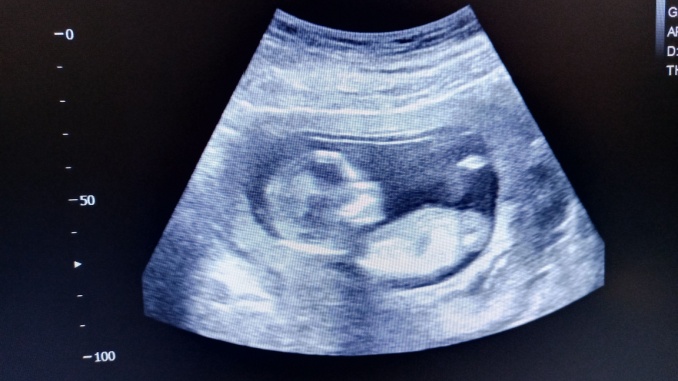
Come November, Arizona voters may decide whether to establish abortion at any stage of pregnancy as a fundamental right in the state constitution.
The assigned ballot number, Proposition 139, declares that voting in favor of the initiative would create a fundamental right to abortion, thereby limiting the state’s ability to interfere with all abortions — mainly those pregnancies predating the generally accepted standard for viability, around 24 weeks.
However, that doesn’t mean that abortions won’t be covered by the state constitution after viability. The proposition declares that abortions will be permissible after viability should any involved health care professional determine them “necessary” to protect the mother’s life or health.
The proposition would also preemptively ban lawmakers from imposing any criminal sanctions or other punishments on anyone who assists another in obtaining an abortion.
“A ‘yes’ vote shall have the effect of creating a fundamental right to abortion under Arizona’s constitution. The State will not be able to interfere with this fundamental right before fetal viability, unless it has a compelling reason and does so in the least restrictive way possible. Fetal viability means the point in the pregnancy when, in the good-faith judgment of a treating health care professional, the fetus has a significant likelihood of survival outside the uterus. Throughout the pregnancy, both before and after fetal viability, the State will not be able to interfere with the good-faith judgment of a treating health care professional that an abortion is necessary to protect the life or health of the pregnant individual. The State will not be able to penalize any person for aiding or assisting a pregnant individual in exercising the right to an abortion.”
The secretary of state’s office is still reviewing signatures for the initiative.
Earlier this month, the PAC behind the initiative, Arizona For Abortion Access, sued the Arizona Legislative Council for using the term “unborn human being” rather than “unborn fetus” in their official analysis of the proposition distributed to voters in a publicity pamphlet.
An attorney for the PAC told lawmakers during their hearing on the subject that “unborn human being” was a partisan phrase, rather than their preferred term of “fetus.”
Arizona For Abortion Access, the political action committee behind the ballot initiative, has pulled in nearly $23.2 million for their cause.
The PAC’s biggest donors are mainly out-of-state entities: over $13.4 million altogether from The Fairness Project, Planned Parenthood Action Fund, Sixteen Thirty Fund, Advocacy Action Fund, the ACLU Foundation, Open Society Action Fund, Think Big America, The Green Advocacy, Movement Voter PAC and Project, Our Children Our Future, Clean and Prosperous America, and Moms Fed Up.
Several in-state entities rich with out-of-state cash flow put about $5.8 million toward the initiative: Arizonans Fed Up With Failing Health, ACLU of Arizona, Reproductive Freedom for All Arizona, Healthcare Rising Arizona, and the UFCW Local 99 PAC.
A number of wealthy, out-of-state billionaires have donated funds:
- Phoebe Gates, daughter of Bill Gates and Stanford University student, $750,000;
- Liz Simons, daughter of hedge fund billionaire James Simons, $250,000;
- Gaye Pigott, a Washington descendant of one of America’s richest families, the Pigott family, $75,000;
- Eric Laufer, a New York engineer, $65,000;
- Giovanna Randall, president and head designer of New York luxury bridal company Honor NYC $65,000;
- Barbara Simons, a retiree of San Francisco, California $51,000;
- Barton Faber, former Canto executive, a California-based software company (reported as living in Hawaii, but formerly from Arizona), $50,000;
- Ning Mosberger-Tang, a Colorado photographer, gave $50,000;
- Steven Spielberg, famed Hollywood director, and his Hollywood actress wife, Kate Capshaw, gave $100,000;
- Sheli Rosenberg, a retired Illinois executive of Equity Group Investments, gave $50,000;
- Gregory Serrurier, retired California cofounder of Redwood Grove Capital, $50,000;
- Eric Uhrhane, a Californian software engineer and angel investor, gave $50,000;
- Laura H. Lauder, a California philanthropist, gave $25,000;
- Georgia Taylor Michelson, Californian and wife to Zimmer Biomet board member Michael Michelson, gave $25,000;
- Marcia Grand, a California donor, gave $25,000;
- Sal Al-Rashid, a New York investor, gave $25,000;
- Elizabeth Brown, a California farmer, gave $25,000;
- Robin Donohoe, a Georgia venture capitalist, gave $25,000
Several wealthy in-state donors also gave. Among them were Juanita Fitzer Francis, who gave $200,000 — a former nurse with University of Arizona College of Medicine and Phoenix Children’s Hospital, and board member of the Arizona State University Foundation and University of Illinois Foundation. Francis also presides over the Francis Family Foundation.
There was also David and Louise Reese, who gave about $200,000 together. They operate the David E. Reese Family Foundation, a private grantmaking foundation in Paradise Valley. David formerly ran banking institutions across Arizona, Ohio, and New York.
And then there’s Sedona’s Donalyn Mikles, who gave $100,000. Mikles has been a top donor for the Democratic Party and Gov. Katie Hobbs in recent years. Mikles has served as a director of the Kling Family Foundation, a private philanthropic California nonprofit.
Donald Levin, a DRL Enterprises executive in Phoenix, gave $50,000. Paul Lipton, a Tucson hydroponics supply company founder, gave $25,000. Likewise, Robert Bertrand, a Paradise Valley retired executive of Concord Servicing, gave $25,000.
They’ve spent nearly $13.5 million so far, around $11 million on signature gathering. The second-largest expenditure was on advertising, generally, amounting to over $500,000, and polling came at a cost of over $100,000.
Staff salaries for other organizations also topped the list: staffing for Healthcare Rising, Reproductive Freedom for All Arizona, The Fairness Project, and the ACLU altogether amounted to over $400,000.
Their cash balance sits at just over $9.7 million.
AZ Free News is your #1 source for Arizona news and politics. You can send us news tips using this link.
by Daniel Stefanski | Jul 10, 2024 | News
By Daniel Stefanski |
Arizona voters will likely have an opportunity to weigh in on the future of their election system in the upcoming November general election.
Last week, Make Elections Fair Arizona filed 584,124 signatures in an attempt to qualify for November’s ballot in the Grand Canyon State.
The group only needed 383,923 valid signatures to cross the threshold for qualification.
After filing for the ballot, Patrick DeConcini, a Cochair of Make Elections Fair Arizona, said, “Arizonans have a unique opportunity to reimagine our election system to promote more choices, better results, and a stronger state. The Make Elections Fair AZ initiative will create a better state for all Arizonans. We all have a role to play in shaping the future of our state, this is our chance.”
Another co-chair of the group, Beau Lane, added, “The party with the best solutions will thrive under this fair process. The Make Elections Fair Act directly addresses this market demand for more inclusive and effective political solutions.”
Scot Mussi, the President of the Arizona Free Enterprise Club and an outspoken opponent of the measure, released a statement, saying, “This fall, Arizonans will have a number of critical decisions to make about the future of our state, but this initiative may be the most important one facing voters. This initiative is nothing more than a California-style election scheme, which would give unilateral power to one politician to determine the candidates on our ballots.”
Mussi went on to say that the campaign to transform Arizona’s election system was “not fair [or] honest.” He said, “If it is determined that this measure did submit enough valid signatures, we will ensure voters know exactly how undemocratic and unfair these policies will be for future generations.”
The conservative policy advocate dubbed this effort as the “Make Elections (Un)Fair Act.”
In Mussi’s press statement, he shared information about what this constitutional amendment would do for the state, including:
- “Allows one politician, the Arizona Secretary of State, to decide how many candidates qualify for the general election ballot for every single contest, including his or her own race.
- “Would result in some races where candidates from only one political party appear on the general election ballot.
- “Would force voters to navigate two completely different voting systems on the same ballot, with some races requiring voters to rank candidates and others that do not.
- “Will increase tabulation errors, create longer lines at the polls and significantly delay election results.”
Daniel Stefanski is a reporter for AZ Free News. You can send him news tips using this link.
by Corinne Murdock | Apr 14, 2021 | News
By Corinne Murdock |
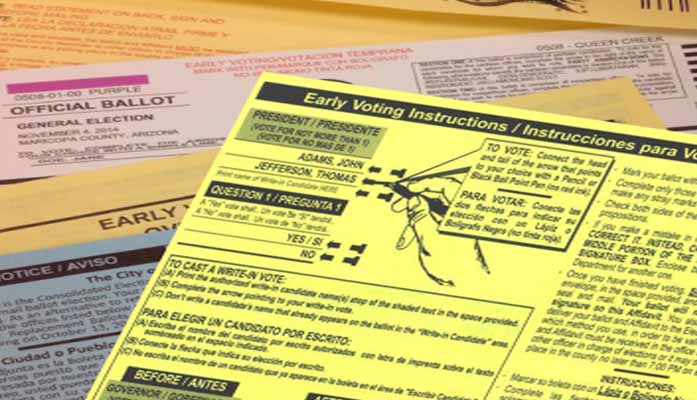
According to the latest polling of Arizona voters, a sweeping majority support strong voter ID requirements and cleaning up early vote-by-mail lists. A total of 550 voters were polled. 82 percent of them supported voter ID in general, with nearly 64 percent in support of requiring ID verification in order to vote by mail.
Although the majority of respondents in support of voter ID requirements were Republicans, a significant amount of Democratic respondents supported them as well. 42 percent of Democratic respondents supported ID requirements for vote-by-mail. Nearly 69 percent of Democratic respondents supported ID requirements for all who vote.
The poll results come as the Arizona state legislature considers bills addressing those very matters. SB1713 would require a form of voter ID for mail-in voting, such as a driver’s license number and signature. That bill has already passed the Senate, and is progressing through the House. SB1485 would clean up the early vote-by-mail lists; it was last retained on the House calendar after passage by the Senate.
The primary majority of respondents were 65 and older, but the second-largest class of respondents fell in the 18 to 34 category. A poll released by the Harvard Institute of Politics before the 2020 election assessed that a majority of 18 to 29-year-olds displayed Democratic leanings with their intent to vote for President Joe Biden.
Although a slight majority of respondents considered themselves Republicans when asked about how they were registered to vote, the greater majority classified themselves as “moderate” rather than conservative when asked what they would classify themselves. The greatest number of respondents either had attended college and not achieved their degree, or received their bachelor’s only. And, the greatest number of respondents were nearly split in their voting patterns, having either voted in all of the last four general elections or none of them.
60 percent of respondents hailed from Maricopa County. That particular county has made headlines for a number of election-related controversies. Several weeks ago, the Arizona Senate hired four companies to audit the county’s results from the 2020 election. The results of that audit are pending. Last week, Republican leaders reached their goal to cover the audit expenses.
The Arizona Free Enterprise Club and Heritage Action sponsored the survey.
In a press release shared with AZ Free News, Arizona Free Enterprise Club President Scot Mussi explained that the poll reflects that Arizona voters hold a positive view of stricter voting regulations despite opposing media coverage.
“During the past two weeks, the public has heard nothing but negative attacks from the media on the issue of election integrity,” said Mussi. “This poll clearly shows that most voters support reasonable laws that protect our election process, despite no organized campaign in support of these reforms.”
Corinne Murdock is a contributing reporter for AZ Free News. In her free time, she works on her books and podcasts. Follow her on Twitter, @CorinneMurdock or email tips to corinnejournalist@gmail.com.