A recent campaign ad from the Democrat incumbent governor cost her millions, but critics and past reporting indicate the ad is misleading and takes credit for work done by Republicans.
Gov. Katie Hobbs’ 30-second “Work” ad released last month claimed that she reduced electricity bills, cut red tape to build more affordable housing, and balanced the budget. Critics across the political spectrum assessed these claims as misleading.
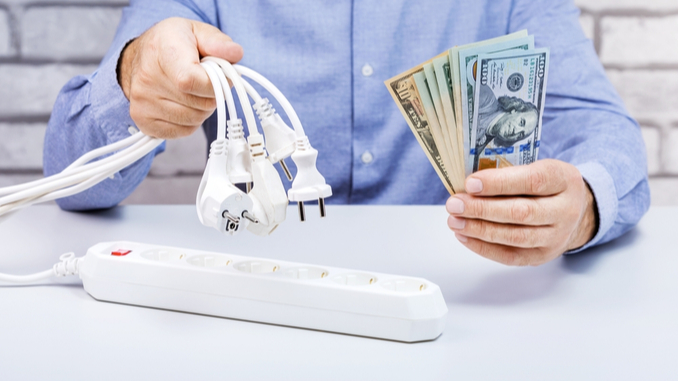
Utility rates have increased by more than 25% under the Hobbs administration.
The Arizona Free Enterprise Club calculated based on Energy Information Administration data that utility rates in Arizona have increased by an average of 27% under Hobbs’ tenure. The Arizona Corporation Commission (ACC) sets rates.
The largest donor to Hobbs’ controversial inaugural fund, Arizona Public Service, also wants to increase the utility rates by 14%. That ratemaking case is ongoing with the ACC.
The Hobbs administration imposed more red tape on housing construction that had the effect of imposing a housing moratorium. A court struck down that red tape earlier this year as an unlawful overreach in agency rulemaking, a ruling which has the potential to put Arizona taxpayers on the hook for over $1 billion in compensation claims.
One developer duo, Buckeye Tartesso I and II, already filed such a claim last September with the help of the Goldwater Institute. The duo is seeking over $320 million in compensation for lost value, an amount their demand letter claimed was a compilation of conservative, not maximum, estimates.
Budget talks were repeatedly called off and subjected to a bill moratorium by Hobbs as she tried to impose what Republican lawmakers characterized as unrealistic revenue assumptions, hidden tax increases, and cost-raising policies.
In the thick of budget talks earlier this year, House Speaker Steve Montenegro (R-LD29) commented that Hobbs’ budgeting style was reminiscent of the more liberal-style budgets coming out of California: fiscal approaches which increase government size and create inconsistencies within the tax system. Hobbs held out on securing tax conformity for months to align the Arizona tax code with many of the congressional changes passed under the One Big Beautiful Bill Act
Hobbs has been accused by bipartisan critics of turning her inheritance of a $2.5 billion surplus from former governor Doug Ducey into a $1.6 billion shortfall.
Last summer, a report by the Common Sense Institute Arizona found that state spending outpaced the $3.3 billion in revenues that emerged following the passage of the flat tax in 2023.
Per the Hobbs campaign, the ad buys required millions from her campaign coffers.
Additionally, the Hobbs campaign press release implied that the Spanish-speaking version of her “Work” ad, “No Se Rinde” (“Doesn’t Give Up”), was uniform in its messaging. However, the ads contained key differences that indicated an awareness of Arizona’s split demographics.
Both opened with a characterization of Hobbs’ background as a mother who worked multiple jobs and as a social worker, but differed distinctly in their portrayals of Hobbs’ approach to governance.
The English-speaking ad, “Work,” depicted Hobbs as a budget and policy expert with key wins in electricity bill and red tape cuts, and school lunch and community college scholarship expansions.
The English ad described Hobbs as working fast food and Uber jobs to make ends meet. It included the misleading claims that Hobbs was responsible for balancing the budget without raising taxes, reducing electricity bills, and cutting affordable housing red tape, along with the valid claims that she expanded school lunches and community college scholarships.
The Spanish version of the ad, “No Se Rinde,” depicted Hobbs as a social worker with key wins in medical debt forgiveness, medical cost cuts, and salary boosts. Hobbs forgave $30 million in medical debts early on in her administration.
The Spanish-speaking ad similarly characterized Hobbs as having a background as a working mother, but only highlighted her past Uber driving work and expanded on her time as a social worker as mainly aiding female domestic violence victims. The ad further diverged in describing Hobbs as responsible for canceling tens of millions in medical debt, reducing medical costs with discounts up to 80 percent, and raising salaries.
A Centers for Disease Control report published in 2024 suggested that Latino and Hispanic women have a disproportionately higher risk of experiencing domestic violence: one in three, indicating an occurrence average up to three times higher than white women.
Close to a quarter of all Latinos in Arizona are uninsured, as are nearly half of all illegal aliens, according to a 2022 research analysis from the Latino Policy & Politics Institute. Approximately 80% of Latino families in Arizona reported financial trouble according to recent polling by UnidosUS; nearly half of Latinos across Arizona, California, and Texas reported medical debt in a 2024 UnidosUS poll.
AZ Free News is your #1 source for Arizona news and politics. You can send us news tips using this link.
Now, Arizona’s largest monopoly utility, APS, is asking the Arizona Corporation Commission for yet another rate hike. Their double-digit 14% request is bad enough on its own. But buried within APS’ ask is something even worse: automatic rate hikes for the next five years (something the Corporation Commission voted in favor of just a year and a half ago).
It isn’t just APS. At the same time, the Commission is also considering a double-digit (also 14%) rate hike for TEP, along with automatic rate increases. Arizona ratepayers are now seeing the consequences of years of bad energy policy, costly clean energy commitments, and a Commission that has not stopped any of it.
Before APS’ rate request becomes a real rate hike on your bill, the Commission still has to vote on it. Right now, the case is before an administrative law judge, with hearings expected to continue through June and July. After the hearing concludes, the judge will issue a recommended order, and then the Corporation Commission will make the final decision.
So, the question now is simple: will the Commission finally say no, or will it force ratepayers to pay for the Green New Scam?
This Rate Hike Is Not Because of AI or Data Centers
APS, Kris Mayes, and the Corporation Commission would like ratepayers to believe this rate hike is about AI, data centers, and explosive load growth. It isn’t…
The Arizona Corporation Commission (ACC) is urging residents to contact their electric utility providers now as summer temperatures rise and higher electricity bills are expected to impact households across the state.
According to a press release, the ACC warned that triple-digit temperatures and increased air conditioning use typically drive significant month-to-month increases in electricity bills beginning in June and continuing through the summer months.
The commission said higher summer energy usage can create affordability challenges for households and businesses and encouraged customers concerned about paying utility bills to reach out to their electric providers before balances become unmanageable. Utilities may offer payment arrangements, budget billing programs, and financial assistance options to eligible customers.
Need help paying your energy bills? Prepare now for the heat of Arizona’s summer months by reaching out to your utility to learn about bill assistance programs and options that can help during financial hardship. https://t.co/qExyEsQDoYpic.twitter.com/reBwHwAqFJ
— Arizona Corporation Commission (@CorpCommAZ) May 19, 2026
“As we head into summer, I encourage ratepayers to explore ways to manage their energy use and to contact their electric utility if they need financial assistance,” Arizona Corporation Commission Chairman Nick Myers said. “The Commission’s responsibility is to ensure rates are just and reasonable, while ratepayers have the ability to control their monthly bills through their energy usage.”
Commissioner Lea Márquez Peterson urged customers to prepare early for summer utility costs and highlighted the commission’s seasonal protections against service disconnections.
“It’s important that our regulated utility customers prepare now for the heat of Arizona’s summer months by reaching out to their utility to learn about energy saving tips and programs that can help during financial hardships,” Márquez Peterson said. “Remember – the ACC has approved a disconnection moratorium from June 1 – October 15 to ensure customers are not disconnected for non-payment and can work out a payment plan.”
The ACC said weather remains the largest driver of summer electricity costs and advised consumers not to delay seeking assistance if they anticipate difficulty paying upcoming bills. The commission said early communication with utility providers can help customers access support programs and avoid financial hardship.
The commission also provided several energy-saving recommendations for Arizona residents during the summer months, including keeping blinds and curtains closed, using fans for personal cooling, limiting use of high-energy appliances during peak hours, regularly replacing HVAC filters, and investing in smart thermostats or energy-efficient appliances when possible.
APS is currently seeking a residential rate increase from the ACC of approximately 14.5%. Residents packed a recent hearing to oppose the proposal, while Administrative Law Judge Charles Hains began reviewing testimony and evidence that will inform a recommended rate decision for commissioners to consider.
In a statement to the outlet, APS defended the increase, stating that “… over the past five years, APS has experienced rapidly rising costs of equipment needed to deliver power to customers. One example is transformer costs which are, on average, 49–90% higher now than when our rates were last set.”
State Rep. Ralph Heap (R-LD10) would like to take the Arizona Corporation Commission (ACC) off the path of green energy and onto a different path in line with President Trump’s energy agenda.
The state’s largest regulated utilities, APS and TEP, are pursuing 14 percent rate hikes with the ACC after receiving other double-digit ratehikes the past few years. Heap, an “Arizona First” candidate, argues that the ACC should be prioritizing ratepayers, and that his approach to the ACC would end the constant upward trend of rates.
Heap’s platform prioritizes individual ratepayers over trendy policy and cash-flush companies: implementing greater protections for rural Arizonans’ energy and water access, rejecting “radical” agendas like the Green New Deal and “corporate welfare” programs, encouraging a free-market energy system, and creating more resistance to rate hikes.
The lawmaker laid claim to the engrossment, passage, or sponsorship of multiple energy-related bills from 2024 to present. Those bills were:
HB4097: authorizing “bring your own power,” or self-supply, for large customers to expand energy supply options without creating an open retail-choice program;
HB2679: establishing a defined legal path for financing utility transition costs;
HCR2022: committing support for nuclear generation through the Palo Verde Generating Station;
HB2042: creating enforcement on geoengineering activity by prohibiting intentional in-state release of materials for solar radiation management, prohibiting public funding for those technologies, and authorizing attorney general investigations;
HB2328: limiting rate disparity in intermunicipal water service by requiring municipal providers selling water to another municipality’s public to charge rates constrained by specified comparators;
HB2331: ensuring reliability within long-range resource planning by requiring covered public power entities and electric utilities to ensure at least 85 percent of relied-on generating capacity comes from reliable resources by 2030;
HB2915: granting county-administered property tax reductions to homeowners suffering depleted property values due to nearby renewable energy facilities; and,
HB2918: ending property tax breaks for new utility-scale renewable energy projects.
Since taking office last January, Heap has maintained several leadership positions, including vice chairmanship of the Natural Resources, Energy, and Water Committee.
Prior to his legislative service and ACC run, Heap practiced orthopedic medicine in the East Valley for nearly 40 years. During that time, he participated in medical missions to developing countries where the presence or absence of reliable energy meant life or death. Heap attributes his “ratepayer first” attitude and interest in reliable, affordable energy to those experiences.
Heap married his high school sweetheart, Denise. Together they have three children—including Maricopa County Recorder Justin Heap—and eight grandchildren.
As part of his “ratepayer first” approach, Heap qualified as a Clean Elections candidate. He has sworn against taking money from regulated utilities or their PACs.
Heap has received many endorsements from grassroots leaders along with state and municipal elected officials, including former ACC Commissioner and current state representative Justin Olson (R-LD10), Rep. Eli Crane (R-AZ-02), and a leading Republican lawmaker who resigned earlier this year to run for Congress, Joseph Chaplik.
Many of the heavyweights in the Arizona legislature put in their support for Heap: Arizona Freedom Caucus leader and State Sen. Jake Hoffman (R-LD15) as well as State Reps. Michele Pena (R-LD23), Laurin Hendrix (R-LD14), Khyl Powell (R-LD14), Lisa Fink (R-LD27), Rachel Keshel (R-LD17), Alexander Kolodin (R-LD03), Beverly Pingerelli (R-LD), Michael Way (R-LD15), John Gillette (R-LD30), Teresa Martinez (R-LD16), Leo Biasiucci (R-LD30), Pamela Carter (R-LD04), and Chris Lopez (R-LD16).
Among those municipal endorsements were supervisors from Gila and Navajo counties; the mayors of Payson, Snowflake, and Springerville; and council members for Payson.
Photo credit: Gage Skidmore / CC BY-SA 2.0
AZ Free News is your #1 source for Arizona news and politics. You can send us news tips using this link.
The Arizona Corporation Commission (ACC) will host its annual 2026 Summer Preparedness Workshop on Tuesday, April 14, at 9:00 a.m. in Hearing Room One at the Commission’s Offices. The workshop will also be available virtually.
This annual event serves as a critical exercise in which Arizona’s regulated electric utilities present detailed plans to the Commission outlining their readiness to meet peak electricity demand during the state’s intense summer heat.
The workshop allows the ACC to review utility preparations, verify proactive grid maintenance efforts year-round, and confirm that infrastructure remains safe, reliable, and resilient for customers.
Arizona’s summer temperatures routinely drive record-breaking electricity demand as residents rely heavily on air-conditioning. In recent years, major utilities—including Arizona Public Service (APS), Salt River Project (SRP), and Tucson Electric Power (TEP)—have repeatedly set new peak demand records amid scorching heat, with highs often exceeding 115 degrees in the Phoenix area.
In 2025, utilities forecasted and prepared for peaks exceeding 8,400 MW for APS and SRP each, while emphasizing additions of solar, battery storage, and other resources alongside adequate reserves to maintain reliability.
The commission uses the workshop to ensure utilities demonstrate sufficient generating capacity, transmission readiness, maintenance schedules, emergency response protocols, and contingency measures for high-demand periods.
Ethan Faverino is a reporter for AZ Free News. You can send him news tips using this link.