by Corinne Murdock | Jun 12, 2022 | News
By Corinne Murdock |
On Monday, the Arizona Senate passed the “Glenn Martin Act” unanimously requiring hospitals to allow daily, in-person family visitation. Only the Arizona State Hospital will be exempt from this bill, HB2633.
The bill now heads to the governor for final approval.
State Representative Quang Nguyen (R-Prescott Valley) explained during a House Judiciary Committee hearing in February that the wife of the bill’s namesake, Glenn Martin, was unable to visit or serve as a patient advocate for her husband while he lay dying in the hospital. The Martins were married 38 years. Nguyen read a letter from Martin’s wife.
“The reality is, a complete stranger was the one who got to hold Glenn’s hand to comfort him, and to sit next to him as he said his final, dying words. This should have been me,” read the letter. “How would you feel if your spouse or child was left to take their final breath without you there to kiss them gently and ensure them [of] how much they were loved?”
In a tweet announcing the Senate’s passage of the bill, Nguyen reiterated the message of the letter from Martin’s wife.
“No one should die alone,” asserted Nguyen.
Last year, Nguyen sponsored a similar bill on hospital visitation policies, HB2575, to ensure that terminal patients have a right to have clergy visitation — even during a pandemic. Governor Doug Ducey signed that bill into law last May.
As AZ Free News reported earlier this year, Arizonans testified in favor of a similar clergy and visitation rights bill from State Senator Nancy Barto (R-Phoenix): SB1514. That bill was passed in the Senate but never made it to the House floor. Those Arizonans in support of SB1514 recounted their own experiences with hospitals preventing them from visiting their loved ones due to COVID-19 policies.
In addition to their inability to visit their sick and dying loved ones, the families explained that the policies rendered them unable to serve as health care advocates to their loved ones — similar to what Glenn Martin’s wife described.
Corinne Murdock is a reporter for AZ Free News. Follow her latest on Twitter, or email tips to corinne@azfreenews.com.
by Corinne Murdock | May 26, 2022 | News
By Corinne Murdock |
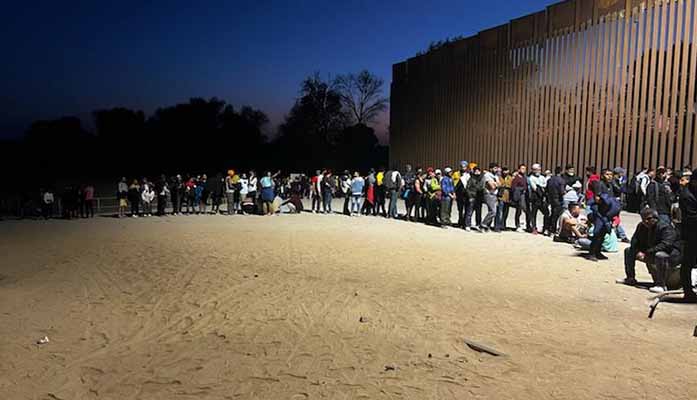
On Wednesday, the entire Republican caucus of the House submitted a legislative proclamation on the floor denouncing the current state of the border under President Joe Biden.
State Representative Gail Griffin (R-Hereford) sponsored the legislation. All 31 Republicans signed onto it.
The GOP proclamation cited the fact that 1.7 million illegal immigrants accounted for a nearly 380 percent increase in border crossings compared to the previous fiscal year. It also noted the spike in drug trafficking: 10,000 pounds of fentanyl, 180,000 pounds of methamphetamine, 86,000 pounds of cocaine, 5,000 pounds of heroin, and 311,000 pounds of marijuana. That’s in conjunction with thousands of violent crimes committed.
The proclamation also touched on a newer trend: cartels recruiting teenagers via social media to be human smugglers for about $1,500 to $2,000 per illegal immigrant, nicknaming the vehicles “load cars” and the teens “load-car drivers.”
The proclamation is reproduced below, in full:
Whereas, the United States-Mexico border consists of 1,954 miles of varied terrain, including deserts, rugged mountainous areas, forests and coastal areas; and
Whereas, officially established in 1924 by an act of Congress in response to increasing illegal immigration, the United States Border Patrol has primary responsibility for securing the border between ports of entry; and Whereas, Border Patrol agents patrol international land borders and waterways to detect and prevent the illegal trafficking of people, narcotics and contraband into the United States; and
Whereas, on March 7, 2022, the Western States Sheriffs’ Association unanimously passed Resolution 22-1, which outlines the alarming issues facing our nation due to the unchecked illegal immigration crises at our southern border; and
Whereas, the southern border of the United States is currently experiencing an unprecedented number of people attempting to enter the country illegally, with the past fiscal year seeing a 379% increase of border encounters as compared to the previous fiscal year. These 1.7 million individuals represent 164 countries, including countries with suspected terrorist ties, and 63% of them are from countries other than Mexico; and
Whereas, there has likewise been a major increase in apprehensions, expulsions and “getaways” on the southwest border, with one million encounters and 300,000 getaways between October 1, 2021, and April 11, 2022; and
Whereas, in the past fiscal year, the number of illegal drugs seized has skyrocketed, including 10,000 pounds of fentanyl, 180,000 pounds of methamphetamine, 86,000 pounds of cocaine, 5,000 pounds of heroin and 311,000 pounds of marijuana. Likewise, criminal activity has soared, with law enforcement documenting 60 homicides, 1,178 assaults, 2,138 drug-related or drug trafficking arrests, 825 burglaries, 1,629 DUIs, 336 weapons arrests and 488 sexual assaults; and
Whereas, in a new effort to boost their operations, criminal cartels are using social media platforms as a recruiting tool for human smuggling. Drivers are lured by social media posts promising payment of $1,500 to $2,000 for every migrant a person can transport by vehicle to Tucson or Phoenix. Known as “load-car drivers,” these individuals are mainly young people, some as young as fourteen years old, who are enticed to pick up undocumented migrants at the border and ferry them to their destinations in exchange for money. Arizona Governor Doug Ducey has called on four social media giants to better monitor their platforms and ban these recruitment posts on their sites; and
Whereas, for individuals who are smuggled into the United States by Mexican and South American cartels, their arrival marks the beginning of years of drug distribution, modern-day slavery and sex trafficking to pay back the criminal cartels to which they are indebted; and
Whereas, an estimated 8% of the 1.7 million encounters last fiscal year were unaccompanied minors; and
Whereas, tragically, the prior year saw 162 migrant deaths in Southern Arizona; and
Whereas, an uncontrolled border is a security and humanitarian crisis, and the increased violence and the smuggling of illegal drugs, weapons and human beings poses a direct threat to our communities and innocent Americans; and
Whereas, the current administration has halted construction of a southern border wall, and there are numerous unfinished sections in Arizona; and
Whereas, this administration is not working collaboratively or in good faith with local law enforcement agencies and other state leaders to address the serious issues related to the border; and
Whereas, in April 2021, Arizona Governor Doug Ducey declared a state of emergency at Arizona’s southern border; and
Whereas, in February 2022, Arizona Attorney General Mark Brnovich issued a legal opinion determining that the current crisis at Arizona’s southern border with the violence and lawlessness of cartels and gangs legally qualifies as an “invasion” under the United States Constitution.
Therefore, Representative Gail Griffin and the following members of the House of Representatives of the State of Arizona denounce the continued breach of our nation’s southern border and support safe communities, immediate, decisive action to secure the border and alleviate the security and humanitarian crises associated with illegal immigration.
Corinne Murdock is a reporter for AZ Free News. Follow her latest on Twitter, or email tips to corinne@azfreenews.com.
by Corinne Murdock | Apr 28, 2022 | News
By Corinne Murdock |
On Wednesday, the Arizona House approved a Senate bill to repeal the governor’s current executive powers in public health emergencies.
Instead, SB1009 would ensure governors only have the authority to issue a state of emergency for public health emergencies for 30 days. After that, the governor would be limited to extending that state of emergency for 30 days at a time with a limit of 120 days or about four months. Once that time is exhausted, the state legislature must consent to any new state of emergency.
The governor wouldn’t be able to extend the state of emergency more than once without additional reporting requirements. After 60 days of an emergency, the governor must submit a written report to a joint committee of the Senate and House health committees. That committee will assess the report along with a Arizona Department of Health Services briefing and publish a public review of the extension.
SB1009 also empowers the state legislature to extend the state of an emergency for public health emergencies as well. Those extensions would be limited to 30 days, too.
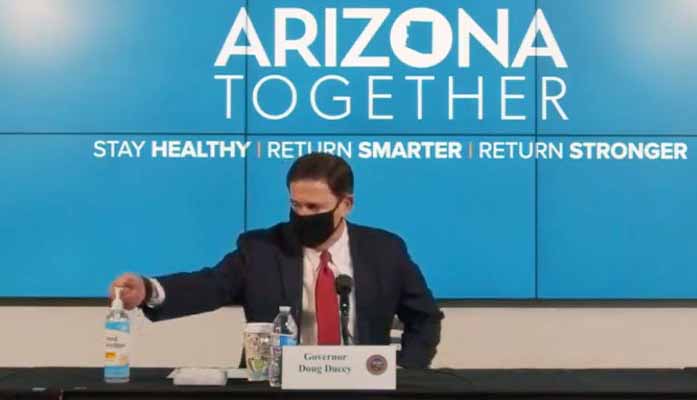
The bill passed along party lines. It now heads to Governor Doug Ducey for final approval.
Ducey only ended the COVID-19 state of emergency at the end of last month: well over two years after the initial state of emergency was issued.
This legislative session covered other changes to Arizona’s state of emergency protocol. Ducey signed HB2507 on Monday, ensuring that religious services would be considered essential during a state of emergency. Over the last two years, other state governments forced the closure of religious buildings and worship gatherings, punishing those who dared to defy their public health orders in order to exercise their religious freedoms.
Corinne Murdock is a reporter for AZ Free News. Follow her latest on Twitter, or email tips to corinne@azfreenews.com.
by Corinne Murdock | Apr 12, 2022 | News
By Corinne Murdock |
Enactment of the proof of citizenship requirement for voter registration will be delayed until 2023, following an amendment approved by the Arizona House on Monday. The amendment was tacked on to SB1638, a bill to provide accessible voting options for the blind or visually impaired. Governor Doug Ducey signed the original bill, HB2492, into law two weeks ago. The State Senate now must approve the amendment. Without the amendment, the legislation would go in effect at the end of June — 90 days after Ducey signed the bill.
Arizona Free Enterprise Club Deputy Director Greg Blackie explained to AZ Free News that the delay was necessary to avoid having the requirement enacted between the primary and general elections, which would allow some individuals to vote in the primary and not the general election several months later.
Blackie added that the two lawsuits seeking a preliminary injunction of the law were another factor for delaying its enactment. Such lawsuits were expected — promised, even, by the DNC’s Russiagate hoax lawyer Marc Elias.
“It was always going to be tied up in court, and the delayed effective date might actually prevent a preliminary injunction allowing the provisions to protect our voter rolls from ineligible applicants and the required investigation by the attorney general’s office of the federal-only voter list to go into effect after this election, instead of being on hold for a trial and decision that could come much later,” said Blackie.
The law requires that individuals provide proof of citizenship when registering to vote. It also requires election officials to cross-reference applications with government databases to confirm citizenship. The law most heavily impacts federal-only voters, since they don’t have to offer proof of citizenship when voting. According to the bill sponsor, State Representative Jake Hoffman (R-Queen Creek), there were over 11,000 Arizona voters in the 2020 election who didn’t offer proof of citizenship when voting. That number was about 1,700 in 2018.
The amendment was approved mostly along party lines. State Representative Amish Shah (D-Phoenix) joined House Republicans to pass the amendment.
The remainder of Democrats voted against the amendment. They held that the amendment was a fix for a “flawed” and “unconstitutional” bill.
Corinne Murdock is a reporter for AZ Free News. Follow her latest on Twitter, or email tips to corinne@azfreenews.com.
by Corinne Murdock | Mar 31, 2022 | News
By Corinne Murdock |
A bill prohibiting the state from discriminating against those with religious beliefs engaging or working within the adoption and foster care systems passed the State House on Thursday. The legislation now heads to Governor Doug Ducey’s desk.
SB1399 offers protections for potential adoptive or foster parents, as well as individuals who advertise, provide, or facilitate adoption or foster care services. The House passed the bill along party lines, just as the Senate did at the beginning of March.
Senate Democrats in opposition to the bill claimed it fixed a nonexistent problem. They warned that the legislation would only serve to create problems, such as the government meddling with religious beliefs.
That stance echoed the arguments presented by progressive organizations such as the Americans United for Separation of Church and State, a nonprofit that pushes for total eradication of any vestiges of religion from government. The nonprofit has intervened in a number of famous cases, such as that of the Christian baker who refused to make a cake for a gay couple’s wedding: Masterpiece Cakeshop v. Colorado Civil Rights Commission. A little over a decade ago, the nonprofit intervened in a case challenging whether taxpayers should be allowed to direct part of their tax payments to religious organizations supporting religious school students: Arizona Christian School Tuition Organization v. Winn.
The Arizona chapter of the American Defense League (ADL) also opposed the bill.
Under the bill, the only potential situation for the government to discriminate against an individual’s religious beliefs when determining placement of a child would be when determining whether the individual shares the same religious beliefs as the child. Otherwise, the legislation prohibits the government from discriminating against individuals offering adoption or foster care services or attempting to adopt or foster a child on the basis of their religion.
The legislation defines “discriminatory action” as altering an individual’s tax treatment, such as assessing penalties and refusing tax exemptions; disallowing or denying tax deductions for charitable donations; withholding, reducing, excluding, terminating, or materially altering the terms or conditions of benefits such as a state grant, contract, subcontract, cooperative agreement, guarantee, loan, or scholarship; withholding, reducing, excluding, terminating, or adversely altering the terms or conditions of or denying any entitlement or benefit under a state benefit program, or a license, certification, accreditation, custody award or agreement, diploma, grade, recognition, or other similar benefit, position, or status; imposing, levying, or assessing a monetary fine, fee, penalty, damages, or an injunction; and refusing to hire or promote, force to resign, fire, demote, sanction, discipline, adversely alter the terms or conditions of employment, retaliate or take other adverse employment action against a person employed or commissioned by the state government.
Corinne Murdock is a reporter for AZ Free News. Follow her latest on Twitter, or email tips to corinne@azfreenews.com.