by Matthew Holloway | May 5, 2026 | Economy, News
By Matthew Holloway |
Arizona Senate Republicans announced on Monday that they passed a $17.9 billion budget for fiscal year 2027 that includes $1.45 billion in tax relief over four years and spends approximately $800 million less than Governor Katie Hobbs’ proposal.
The budget, approved by the Legislature and sent to Hobbs, is based on updated April revenue projections that showed a $200 million decrease in available resources.
According to Senate Republicans, the plan includes a series of tax changes intended to provide cost-of-living relief, including eliminating state taxes on tips and overtime pay, increasing the standard deduction, allowing full deductions for child-care expenses, increasing the dependent tax credit by $25, and creating a $6,000 deduction for seniors age 60 and older with retirement or pension income.
The proposal also includes conformity with federal tax policy changes associated with Donald Trump’s tax cuts, which the Senate said would ensure Arizona taxpayers do not need to refile their 2025 state tax returns.
“This is a serious, disciplined budget that puts Arizona families first,” Senate President Warren Petersen (R-LD14) said in a statement. “We cut taxes, protect essential services, and base every decision on real April revenue projections — not wishful thinking.”
He added, “In divided government, we faced the math, eliminated waste through targeted reforms, and delivered real results without raising taxes or growing government.”
The budget maintains current funding levels for K-12 education and public safety, preserves the voter-protected K-12 State Land Trust, and limits overall spending growth to 1.9 percent.
To address the projected shortfall, Senate Republicans said the plan includes policy changes aimed at reducing spending, including enhanced eligibility verification in public assistance programs such as the Arizona Health Care Cost Containment System (AHCCCS) and the Supplemental Nutrition Assistance Program (SNAP), a 5% reduction in agency operating budgets excluding public safety and child welfare agencies, and the repeal of certain tax credits and subsidies, including solar incentives.
The budget does not reduce base pay for Arizona Department of Public Safety troopers or firefighters and does not modify existing data center incentives previously signed into law.
The plan also includes $4.75 million in emergency funding for the Department of Public Safety, which Senate Republicans said the agency had requested and that the governor had previously vetoed as a standalone bill.
The Arizona Senate Republican Caucus said the budget reflects the constraints of divided government and relies on no new taxes or fees.
“This budget reflects the reality of divided government,” Petersen said. “While Democrats were on the floor today saying we need to raise taxes, we are instead delivering historic tax relief without burdening taxpayers. Your business and your wallet are on the ballot this fall. Vote wisely.”
The proposal now awaits Hobbs’ action.
House Speaker Steve Montenegro (R-LD29), Petersen, and other legislative Republican leaders are scheduled to hold a press conference on Tuesday at 1 p.m., according to a media advisory, to highlight the budget and urge Hobbs to sign the legislation.
Matthew Holloway is a senior reporter for AZ Free News. Follow him on X for his latest stories, or email tips to Matthew@azfreenews.com.
by Matthew Holloway | Apr 21, 2026 | News
By Matthew Holloway |
Arizona lawmakers approved a resolution affirming Israel’s sovereignty over Judea and Samaria with House Concurrent Resolution 2047, sponsored by State Representative David Livingston (R-LD28), in a Senate vote on Monday.
The measure recognizes what lawmakers described as the historical, biblical, and legal legitimacy of Judea and Samaria and formally rejects the term “West Bank,” applied to the region during the Jordanian occupation in 1948. The resolution follows the passage of House Resolution 2002 in February, which applied the same policy and recognition, but was limited in scope to the Arizona House of Representatives.
HR 2002 took effect upon House passage in February, while HCR 2047 completed legislative approval with Monday’s Senate vote. The resolutions received bipartisan support after first clearing the House Appropriations Committee earlier this year.
“Today, as Israel honors those who gave their lives defending the nation, Arizona stands with the truth about that nation’s history,” Livingston said in a statement released after the vote. “Judea and Samaria are central to Jewish history and faith. They are not political labels to be swapped out for convenience. This resolution affirms what is true and rejects language created to deny it. I thank my colleagues for standing with Israel and supporting this effort.”
In a February statement following the House vote, Livingston observed, “The Arizona House chose accuracy over politics. Judea and Samaria are not invented terms, and they are not negotiable facts. They are central to Jewish history, faith, and national identity, and Arizona will not participate in language meant to deny that truth.”
“This vote shows that respect for history still matters,” he added. “Arizona stands with Israel, speaks plainly about the facts, and refuses to bend to political pressure.”
The resolutions also state that Judea and Samaria are important to Israel’s security and to the United States’ interests in preventing terrorist-controlled territory from emerging in the region. Livingston said Arizona lawmakers were standing against efforts to “rewrite the historical and legal record.”
Supporters of the measures argued that the term “West Bank” originated during Jordan’s control of the territory between 1948 and 1967, following the 1948 Arab-Israeli War, and does not accurately reflect the region’s Jewish history.
Israel Bachar, Israel’s Consul General to the Pacific Southwest, praised the Arizona House action and said the state had “set a gold standard” for state-level support of Israel.
In a statement, Bachar said Arizona had previously opposed the Boycott, Divestment, and Sanctions movement through House Bill 2617 in 2016 and adopted the International Holocaust Remembrance Alliance definition of antisemitism through House Bill 2675 in 2022. He also thanked Livingston, House Speaker Steve Montenegro (R-LD29), House International Trade Committee Chairman Tony Rivero (R-LD27), and other lawmakers who helped advance the resolution.
Bachar wrote, “In formally rejecting the term ‘West Bank,’ labeling it a modern political construct, and opting instead to use the indigenous terms ‘Judea and Samaria’ in all official state communications, documents and references, the Arizona House of Representatives attests: the indigeneity of Judea and Samaria and their rightful place in the history of the Holy Land and modern-day Israel are eternal and undebatable.”
Bachar also said Livingston’s visit to Judea and Samaria in late 2025 helped him understand what the consul general described as the initiative’s strategic importance to Arizona-Israel and U.S.-Israel relations.
Matthew Holloway is a senior reporter for AZ Free News. Follow him on X for his latest stories, or email tips to Matthew@azfreenews.com.
by Matthew Holloway | Apr 3, 2026 | News
By Matthew Holloway |
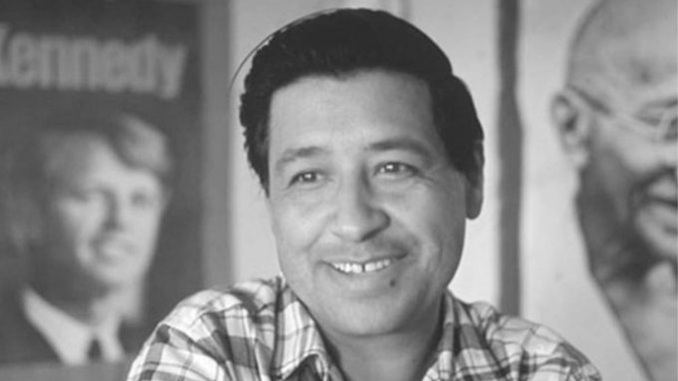
Arizona Governor Katie Hobbs has signed a bipartisan emergency measure to repeal the state law recognizing César Chávez Day, following the legislature’s action on Monday.
House Bill 2072, sponsored by Rep. Lisa Fink (R-LD27), removes statutory recognition of the March 31 holiday honoring the late union leader following New York Times reporting on allegations that he sexually abused women and minors during his tenure.
The bill passed the Arizona House with a 48-8 vote and cleared the Arizona Senate with a 29-1 vote, with State Sen. Sally Ann Gonzales (D-LD20) casting the sole dissenting vote.
“Once these reports came to light, there was no excuse for leaving this honor in Arizona law,” Fink said. “The women and children Chavez harmed should not have to watch the state continue honoring his name. Repealing this law is the proper response. It respects the victims he left behind and removes a state honor that should not remain in place.”
The legislation advanced following recent reporting on allegations involving Chávez during his tenure as president of the United Farm Workers.
“Arizona law should not honor a man tied to sexual abuse against children and violence against women,” House Speaker Steve Montenegro (R-LD29) said in a statement. “The House acted today because victims deserve better, the truth cannot be ignored, and state honors carry meaning.”
Montenegro urged Hobbs to sign the bill, stressing bipartisan support in both chambers of the legislature.
Hobbs said in a statement on Wednesday that she is “deeply troubled by the recent revelations about César Chávez.”
“After learning the troubling news, I decided not to recognize César Chávez Day this year and have signed legislation to repeal the observance of March 31st as César Chávez Day. While I know signing this bill won’t erase the pain, my thoughts are with the victims and everyone affected. I’m working with community leaders to find meaningful ways to honor and celebrate our farmworker community and their continued contributions to the state of Arizona. “
Addressing the Arizona farmworkers Chávez once represented, Hobbs said, “I am incredibly grateful for our hardworking farmworkers. Their resilience is evident in the lettuce fields of Yuma and the orange-picking farms of Mesa. Arizona’s farmworkers are the backbone of our state’s economy. I remain committed to supporting them and ensuring their contributions are recognized with dignity and respect.”
A March 2026 report by The New York Times detailed allegations from multiple women who said Chávez engaged in sexual misconduct, including claims that he “used his power within the organization to exploit women and girls.”
House Republicans stated in a release that “Arizonans should not be forced to celebrate a figure whose legacy is now under serious question,” adding that the measure reflects “a responsibility to ensure state-recognized holidays align with values supported by the public.”
The emergency legislation, an amended version of HB 2072, repeals sections of the Arizona Revised Statutes that establish the holiday and includes an emergency clause that makes the repeal effective immediately upon the governor’s signature. The bill text specifies that it “repeals section 1-301, Arizona Revised Statutes,” which designates César Chávez Day as a state holiday.
In a March 30 letter to Governor Hobbs, Gonzales urged a veto of the measure, arguing the emergency clause is unconstitutional.
“House Bill 2072 is not an emergency, and it lacks the constitutionally required section that explains why it is necessary to preserve the public peace, health, or safety,” Gonzales wrote. She added that the bill “denies the people of Arizona their constitutionally protected right to direct democracy via referendum.”
Gonzales also called on state leaders to pursue recognition of farmworkers’ contributions through an alternative designation, writing that lawmakers should consider “renaming Dr. Cesar Estrada Chavez Day” rather than eliminating it entirely.
Despite those objections, the bill received the supermajority required for an emergency clause.
Matthew Holloway is a senior reporter for AZ Free News. Follow him on X for his latest stories, or email tips to Matthew@azfreenews.com.
by Matthew Holloway | Feb 28, 2026 | Economy, News
By Matthew Holloway |
The National Federation of Independent Business (NFIB) Arizona issued a policy statement this week urging state lawmakers to prioritize tax certainty for small businesses in the upcoming legislative session.
In a press release, NFIB Arizona urged Arizona policymakers to “take action and align Arizona’s income tax code with the small business provisions that are permanent in federal law,” and consider tax policy changes this year. The group argued that stable and predictable tax policy is essential for small businesses to plan, invest, and grow.
NFIB Arizona also highlighted concerns about potential tax increases and shifting tax policy, emphasizing that uncertainty in state taxes could discourage investment and expansion by small businesses across Arizona. The organization represents thousands of small business owners in the state.
In its release, NFIB Arizona pointed to the Arizona House and Senate GOP plan to protect taxpayers during the filing season, stating that lawmakers should avoid policies that could lead to higher costs or an unstable tax environment for small business operators.
“It’s good to hear that the legislative majority has the back of small business and will not allow for a surprise tax increase for the 2025 tax year,” NFIB State Director Chad Heinrich said in a statement. “That’s great for 2025, which is in the books.”
He added, “Small businesses are actively operating in 2026 without having the certainty needed to make investments now. We will continue to urge lawmakers to take action and align Arizona’s income tax code with the small business provisions that are permanent in federal law so that Main Street can operate and grow their businesses with certainty.”
NFIB Arizona’s statement follows an ongoing debacle at the Arizona State Capitol over the state’s conformity with 2025 federal tax changes between the Republican-led legislature and Democrat Governor Katie Hobbs. Hobbs vetoed a Republican bill, HB 2785, which would have brought Arizona’s income tax law into full conformity with the federal Internal Revenue Code on Feb. 12. The group said tax certainty would help small businesses make long-term hiring and investment decisions.
At the time, the NFIB wrote in a statement, “Twice, the Legislature has taken responsible action to protect hardworking Arizonans from tax uncertainty. Twice, Governor Hobbs has chosen political gamesmanship instead—turning something as mundane as tax conformity into a partisan game.”
Matthew Holloway is a senior reporter for AZ Free News. Follow him on X for his latest stories, or email tips to Matthew@azfreenews.com.
by Staff Reporter | Feb 21, 2026 | News
By Staff Reporter |
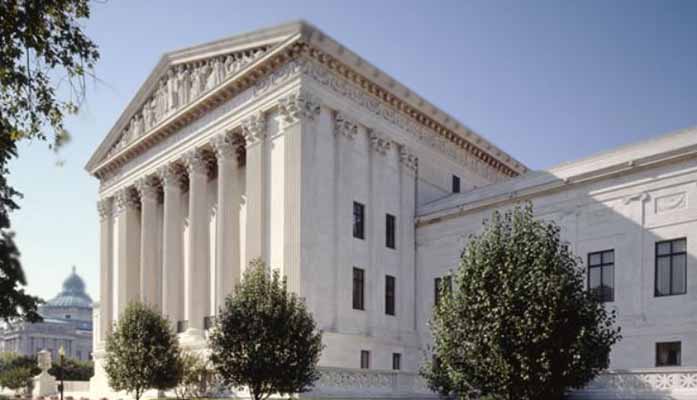
Arizona state lawmakers requested the U.S. Supreme Court to take up an appeal on the state’s proof of citizenship for voter registration.
Last February, the Ninth Circuit Court of Appeals struck down two laws which established proof of citizenship requirements. That court declared Arizona’s laws attempting to add more requirements on voter registrations were preempted by the simpler registration requirements of federal voting rights laws under the National Voter Registration Act (NVRA) and were therefore invalid.
Those laws, passed in 2022 under then-Gov. Doug Ducey, restricted mail-in voting for registrants lacking citizenship verification in addition to requiring recorders to check federal citizenship databases and applicants to provide documentary proof of citizenship and residence. These pieces of legislation emerged following the Supreme Court’s 2013 decision against an Arizona law requiring proof of citizenship when registering to vote in federal elections.
Several years later, in 2018, the state entered into a consent decree requiring county recorders to search Arizona Department of Transportation (ADOT) records for state registration forms lacking proof of citizenship. Those applications without verifiable citizenship proof through ADOT would only be allowed to cast ballots in the federal election, otherwise known as “federal-only voters.”
A number of progressive activist organizations joined in a lawsuit to challenge these laws: Mi Familia Vota, Voto Latino, Living United for Change in Arizona, League of United Latin American Citizens, Arizona Students Association, ADRC Action, Arizona Coalition for Change, Poder Latinx, Chicanos Por La Causa and their affiliated action fund, Democratic National Committee, Arizona Democratic Party, Arizona Asian American Native Hawaiian and Pacific Islander for Equity Coalition, Promise Arizona, and the Southwest Voter Registration Education Project.
The Inter-Tribal Council of Arizona, San Carlos Apache Tribe, Tohono O’odham Nation, and Gila River Indian Community also were among the challengers to proof of citizenship laws, citing concerns with challenges tribal members face to obtain proof of residency. Several tribal members were named independently in the lawsuit: Keanu Stevens, Alanna Siqueiros, and LaDonna Jacket.
The leaders of the Republican-led Arizona legislature filed their petition with the Supreme Court this week.
Sen. President Warren Petersen (R-LD4) issued a press release announcing the Supreme Court petition in which he accused the Ninth Circuit judges of having “rewrote” federal law and ignored Supreme Court precedent.
“For more than two decades, Arizona has required proof of citizenship to register to vote, because only American citizens should decide American elections,” said Petersen. “This case is about whether states still have the power to enforce commonsense safeguards to ensure only eligible voters participate in our elections. Arizona is standing up not just for our state, but for every state’s constitutional authority to secure its own elections.”
The filing argues that the Ninth Circuit ruling against Arizona law stretches federal voting law far beyond its allowable interpretation.
“This case, which comes to the Court on a non-expedited basis and underpinned by a comprehensive evidentiary record, offers an ideal vehicle for clarifying the NVRA’s preemptive scope, affirming that federal consent decrees cannot perpetually paralyze state legislative bodies, and vindicating the presumption of legislative good faith,” read the filing.
AZ Free News is your #1 source for Arizona news and politics. You can send us news tips using this link.
Page 1 of 2112345678910...20...»Last »