by Matthew Holloway | Feb 11, 2026 | News
By Matthew Holloway |
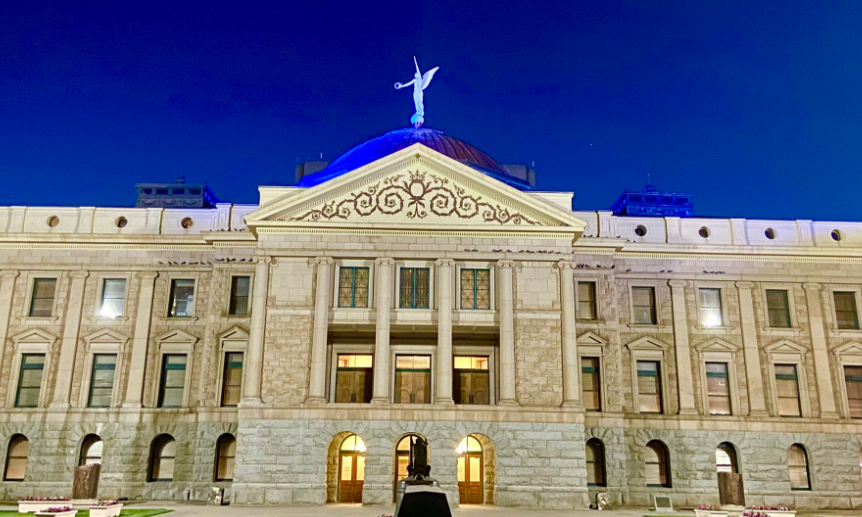
Arizona lawmakers advanced a constitutional proposal last week that would set a firm deadline for ending the Legislature’s regular session, a major procedural change supporters say would provide a clearer structure for what is currently an open-ended calendar.
Under the state’s current system, the Arizona Constitution requires lawmakers to convene the regular session on the second Monday in January each year, but does not set a deadline for when that session must end. Regular sessions in recent years have stretched into late spring or early summer, with the 2025 session adjourned on June 27 after roughly 169 days in session.
The absence of a constitutional adjournment deadline means lawmakers can continue legislative work beyond traditional spring months, even though state law governs per diem reimbursements for extended sessions.
By contrast, other states employ more rigid schedules. Texas lawmakers meet in regular session once every two years for a constitutionally limited period, and adjourn by a set date unless a special session is called. In 2025, for example, the Texas Legislature concluded its most recent regular session in early June as the statutory timeline expired.
The House Government Committee on Wednesday passed House Concurrent Resolution 2005 (HCR 2005), sponsored by State Representative Justin Wilmeth (R-LD2) of North Phoenix. The resolution would amend the Arizona Constitution to mandate that the Legislature adjourn its regular session sine die no later than April 30 each year.
Under the proposal, lawmakers could still convene special sessions after April 30, but those would be subject to the subjects specified in the Governor’s call. If HCR 2005 clears both chambers of the Legislature, it would be placed on the ballot at the next general election for voter approval.
Wilmeth said the measure is aimed at restoring discipline and accountability to the legislative calendar. “I appreciate the committee moving this measure forward, allowing the discussion to continue,” he said in a statement.
“This proposal is about accountability and discipline. Arizonans expect the Legislature to do its job, pass a budget, and finish its work on time. President Ronald Reagan kept a sign on his desk in the Oval Office that said, ‘It CAN be done.’ I agree with that. Finishing our work by April 30 is achievable, and it should be the standard.”
Wilmeth, a Republican member of the Arizona House of Representatives and Chairman of the House Committee on Artificial Intelligence & Innovation, introduced the constitutional adjournment proposal earlier this year.
Supporters of the resolution have pointed to frequently extended sessions, which in recent years have stretched deep into spring and summer, as justification for a defined end date. In several recent cycles, lawmakers did not adjourn until June, well past traditional deadlines for bill passage and budget agreement.
In a post to X on January 23, Wilmeth wrote, “Decades ago, we told the people we’d have a part-time legislature conducted by citizen-legislators. Nowadays, the legislative session basically goes seven months! That’s unacceptable to me. It’s just responsible government to stick to our part-time commitment.”
If voters approve a constitutional amendment, Arizona would become one of the states with a fixed legislative deadline, rather than relying on internal legislative rules and per diem incentives to guide the calendar. That model differs from states like Texas, where sessions are inherently limited by statute or constitution and extend only through specified time windows.
HCR 2005 now moves to further consideration in the Arizona House as it continues through the legislative process.
Matthew Holloway is a senior reporter for AZ Free News. Follow him on X for his latest stories, or email tips to Matthew@azfreenews.com.
by Ethan Faverino | Jan 30, 2026 | News
By Ethan Faverino |
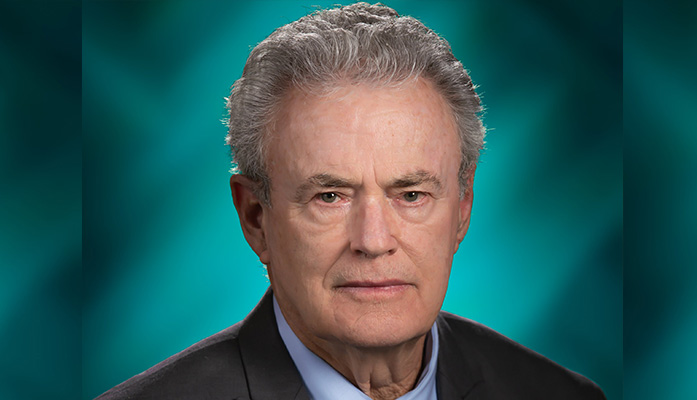
Former Arizona State Representative Noel Campbell, a dedicated public servant and veteran, passed away on January 24, 2026, at the age of 84, from injuries sustained in a motorcycle accident on I-10 in Phoenix on January 20.
Arizona House Speaker Steve Montenegro announced the news, highlighting Campbell’s lifelong commitment to service. “Noel Campbell lived a life defined by service,” explained Montenegro. “He served his country in uniform, protected our communities in the air and on the ground, and brought that same sense of duty to the Arizona House. Our state is better because he chose to serve. Our prayers are with Noel’s wife, Mary Beth, his family, and all who were fortunate to know him. He will be remembered with respect and gratitude.”
Campbell, a Republican from Prescott, represented Legislative District 1 in the Arizona House of Representatives for three terms, from 2015 to 2021.
He chaired the House Transportation Committee during the 53rd and 54th Legislatures, earning respect for his practical approach, leadership, and thoughtful policy work.
Before entering politics, Campbell’s career was marked by extensive service in high-stakes roles. He served as a United States Navy combat aviator during the Vietnam War, later retiring as a Commander in the Naval Reserves.
He went on to work as a pilot with the United States Customs Service, combating illegal drug trafficking, and later as a wildfire pilot for the United States Forest Service.
Arizona lawmakers from both chambers mourned his loss and celebrated his legacy. “Noel served Arizona with distinction, representing his district with a steady hand and a deep commitment to the people he was elected to serve,” expressed Senator Mark Finchem. “Never afraid to have a scrappy debate, his work at the Legislature reflected a strong belief in public service, civic duty, and the responsibility of government to its citizens. Noel was someone who took the job seriously and never forgot who he worked for. He represented his district, Legislative District 1, with integrity and left a lasting mark on Arizona’s legislative history.”
“His passing is a loss for our state,” Senator Finchem added. “Noel was known for his thoughtful approach to policy and his dedication to Arizona communities, particularly in Legislative District 1. His service spanned decades of civic involvement, and his impact continues to be felt by colleagues and constituents alike.”
Representatives Quang Nguyen and Selina Bliss also honored Campbell’s legacy in Arizona, stating:
“Noel was a mentor and a friend,” Rep. Nguyen said. “When I was first elected, he reminded me that my vote mattered just as much as anyone else’s and that no one should ever be bullied out of doing what they believe is right. He also taught me that your word is everything. Once you lose that, you have nothing left. I am grateful for his guidance and his example. Thank you for your service, Representative Campbell. Rest in peace.”
“Noel Campbell was a champion for Legislative District 1 and for the state of Arizona,” said Rep Bliss. “He served with honor and cared deeply about the people he represented. God bless him, and rest in peace.”
Campbell’s decades of service—from military aviation and federal law enforcement to wildfire response and state legislation—reflected a consistent willingness to step forward in challenging environments, guided by leadership, discipline, and a focus on protecting communities in his district and across the state of Arizona.
Ethan Faverino is a reporter for AZ Free News. You can send him news tips using this link.
by Alexander Kolodin | Jan 26, 2026 | Opinion
By Alexander Kolodin |
In 1952, Republican Governor J. Howard Pyle appointed a 24-member Underground Water Commission to recommend a new groundwater framework for Arizona. Every member was a farmer or rancher— people who lived and worked on the land and relied on groundwater to survive.
After nine months of work and thirteen public comment sessions, the Commission issued a 172-page report recommending that the Legislature adopt “correlative rights” as the new groundwater law for the state, calling it the fairest and most equitable way to apportion subterranean rights among adjoining landowners on the surface.
Farmers agreed. One testified: “The principle of correlative rights gets closer to solving the problem than any water code.” Another said that courts should eventually recognize that landowners should own the groundwater beneath their land, so long as it does not harm others—like the ad coelum doctrine and “no harm” principle described in Part 1.
Yet, the Legislature failed to act. With Democrats holding 15 of 19 Senate seats and 50 of 80 House seats, lawmakers left the issue to the courts, which rejected correlative rights in favor of “beneficial use,” leaving landowners with no legal means to protect or conserve their supplies.
It didn’t have to be this way.
We can restore private property rights to groundwater
In 1953, the Arizona Supreme Court rejected correlative rights not because the Court thought it was unfair, but rather because the Court believed it was technologically infeasible, saying: “Apportionment of subterranean percolating water between adjacent landowners is often, if not always, impossible.”
Today, that excuse no longer applies. Advances in groundwater modelling have made quantifying and allocating rights to subsurface water completely possible—especially in Arizona’s alluvial fill basins like Willcox, McMullen Valley, and the Big Chino, where the tragedy of the commons is already unfolding.
In 2011, for example, the Arizona Water Resources Development Commission issued a statewide assessment, finding that the Willcox, McMullen, and Big Chino basins contained approximately 42 million, 14 million, and 10 million acre-feet (AF) of groundwater, respectively, to a depth of 1,200 feet, providing critical data that demonstrates that implementing correlative rights is entirely feasible.
Since it’s been over seventy years since we’ve meaningfully considered correlative rights, many residents today have likely never heard of this term and would naturally have questions about how it would work, how it would benefit them, and how it would help advance our shared goals of conservation.
Here’s how it would work—using Willcox as an example
Once a basin is closed to new pumping, the groundwater is quantified and allocated to landowners based on the number of acres they own. With 42 million AF underground and about 1.2 million acres on the surface, each landowner in Willcox would receive about 35 AF per acre as a one-time “lump sum.”
For a 4-acre parcel (the minimum lot size in Cochise County), a landowner would receive 140 AF. A 160-acre quarter section would receive 5,600 AF, and a full 640-acre section would get 22,400 AF. This is similar to the proportional share-based approach utilized in oil and gas regulation.
It is also similar to the approach utilized in Arizona’s transportation basins, like Harquahala, McMullen Valley, Butler Valley, and the Big Chino. In Harquahala, the formula is 6 AF/acre annually. More acres mean more rights.
For municipal providers, lump sums would be allocated based on the acres they serve. A larger service area means a larger groundwater allocation. When residents interconnect, their allocations would transfer to the provider—allowing the provider to manage their supplies on their behalf.
State trust lands would also receive allocations, which lessees would be entitled to use through their leases. The more acres leased, the more groundwater available. In transportation basins that have large amounts of state trust land, cities would know exactly how many acres they’d need to lease to secure an assured water supply.
Additionally, landowners would be credited a proportional share of the annual natural recharge. A person owning one percent of the acres would receive one percent of the natural recharge.
Over time, these credits would add up. After five years, a person earning 0.2 AF/year would acquire a full acre-foot, while a resident with 28 acres would earn enough water annually to meet all of their household needs from recharge alone, allowing them to live off their recharge without touching their lump sum.
For lump sums, a minimum 4-acre lot would provide enough water to last 424 years. Adding recharge makes supplies last even longer. Additionally, increased recharge from proactive investments would be credited to the investor, incentivizing the development of new recharge projects.
Because the basin is closed to new pumping, existing landowners would be protected against subsequent users, like prior appropriation but without the complications. Additionally, because rights are transferable within the same basin, economic growth is still possible. Newcomers can enter, but only if they purchase land or water rights from existing users first.
To enforce all this, annual reporting requirements would be implemented, ensuring that no one pumps more than his or her fair share. Meanwhile, minimum well spacing requirements would be implemented to help ensure an even distribution across the basin, reducing impacts to existing well-owners.
Well monitoring has been a controversial issue in the past, largely because it has been seen as the camel’s nose under the tent for greater bureaucratic control. Here, however, users get certificated private property rights that can never be revoked and thus more, not less, freedom in exchange for their trouble.
For residential well owners, shared infrastructure is already possible through the adoption of water districts. A shared well drilled to 1,200 feet can provide greater long-term security than 100 wells drilled to 120 feet—allowing each landowner to access their full supply but at a substantially reduced cost.
Lastly, there would be no “safe yield” requirement. While states like California have applied correlative rights to only annual recharge, this model would not work in Arizona. In fact, the 1952 Underground Water Commission specifically rejected the California model, noting it would not provide enough water in our arid climate.
Instead, a hybrid approach is required, one that allocates rights to both the subterranean resource and the annual recharge, thereby maximizing the amount of water granted to each landowner and ensuring that every drop is accurately accounted for. That is the approach described here.
Your water, your choice
The most intriguing aspect of correlative rights is that, once the groundwater has been allocated, it’s yours to keep—permanently. If you don’t use it, there’s no risk of loss; it will still be there 10, 20, or 100 years into the future.
This stands in stark contrast to the current free-for-all described in Part 2, where leaving groundwater in the basin simply leaves more for someone else to take. Because there’s no forfeiture, landowners are free to use, conserve, lease, or transfer their water within the same basin as they see fit. The choice is theirs.
For farmers, this creates new incentives. A 160-acre farm with a center pivot may have enough water to last several years, while others may need to scale back, shift to less water-intensive crops, or acquire additional rights from others. Commercial farming is still possible, but only if land and groundwater use align, encouraging open space and land conservation.
Thus, the motivation to conserve is simple: when the property is yours, you—and you alone—are responsible for maintaining it. Once an allocation is gone, it’s gone for good, forcing users to make tough decisions and encouraging wise use. That’s the power of private property: when you own it, you protect it.
Turning water into wealth
For many rural residents, correlative rights would instantly turn an uncertain water future into a secure financial asset, creating real value that can provide both long-term water security and financial independence.
With a single AF selling at roughly $400 today, a 40-acre parcel would suddenly hold $560,000 in water value—plus an additional recharge credit worth about $200 a year, acting like an annual dividend. For someone living on a fixed income, that’s transformative.
A 160-acre quarter section would receive $2,240,000 in water value, plus $800 in annual credits, while a 640-acre full section would sit on nearly $9 million and receive $3,000 in annual recharge credits.
With outright ownership, landowners could monetize their allocations or borrow against them without pumping a single drop. Here, water is not a commodity—it’s a currency: the currency of your future, allowing rural residents to build real equity and generational wealth.
The question is: what would you do with your share?
Correlative rights can save our aquifers, farmers, and ranchers—it’s time to adopt them
For over seventy years, Arizona tried top-down bureaucratic approaches to addressing the tragedy of the commons in groundwater—but to no avail. As discussed in Part 3, what Arizona needs now is the only solution that we haven’t tried but should have adopted when rural farmers and ranchers recommended it in 1952: correlative rights.
By closing our alluvial-fill basins to outsiders who seek to pump them dry for short-term profit at the expense of others, and restoring private property rights to the groundwater beneath our feet through correlative rights, we can unlock millions of dollars’ worth of groundwater that will last thousands of years and finally give landowners the legal right and incentive to protect and conserve their supplies for themselves and future generations.
The Legislature can act. As the Arizona Supreme Court itself said in 1953: “If any change in the law is necessary, it should be made by the Legislature,” including the power to “invest” groundwater with the “character” and “attributes” of “private ownership.”
The moment to act has arrived. Imminent cutbacks to our Colorado River supply mean that our state can no longer afford the inefficiency of centralized bureaucratic control over our most precious resource. It’s time to end top-down bureaucratic control, give private property rights to groundwater back to the people, and fix a generations-old mistake.
Alexander Kolodin serves Legislative District 3 in the Arizona State House and has been practicing election law in Arizona for over a decade. He is currently running to be Arizona’s next Secretary of State.
by Warren Petersen | Jan 13, 2026 | Opinion
By Sen. Warren Petersen |
For years, Arizona was governed by Republican majorities in the state legislature—with Republicans also holding the Governor’s and Attorney General’s offices. During that time, we transformed Arizona into one of the most enviable and prosperous states in the nation: a booming economy, a hot jobs market, a flat income tax, strong support for law and order, and universal school choice.
That all changed in 2023 when Katie Hobbs and Kris Mayes—both Democrats—took over the Governor’s and Attorney General’s offices. Since then, they’ve worked to impose a radical agenda and remake Arizona in the image of California. If not for the slim Republican majorities in both chambers of the Arizona Legislature, Hobbs and Mayes would have quickly succeeded.
As the leader of the Senate Republicans, it has been my honor to work with my colleagues to defend Arizona values and push forward conservative priorities. Despite divided government, we’ve used every tool in our toolbox to not only stop the radical left’s agendas, but to also lead. In doing so, we have set the standard for other states dealing with divided government. Here are just a few of the top victories we’ve secured on behalf of Arizonans.
Fully Funded and Protected Universal School Choice
Over the past two decades, Arizona has led the nation in enacting school choice, giving all families the freedom to choose the education that best fits their children. We dramatically increased K-12 funding (now approximately $13,000 per student) during this time, investing heavily in and safeguarding all forms of education across the state—district, charter, home school, online, and empowerment scholarship accounts. The left only wants to give you one choice to educate your child. Both Hobbs and Mayes have prioritized the dismantling of the apparatuses that let parents decide where their children go to school.
I believe educational freedom is a foundation of the American Dream. Families shouldn’t be trapped in failing schools based on their zip code; rather, they should have the right to choose the educational institutions that work best for their sons and daughters. Unfortunately, Hobbs and Mayes have repeatedly rejected this belief to the detriment of our state’s future.
Under my leadership at the legislature, we stopped them. School choice remains fully funded and protected—even in this divided government. Fighting for parental empowerment and school choice has been one of the most consequential and rewarding endeavors of my time as Senate President. I believe that we are rescuing an entire generation of Arizonans from the grip of a broken education system.
Tax Cuts for Arizonans
One of our top priorities has been to return money to Arizona taxpayers. Despite repeated attempts by Hobbs to block us, we’ve delivered real tax relief. We eliminated the rental tax in Arizona, saving families and renters hundreds of millions of dollars each year. Charging a rental tax is bad policy, and now these revenues will stay in the pockets of the people who need them the most.
Republican lawmakers forced the governor to sign additional bills that cut taxes for hard-working Arizonans. We raised the state’s business personal property tax exemption, reducing burdens on small business owners. We banned municipal excise taxes on residential leases, relieving tenants of additional tax liability and helping lower housing costs. And we passed the Arizona Families Tax Rebate to return funds directly to eligible families.
At a time when families are feeling squeezed, we’re doing what government should—getting out of the way and letting our hardworking taxpayers keep more of what they earn. These tax cuts are the result of smart, conservative leadership that puts everyday Arizonans first. This is the same pro-growth, American First approach that President Trump is delivering for our nation, and we’re proud to carry that torch here in the Grand Canyon State.
Fully Vetted Agency Directors
One of the most consequential powers of any governor is the ability to nominate and install agency directors, who do the bidding of their chief executive. These individuals wield enormous influence over how state government functions, and under Hobbs, many of her nominees have been extreme, unqualified, or relatively unknown to the public. That’s why one of my first actions as Senate President was to create accountability through a formal vetting process for the governor’s nominees. The purpose was to ensure the individuals chosen to lead integral government agencies were competent and aligned with Arizona values. Despite resistance from the governor, we succeeded. We held her nominees to high standards and protected Arizona from the consequences of unchecked political appointments.
End of DOJ Investigation into Phoenix Police Department
Over the past several years, the Phoenix Police Department was the target of a blatantly politicized witch hunt by President Biden’s Department of Justice. They twisted facts and law in a backhanded attempt to hijack another police department and bring it under the control of the federal government. After I contacted the Trump administration and met with several of the President’s top officials, the White House and DOJ ended this rampage against the men and women in blue from the Phoenix Police Department. The announcement from the Trump administration was complete vindication, and it removed the handcuffs off our law enforcement so that they may do their jobs to keep the City of Phoenix and our citizens safe from criminals seeking to cause harm.
Divided government is messy. The path forward isn’t always easy or clear. But through consensus building, unity, discipline, determination, and bold conservative leadership, we’ve proven in Arizona that progress is possible—even in the toughest of times. The rewards of this hard work are immense for those entrusted with leaving our state and nation in a better place for future generations of Americans. I hope that our efforts in Arizona have not only preserved our rich heritage of conservative values, but inspired other warriors around the country to follow in our footsteps.
Warren Petersen is the President of the Arizona State Senate and represents Legislative District 14.
by Matthew Holloway | Jan 12, 2026 | News
By Matthew Holloway |
The Arizona Legislature will return to the State Capitol today, marking the start of the Fifty-Seventh Legislature, Second Regular Session and the beginning of legislative work for 2026.
According to information published by the Arizona Legislature, the opening day will include ceremonies in both chambers of the Capitol, followed by a joint session of the House and Senate later in the afternoon.
Per a legislative announcement released ahead of the session, events will begin at 11:00 a.m. with welcome music in the Capitol courtyard performed by the Eastern Arizona College Marching Band.
The Arizona Senate is scheduled to convene at noon in the Senate Chamber to formally open the Second Regular Session. The program outlined in the legislative release includes gathering music by Trio Fratelli, a call to order by Senate President Warren Petersen (R-LD14), an invocation delivered by Pastor Luke Simmons of Ironwood Church, and the presentation of the colors by the Luke Air Force Base Honor Guard.
The Pledge of Allegiance is scheduled to be led by Senator Priya Sundareshan (D-LD17), followed by the national anthem performed by Trio Fratelli. Petersen is expected to deliver opening remarks before the Senate recesses.
Following the recess, Brian Mueller, president of Grand Canyon University, is scheduled to address lawmakers and guests, according to the same announcement.
At 2:00 p.m., members of the House and Senate are scheduled to convene in the House Chamber for a joint session, during which Democratic Governor Katie Hobbs is expected to deliver the annual State of the State address, outlining her priorities for the year ahead.
Following the joint session, the Senate is scheduled to reconvene to complete remaining Senate business.
In a statement included with the opening-day announcement, Petersen said lawmakers are entering the 2026 session focused on affordability and public safety.
“This session, our top priority is to provide real relief for the people of Arizona,” Petersen said. “Opening day is both a celebration and a call to action. It offers a special opportunity for the legislature to welcome their families and loved ones to the Capitol as we mark the beginning of a new session. As we start our work, our focus is clear: lowering costs, making Arizona affordable, protecting our freedoms, and enhancing community safety. I look forward to commencing this session and delivering results for Arizonans across the state.”
The opening-day ceremonies and the joint session will be livestreamed on the Arizona Legislature’s official website at: https://www.azleg.gov/liveproceedings.
Matthew Holloway is a senior reporter for AZ Free News. Follow him on X for his latest stories, or email tips to Matthew@azfreenews.com.