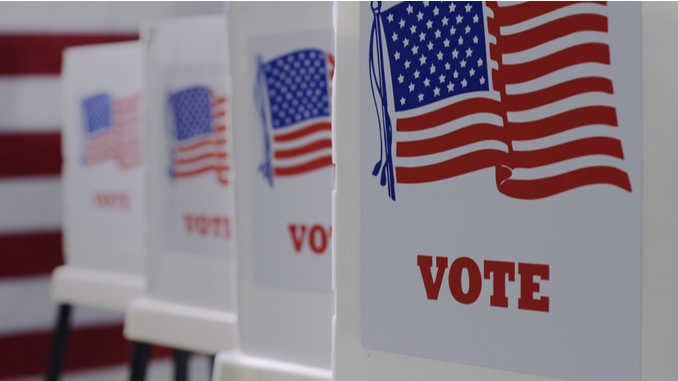
Arizona’s top Democrats from Congress on down are coordinating to pass a ballot measure that would enshrine relaxed voter ID laws in the Arizona Constitution.
A coalition of top Democrats joined on a livestream earlier this week for a launch of the Protect the Vote Arizona Act political action committee: Reps. Greg Stanton (D-AZ-04), Yassamin Ansari (D-AZ-03), and Adelita Grijalva (D-AZ-07); Secretary of State Adrian Fontes; Attorney General Kris Mayes; and the minority leaders for the Arizona House and Senate, Rep. Oscar De Los Santos (D-LD-11) and Sen. Priya Sundareshan (D-LD-18).
The Democrats styled the ballot measure in their public comments as focused primarily on keeping mail-in voting as an option in Arizona. However, most of the ballot measure focuses on undoing the strictness of voter ID laws and ensuring that stricter voting requirements may not come to pass.
The Protect the Vote Arizona Act would require the acceptance of any IDs with the photograph, name, and address of an individual — not just limited to any government-issued form of identification.
The act also prohibits limiting allowable forms of identification to photo IDs, and requires acceptance of IDs so long as election workers can’t determine “on its face” that the identification provided had expired.
The act would also require the acceptance of “any two forms of identification that bear the name and address of the elector.” The non-exhaustive examples of valid voter ID included utility bills or bank or credit union statements dated within ninety days of the election, or any mailing labeled “official election material.”
Even if an individual doesn’t provide valid identification, the law would require that individual be allowed to cast a provisional ballot regardless. According to the ballot measure, that provisional ballot wouldn’t count unless the elector provides any of the myriad forms of ID to their county elections officer within a certain time frame.
Beyond identification laws, the act would prohibit any policies or laws that would “burden” voting, not just those that restrict or curtail voting. One of those measures would concern mail-in ballots. The act proposes to enshrine mail-in ballots within the Arizona Constitution.
Help us protect early voting and mail-in voting in Arizona! Join me for a ‘Protect the Vote’ livestream this evening to learn more about this key Arizona ballot initiative. We must count and protect every single vote 🗳️📩 pic.twitter.com/uqkqmfYOue
Ansari said in the livestream that Democrats need to gather 500,000 signatures by July 2 to get their constitutional measure on the ballot this November. The Protect the Vote Arizona website said a lower number will be needed: about 384,000 signatures.
Ansari estimated that they’ve already collected about 50,000 signatures in recent weeks.
During conversations on the ballot measure, Grijalva agreed with a claim that the SAVE Act and similar efforts to require voter ID were rooted in racist efforts to prevent non-whites from voting.
“We have to give people hope that there is a way out of this,” said Grijalva. “We know that our message is resonating with people.”
Other top Democrats on the livestream included Democratic Reps. Alexandria Ocasio-Cortez (NY), Greg Casar (TX), Jasmine Crockett (TX), Maxwell Frost (FL), and Robert Garcia (CA).
The political action committee behind the ballot measure, Protect the Vote Arizona, claimed to have had no funding or expenditures since its launch in January through the end of March.
Key members behind the ballot measure are Maritza Miranda Saenz, a lobbyist with Lumen Strategies, and Dacey Montoya, Gov. Katie Hobbs’ treasurer and a leading dark money handler for Arizona Democrats (see: “The Money Wheel”).
AZ Free News is your #1 source for Arizona news and politics. You can send us news tips using this link.
The City of Phoenix has drawn the attention of the Goldwater Institute, earning a stern response from the conservative think tank to “Stop violating taxpayers’ rights.” The rebuke comes over a proposed tax increase on businesses that provide services that are precluded by the Arizona Constitution. A final city council vote on this proposal is set for March 18, 2025.
If the hike on Transaction Privilege (“TPT”) and Use Tax rates is approved, the rates go into effect July 1, 2025.
According to Goldwater, “The city of Phoenix has proposed a tax increase on businesses that provide services, claiming it needs the money because of a revenue shortfall. But the burden of the new tax increase will ultimately fall hardest on Phoenix businesses and consumers, raising the prices of services like construction contracting and lodging.” As Goldwater observes, the Arizona Constitution (Art. IX § 25) outright forbids “any county, city, town, municipal corporation, or other political subdivision of the state, or any district created by law” from creating any new or increasing any existing transaction-based taxes on the “privilege to engage in, or the gross receipts of sales or gross income derived from, any service performed in this state.”
Notably though, the prohibition on Section 25 “does not repeal or nullify any tax, fee, stamp requirement, or other assessment in effect on December 31, 2017,” and therefore allowed the pre-2017 taxes already in place. However, as Goldwater Attorney Stacy Skankey explains, the new rates would constitute a new tax under the law.
Skankey wrote succinctly, “New or increased taxation on services violates the Arizona Constitution.”
“The Arizona Constitution has a broad understanding of the term ‘service,’ and it includes a range of covered enterprises on anything that does not produce ‘goods.'”
“Service generally includes activities involving human effort like labor, skill, or advice. The term also covers businesses in the hospitality industry such as hotels, restaurants, and bars. Many of the business classifications subject to the proposed TPT tax increase are services as that term is used in the Constitution.
“The proposal by the Phoenix City Council is a tax increase on services, and therefore, is unconstitutional. Consequently, we urge the City to disapprove of the proposed TPT tax increase and any future proposed tax that may violate the Arizona Constitution.”
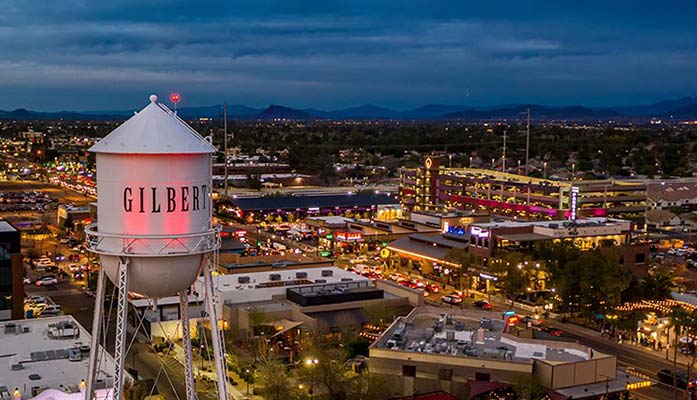
As reported by AZ Free News in January, the Goldwater Institute has already launched a lawsuit against the Town of Gilbert after municipal leaders unleashed a similar service tax on Town businesses including homebuilding and short-term rental properties.
As President Trump gets to work cleaning up Joe Biden’s failed economy, the last thing the people of Arizona need is to be sending their hard-earned dollars to woke Hollywood. But that’s exactly what’s happening.
Thanks to a law passed in 2022, movie companies that film in Arizona will begin receiving refundable tax credit subsidies this year—up to 15 percent if they spend up to $10 million in production costs, 17.5 percent if they spend between $10 million and $35 million, and 20 percent if they spend over $35 million. Then, to top it all off, these movie companies can get an additional 2.5 percent if they meet other criteria.
But here’s the real kicker. The keyword in all of this is “refundable.” This essentially means that if a movie company qualifies for more credits than they owe in taxes, the State of Arizona sends them a check!
So, how much does this outrageous tax scheme cost the people of Arizona?
Up to $125 million each year!
For that kind of money, there must be at least some kind of return on this investment, right? Nope.
If a company comes to Arizona, films a movie, mentions our state in the credits but decides not to release or distribute the film, it still receives the money.
Yes. You read that right. Arizona taxpayers could be funding Hollywood movies that won’t ever see the light of day…
The Town of Gilbert is the target of a lawsuit by the Goldwater Institute on behalf of the Home Builders Association of Central Arizona and a local property owner, Jonathan Barth, for allegedly violating the Arizona Constitution which bans tax increases on “services.”
According to Goldwater, the tax increase imposed by the Town of Gilbert includes “many types of business that do not produce tangible goods, such as advertising, photography, utilities, hotel/lodging, and construction.”
Goldwater is challenging two of the tax increases in particular: on homebuilding and short-term rental properties.
Lawsuit Alert: The Goldwater Institute challenges Gilbert’s illegal pickleball tax.
Gilbert officials are hiking taxes to fund pickleball courts, splash pads, and even a ropes course—all in violation of the Arizona Constitution. Here’s what you need to know: 🧵
As noted in the text of the lawsuit, the Arizona Constitution prohibits “any county, city, town, municipal corporation, or other political subdivision of the state, or any district created by law” from creating any new or increasing any existing transaction-based taxes on the “privilege to engage in, or the gross receipts of sales or gross income derived from, any service performed in this state.”
The new tax ordinance in question, per the Town of Gilbert’s website, imposes a 0.5% increase in the existing sales tax and creates a “use tax” to be “paid for by residents and businesses when purchases are made online with out-of-state vendors who do less than $100K of sales in Arizona per year.”
The lawsuit explains that, “As a result of the Ordinance, individuals, businesses, and taxpayers, including Plaintiff Jonathan Barth, who engage in the rental or lease of real property, including for transient lodging, will pay a higher tax rate for the services they perform. Additionally, individuals, businesses, and taxpayers that engage in general contracting services, including the members of Plaintiff Home Builders Association of Central Arizona (“HBACA”), will pay a higher tax rate on the services they perform.”
Barth, an educator and father of five, will be impacted because he earns supplemental income by managing his detached bungalow as a rental for short-term tenants. He told Goldwater, “This tax hike makes it all the more difficult to make ends meet in Gilbert.”
Former Mayor Brigette Peterson and all of the members of the Town Council are named as defendants in addition to the town itself.
The town allegedly intends to use the projected $55 million yield of this new tax for “Critical Infrastructure Projects,” adding that “Time is of the essence as many of Gilbert’s services are over capacity and new infrastructure is needed.”
The Goldwater Institute has found however, that these “Critical Infrastructure Projects,” include pickleball courts, splash pads, a ropes course, and a “statement” bridge.
The Home Builders Association of Central Arizona (HBACA) told Goldwater that the new taxes will result in increased construction costs in the town as well. HBACA CEO Jackson Moll warned, “Gilbert officials are trampling on their own constituents’ rights with no regard for the consequences their illegal actions will have on taxpayers and homebuyers. The Arizona Constitution is clear: increasing taxes on services, including on construction contracting, is unlawful.”
As previously reported by AZ Free News, the Goldwater Institute pursued a similar action against the Town of Payson in September when the Town Council decided to incur a $70 million debt via a bond measure without a public referendum.
The right to an abortion will now be enshrined in the Arizona Constitution after voters approved a radical ballot measure on Tuesday night.
Proposition 139 passed in the Grand Canyon State, receiving over 61% of the vote as of Thursday night. It will create a “fundamental right” for abortion up to “fetal viability” and allows a baby’s life to be ended potentially up until birth.
Arizona for Abortion Access released a short statement on its social media platform after the outcome became clear, stating, “We did it! Arizona has overwhelmingly voted to protect abortion access! We proved, yet again, that Arizona is a state that values freedom and individual rights. Thank you to the thousands of voters, volunteers, and donors – this victory belongs to you.”
Pastor Eric Jones, who helped organize a large coalition of local faith leaders against Prop 139, bemoaned the result of the campaign in a statement posted to his Facebook account. Jones wrote, “While I mourn and lament over the passage of Prop 139, there remains a silver lining as over 700 Arizona Christian pastors crossed denominational and doctrinal lines to unite over this biblical issue and take a stand for the sanctity of human life. Our unity and willingness to stand together pleases the Lord. “How good and pleasant it is when God’s people live together in unity (Psalm 133:1)! And so, let us not grow weary in doing good and let us pray without ceasing. God, have mercy on us.”
Cathi Herrod, another pro-life advocate against this ballot measure, issued a warning about the effects of this amendment on her state, saying, “Arizona will come to regret passing Prop 139 – when girls and women lose their doctors and safeguards, when parents get shut out, when a staggering number of unborn lives end before they even begin, and when voters realize they have been lied to by proponents who would say anything to pass their extreme abortion amendment.”
Herrod added, “I suspect abortion activists know, and that is why they deceitfully lied to voters, telling them there was a ban – when there was no ban – and shamefully telling them women cannot get treatment for miscarriages without passing the proposition. Again, false. But Prop 139 was never about protecting women; it has always been about unregulated and unlimited abortion.”
For several decades, Arizona had been one of the most pro-life states in the country – largely thanks to Republican legislators, governors, and effective activists. Because of the constitutional amendment being passed by voters, a simple majority of the members of the state legislature would not be able to reform any of the policies enacted by the measure.
Daniel Stefanski is a reporter for AZ Free News. You can send him news tips using this link.