by Mike Bengert | Apr 10, 2025 | Opinion
By Mike Bengert |
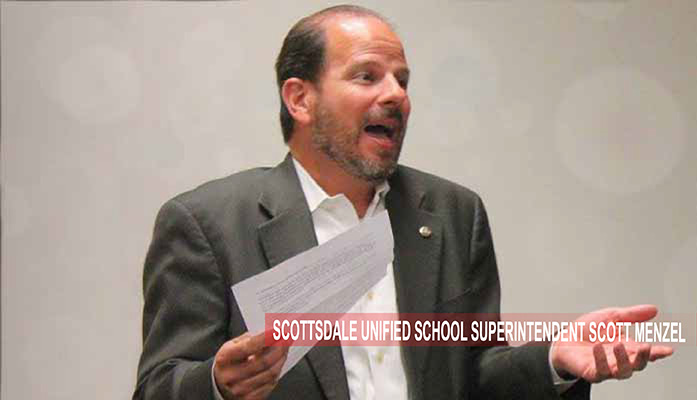
At the April 1 meeting of the Scottsdale Unified School District (SUSD) Governing Board, the main topic of discussion was once again the FY2025-2026 budget. As usual, SUSD Chief Financial Officer Shannon Crosier presented slides filled with numerous figures and did her best to put a positive spin on the information, carefully avoiding direct answers to the questions posed. At times, questions from Board Members Pittinsky and Sharkey seemed to include the answers, perhaps as a reminder of the narrative they were expected to follow.
However, the information presented made it clear that Superintendent Dr. Menzel is once again cutting teachers and instructional staff to deal with the financial impact of declining enrollment. Much of this decline can be traced back to his mismanagement of the district and the implementation of controversial policies like social-emotional learning (SEL), which critics argue undermine academic instruction and teacher morale.
Proponents of SEL, including Dr. Menzel, argue that by addressing students’ psychological challenges, academic achievement will follow. However, independent research, especially outside the U.S. teaching establishment, shows little evidence supporting this theory. You don’t need another study to confirm this; just look at the student proficiency scores in the Arizona Auditor General’s annual school district spending analysis report.
In FY24, SUSD spent 54.4% of its budget on instructional services, slightly below its peer group’s average of 55.2%. Over the past five years, spending on instruction in SUSD has dropped by 1.7%, while spending on student support has increased by 2.6%. During this period, SUSD’s enrollment has decreased by 8.4%, a trend that directly correlates with Dr. Menzel’s tenure. In the 2024 financial report, SUSD cut 59 instructional positions, added 71 student support positions, and increased the number of support and administrative roles by 44. As enrollment continues to fall, instructional spending declines, while support services and administrative costs rise. Yet, despite this shift in priorities, the effectiveness of SEL in improving academic performance has not been proven. Rather, the opposite is true.
For example, in FY24, in SUSD, only 55% of students passed the state math assessment, 61% passed English Language Arts (ELA), and just 41% passed science—an average drop of 12% since 2019. These results point to an inverse correlation between increased spending on support services and academic performance. This fact is well-documented in various unbiased studies.
Dr. Menzel, however, seems undeterred by the data, continuing his agenda of reducing instructional positions while increasing funding for social-emotional support services, including hiring more social workers and psychologists. All of this is happening despite clear declines in academic achievement.
At the meeting, it was apparent that Dr. Menzel has little regard for Board Members Carney and Werner’s requests for cost-cutting measures they made during the first budget meeting. In response to a question from Member Pittinsky about the possibility of future funding, Dr. Menzel stated, “There’s a path to land the plane to address those priorities of the board.” A “path” to address the Board’s priorities? The Governing Board is legally responsible for the district’s financial performance, and Dr. Menzel’s role is to present options that align with the Board’s priorities now, not at some unspecified future date based on potential additional funds.
Crosier claimed that the district had reviewed its costs carefully and had cut 13 positions from district-level departments. However, when questioned, she revealed that only one of those positions was not vacant and that no one had lost their job or experienced a reduction in force. So, how does this translate to cost savings?
When Member Carney inquired about her request for cuts to discretionary spending—such as travel, conferences, and consulting fees, Crosier had no answer. Carney also asked what steps she had taken to preserve the full-time assistant principal positions, which were requested by the Board, community members, and teachers alike. Once again, no answer.
Dr. Menzel’s disregard for the Board’s requests, coupled with his continued expansion of district staffing in non-instructional areas, raises serious concerns. One slide presented during the meeting, titled “Department Level Positions History – All Funds,” listed changes for FY25-26, but the data presented was incomplete and lacked the actual number of staff in each department. Showing the true staffing numbers would prompt uncomfortable questions, such as, “Why are these positions necessary?” and “Are they more important than keeping teachers in the classroom?”
According to the Auditor General, SUSD’s per-student administrative spending is 15% higher than the peer group average. Meanwhile, the public comment portion of the meeting included heartfelt testimonies from teachers, including the president of the Scottsdale Education Association (SEA), who expressed the growing difficulty of teaching amid rising costs, particularly healthcare. Next year, the district plans to offer teachers only a 1% raise while shifting more of the healthcare burden onto the teachers.
We heard stories from teachers struggling to make ends meet, including one who is leaving the district after years of service, and others—one with 27 years of experience—facing insurmountable medical expenses.
Because state funding for education is based on enrollment, the root of the district’s financial troubles lies in the decline of enrollment, which has been exacerbated by Dr. Menzel’s policies and his focus on non-academic priorities. The Auditor General tracks school district enrollment and assesses the financial risks associated with declining enrollment. According to these trends, SUSD has been rated as “high risk” due to its decreasing enrollment numbers.
In FY24, while districts across the state facing declining enrollment worked to reduce operating costs, SUSD failed to make similar adjustments. The statewide average teacher salary increased by 34.6% between FY17 and FY24, reaching $65,113, while SUSD’s average teacher salary rose by just 27.7% to $63,151—$1,962 below the state average. This is a 1.5% decrease in the average teacher salary for FY24 from FY23. Moreover, the average base salary for teachers with less than three years of experience rose by 24.4%, while those with more than four years of experience saw an increase of less than 0.5%. This discrepancy is contributing to the loss of experienced teachers, many of whom are leaving the district. This creates a younger teacher population at SUSD. Recent teaching graduates are more likely to support Dr. Menzel’s policies than older graduates. This is what he wants.
Several speakers at the meeting called for more state funding to address these challenges. While their frustration is understandable, their anger is misplaced. The real issue, as outlined by the Auditor General, is not a lack of state funding but rather mismanagement by Dr. Menzel and the Governing Board, which has consistently approved budgetary decisions that prioritize administrative and support staff over instructional spending.
According to the Auditor General in FY24, statewide school district spending increased by over $500 million to $13.1 billion, with per-student increases, including instruction, over FY23. Despite this increase in funding, the district allocated a smaller portion of the increase in spending to instruction than in prior years. As a result, the FY24 instructional spending percentage is the lowest since the Auditor General started monitoring in FY2001.
The decline in enrollment, because of Dr. Menzel’s continued focus on implementing SEL and bloating administrative positions, will only worsen SUSD’s financial situation. The Governing Board will need to face this ongoing problem for years to come unless drastic changes are made.
Rather than calling for more state funding for education, the SEA should be calling for the removal of Dr. Menzel as the first step in making the changes needed in SUSD.
Unfortunately for students and parents alike, rather than “landing the plane”, what we are witnessing is a controlled crash of the SUSD plane.
Mike Bengert is a husband, father, grandfather, and Scottsdale resident advocating for quality education in SUSD for over 30 years.
by Matthew Holloway | Oct 11, 2024 | Education, News
By Matthew Holloway |
A former superintendent secretary with Yuma County’s Hyder Elementary School District, Nubia Gonzalez, has been indicted for Theft, Misuse of Public Monies, and Forgery. The indictment comes eight weeks after her arrest in Scottsdale in connection with an elaborate fraud scheme against the Cocopah Middle School Association of Parents and Teachers (APT).
A press release from the Arizona Auditor General revealed that Gonzalez has been indicted on allegations that in December 2020 she “embezzled $2,486 when, 3 months after she was terminated, an illicit District check in that amount was deposited in her business checking account.”
As reported by Fox10, court documents revealed that the Yuma County case “is currently with the AZ Attorney General’s Office,” however, Attorney General Kris Mayes’ Office replied to reports that the AG “cannot comment on this matter at this time.”
On July 3rd, Scottsdale Police received a report of suspected fraud from the president of the Cocopah Middle School APT. After returning from travel outside the U.S., the president had found the organization’s savings account emptied.
Per Fox10, court documents showed, “After she saw this, [the APT president] reached out to the former treasurer to ask her about the zeroed out accounts.” The documents noted also, “[the former treasurer] stated that she had no idea what had happened.”
The two APT officials reached out to the organization’s bank investigators. They discovered that the entire balance of the organization’s accounts had been wiped out in a series of withdrawals from their savings and checking accounts, linked to Gonzalez.
Police reported in the court documents that, “The total combined loss between both accounts was $36,512.09. Banking documents were obtained directly from Wells Fargo personnel, which showed Nubia Gonzalez signing each withdrawal slip.”
According to AZFamily, the group’s president said that Gonzalez was elected as treasurer in April and was given control and signing authority over the group’s accounts at Wells Fargo bank. Only the two of them had access. The authorities said, “It became readily apparent” that the suspect “immediately withdrew the money,” once the president had left. On the same day, Gonzalez reportedly deposited $22,300 into her personal checking account which she subsequently used to pay her own bills including “credit cards and other various accounts.”
The court documents described that Gonzalez allegedly told the president she was moving the group’s funds to a higher-yield interest bearing account, however, none was created per the bank. She reportedly sent doctored screenshots and forged documents supporting this claim.
The authorities wrote, “This was a well-thought out fraud scene, which involved counterfeit and forged banking documents.”
The board members promptly voted to remove Gonzalez from her position as treasurer. She later turned herself in following media reports of the allegations and has been charged with theft, fraudulent schemes, and forgery. Funds totaling $14,212.09 are still unaccounted for according to Scottsdale Police.
Per 12News, Gonzalez is being held on a $40,000 bond in Scottsdale and a $30,000 bond in Yuma County.
In a statement to Fox10 the Cocopah Middle School APT wrote:
“The Cocopah APT would like to express our appreciation to the community at large for all the support shown to us. We are moving forward stronger and more united than ever.
We have added additional security measures and will continue to educate and inform other school parent organizations to learn from this incident and adapt their processes as well. Unfortunately at this time, it does not appear the money will be recovered. We are working hard to raise needed funds for our school and students during our current fundraising campaign for this school year.
This investigation is in the very capable hands of Maricopa County and we thank them as well as the Scottsdale PD for their diligent work in this matter.”
Matthew Holloway is a senior reporter for AZ Free News. Follow him on X for his latest stories, or email tips to Matthew@azfreenews.com.
by Corinne Murdock | Dec 29, 2023 | Education, News
By Corinne Murdock |
Another one of Arizona’s 14 career and technical education (CTE) districts can’t prove it effectively prepared students for high-need technical occupations despite spending over $1.4 million.
A report issued last week by the Arizona auditor general revealed that the Cobre Valley Institute of Technology (CVIT) didn’t collect, validate, and use complete data to assess whether students were successfully prepared to enter high-need occupations or earned industry certifications through its programs.
“Without collecting, validating, and using complete and reliable key outcome data about jobs obtained and certifications earned by its students, the District could not demonstrate to students, parents, the public, and State policymakers that its programs were effective in achieving the statutory purpose of preparing students for entry into high-need occupations,” reported the audit.
CVIT reported that it didn’t factor student employment and industry certification data because it didn’t have a reason to distrust self-reported data from its students and member districts. The auditor general rejected the permissiveness as prone to corrupting the data quality with errors and misreporting.
High-need occupations are those defined by the Arizona Office of Economic Opportunity and the Arizona Department of Education as high-skill, high-wage, or in-demand occupations. These careers normally don’t require a higher education or advanced degree, and may require certification or licensure.
CVIT paid over $176,000 to partner with Eastern Arizona College: $130,000 in tuition and other fees for its students to attend the program and $46,000 for classroom supplies and equipment purchases. It also paid over $575,000 in satellite funding to its member districts and about $120,000 on grants passed to member districts and equipment purchases.
Administrative costs were the second-biggest portion of the $1.4 million collectively, totaling about $529,000. CVIT spent about $356,000 on salaries and benefits for its superintendent and business manager, administrative supplies and equipment, audit services, and advertising, as well as nearly $173,000 on support services for the salaries and benefits of staff performing program director duties, attendance software and services, insurance costs, school safety supplies and equipment, and cell phone services.
According to the auditor general, CVIT didn’t have consistent processes in place to collect student job placement data, though it surveyed students who completed a CTE program to determine if they were employed, enrolled in postsecondary education, or enlisted in the military, and were using skills and knowledge acquired in their CTE programs.
Additionally, CVIT only validated certification data for students who attended central campus programs, not member districts.
The auditor general recommended CVIT develop and implement consistent data collection protocols for all CTE programs: collecting and validating complete data such as student certifications earned and post-graduate jobs obtained. CVIT issued a response agreeing with the auditor general’s finding and recommendations.
CVIT wasn’t the only CTE district to fail to prove its funding adequately prepared students for high-need occupations. The auditor general reported in September that the Northern Arizona Vocational Institute of Technology also didn’t.
Corinne Murdock is a reporter for AZ Free News. Follow her latest on Twitter, or email tips to corinne@azfreenews.com.
by Daniel Stefanski | Aug 28, 2023 | News
By Daniel Stefanski |
A recent audit from the Arizona Auditor General has bad news for a division within the Arizona Department of Transportation.
On Thursday, the Arizona Auditor General released a report on the Arizona Department of Transportation – Motor Vehicle Division’s (MVD) Oversight of Third Parties. The overview of the report summarized that “MVD failed to ensure authorized third-party companies consistently issued vehicle titles, driver licenses, and identification cards only to qualified and/or authorized individuals/entities, increasing public safety risks such as unsafe drivers, vehicle and identity theft, fraud, and terrorism.” The report was delivered by the Auditor General, Lindsey Perry, who transmitted the findings to Members of the Arizona Legislature, Governor Katie Hobbs, and the Director of the Arizona Department of Transportation.
The purpose of this audit was to “determine whether MVD effectively oversaw third parties to ensure they issued vehicle titles, driver licenses, and identification cards only to qualified and authorized individuals/entities.”
Out of more than 17 million documents (vehicle titles, registrations, driver licenses, and identification cards) issued in Arizona, 36% have been disseminated by third parties. The Arizona Department of Transportation has 96 third parties across 175 locations.
Through a review of a 130-transaction sample from third parties between March and October 2022, the Auditor General discovered that 25 of these records “lacked documentation that confirmed that the individuals/entities who received vehicle titles, driver licenses, and identification cards were qualified and/or authorized to receive them.” Twenty-two of those results were exposed as having “high-risk errors according to MVD guidance.”
The report warned that “fraudulently obtained identification documents may facilitate criminal activity, including fraud, identity theft, and terrorism,” noting that “individuals who fraudulently obtain identification documents may do so to commit other crimes, such as fraud of acts of terrorism.”
The Auditor General made six recommendations to MVD, which Perry told state officials that “the Arizona Department of Transportation agrees with all the findings and plans to implement all the recommendations.” The recommendations for MVD were as follows:
- Ensure its third-party contract performance measurement attachment includes clearly defined performance requirements;
- Ensure third parties issue vehicle titles, driver licenses, and identification cards only to qualified and/or authorized individuals/entities by developing and implementing written policies, procedures, and guidance for its third-party quality assurance process;
- Develop and implement training on its quality assurance policies and procedures for all applicable MVD staff who support the third-party quality assurance process to ensure adherence to established oversight policies, procedures, and guidance;
- Develop and implement training for all third parties or their authorized representatives, and verify their completion of the training;
- Conduct an initial analysis of transactions the third parties were provided for self-review dating back to February 2022 to assess third-party compliance with statutory minimum quality standards and MVD’s quality assurance process, and continue to complete a monthly analysis thereafter up until MVD implements a revised third-party quality assurance process as described in Recommendation 2;
- Identify and implement changes to align its third-party quality assurance process more closely with its quality assurance process for MVD field offices, including conducting a staffing and workload analysis, and taking action as needed to ensure sufficient staffing resources are allocated to third-party oversight.
The State’s Department of Transportation was called out for its inconsistency in upholding the recommendations made by the Auditor General in 2015. The Auditor General highlighted that its office had “recommended MVD ensure any changes to its processes did not weaken its oversight of third parties, with specific recommendations to improve its oversight of third-party transaction accuracy and to take corrective actions against third parties with serious errors or patterns of problems.” The Auditor General followed up with the Department two years after the audit, finding that MVD had successfully implemented the recommendations. However, that adherence apparently came to an end a handful of years later when “MVD established a new quality assurance process in February 2022 that is inconsistent with recommended practices for monitoring and overseeing third parties’ performance.”
According to the Arizona Auditor General, its mission is to “provide independent and impartial information and specific recommendations to improve the operations of State and local government entities.”
Daniel Stefanski is a reporter for AZ Free News. You can send him news tips using this link.
by Corinne Murdock | Sep 24, 2022 | News
By Corinne Murdock |
Arizona’s Municipal Tax Code Commission (MTCC) hasn’t met in over three years, spelling trouble for the state’s taxpayers and businesses.
The issue was the focal point of a report issued by Auditor General Lindsey Perry on Tuesday. Perry warned that continued inactivity would have an inevitable, adverse impact on Arizona’s cities and towns. That, and the inactivity runs counter to state law.
As Perry noted, every one of the MTCC member’s terms expired last October without successors. State law allows members whose terms have expired to continue serving in the position until a successor is appointed.
At present, there are three who continue their expired terms: Chairman René Lopez, Jr., a councilman for the city of Chandler; Jerry Weiers, mayor of Glendale; and Jim Waring, a councilman for the city of Phoenix.
MTCC’s last meeting was in May 2019, despite receiving three proposed amendments to consider last year for the Model City Tax Code (MCTC): the uniform sales and use tax act that facilitates economic order. State law requires MTCC to hold a public hearing within 60 days of receiving a proposed amendment.
Perry recommended that Governor Doug Ducey, State House Speaker Rusty Bowers (R-Mesa), and State Senate President Karen Fann (R-Prescott) abide by state statute and appoint members to meet quorum.
MTCC has 10 members: an Arizona Department of Revenue (ADOR) representative, and nine mayors or council members from various cities that serve three-year terms. The governor appoints five members, while the senate president and house speaker each appoint two members.
Lopez issued a response letter last month agreeing to Perry’s recommendations.
Corinne Murdock is a reporter for AZ Free News. Follow her latest on Twitter, or email tips to corinne@azfreenews.com.