by AZ Free Enterprise Club | Sep 28, 2022 | Opinion
By the Arizona Free Enterprise Club |
What’s the difference between 141,714 and 88,866? Take a few seconds to do the math, and feel free to use a calculator if you’d like.
If you answered 52,848, you’re correct! Congratulations and give yourself a pat on the back because your math skills are far superior to those of Save Our Schools (SOS) and the rest of Arizona’s teachers’ unions.
On Friday, SOS Executive Director Beth Lewis boldly proclaimed—with all the confidence in the world—that the wall of boxes she was standing in front of contained the signatures of 141,714 Arizona voters who supported a ballot initiative aimed at overturning universal Empowerment Scholarship Accounts (ESA) in Arizona. She was giddy. Her supporters cheered. SOS declared blocking universal school choice for all a “historic victory.” And corporate media jumped on the opportunity to push their narrative, accepting everything SOS said at face value.
But there was a problem. And that’s where simple math comes into play…
>>> CONTINUE READING >>>
by Kurt Rohrs | Sep 26, 2022 | Opinion
By Kurt Rohrs |
Public education funding accounts for nearly $11 billion of Arizona’s $18 billion state budget. Considering this cost, taxpayers should have a clear perception about the return on this massive investment.
We can define the purpose of public education as the process of producing capable adults who can effectively participate in the economic activity of the community. This puts the focus on developing students who can be productive after they leave our public education system and identifies the return on investment for substantial state spending.
The economic benefit of Career and Technical Education (CTE) should then become the primary objective of each public education institution that is funded by the taxpayers of the state. The goal of CTE should be the attainment of professional degrees and technical certificates that demonstrate proficiency in various career-related specialties that allow students to attain beneficial employment.
There are several public education institutions that share the responsibility for preparing our students to be productive adults.
1. Pre-K-12 District and Charter Public Schools
Some Examples:
-
- District Schools: Mesa Unified, Chandler Unified, and Tucson Unified are the largest in the state.
- Charter Schools: American Leadership Academy, Legacy Traditional, Archway (Great Hearts)
- Online Schools: Sequoia, Portable Practical Educational Preparation (PPEP), Arizona Connections Academy
2. Community Colleges
-
- Maricopa Community Colleges and Pima Community Colleges are the largest.
3. Technical Schools
-
- East Valley Institute of Technology (EVIT), West Maricopa Education Center (West-MEC), and Pima County Joint Technical Education District (Pima-JTED) are the largest.
4. Colleges and Universities
-
- Arizona State University, University of Arizona, and Northern Arizona University are the three public universities.
Coordination and Collaboration
Students often use several of these institutions in their educational journey but many of the programs overlap in their requirements. However, many students have also found that their credits earned by completing courses in one institution are not readily transferable to another institution, resulting in a student having to repeat classes they have already passed. This unnecessarily delays their attainment of educational goals and adds additional costs.
There does not appear to be any good reason for this uncoordinated approach to public education. It also serves to harm students and discourage their educational progress.
While some institutions do attempt to collaborate for the better benefit of students, the effort is spotty and uncoordinated. In a recent presentation to the EVIT Board of Directors, Chief Academic Officer Ronda Doolen demonstrated the chaotic approach to the transfer of credits from one institution to another. There is clearly no consistency and no universal process for doing so leaving students, as the clients of the system, to be served poorly.
Universal Portability, Student-Centric Education
One solution is to have state level certifications for certain classes that can be applied to each student’s education transcript and universally accepted by any public education institution in the state. This makes a student’s academic achievements “portable” and shifts the focus from “institution-centric” to “student–centric” in order to better benefit students.
One current model is the Dual-Credit platforms that are now in place between some high schools and local community colleges. However, the programs are usually governed by specific Inter-Governmental Agreements (IGAs) at the school or district level. But the programs are typically difficult to navigate and there is no guarantee of universal acceptance of credits that can be applied at any Arizona public school.
An example would be a basic college level English course (“English 101”) that can be universally accredited as fulfilling any higher education requirement. However, this basic course typically has different course titles depending on the institution and may or may not be accepted at a community college or one of the Arizona universities—depending on the whims of that particular institution. This basic course should have one course title, one course number, and one course description in use by every public education institution in the state of Arizona and be fully portable between them.
Other courses that should have universal accreditation would be Basic History, Civics, Basic Math and Science Courses, Basic Arts and Humanities courses, and Foreign Languages. It would be far more efficient and far less costly to have these courses taken at accredited high school or community college institutions instead of at the university level.
Follow the Money, Institutional Self-Interest, and Territorialism
Many of the roadblocks to a more efficient and service-oriented approach to public education revolve around funding. However, we must first recognize that most education funding is ultimately derived from taxpayers. These taxpayers do not typically have much of an interest as to which institution receives their tax dollars as compared to their more beneficial interest that their funds are spent efficiently and not wasted on ineffective or duplicative efforts.
Unfortunately, there is an institutional self-interest in how funds are allocated to them by the state. No one wants to have their budget cut. This can lead to a bias in how universal course credits are supported that can run counter to the best interests of students, for whom these institutions were originally created to serve.
An example would be that there is little practical justification for our universities to offer general education courses that are also taught at community colleges, and some high schools, at a fraction of the cost to students and taxpayers. Wouldn’t it far more useful to have highly paid university professors spending their time teaching advanced courses that could only be offered at the university?
There does not seem to be any evidence that an English 101 course better serves a student if it is taken at a university as compared to a community college or even a good high school. This one single reform should significantly reduce the cost of education for students and their parents, who help pay their tuition, even though it may threaten the territory of certain institutional “empires” that have built up at taxpayer expense.
Re-thinking Public Education, Some Conclusions
-
- The goal of public education should be to develop productive adults.
- Public education should then be more focused on Career and Technical Education in order to have real value for students and the community.
- Public education must be re-oriented to be “student-centric” and less institution-centric” to be more efficient and cost effective.
- Course credits in higher education should be “portable” and universally accepted by all taxpayer-funded public education institutions.
Kurt Rohrs is a candidate for the Chandler Unified School District Governing Board. You can find out more about his campaign here.
by AZ Free Enterprise Club | Sep 23, 2022 | Opinion
By the Arizona Free Enterprise Club |
Save Our Schools Arizona is clearly frustrated in its mission to stop families from having the freedom of school choice. For a few months now, the group has been gathering signatures throughout Arizona for a ballot initiative aimed at overturning universal Empowerment Scholarship Accounts (ESA). You know…the law that was passed this summer to ensure every child gets the education they deserve. The one that even some Democrats and prominent black leaders like Pastor Drew Anderson fought for. The law that actually saves taxpayers money and was so popular that its launch overwhelmed the Arizona Department of Education’s website!
That’s what Save Our Schools is fighting against. And they likely thought their efforts to deceive the public about the nature of ESAs would go uncontested. But they were wrong.
>>> CONTINUE READING >>>
by Kim Miller | Sep 22, 2022 | Opinion
By Kim Miller |
Are you considering voting for a Democrat, or not voting for a Republican because you think they’re crazy?
If you’re someone who votes according to the “candidate I like,” rather than the political party, consider what RESULTS your vote will bring to America, Arizona, and your family. A candidate’s likability and respectfulness mean nothing if their actions bring destruction.
You may like a Democrat as a person, and they may seem “reasonable” compared to the Republican alternative, but gone are the days when you could assume both parties have the same goals for America with different ideas to achieve them. Today’s Democrats have the opposite vision for America than Constitutional Republicans.
What is your vision for America, for your everyday life, for your family’s well-being? Don’t give your vote to a politician who will dismantle and eventually destroy your vision. Check the voting record and statements of ANY Democrat. (I’m not saying every Republican is wonderful; only that they will at least do far less damage than any Democrat.) Think I’m exaggerating? Look at what Democrat ideas have done to your daily reality:
THIS is what EVERY Democrat represents—no matter how “reasonable” a person they seem to be. Just look at the results of President Biden, Chuck Schumer, Nancy Pelosi, and virtually every Democrat in power—including every Congressperson. And don’t forget about Mark Kelly who ran as a moderate but votes 94% of the time with Democrats. Mark Kelly = Joe Biden. Katie Hobbs = woke insanity.
This is a different America than we had 20, 10, or even 1 year ago. And the main reason is a Leftist “long march through the institutions,” (Christopher Rufo) and a long strategy grounded in communism and socialism which has overtaken the Democrat party, big business, education, culture, law, and even medicine. Think about it. This is not the America we could have imagined even a few years ago.
Conrad Black sums up the RESULTS of Leftist Democrat policies:
“A disastrous and shaming flight from Afghanistan is described by President Joe Biden as ‘a triumphant success,’ while Dr. Anthony Fauci retires with dignity after doing terrible damage to the country with his nonsense about shutting schools, ‘droplets,’ the ups and downs of masking, the ‘abolition of hand-shakes’—almost all of it now thoroughly discredited.
Six years ago, no one could have imagined that these outrages would have occurred, much less that they would be accepted by a bedraggled, degraded, demoralized United States, its federal government in the hands of lawless and authoritarian myth-makers, applauded by the complicit national political media. Can this be America?”
What will your kids and grandkids experience if we keep putting Democrats in power?
It will only get worse.
That’s why a return to Constitutional Americanism is the only way to restore sanity, dignity, productivity, and hope to America.
And the surest way there is to elect Republicans (no matter how flawed one may be) to replace the destructive RESULTS of Democrats (no matter how nice one may seem).
Kim Miller is the President and Founder of Arizona Women of Action. You can find out more about their work here.
by Kurt Rohrs | Sep 21, 2022 | Opinion
By Kurt Rohrs |
Right now, there’s a growing conflict between whether our schools should be focused primarily on academic instruction or social instruction.
Randi Weingarten, President of the American Federation of Teachers (AFT), stated recently that teachers must assume the role of “Social Justice Warriors” in classrooms across the country. The National Education Association (NEA), another very large teachers’ union, urged the U.S. Justice Department to label concerned parents as “Domestic Terrorists” in an attempt to silence their objections. It’s clear that these teachers’ unions simply want to dismiss parents as being unworthy of advocating for their own children.
But parents need to be involved in the education of their children now more than ever.
Just look at what’s going on with Arizona Superintendent of Public Instruction Kathy Hoffman. She was recently sued for advertising links to chat rooms where minors discuss sex and gender with adults present and without parents necessarily knowing.
Then, there’s Chandler Education Association Union President Katie Nash, who is on video at a Chandler Unified School District Board (CUSD) meeting actively promoting the teaching of White Supremacy Theory, the 1619 Project, and “Anti-Racism” programs typically derived from Critical Race Theory (CRT).
What does any of this have to do with academic instruction? Nothing.
But it’s being pushed in our schools, and while it can be tempting to blame teachers for this, we need to be careful. Most teachers should be considered as dedicated and trustworthy professionals. Instead, this is a failure of union leadership and their minions who have lost interest in academic education in favor of a growing obsession with political power. What has been the result? Declining academic scores across the country.
Of course, all of this is in direct contradiction with Arizona statute, which clearly defines these social activities as fundamental rights reserved to parents to be directed by them in the home. But these teachers’ unions don’t seem to care. They’d rather do whatever it takes to usurp these parental rights—even if it means lower academic scores.
Is Academic Proficiency Now a Secondary Consideration?
As social instruction grows, academic proficiency suffers. Consider a recent CUSD presentation of a “Portrait of a Learner” program, which described several social aspirations for students, yet somehow omitted any reference to academic proficiency. Shouldn’t we expect academics to be the primary focus of something that involves “Learning”? Either that, or you would think it would at least push students toward developing practical job skills training.
This continued lack of focus on academic proficiency is resulting in a continued decline in student test scores across the state. There does not seem to be any comprehensive plan to recover from this.
The most recent shiny new program is called the Whole Child Concept. But it appears to do nothing more than broaden the scope of the Social and Emotional Learning (SEL) programs already embedded in school curriculum.
Parent Flight
One of the unintended consequences of this movement to focus on social instruction is “Parent Flight” to other educational alternatives such as charter schools, private schools, and homeschooling. The recent expansion of the Empowerment Scholarship Account (ESA) program in Arizona now allows for parents to choose from these alternatives over unsatisfactory district schools.
But as you might expect, teachers’ unions and their political arm, RedforEd, vigorously oppose this legislative expansion, claiming that it defunds schools. But what they won’t tell you is that it clearly does not defund a student’s educational opportunities. Equally important, it enhances a parent’s choice as to where they believe their children would receive the best education.
The program has been so popular that parents already overwhelmed the website in an effort to get out of undesirable district schools. Yet somehow it does not seem to occur to opponents of ESAs that, if they had district schools that were satisfactory to parents, then those parents probably would not even consider moving their kids to another competing educational alternative.
Quasi-Religious Woke Doctrine?
Perhaps what’s most frustrating about the growing social instruction in our schools is that, for years, our nation has been gradually removing religious (mostly Christian) influences from our public schools. In fact, it feels like the First Amendment right to “Freedom of Religion,” which was fundamental to the first European immigrants to this continent, has gradually been reinterpreted by the Left to mean “Freedom from Religion.”
But you can’t help but notice how certain aspects of woke doctrine seem to have become “articles of faith” that cannot be questioned by anyone without facing severe social backlash. It’s clear that Christian doctrine has been suppressed in schools and replaced by Secular Humanism, the belief that humanity is capable of morality and self-fulfillment without belief in God, and the more extreme Cultural Marxism, the Neo-Marxist movement seeking to apply critical theory to matters of family composition, gender, race, and cultural identity within Western society.
If teachers’ unions want to apply the “Freedom from Religion” doctrine in public schools, they should also apply a “Freedom from Extremist Political Doctrine” as well. It’s the only way to ensure our schools remain on neutral ground for political ideology, and it leaves social development at home with the child’s parents—where it should be.
Teacher Opt-Out?
Finally, along with our First Amendment rights comes a prohibition on “compelled speech,” which prevents a person from being forced, under threat or duress, to say things they don’t really believe in. But we hear regular reports of teachers being bullied and harassed by other “activist” colleagues to force them to go along with their extreme Leftist political doctrine. Many teachers simply comply because they are concerned about having to work in a hostile environment or having their livelihoods threatened.
This implies that there is some sort of informal “political test” for teachers in our schools. It is often enforced by aggressive colleagues who are usually associated with a teachers’ union. The apparent message is: “comply and be welcome, or dissent and be ostracized.” It is no wonder teachers are under such workplace stress because of these implied threats.
However, there is a recent report of one brave, principled teacher, who, in looking over the daily SEL lesson, simply said, “we are not going to do this today” and put the controversial assignment aside. So, if parents have the right to “opt-out” their children from the presentation of controversial subject matter, that same rule needs to be extended to teachers who do not believe in these social lessons or deem them inappropriate for the children in their class. It’s time to give these teachers an “opt-out” choice as well.
In conclusion, here are a few ways we can start to clean up our public schools:
-
- Return the primary focus of schools to academic instruction rather than social instruction.
- Reduce the influence of the politically biased teachers’ unions.
- Protect parents’ rights to direct the social upbringing of their children.
- Prohibit political and social ideologies from being established in schools.
- Protect teachers from being compelled to present controversial materials that they do not believe in.
Kurt Rohrs is a candidate for the Chandler Unified School District Governing Board. You can find out more about his campaign here.
by Dr. Thomas Patterson | Sep 16, 2022 | Opinion
By Dr. Thomas Patterson |
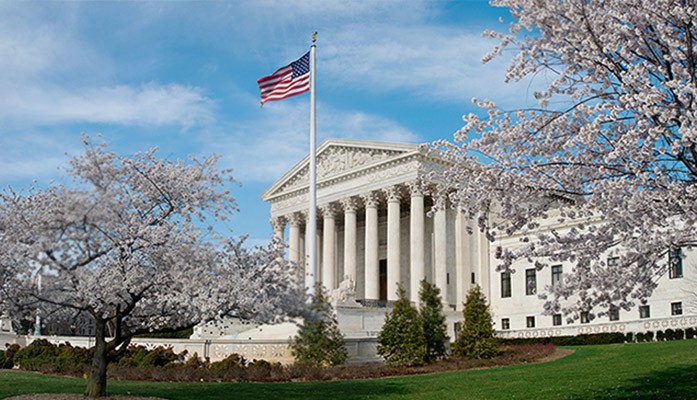
Sen. Elizabeth Warren, with the concurrence of much of the Left, believes our democracy is once again under attack, this time from our own “rogue” Supreme Court. MSNBC agreed that “the Supreme Court has gone rogue.” The Congressional Progressive Caucus insists “we must hold these rogue justices to account.”
It goes beyond coordinated hysterical rhetoric. Rep. Alexandria Ocasio-Cortez demanded that Democratic Party leaders share their plans for “solving the problem of the rogue Court.” The New York Times advised “the Constitution provides a number of paths by which Congress can restrain and discipline a rogue Court.” Senator Sheldon Whitehouse introduced the Supreme Court Review Act to “check the Court’s rogue decisions.”
From the Left’s point-of-view, not only is the Court rogue, but so are the six justices who normally form the majority. According to protesters at a recent anti-Court rally, Roberts is an “impotent fool,” Kavanaugh a “drunken rapist,” and Thomas a “traitor and perv.” “Strong women scare” Alito. Gorsuch “stole his seat.” Barrett is in “an actual cult.”
Scholars like Berkeley Law Dean Erwin Chemerinsky write that none of the justices should be there. Georgia State Law professor Eric Segall argues that the Court’s illegitimate rulings should just be ignored.
But what rulings from this last term were radical, extra-legal interpretations of the Constitution? Here are some of the purportedly rogue rulings:
-
- An administrative agency must have congressional authority to make far-reaching decisions.
- If states subsidize students in private schools, they can’t exclude religious schools.
- Since the Constitution is silent on abortion regulation, per the 10th Amendment, states retain the authority.
- The Second Amendment actually prescribes the right to bear arms.
Reasonable people can disagree with these as policy prescriptions. However, the rulings are hardly constitutionally outrageous by any standard. They are not even that politically unpopular, except on the activist Left.
Still, White House press secretary Karine Jean-Pierre claimed, with no substantiation attempted, that overturning Roe v. Wade was an “unconstitutional action.” But most Court critics don’t argue about constitutionality. They simply don’t like the results of the rulings.
Americans have politicized the Court through failure to understand its role and purpose. Commentators commonly characterize justices as liberal or conservative, implying their personal ideologies are the legitimate basis of their judicial opinions. Sometimes they’re even referred to as Democrat or Republican.
Indeed, Barack Obama, himself a former constitutional law professor, wanted his Supreme Court nominees to “understand that justice isn’t about some abstract legal theory.” Rather, they should have “empathy…understanding and identifying with peoples’ hopes and struggles.”
But as the late Justice Antonin Scalia pointed out, there are fundamentally two grounds for federal court rulings: the text of the Constitution and laws or…what? Ideological chaos where ultimately the personal opinions of the judges prevail.
Americans not only tolerate this practice, they demand it. Partisans fully expect the Court to protect their ideological interests, to be their backup when the legislative process fails to produce the desired results.
Thus, another critic claims the current Court is deemed to have rogue status because it “acted under conservative control, as if it stands above the constitutional system, unaccountable to anyone other than itself.” But the Court by design is not supposed to be “accountable” to the political process.
Justices don’t face elections precisely so that they can be an independent third branch. They are free to protect minority rights and serve as a check against populist excesses in the democratically elected branches.
In return for their independence, judges bear a solemn responsibility to follow the Constitution. Any other course leads to government by black-robed tyrants not subject to any checks or balances.
In our cancel culture, justices have been seriously threatened with physical harm. Leftist politicians have proposed structural reforms like packing the Court, blowing it up, or ignoring it. But these are dangerous threats to the rule of law.
Those unhappy with the current Court’s decisions should utilize the traditional means available to effect change. Amend the Constitution, change the laws, appoint new judges when the time comes.
An independent judiciary is a hallmark of all successful democracies. Attempts to punish and threaten judges for their decisions is the real threat to our republic.
Dr. Thomas Patterson, former Chairman of the Goldwater Institute, is a retired emergency physician. He served as an Arizona State senator for 10 years in the 1990s, and as Majority Leader from 93-96. He is the author of Arizona’s original charter schools bill.