by AZ Free Enterprise Club | Jul 7, 2021 | Opinion
By the Free Enterprise Club |
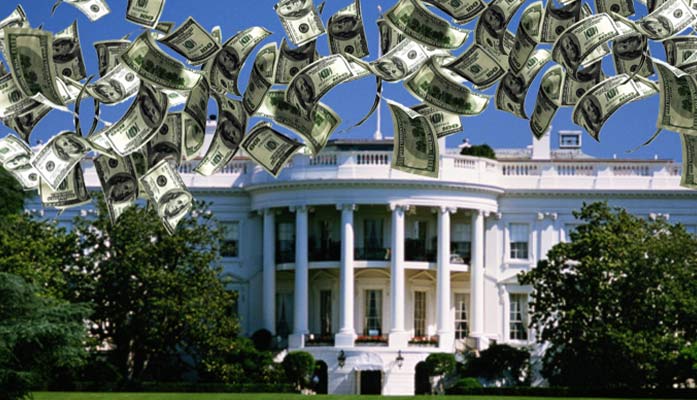
After raking in cash from taxpayers amounting to a staggering $4 billion surplus, Governor Ducey and Republican legislators have delivered big with a historic tax cut this year. At full implementation, the cuts enshrined in SB1827, SB1828, and SB1783 will total $1.8 billion, and this couldn’t have come at a better time.
While Arizona families and small businesses were struggling during covid shutdowns and trying to make ends meet, the tax collector was still busy collecting. And as all Arizonans were already being overtaxed, on the narrowest margin, Proposition 208 was passed threatening a 77% tax hike on many Arizonans and small businesses. The tax cuts in this year’s budget completely neutralize that threat.
The tax cut package will result in a tax cut for all Arizona taxpayers. At full implementation, the current four rates of 2.59%, 3.34%, 4.17%, and 4.5% (with a fifth Prop 208 rate of 8%) will be collapsed into one single rate of 2.5%.
But since Proposition 208 is voter protected, income above $250,000 ($500,000 for married filing jointly) would still be hit with the 3.5% “surcharge,” resulting in a top rate of 6%, leaving Arizona still uncompetitive. The tax cut package takes care of this, too, by capping the top rate any taxpayer will shoulder at 4.5%, or the current top marginal rate.
Finally, holding the Red4Ed Prop 208 proponents to the promise that their tax hike “legally” could not affect small businesses, SB1783 will create an optional alternative small business tax which will have a rate beginning at 3.5% this year, ratcheting down to match the new single individual income rate of 2.5%. This means that small businesses can bifurcate their business income from their personal income, filing it under the alternative small business tax and paying a rate of 2.5% instead of the capped 4.5% rate. To reiterate, this is small business income that by Prop 208 advocates own words was never supposed to be subject to the surcharge. SB1783 codifies that intent…
>>> READ MORE >>>
by Jose Borrajero | Jul 6, 2021 | Education, Opinion
By Jose Borrajero |
As one of the longest legislative sessions in Arizona history comes to a close, we come to the customary conclusion that no one is totally happy with the results. That is to be expected. No individual or group of individuals should expect to get all they want.
However, this session fell considerably short of conservative goals in several areas. Most prominent among these were election integrity and balance of power. Balloting irregularities and dictatorial executives are anathema to good governance.
Still, we did not do so badly considering the current composition of our legislature. Hopefully, that composition may be improved during the next election cycle.
Two areas in which we did better than many had expected were the budget and tax reform. But these are precisely the two areas in which we are getting tremendous pushback from organizations that support unionism, socialism, and radicalism (please excuse the redundancy).
One major radical group is Save Our Schools Arizona. They are already calling for a citizen’s initiative to undermine the hard-earned progress we made in the areas of budgeting and taxation.
In fact, Save Our Schools AZ, in their June 28 Legislative Report made the following outrageous, irresponsible, and patently false statements:
“The Bad: House lawmakers passed a K-12 budget bill packed with myriad attacks on schools and teachers.” And…
“The Brutally Awful: Both the House and Senate passed identical bills pushing Arizona’s largest tax cut in history into law”.
Let us evaluate the second claim first. It should be pointed out that whenever these radical organizations bitch and moan about “tax cuts” they are bitching and moaning about “tax cuts for the rich”. They don’t bitch and moan about the portion of the tax relief that helps low- and middle-class taxpayers. With that in mind let us look at the overall taxation of the rich, to determine whether this is a giveaway to the wealthiest among us, or simply a much-needed tax relief to prevent job providers from fleeing Arizona.
Marginal income tax rate paid by the wealthiest Arizonans:
| Before Prop 208 |
4.5% |
| After Prop 208 |
8.0% (4.5% + 3.5%) |
| After Tax Relief |
6.0% (2.5% + 3.5%) |
Can someone, with a straight face, explain how going from a 4.5% tax rate to a 6.0% tax rate constitute a “tax cut”? Tax relief would be a much better name for it.
It should also be noted that there is nothing in the omnibus tax relief tax relief bill (SB1828), or in any of the budget reconciliation bills to remotely suggest that the Education industry will not get their 3.5%. This brings us to addressing the other claim made by the Save Our Schools cabal.
The only way that a thinking person can agree with the SOS’s claim that the legislature gave us a “K-12 budget bill packed with myriad attacks on schools and teachers” is to conclude that a whopping 24% increase in funding constitutes “myriad attacks”. Let us look at some numbers taken from the JLBC’s and the Governor’s websites:
| FISCAL YEAR |
TOTAL BUDGET |
EDUCATION BUDGET |
| 2021 |
$11.5 BILLION |
$6.7 BILLION ($5.0 B K-12 + $1.7 B HIGHER ED) |
| 2022 |
$12.8 BILLION |
$8.2 BILLION ($6.2 b K-12 + $2.0 B HIGHER ED) |
While the overall budget went up by a relatively modest 11%, the education budget increased by 22%, and the K-12 portion increased by 24%.
Under this new budget, the portion allocated to education is 64%, leaving only 36% for healthcare, law enforcement, border security, street repairs, infrastructure, etc.
The SOS and other groups that claim to support students should be praising our legislature and thanking them for their generosity, instead of plotting to undermine their work via mob rule.
by Dr. Thomas Patterson | Jul 4, 2021 | Economy, Opinion
By Dr. Tom Patterson |
The Biden/Harris administration is ignoring established budget tradition in their determination to spend yet more money.
Since the Reagan era, each federal budget has included a list of achievable spending cuts. The final Obama/Biden budget boasted of their averaging 140 cuts, saving $22 billion, yearly. Then-VP Biden headed up these cost cutting efforts as he did the spending reductions in the 2011 Budget Control Act.
Obama praised Biden‘s leadership in the Campaign to Cut Waste, calling him “the right man to lead it because nobody messes with Sheriff Joe.”
So Biden was justified in campaigning on his record of cost-cutting, which he did (although overall spending never fell during his tenure). But, as we have seen on almost every front, the rhetoric of candidate Biden meant nothing.
His initial budget was the first in 40 years to not include a section on savings. Instead, he withdrew President Trump’s final 73 rescissions, which would have saved taxpayers $24.4 billion, including several, such as the Commission on Fine Arts and the Presidio Trust, that had been included in earlier Obama/Biden reductions. His address to Congress in April in lieu of the SOTU contained no mention of waste reduction, nor has any other communication so far.
The contrast is striking. In 2011, President Obama proposed a $4 trillion deficit reduction over 12 years. We now know he fell far short of the mark, yet 10 years later, President Biden proposed a $14.5 trillion increase in deficits over 10 years. Success seems quite probable this time.
What’s going on here? Biden’s inference that there is no waste available in federal spending is laughable. State and local governments are awash in newfound largess. Unemployed beneficiaries have received so much compensation that millions have understandably quit their jobs.
Americans in no financial stress, nursing home residents and dead people by the millions have received COVID stimulus checks. Meanwhile, the Department of Education, an inconsequential agency that has overseen the decline of American education at all levels despite a massive funding surge, was given a $67 billion boost.
The tsunami of spending is relentless. Our national debt has now reached $28 trillion, including a 30 percent increase from spending on the Covid shutdowns alone. Federal spending this fiscal year is about $8 trillion, fully half of which will be put on the tab.
Biden’s next budget is $6 trillion, plus $6 trillion or so of additional spending on anticipated campaign promises. If Biden’s budget plan is adopted, the projected national debt would be $44,800,000,000 by 2031. Moreover, the current value of obligations to finance legal entitlement programs is $132 trillion more.
We are clearly on an unsustainable course. Easy money and goosing the economy with government spending can only take us so far. Eventually, our luck will run out when interest rates return to normal, creditors run out of confidence, inflation and lack of productivity gains take their toll or all of the above.
Technology may help some to delay the deterioration of our standard of living. But our descendants will be far worse off and America will be permanently damaged from our foolish selfishness.
Yet there is a preternatural calmness in Washington circles over the consequences of pushing massive debt out to future generations. When the ruling Left discusses their multi-trillion dollar spending proposals, they typically don’t bother to address the revenue problem. The fact that they are politically popular (and Biden’s “free” spending proposals are) is rationale enough in Dem World.
The spenders act as if spending itself is a social good. Deeply in debt, they spend for unnecessary frills like taxpayer-supplied benefits for illegal immigrants and middle class social programs.
They profess to believe that money will always be available so long as government can figuratively print more, but that is patently ludicrous. More likely, they just don’t care.
These are people who fervently believe in the power of Big Government to make life better, the overwhelming evidence to the contrary notwithstanding. The more money that is spent on anything, the larger their constituent base grows. As in the border crisis, the chance to maintain power drives policy.
Literally nothing else matters.
Dr. Thomas Patterson, former Chairman of the Goldwater Institute, is a retired emergency physician. He served as an Arizona State senator for 10 years in the 1990s, and as Majority Leader from 93-96. He is the author of Arizona’s original charter schools bill.
by AZ Free Enterprise Club | Jul 2, 2021 | Opinion
By the Free Enterprise Club |
They’re still trying to scare us. Apparently, some people in our country just don’t like seeing businesses reopen, people unmasked, and a return to normalcy. So, as the threat to COVID largely dwindles, it should come as no surprise that the media is now pushing a new threat: the Delta variant.
Of course, the messaging is predictable:
-
- More contagious (CNN)
- Exploded in the UK (CNBC)
- Worst and scariest variant yet (MSNBC)
It will be interesting to see how state and local governments across the country respond to this so-called “latest threat.” As you’ll recall, it didn’t go so well the first time around with most seizing the opportunity to abuse emergency powers, even here in Arizona. And although Arizona’s COVID response puts it ahead of most other states in the country, there’s still work to be done.
Thankfully, our state lawmakers haven’t ignored the problem. And with various provisions in a series of Budget Reconciliation Bills, they have taken important steps to protect Arizona from more COVID mandates and government overreach.
>> READ MORE >>>
by Richard Vedder | Jul 1, 2021 | Opinion
By RICHARD K. VEDDER |
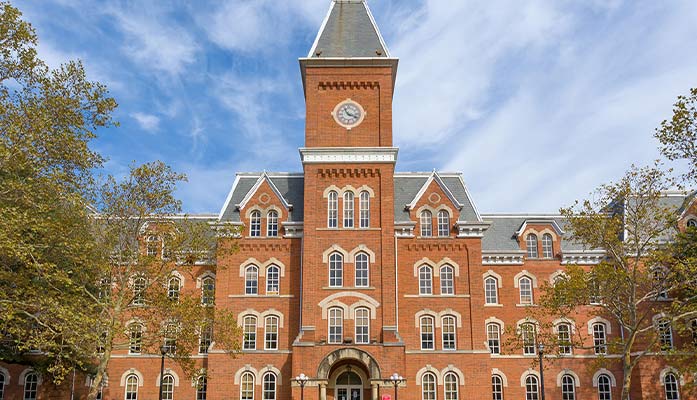
Universities have played a consequential role in the fight against the coronavirus that has swept the globe—their research tries to prevent the disease or mitigate its effects, their classrooms and labs train the future physicians and others trying to save lives, and their hospitals and clinics try to heal those with not only this sickness but all sorts of other serious aliments afflicting humankind. About 100 institutions with med schools and hospitals are particularly critical.
With all this is mind, I recently chatted with Dr. Harold Paz, Executive Vice President and Chancellor for Health Affairs at Ohio State (OSU), and CEO of its Wexner Medical Center. Dr. Paz has run university medical centers at Rutgers and Penn State as well, and was the chief health executive at Aetna for several years. He also has had close professional associations with several private schools, such as Rochester, Johns Hopkins and Yale. He is an articulate, bright individual.
The health care component at massive universities like Ohio State, as measured by spending, now sometimes exceed 50%—it is around $4.5 billion a year ($500,000 an hour) at OSU, bigger than all other parts of that huge school combined—an institution with 60,000 or so students in Columbus alone. Dr. Paz spends 20 times as much as the athletic director overseeing OSU’s superstar status athletic programs.
>> READ MORE >>>
by John R. Ammon | Jun 29, 2021 | Opinion
By John R. Ammon |
The next Republican Prescott Mayor will be chosen in the August 3, 2021 primary. The two candidates are Phil Goode and the incumbent, Greg Mengarelli. Early voting begins on July 7th.
When people ask me why Prescott is so special and what does it mean to me, I always respond that Prescott is traditional America with the values and the culture that Americans have always loved and sought.
Many of us are fed up with the political class in Washington, D.C. and throughout state and local governments that holds its citizens in low regard and favors itself rather than the citizens it supposedly represents. Such a culture appears to be raising its head locally in this election.
Let’s look at the two candidates seeking victory on August 3rd. Which of these two candidates can best represent American values and protect Prescott culture, its small town feel, and critically, its future, with governance of water policy and development that is competent, honest, transparent and without even the perception of self-interest?
The key question is who will best “serve” the citizens of Prescott as Mayor? A generic description of the individual who will best “serve” the citizens of Prescott is the candidate who has a history of service for fellow citizens and community organizations and proven leadership roles in the real world not conflated with personal gain and profit.
>> READ MORE >>>