by Corinne Murdock | Jan 5, 2022 | News
By Corinne Murdock |
Ahead of the anniversary of January 6, the Arizona Democratic Party’s (ADP) tone concerning the fateful rally-turned-riot shifted from somber to opportunistic. The ADP sent out a fundraising email this week requesting $10 or more donations to flip voters like the January 6 incident did, they said.
The ADP informed recipients that over 20,000 Arizona voters switched from Republican to Democrat following the January 6 riot, which they referred to as an insurrection. They emphasized the importance of financing their grassroots efforts ahead of Thursday’s anniversary.
“Starting today, just before the one-year anniversary of the insurrection, we’re using our Project 15/30 organizing program to reach out to every single one of those 20,000. We want to thank them for their courage and for standing up for our democracy,” read the email. “Team, efforts like this show that through Project 15/30, we’re fighting for every single vote in AZ. But running special programs like this takes people and resources to work. Can you donate $10 today so voter outreach programs like this one are successful?”
Project 15/30 intends to increase voter registration and strengthen party numbers in the 15 counties and 30 legislative districts across Arizona. The ADP launched the initiative early last August.
ADP’s latest messaging conflicts with its previous rhetoric on the subject of the Capitol Hill riot. Throughout last year, the ADP honored the Capitol police officers that responded to the break-in.
“We will never forget the events that took place in our Capitol on January 6, 2021,” wrote the state affiliate. “We stand with the heroic officers who risked their lives.”
The ADP also called for the punishment of Congressman Andy Biggs (R-AZ-05) and Paul Gosar (R-AZ-04) repeatedly.
President Joe Biden plans to give an address on Thursday to commemorate last year’s riot. During the White House daily briefing on Wednesday, Press Secretary Jen Psaki promised that President Joe Biden would speak extensively on how former President Donald Trump was solely to blame for the January 6 riot.
“The president is going to speak to the truth of what happened, not the lies that some have spread since — and the peril opposed to rule of law and our system of democratic governance. He will also speak to the work that we need to strengthen our democracy and our institutions to reject the hatred and lies we saw on January 6 to unite our country. I’d also note that President Biden has been clear-eyed about the threat the former president represents to our democracy and how the former president works to undermine basic American values and rule of law. And President Biden has spoken repeatedly about how the president has abused his office, undermined the Constitution, and ignored his oath to the American people in an effort to amass more power for himself and his allies. He sees January 6 as the tragic culmination of what those four years under President Trump did to our country and they reflected the importance to the President of winning. What he has called many times the battle for the soul of our nation. So just as you heard him say on January 6 of last year, I would expect that President Biden will lay out the significance of what happened at the Capitol and the singular responsibility that President Trump has for the chaos and carnage we saw, and he will forcibly push back on the lies spread by the former president in an attempt to mislead the American people and his own supporters, as well as in respect to his role in what happened.”
Psaki couldn’t answer as to whether Biden will call out Trump by name because they were finalizing the speech.
Corinne Murdock is a reporter for AZ Free News. Follow her latest on Twitter, or email tips to corinne@azfreenews.com.
by Terri Jo Neff | Jan 5, 2022 | Economy, News
By Terri Jo Neff |
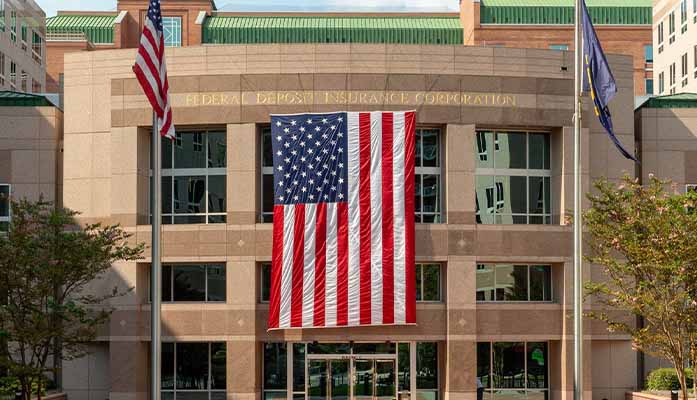
Jelena McWilliams, the Trump-appointed chairwoman of the Federal Deposit Insurance Corp. (FDIC) and only Republican on the board of directors, is resigning her position after accusing three Democratic directors of engaging in “a hostile takeover” of the agency responsible for maintaining stability and public confidence in the nation’s financial system.
News of McWilliams’s unexpected resignation effective February 4 was buried in a press release issued on New Year’s Eve. She took the helm of the FDIC in June 2018 after being confirmed by Congress to serve a five-year term as chair of what is supposed to be an independent agency that examines and supervises more than 5,200 banks and financial institutions for safety, soundness, and consumer protection. It also manages receiverships and insures deposits.
McWilliams’ announcement came just two weeks after she submitted an op-ed to the Wall Street Journal warning of the politization of America’s banking system.
The former executive vice president for Fifth Third Bank wrote of how for nearly 90 years day-to-day FDIC operations were delegated to its chairman, who controlled the board agenda and “worked collaboratively with other board members” regardless of political difference.
But that collegiality ended in late October, according to McWilliams, when the three Democratic-appointed members teamed in an effort to begin a FDIC review of the standards used for bank mergers without McWilliams’ assent.
Those other members are Michael Hsu, acting Comptroller of the Currency; Michael Hsu. Rohit Chopra, director of the Consumer Financial Protection Bureau; and Martin Gruenberg, former FDIC chairman who is serving on a temporary basis because the Biden Administration has not moved to fill two vacant board positions.
The FDIC may not have more than three directors of the same political affiliation. President Joe Biden, by keeping one of the five seats open throughout his first year in office, has been able to impede McWilliams’ inherent powers as chair.
McWilliams, who previously served as chief counsel on the U.S. Senate Banking, Housing and Urban Affairs Committee, initiated a program at the FDIC called Trust through Transparency in an effort to make the FDIC more accessible, understandable, and responsive. As part of that initiative, she visited in person with stakeholders in 30 states prior to COVID-19 then continued the visits on a virtual basis, including a meeting with the Arizona Bankers Association.
The Republicans on the U.S. House Committee on Financial Services tweeted Monday about concerns with McWilliams’ resignation.
“The attempted power grab by CFPB Director Chopra and Interim Chair Gruenberg raises serious concerns about @FDICgov‘s independence. Dems’ support for this unprecedented action exposes their ongoing effort to politicize our regulators for their own gain.”
McWilliams also continues to have the public support of industry groups due to her efforts to ensure all stakeholders were heard. One such supporter is Richard Hunt, the CEO of the Consumer Bankers Association.
“A total class act who always sought balance—much to my chagrin at times,” Hunt said after learning of McWilliams’ resignation. “The FDIC cannot operate where the minority is not represented.”
by Terri Jo Neff | Jan 4, 2022 | Education, News
By Terri Jo Neff |
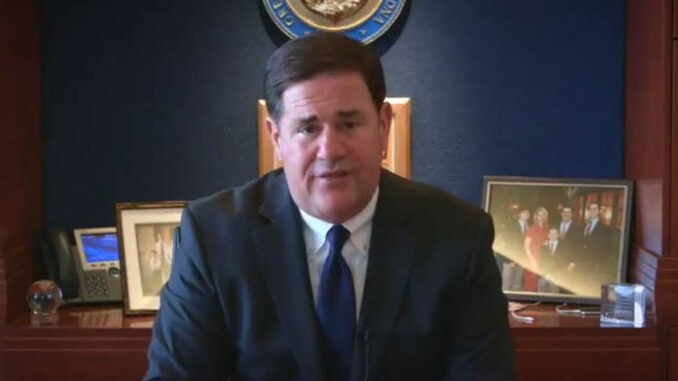
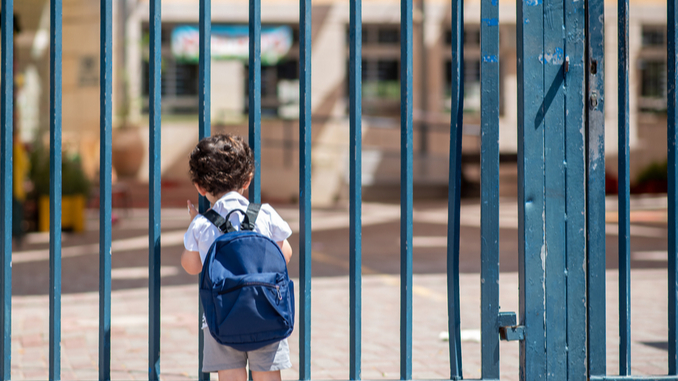
In an effort to reassure students and parents, Gov. Doug Ducey announced Tuesday that he is making up to $7,000 available for families who may face financial or educational barriers due to unexpected school closures.
Ducey described his new $10 million Open for Learning Recovery Benefit program as a “preemptive action” to ensure in-person learning remains an option for all K-12 students in Arizona. Funds can be used by eligible students and families toward childcare approved by the Arizona Department of Economic Security, as well as school-coordinated transportation, online tutoring, and school tuition.
“In-person learning is vital for the development, well-being and educational needs of K-12 students,” Ducey said. “With the new Open for Learning Recovery Benefit program, if a school closes for even one day, students and families who meet the income requirements will have access to instruction that best meets their needs.”
Families at or below 350 percent of the federal poverty line will be eligible to apply online for benefits later this month. Data shows such families are more likely to be negatively impacted by school closures due to limited daycare options, limited access to technology for remote learning, and less flexibility with work schedules.
The governor’s announcement of the new funding program came just days after some members of RedforEd, a teachers’ union / activist group, called on school districts to require students to utilize remote learning in place of in-person classroom instruction for the next few weeks, at a minimum. Ducey and many K-12 professionals have rejected the option, citing performance gaps and other harms brought on by school closures.
You can read more about the call for school closures here.
“We will continue to work with families, public health experts and school leaders to ensure our kids can stay in the classroom and parents have a choice – always.” Ducey said Tuesday.
The Open for Learning Recovery Benefit program is the latest effort by Ducey to show his seriousness toward requiring schools to resume teacher-led, in-person instruction. Since March 2021, various funding options have been made available by the state, including the Education Recovery Benefit program and the Education Plus Up Grant program announced in August to provide grant fundings for district and charter schools that kept their doors open and followed all state laws.
Another K-12 funding program implemented last year addressed K-12 literacy, adult education, and expanded teacher professional development. Monies were also set aside to promote after-school programs, to support school choice opportunities for students in rural communities, and to fund Arizona Transportation Modernization Grants to improve reliable and safe transportation options.
by Corinne Murdock | Jan 4, 2022 | Education, News
By Corinne Murdock |
In an apparent response to the push from teachers’ unions to revert to remote learning for at least two weeks if not more, Governor Doug Ducey announced Monday that all of Arizona would continue with in-person learning.
In a thread, Ducey reminded Arizonans of President Joe Biden’s stance on keeping schools open, as well as the past actions of unions striking for higher pay after being promised higher pay. For the latter reference, Ducey was citing his promise of a 20 percent raise.
“IN-PERSON LEARNING WILL CONTINUE IN ARIZONA[.] ‘The science is clear, and overwhelming. We know how to keep our kids safe from COVID-19 in school. K through 12 schools should be open.’ That’s from President Joe Biden. And public health experts agree. Yet union leaders are telling parents to prepare for remote learning. It shouldn’t come as a surprise, this is the same union that encouraged a teacher strike well after a teacher raise was proposed. Once again, teacher unions are playing political games with no regard for the social and emotional impact on our kids. Parents shouldn’t stand for it — and will remember these antics at the ballot box. And at the state level, we’ll be working to ensure in-person learning continues. From recruiting more substitute teachers, to ensuring that if a student is turned away for even one day of in-person learning, parents have a choice and the resources to take their child to a school that better meets their needs.”
Twitter tagged the following warning to the governor’s thread: “Some conversations get heavy[;] Don’t forget the human behind the screen.”
Ducey issued a similar Twitter thread announcement last March several weeks before the one-year anniversary of COVID-19 being announced as a national emergency. That thread announced Ducey’s executive order for all schools to continue March 15 — several days after the one-year anniversary of former President Donald Trump’s national emergency declaration.
“ANNOUNCEMENT: Getting kids back in the classroom is one of the most important things we can do as we see #COVID19 cases drop and vaccinations underway. A majority of Arizona public schools are already open, and school leaders have demonstrated in-person instruction is possible to do safely. The @CDCgov has laid out a path for every school to open safely. Public health experts nationally have spoken about the importance of getting kids back in school. In Arizona, teachers have been prioritized for the vaccine, and many school districts are reporting that nearly all of their educators have received both doses. Today, I’m issuing a new Executive Order. It requires public schools to get back to teacher-led, in-person instruction by March 15, or after Spring Break. I know not every parent feels comfortable sending their kids back to school. So virtual learning will continue to be an option for those families. But many do want to go back, and this will require schools to provide that opportunity. The science is clear, and so are the social and behavioral impacts. It’s time to get kids back in the classroom. I’m confident that Arizona has made better progress on this to date than many other states, and today’s action will speed up that process even more.”
According to the Occupational Safety and Health Administration (OSHA) at the time of this report, there have been 1861 reported workplace fatalities from COVID-19. OSHA issued an Emergency Temporary Standard (ETS) requiring employers to report employees that were hospitalized or died from COVID-19, “regardless of the amount of time between the exposure to COVID-19 in the work environment and the death or in-patient hospitalization.
These OSHA reports are given within eight hours of a fatality, or 24 hours of a hospitalization.
According to the latest counts, there have been over 24,300 deaths related to COVID-19 in Arizona. In the last six months, a total of over 6,300 deaths have occurred. Nearly 72 percent of deaths occurred in individuals over 65 years old. Nearly 16 percent of deaths occurred in individuals aged 55 to 64 years old.
Nearly 8 percent of deaths came from individuals aged 45 to 54 years old. 5 percent of deaths came from individuals 20 to 44 years old. Nearly 0 percent of deaths occurred in individuals under the age of 20: .2 percent, to be exact.
Corinne Murdock is a reporter for AZ Free News. Follow her latest on Twitter, or email tips to corinne@azfreenews.com.
by Corinne Murdock | Jan 4, 2022 | News
By Corinne Murdock |
The two-year anniversary of the COVID-19 pandemic declared a national emergency is on March 15; as of this report, there have been .2 percent deaths from COVID-19 in individuals under the age of 20 in Arizona, or nearly zero. The total amount: 53. According to the latest census, about 22 percent of the population was under 18.
The Arizona Department of Health Services (ADHS) latest reporting noted that less than half of those deaths occurred within the last six months: 20. That’s just over zero percent of deaths within the last six months: .3 percent.
For the last six months, 60 percent of COVID deaths occurred in individuals over 65 years old. 19 percent were individuals aged 55 to 64. 12 percent were individuals aged 45 to 54. 9 percent were individuals aged 20 to 44.
In both counts from the last six months and all time, the majority of COVID-19 deaths occurred in men and white, non-Hispanic individuals.
For all time, 71 percent of COVID deaths occurred in individuals over 65. 16 percent were in individuals aged 55 to 64. 8 percent were in individuals aged 45 to 54. 5 percent were in individuals aged 20 to 44.
Again, just over zero percent of deaths were in individuals under 20 years old: .2 percent.
The death rates have remained consistent, despite the recent winter surge prompted by the Omicron variant. The surge mirrored that of last year, though this year’s spike of 14,000 was 3,000 less than the spike that occurred then. According to genetic marker review of the state’s COVID-19 cases, over 87 percent of recent cases were of the Omicron variant.
Even with the number of under-20 COVID-19 deaths, the Arizona Department of Health Services (ADHS) has been pushing for parents to vaccinate their children. Dr. Richard Carmona, appointed by Governor Doug Ducey as a special advisor for the pandemic, suggested to parents that they should vaccinate their children because the vaccine could prevent injury and death, though he admitted COVID-19 doesn’t pose a serious harm.
“The science is sound. The science tells us this is the right thing to do, and we have a long, long history of understanding how vaccines work, and how it’s prevented our children from getting all of these diseases that grievously can cause serious harm and death — and today we don’t see that in our society if our children are vaccinated,” stated Carmona.
Carmona serves as a board of directors member for McKesson, a major distributor of the COVID-19 vaccine.
Corinne Murdock is a reporter for AZ Free News. Follow her latest on Twitter, or email tips to corinne@azfreenews.com.
by Corinne Murdock | Jan 3, 2022 | Education, News
By Corinne Murdock |
Arizona educators have a new resolution to kick off 2022: a return to remote learning and school closures, with the struggle over school funding placed on the backburner temporarily. Teachers unions are calling for schools across Arizona to hold off on in-person learning for another two weeks due to the holiday spike in COVID-19 cases.
Arizona Daily Independent reported on a key player in the push to pause in-person learning: Rebecca Garelli. She was also a critical player in the establishment of RedforEd, a teachers union activist movement, and a founding member of Arizona Educators United (AEU), a local affiliate of the National Educators United (NEU). AEU’s domain is defunct currently, though their Facebook page remains active.
Garelli encouraged people to sign onto a letter from NEU to delay school openings for another two weeks.
The letter was published the same day AEU published the results of a “Return to Safe Schools” survey by RedforEd to determine support for school reopenings.
Of the nearly 500 responses from Arizona educators and community members spanning 81 different school districts and charter schools, 56 percent said “yes, with reservations” to reopening, about 24 percent said “no,” about 18 percent said “yes,” and about three percent qualified as “other” responses. Concerning work-related stress attached to in-person work: about 39 percent were “extremely stressed,” about 28 percent were “moderately stressed,” about 11 percent were “mildly stressed,” about 11 percent were “typical[ly] stress[ed],” and about 10 percent were “not stressed at all.
The Arizona transplant came from Chicago, where she made tens of thousands more — at least about $12,800 more —while working as a middle school math and science teacher in Chicago Public Schools (CPS) than she has in Arizona. According to open records, Garelli made around $80,800 a year as a middle school teacher and for three years an additional estimated $7,400 as a CPS consultant, then $69,000 with the Arizona Department of Education (ADE).
NotInOurSchools reported Garelli’s hire and relocation to Arizona following the appointment of Kathy Hoffman, the current Arizona Superintendent of Public Instruction. Garelli also serves on the Democratic Socialist Labor Commission Steering Committee.
The unionists’ timing this year to strong-arm a halt on returning to classrooms wasn’t novel. Last New Year’s Eve, Garelli suggested educators take coordinated “sickouts” and “other actions” on behalf of NEU.
This year, Garelli promised that she wouldn’t be sending her children to school “anytime soon” due to the increase in COVID-19 cases.
Another key player in the RedforEd founding, Arizona Education Association (AEA) President Joe Thomas, also called for remote learning. The AEA is a state affiliate of the National Education Association (NEA).
Garelli, Thomas, and Dylan Wegela led AEU, which oversaw and organized the RedforEd movement. Noah Karvelis — a Littleton Elementary School District (LESD) music teacher quickly appointed as president of the Littleton Education Association (LEA), a local AEA affiliate, and AEU co-founder — told the Shanti Journal in a 2018 spotlight interview that RedforEd started as a Twitter exchange between him and Thomas. That interview has since been removed from the journal’s website.
“RedforEd is a movement to increase funding for education in Arizona. The primary goal is to restore the $1.1 billion in education funding cuts. It all started with a tweet between myself and Joe Thomas discussing what the climate among educators in Arizona was like,” stated Karvelis. “Ultimately, we decided to have me start a RedforEd day.”
December of 2020, the NEA claimed that mitigation measures like remote learning were far more important than the effects they had on schoolchildren. The association claimed that the children were “resilient.”
“Yes, it’s been difficult. There is learning loss. There are social-emotional challenges. In some cases, there is sickness, economic hardship, or trauma,” wrote the NEA. “But students are extremely resilient.”
Last October, the American Academy of Pediatrics declared that the current state of youth mental health qualified as a national emergency.
The next month, Education Secretary Miguel Cardona and Surgeon General Vivek Murthy published an opinion in USA Today urging schools nationwide to keep schools open. They cited the 50 percent decline in child and adolescent COVID-19 cases nationwide from late last August to late October.
“[I]t’s on adults to recognize that our highest responsibility to children and youth is to lift up their needs; equip them to be physically, mentally and socially healthy; and give them a chance, at long last, to thrive,” wrote the two officials.
Corinne Murdock is a reporter for AZ Free News. Follow her latest on Twitter, or email tips to corinne@azfreenews.com.