So many parents were trying to apply for Arizona’s expanded Empowerment Scholarship Accounts (ESAs) by Friday’s first quarter deadline that the department of education’s website was overwhelmed, leading to a decision to extend the application period.
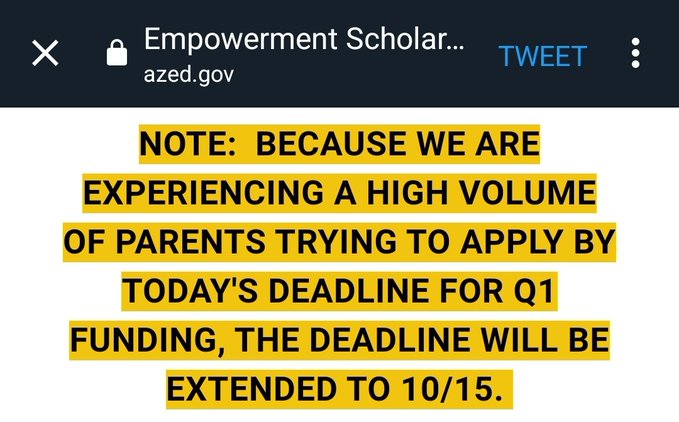
“Because we are experiencing a high volume of parents trying to apply by today’s deadline for Q1 funding, @azedschools is extending the deadline to remain eligible for retroactive Q1 funding to 10/15/22,” the department announced midday Friday.
UPDATE: Because we are experiencing a high volume of parents trying to apply by today's deadline for Q1 funding, @azedschools is extending the deadline to remain eligible for retroactive Q1 funding to 10/15/22. https://t.co/NbiNjT8SnI
Gov. Doug Ducey helped spread word of the extension while commenting on the tremendous popularity of the new law which now makes all 1.1 million of Arizona’s K-12 students eligible to apply for an ESA which provides about $7,000 per student, per year to assist families in tailoring a student’s education experience to best meet their needs.
The funds can be used for a variety of purposes, including private school tuition, homeschooling expenses, educational therapies, tutoring, and other expenses in exchange for not attending a public school or receiving a tuition tax credit.
Arizona parents have shown time and time again they want options for their children’s education. https://t.co/Th3lqXXC2O
More than 12,000 applications have been received by the Arizona Department of Education since the governor signed ESA expansion legislation in June. That outpaces the number of students who were utilizing the ESA program under the old law.
The new expanded eligibility was to take effect Sept. 24 with a Sept. 30 deadline to qualify for first quarter funding. The rush by families to apply this week was bolstered by publicity involving a political action committee’s failed referendum effort to waylay the ESA expansion until voters could decide in 2024 whether it should go into effect or not.
Arizona Secretary of State Katie Hobbs put the law on hold Sept. 23 based on claims by Save Our Schools Arizona that more than 141,000 referendum petition signatures had been submitted to Hobbs’ office. Of those, at least 118,823 signatures needed to be validated to keep the ESA expansion sidelined.
But in a letter dated Thursday, Hobbs’ staff officially confirmed what has been known for days – that the referendum effort failed to come anywhere close to the constitutional minimum number of signatures.
We have informed the SOS committee that the referendum will not qualify for the 2024 General Election Ballot. While the statutorily required review continues, our office has inspected enough petitions & signatures to confirm that the 118,823 signature minimum will not be met. pic.twitter.com/UVydtBH5oi
One parent said Friday’s announcement by Hobbs’ office ensures parents are now “rightly in control of their children’s future.”
Christine Accurso of Gilbert is among pro-ESA parents who questioned whether the glaringly insufficient referendum filing was simply a calculated ploy by anti-school choice politicians to freeze funding for children right in the midst of the school year.
“As a longtime ESA parent, I could not be more thrilled to see thousands of new parents benefiting from this program,” Accurso said. “It is my hope that the rest of the country can follow our lead and bring this legislation to their state, so that we can one day see all American children in the school of their parent’s choice.”
Save Our Schools Arizona issued a statement Friday putting the blame for the group’s referendum effort failure on the governor, who is one of ESA’s staunchest supporters.
“We are confident we would have succeeded had Governor Ducey not waited 10 days to sign the bill, robbing Arizona voters of crucial time to sign the petition,” according to the statement.
The group even criticized pro-ESA organizations like the Goldwater Institute for using “sophisticated software” to review the petitions, resulting in Monday’s revelation that Save Our Schools Arizona submitted only about 90,000 signatures.
For school choice advocates like Accurso, the important fact is that the ESA expansion is now in effect. The priority now is to ensure families that still want to apply become aware of the extended Oct. 15 deadline.
BREAKING: So many families are applying for the new school choice program that the Arizona Department of Education extended the application deadline by two weeks pic.twitter.com/vrNKDisO5z
On Wednesday, Democratic Maricopa County Attorney candidate Julie Gunnigle denied allegations of partnering with an abortion clinic accused of fetal organ sales.
Gunnigle issued the denial in response to a text campaign survey which asked voters about their attitude toward Gunnigle’s connection to an abortion clinic that “violated federal law by harvesting and selling organs for profit.” Gunnigle called the allegation a “new low” and denounced her opponent, Maricopa County attorney Rachel Mitchell, for having supporters that would issue the text.
“This ‘survey’ which is untrue, hurtful, and reprehensible has no place in politics and is a disservice to her constituents, particularly coming from someone in an office reeling from lack of integrity,” stated Gunnigle.
Today I was accused of…being part of a fetal organ harvesting operation?!?
The origins of the allegation that Gunnigle partnered with a fetal organ harvesting operation likely originated with a viral report from earlier this month. The Washington Free Beacon reported on Gunnigle’s campaign event in 2020 with Camelback Family Planning, an abortion clinic that harvested and sold fetal organs from 2010 to 2015.
The Washington Free Beacon report also noted Gunnigle’s recent fundraising efforts for another abortion clinic, Desert Star Family Planning, whose founder made light of fetal organ harvesting.
NEW: Soros-Backed Arizona DA Candidate Partners With Abortion Clinics That Sold Fetal Organs
In addition to endorsements from both abortion clinics, Gunnigle benefits from the Democratic dark money network’s kingpin, George Soros, whose Open Society Policy Center bankrolled Planned Parenthood lobbying after investigative journalist David Daleiden released undercover videos of abortion providers selling fetal tissue. Those videos sparked national controversy.
The House Committee on Oversight and Reform has a “Planned Parenthood Fact v. Fiction” page countering Daleiden’s claims. The committee notes that Planned Parenthood recoups only the cost of transferring the fetal parts, drawing the distinction between “sale” and “profit.”
In March, months ahead of the Supreme Court (SCOTUS) ruling overturning Roe v. Wade, Gunnigle pledged to not prosecute anyone who broke laws limiting or prohibiting abortions if elected.
Corinne Murdock is a reporter for AZ Free News. Follow her latest on Twitter, or email tips to corinne@azfreenews.com.
Last year’s fiery death of two adults and seven children in a head-on collision involving a drunk driver in California has prompted the National Transportation Safety Board (NTSB) to recommend all new vehicles in the U.S. be equipped with a device capable of preventing or limiting a vehicle’s operation if driver impairment by alcohol is detected.
The NTSB recommendation calls on the National Highway Transportation Safety Administration (NHTSA) to adopt new manufacturing requirements to include passive vehicle-integrated alcohol impairment detection systems, advanced driver monitoring systems, or a combination of both in an effort to prevent impaired drivers from getting on the road.
“Vehicle-integrated passive alcohol detection technologies that prevent or limit impaired drivers from operating their vehicles have significant lifesaving potential; however, development of the technologies has been slow, and additional action is needed to accelerate progress in implementing these technologies,” according to the NTSB report of the deadly 2021 California crash.
That report released in September argues such a device would have likely kept a heavily intoxicated driver off a highway the night of Jan. 1, 2021. The unidentified driver lost control of his SUV at speeds between 88 and 98 mph and crossed the centerline where the SUV crashed head-on with a pickup truck.
The pickup truck was occupied by an adult driver and seven children ages 6 to 15. The truck immediately caught on fire and was fully engulfed before other drivers could extricate the occupants.
The SUV driver and all eight people in the truck died at the scene.
But NTSB chairwoman Jennifer Homendy says the “heartbreaking crash” could have been prevented with readily available technology, “just as it can prevent the tens of thousands of fatalities from impaired-driving and speeding-related crashes we see in the U.S. annually.”
The official findings in the California incident also included a renewed call for the NHTSA to incentivize passenger vehicle manufacturers and consumers to adopt Intelligent Speed Assistance (ISA) systems which alert a driver if a vehicle travels above the speed limit. Some newer ISA products can even automatically restrict the vehicle from traveling above a predetermined speed.
However, the five-member NTSB is not waiting for the NHTSA to adopt new manufacturing standards, which could take two or three years.
The agency has publicly called out the Alliance for Automotive Innovation—whose members manufacture nearly all new cars and light trucks sold in the United States—to encourage the development and deployment of technology to combat alcohol-impaired driving.
Data recently released by the NHTSA shows roughly one in three traffic fatalities in the U.S. resulted from crashes involving alcohol-impaired drivers. And the number of such impaired driver crashes is increasing.
Arizona is no different, according to the Arizona Department of Transportation, which shows the number of traffic fatalities in the state from all causes rose last year to 1,180, the highest level in 15 years. Of those, 243 deaths were alcohol related, up from six percent from 2020.
The full 2021 Arizona Motor Vehicle Crash Facts report is available here.
The NTSB is an independent federal agency charged by Congress to investigate a variety of transportation accidents, including aircrafts, railroads, boats, and pipelines. It also has authority to investigate “significant accidents” which occur on highways. Another responsibility of the NTSB is to issue safety recommendations aimed at preventing future accidents.
Any of those recommendations concerning highways are made to the National Highway Transportation Safety Administration (NHTSA) within the U.S. Department of Transportation. Among its authorities is the setting of and enforcement of safety standards.
On Monday, Arizona Senate President Karen Fann appointed Dr. Theodore Cooke, Central Arizona Project (CAP) general manager, to the Water Infrastructure Finance Authority (WIFA) Board.
FOR IMMEDIATE RELEASE: Senate President Karen Fann Announces Appointment to Water Infrastructure Finance Authority Board pic.twitter.com/cD86SYicVn
In June, Governor Doug Ducey increased WIFA’s responsibility to manage a $1.2 billion appropriation to ensure the state has an adequate water supply over the next century. The increased authority came through SB1740, introduced by State Senator Sine Kerr (R-Buckeye) and backed by a bipartisan majority of all but two votes in the legislature. Current members of the WIFA Board are Misael Cabrera, Keith Watkins, Paul Gardner, Alan Baker, Kevin Rogers, Lynne Smith, Briton Baxter, Fernando Shipley, and Ray Montoya.
The WIFA appointment comes as Arizona continues to grapple with its declining water supply.
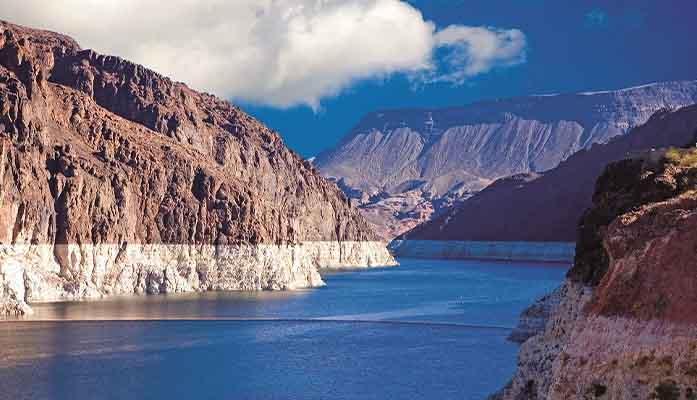
Last year, the federal government cut back on Arizona’s largest renewable water supply, the Colorado River, when it reclassified the river to Tier One drought status. Then last month, the Interior Department announced that it would again cut back Arizona’s water allocation for next year.
In response, Cooke and Arizona Department of Water Resources (ADWR) stated in a joint press release that Arizona isn’t responsible for it’s water supply struggles. Rather, the two authorities indicated that other states were to blame. CAP and ADWR outlined how Arizona did its part to conserve the Colorado River system supply, such as leaving 800,000 acre-feet in Lake Mead alone this year, in addition to 37 feet of increased elevation contributed to that lake since 2014.
“It is unacceptable for Arizona to continue to carry a disproportionate burden of reductions for the benefit of others who have not contributed,” stated the CAP and ADWR. “Discussions among the Basin States and the United States have only led to a framework relying entirely on short-term, voluntary contributions for 2023 that fall far short of the water volumes needed to protect the system.”
State officials have been exploring options to reverse Arizona’s declining water supply, such as adopting Israel’s desalination techniques.
Cooke will retire as CAP general manager in November. As a WIFA Board member, he will oversee loan and grant distributions for importing, conserving, and reusing water, as well as new technologies to improve the state’s water situation.
Fann asserted that Cooke was the best qualified candidate to improve the state’s water security at the most affordable cost to taxpayers.
“We closely examined every applicant and determined Dr. Cooke’s wealth of knowledge and incredible industry insight make him a highly qualified person for this position,” said Fann. “He understands the very different needs of municipalities, the agriculture industry, home builders and economic developers, as well as conservation.”
Cooke expressed gratitude for the appointment.
“I will do my very best to meet the high expectations for this role in the governance of Arizona’s fiscal, infrastructure, and water resources,” said Cooke.
Thank you, President Fann, for the appointment and for your confidence in me. I will do my very best to meet the high expectations for this role in the governance of Arizona's fiscal, infrastructure and water resources.
Maricopa County Attorney Rachel Mitchell announced on Tuesday that her office wouldn’t prosecute women who obtain an abortion, citing the ongoing legal confusion over state law on abortion.
Mitchell disclosed that her office hasn’t received any case submittals relating to abortion. However, if any submittals were to come through, Mitchell promised that she would seek court guidance before taking any action.
“I know this is a highly emotionally-charged subject, and I want the community to know: I will not prosecute women for having abortions,” said Mitchell. “And no statute even suggests that a woman will ever be prosecuted for her decision.”
Mitchell added that she wouldn’t further victimize rape, incest, or molestation victims by prosecuting them. She implied that her detractors were spreading lies in order to sow fear for political gain. That final comment was likely directed at her opponent, Democratic candidate Julie Gunnigle.
In response, Gunnigle accused Mitchell of “flip-flop[ping]” on her position on prosecuting abortion cases. Gunnigle contended that Mitchell’s promise to enforce the law was contradictory.
Do you know why you shouldn’t wear flip-flops while you’re running?
Because it’s dangerous. This flip-flop by unelected County Attorney Mitchell is dangerous. /🧵 https://t.co/v6pAqR4DC0
Planned Parenthood endorses Gunnigle. Earlier this week, the abortion organization petitioned the Pima County Superior Court to implement a stay on its ruling last week, which lifted the 1973 injunction on Arizona’s total abortion ban.
PPAA is proud to announce our endorsement of Julie Gunnigle for Maricopa County Attorney. Gunnigle is a local attorney and activist who continues to fight for reproductive freedom, justice in our criminal legal system, and funding in our public schools. @JulieGunniglepic.twitter.com/GQkRqOtiri
— Planned Parenthood Advocates of Arizona (@ppazaction) March 28, 2022
At present, two abortion laws are in effect: one limiting abortions to 15 weeks, and another banning abortions entirely save in cases where the mother’s life is at stake.
While the state of abortion law is in legal limbo in Arizona, local governments are determining their next moves.
Tucson led the way, preceding the Supreme Court (SCOTUS) ruling by passing a resolution in early June that effectively established the city as a safe haven for abortions. The resolution allowed the police to not arrest anyone who violated abortion law.
AZ Free News reached out to the Phoenix City Council and the Phoenix mayor’s office concerning their promise last month to pass a resolution prohibiting the use of city resources to enforce abortion laws. We are awaiting a response.
Corinne Murdock is a reporter for AZ Free News. Follow her latest on Twitter, or email tips to corinne@azfreenews.com.
The Arizona Department of Transportation is hoping to protect consumers from having a bad time buying a used vehicles.
An increased demand for certified pre-owned or used vehicles has been seen in recent months in response to manufacturer supply chain interruptions and the increased cost of new vehicles coming off the assembly line. Add that to tightened underwriting rules for new vehicle loans, and the used car market has become the next best option for many Arizonans.
But purchasing a used vehicle comes with its own risks, whether buying from a private party or a car dealer. Which is why ADOT urges consumers to use care in such transactions, and to “walk away” if anything seems off with the car, the deal, or the seller.
Most used cars sold in Arizona come with only an implied warranty of merchantability lasting 15 days or 500 miles, whichever comes first. Therefore, ADOT recommends consumers not buy a used vehicle until a trusted mechanic has performed an inspection.
In addition to checking the vehicle’s general mechanical condition, the inspection should look at whether the odometer was tampered with and whether the vehicle has any water or collision damage which was not reported or properly repaired. Such damage could lead to future malfunctions of the electrical system or engine.
A prospective buyer should also obtain a Motor Vehicle Record to ensure the vehicle’s title is not encumbered by a lien. When a vehicle title has a lien, it cannot be transferred to a new owner without a release first being recorded.
“Unfortunately, there are unscrupulous sellers that go to an auto-title / loan business and receive a loan against their vehicle one day before they sell it. The auto-title / loan business applies a lien to that particular vehicle so it can’t be sold until the loan is paid,” according to ADOT.
A Motor Vehicle Record is available at MVD offices and authorized MVD third party office. Private companies such as CarFax and Experian Automotive also sell similar records, often referred to as a vehicle history report.
A third way to avoid fraud is to ask the vehicle seller to be present with the buyer to transfer the title at an MVD or Third Party office where the payment can be exchanged.
ADOT even has advice for anyone selling a used vehicle, as seller’s too can be targeted by scammers. First, make sure to obtain the buyer’s name and address. Second, make sure to remove the license plate and any handicap placard before the new owner drives away.
It is also critical to complete an ADOT-MVD “sold notice” and submit it to ADOT. This step ensures the seller is not held responsible for any tickets or liability connected with the vehicle after the sale is reported.
Additional consumer information concerning auto purchases is available from the Arizona Attorney General’s Office here.