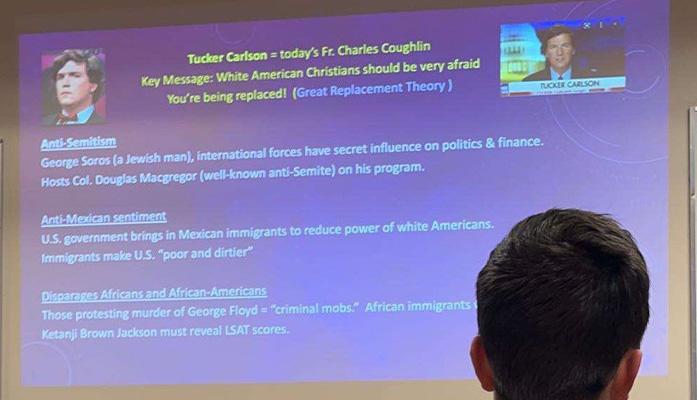
A class within Phoenix’s elite private Catholic high school, Brophy Preparatory School, lectured students that Fox News host Tucker Carlson was anti-Semitism, anti-Mexican, and anti-African American.
A photo obtained by AZ Free News featured a slide shown in a “History of the Catholic Church” class, equating Carlson with controversial 20th century Roman Catholic priest Charles Coughlin. Carlson is Episcopalian.
“Tucker Carlson = today’s fr. Charles Coughlin,” read the slide. “Key message: White American Christians should be very afraid[.] You’re being replaced! (Great Replacement Theory).”
Coughlin pioneered political radio, garnering around 30 million listeners in his program’s heyday. He denounced the Ku Klux Klan (KKK) though he expressed opposition to banks and Jewish people in power. He opposed communism but was equally against free market capitalism, going so far as to support Franklin Delano Roosevelt’s (FDR) New Deal initially. Coughlin advanced the term “social justice.”
For years, the mainstream media discussed how Democrats were relying on and influencing demographic changes to skew voting in their favor, quipping “demographics are destiny.” The 2020 election results cast doubts on Democrats’ long-term plan as more of a theory, when voter turnout reflected that Republicans were the party of multiracial, working-class voters in practice. However, polling suggested that younger Hispanic and black individuals were more likely to vote Democrat.
The slide then listed evidence to support its claims of Carlson’s racism toward Jewish, Mexican, and black people. It listed various claims put forth by Carlson. On charges of antisemitism, the slide summarized Carlson’s statements that George Soros, a Jewish man, and international forces secretly influence politics and finances.
On charges of anti-Mexican sentiment, the slide summarized Carlson’s statements that the government tolerates mass migration in order to reduce white Americans’ power. The slide also included an out-of-context reference to Carlson’s belief that mass unchecked immigration leads to poorer, dirtier living conditions.
Carlson’s full remarks focused on peoples’ concerns over the quality of areas where large numbers of immigrants settled and how elected leaders ignored those concerns. He also characterized immigrants as “nice people” and highlighted concerns from Tijuana, Mexico citizens over the spikes in crime and uncleanliness accompanying Honduran immigrants— something mainstream media and the classroom slideshow neglected to spotlight.
“[Immigrants are] nice people, no one doubts that, but as an economic matter this is insane. It’s indefensible, so no one even tries to defend it. Instead our leaders demand that you shut up and accept this. We have a moral obligation to admit the world’s poor, they tell us, even if it makes our country poorer and dirtier and more divided,” stated Carlson. “Immigration is a form of atonement. Previous leaders of our country committed sins; we must pay for those sins by welcoming an endless chain of migrant caravans. That’s the argument they make.”
Finally, on charges of anti-African American sentiments, the slide pointed out how Carlson called George Floyd protestors “criminal mobs,” and how he insisted on the necessity of seeing Supreme Court Judge Ketanji Brown Jackson’s LSAT scores. The slide neglected to include the fact that Carlson was referring to those engaged in rioting when accusing George Floyd protestors of criminal mob behavior.
“Reason and process and precedent mean nothing to them. They use violence to get what they want immediately,” wrote Carlson. “On television, hour by hour, we watch these people — criminal mobs — destroy what the rest of us have built.”
Concerning Jackson’s LSAT scores, Carlson shared doubts that Jackson had a record of legal mastery.
“[An LSAT score] would settle the question, conclusively, whether she’s a once-in-a-generation legal talent,” stated Carlson. “It would seem like Americans in a democracy have a right to know that and much more before giving her a lifetime appointment.”
Tucker: It might be time for Joe Biden to let us know Ketanji Brown Jackson’s LSAT score was. Why wouldn’t he tell us that… pic.twitter.com/boPHU5PnMd
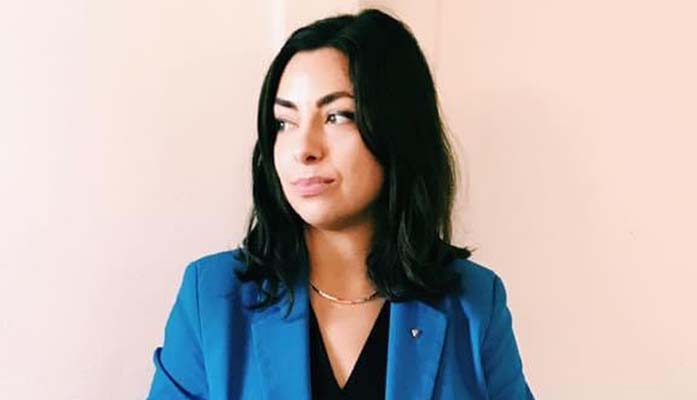
Earlier this month, the Arizona Democratic Party hired a new staffer, Josselyn Berry, known for her support of defunding police and the infamous cop killer and FBI Most Wanted Terrorist, Assata Shakur. After escaping from prison, Shakur received political asylum in Cuba where she resides currently.
Up until recently, Berry served as the communications director for the Arizona State Senate Democratic Caucus. She assumed that role in March 2020. It was less than two months into that job and several days after George Floyd’s death that she quoted Shakur, whose remarks were loosely paraphrasing the final sentences in Karl Marx and Frederick Engels’ Communist Manifesto.
“It is our duty to fight for our freedom. It is our duty to win. We must love each other and support each other. We have nothing to lose but our chains.”
The Arizona Senate Democrats also shared the quote on their Twitter feed. They later removed the offending tweet and issued a formal apology after it stoked controversy. Berry didn’t delete her tweet.
In their apology statement, the Arizona Senate Democrats claimed ignorance of Shakur’s criminal history and status as a wanted terrorist.
“This is a quote used frequently in social justice and activism circles and we know her as an author and well-known commentator on civil rights. Yet it has come to our attention her past criminal conviction and current status,” wrote the Arizona Senate Democrats. “The use of the quote was not intended as an endorsement, but to emphasize issues of social justice and we regret the inclusion of the quote, but stand by the rest of the statement. We remain focused on the murder of Black Americans and finding solutions to address systemic racism in this country.”
— Arizona Senate Democrats (@AZSenateDems) May 29, 2020
Berry graduated from Arizona State University’s (ASU) Walter Cronkite School of Journalism and Mass Communication, where she was also a Barrett, The Honors College student.
Corinne Murdock is a reporter for AZ Free News. Follow her latest on Twitter, or email tips to corinne@azfreenews.com.
A new Tucson-based abortion rights group, Arizonans for Reproductive Freedom, began gathering signatures for a ballot initiative making abortion a right within the Arizona Constitution. The group filed their application last Monday. With a July 7 deadline, they have a little over six weeks to collect over 356,000 signatures to qualify.
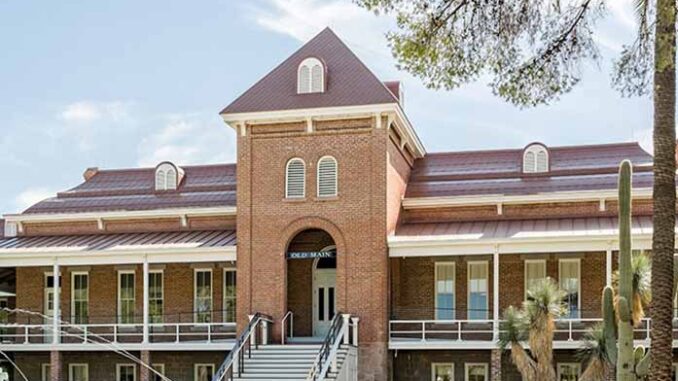
A University of Arizona (UArizona) College of Medicine professor and Tucson OB-GYN, Dr. Victoria Fewell, filed the application as the group’s chairwoman alongside the group’s treasurer: UArizona Senior Program Coordinator, Planned Parenthood Arizona Secretary, and former Pima County Democratic Party Executive Director Shasta McManus.
McManus has been active with Planned Parenthood Advocates of Arizona (PPAZ), recently voicing over a biographical feature on avowed communist activist and Black Panthers supporter, alleged black militant, and University of California professor Dr. Angela Davis. Last week, PPAZ Chairwoman Chris Love bragged about her husband assaulting a black Trump supporter while at a pro-abortion rally in Phoenix.
The proposed constitutional amendment not only declared the right to elective abortions at any point in a woman’s pregnancy. It reads as follows:
Every individual has a fundamental right to reproductive freedom, which entails the right to make and effectuate decisions about all matters relating to pregnancy, including but not limited to prenatal care, childbirth, postpartum care, contraception, sterilization, abortion care, miscarriage management, and infertility care.
Neither the state nor any political subdivision shall restrict, penalize, frustrate, or otherwise interfere with the exercise of the right to reproductive freedom, including: any individual’s access to contraception; pre-viability medical and surgical termination of pregnancy; or medical and surgical termination of pregnancy when necessary to preserve the individual’s health or life.
Neither the state nor any political subdivision shall restrict, penalize, frustrate, or otherwise interfere with a qualified, licensed healthcare professional providing medical services or any person providing non-medical services necessary for the exercise of the right to reproductive freedom.
The term ‘viability’ means the point in a pregnancy at which, in the good-faith medical judgment of the qualified, licensed healthcare professional, based on the particular facts of the case before the healthcare professional, there is a reasonable likelihood of sustained fetal survival outside the uterus with or without artificial support.
The activist group also began asking for donations.
Arizonans for Reproductive Freedom is working to give you a voice & vote this Nov with a ballot initiative to protect reproductive rights. We believe every person should make their own healthcare and family planning decisions
— Arizonans for Reproductive Freedom (@azreprofreedom) May 17, 2022
The group filed the ballot initiative application about two weeks after the leak of a Supreme Court draft ruling determining whether abortions constitute a state issue.
Corinne Murdock is a reporter for AZ Free News. Follow her latest on Twitter, or email tips to corinne@azfreenews.com.
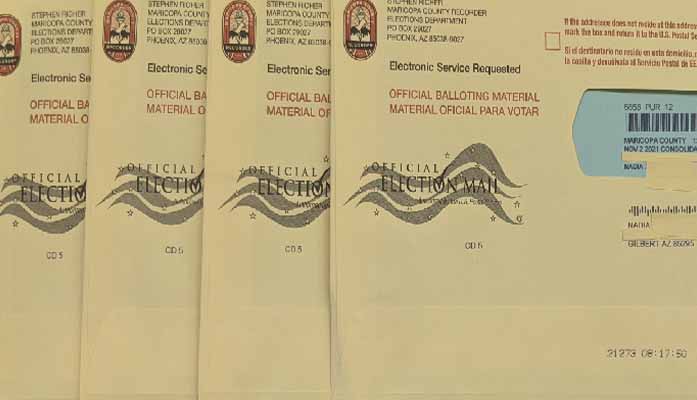
On Monday, the Arizona Senate passed HB2617 to require county recorders to cancel voter registrations for individuals who are proven to not be qualified electors, such as those who aren’t U.S. citizens and those who have a driver’s license or other non-operating license in another state. The bill passed along party lines, 16-13. Since HB2617 was amended in the Senate, it will be reviewed by the House before it’s passed on to Governor Doug Ducey.
In further detail, HB2617 will require the Arizona Department of Transportation (ADOT) every month to submit information regarding who’s been issued a driver’s license or non-operating license in another state to the secretary of state. Then within 10 days, the secretary of state will also be required to furnish county recorders with a list of registered voters for their county that were issued a driver’s license or a non-operating ID license in another state.
Additionally, HB2617 requires the county recorder to compare their voter registration database to the Social Security Administration database on a monthly basis. In the event an individual doesn’t provide satisfactory proof of citizenship, county recorders must compare their file to the Electronic Verification of Vital Events System.
Furthermore, the secretary of state will be required to report the number of deaths and number of voter registration cancellation notices issued to county recorders to the state legislature on a quarterly basis. Jury commissioners and managers must also forward information about individuals who indicate they’re not a U.S. citizen or reside outside of the county to the secretary of state and county recorder.
Prior to canceling the voter registration of the person in question, county recorders must submit notice to the individual and give them 90 days to provide evidence that they’re qualified to vote in Arizona. If the person doesn’t respond with satisfactory evidence within 90 days, each individual case may be referred to the county attorney or attorney general for further investigation.
Progress Arizona, a progressive activist nonprofit, argued that the legislation would “harm vulnerable communities,” calling it an “unnecessary barrier to vote.”
The GOP-led #AZLEG will not stop attacking our right to vote until they implement their bills that would harm vulnerable communities in Arizona. Call your state Senator and ask them to VOTE NO on #HB2238 and #HB2617! https://t.co/BK67Crv13p
House Republicans insisted that the legislation, sponsored by State Representative Joseph Chaplik (R-Scottsdale) would ensure that those who didn’t belong on the voter rolls would be purged.
On Monday, Governor Doug Ducey signed a bill requiring superior court clerks to submit monthly records of felony convictions to the secretary of state for purposes of purging the voter rolls.
State Senator Kelly Townsend (R-Mesa) introduced the bill, SB1477. The law provides additional identifying information for felons, including their date of birth and parents’ names.
“Each month the clerk of the superior court shall transmit to the secretary of state without charge a record of every felony conviction in that county within the preceding month. This record shall include only the name of the person convicted and the person’s date of birth, Social Security number, if available, usual legal residence and, if available, father’s name or mother’s maiden name. The secretary of state shall use the record for the sole purpose of canceling the names of convicted felons from the statewide voter registration database and shall notify the appropriate county recorder, and that county recorder shall cancel the voter registration of the convicted felon.”
The law was reportedly prompted by an ABC15 investigation into state law last November exposing a loophole allowing felons to register to vote illegally. Prior to Townsend’s bill, there wasn’t a system for election officials to discern which felons remained ineligible to vote or had their voting rights restored.
Jen Marson, Arizona Association of Counties Executive Director, expressed support for the legislation during hearings on the bill earlier this year.
Corinne Murdock is a reporter for AZ Free News. Follow her latest on Twitter, or email tips to corinne@azfreenews.com.
Last Friday, Congresswoman Debbie Lesko (R-AZ-08) joined a letter asking Centers for Disease Control and Prevention (CDC) Director Rochelle Walensky what legal authority her agency had to purchase Americans’ location data.
The CDC reportedly shelled out $420,000 for one year of phone data from at least 20 million Americans’ phones. The CDC’s transaction and its purposes were exposed through documents obtained by VICE through open records requests.
The CDC documents outlined plans to use the data to not only track COVID-19 curfew and quarantine compliance but visits to places of worship, K-12 schools, pharmacies, neighbors, parks, gyms, weight management companies, grocery stores; as well as the movements of Navajo Nation peoples, K-12 bus route users, and college students, to name a few. According to the documents, the CDC purchased the geotracking data from the controversial data broker SafeGraph. In doing so, the CDC relied on the same type of data currently being scrutinized for its use to track potential ballot harvesters, or “mules,” as highlighted in the controversial documentary “2000 Mules.”
Lesko joined 18 other legislators led by Congressman Kelly Armstrong (R-ND) to demand answers from the CDC. They expressed concern over the legality of the CDC surveilling Americans, citing a 2018 Supreme Court ruling that determined that mobile location information fell within a reasonable expectation of privacy.
“This violates the rights of Americans!” tweeted Lesko.
The congressman asked the CDC to explain what legal authority they had to acquire location data (especially concerning places of worship and its relation to the First Amendment), whether they obtained legal advice in order to do so, and whether they informed Congress of their intent to do so; if they’d requested Congress within the last five years to enact legislation specifically authorizing the purchase or acquisition of location data; what specific appropriation line item funded the purchase of the location data, and if they conducted an internal review to ascertain the compliance of their purchase; what form they purchased the data and if it included any personally identifiable information or it was in an aggregate, anonymous form; whether the data had been deleted or was being repurposed for other uses; what conclusions, analyses, or other methods were the results of their data acquisition; whether this was the only instance of them purchasing location data; who decided to purchase the data; and who has access to the data.
This wasn’t the first time that the CDC relied on SafeGraph. Throughout the 2020, they relied on SafeGraph information to conduct their reports on Americans’ compliance with stay-at-home orders. According to the documents obtained by Vice, the CDC continued relying on SafeGraph’s public data until the company no longer provided their data for free last March.
Corinne Murdock is a reporter for AZ Free News. Follow her latest on Twitter, or email tips to corinne@azfreenews.com.