by Staff Reporter | Jan 29, 2025 | Education, News
By Staff Reporter |
The Phoenix Union High School District (PXU) passed a resolution declaring its right to refuse entry to federal immigration officials on school grounds.
During a special meeting last Friday, the PXU Governing Board unanimously passed its “Safe Zone Resolution” which designated PXU as a “Safe Zone.”
Under this “Safe Zone” designation, the governing board claimed, PXU officials reserve the right to deny Immigration and Customs Enforcement (ICE) entry to any campus.
The governing board required ICE — as well as any state or local law enforcement agencies acting for ICE — to submit a request to Superintendent Thea Andrade or her designee for review. PXU asserted that Andrade or her designee had the authority to review whether each requested instance of campus access by immigration enforcement would be permitted by law or would require a judicial warrant.
Similarly, PXU required immigration enforcement agents to go through Andrade’s office to request student information.
PXU further claimed in its resolution that their district doesn’t maintain any data relating to students’ immigration status, characterizing the distinction as “potentially discriminatory” and “irrelevant” to education. The district declared that all students “regardless of immigration status” had a right to free public K-12 classrooms, even claiming that illegal alien minors had “other legal grounds for presence” in the country. The district resolution didn’t clarify what those were.
“[F]ederal immigration law enforcement activities, on or around District property and transportation routes, whether by surveillance, interview, demand for information, arrest, detention, or any other means, harmfully disrupt the learning environment to which all students, regardless of immigration status, are entitled and significantly interfere with the ability of all students, including U.S. citizen students and students who hold other legal grounds for presence in the U.S., to access a free public K-12 education,” stated the resolution.
The resolution was submitted before the board for approval by PXU general counsel, Eileen D. Fernandez.
Fernandez formerly served as the associate general counsel for Orange County Public Schools from 2010 to 2021.
The Trump administration has already indicated its intent to bring accountability to those who hinder immigration enforcement efforts.
The day after Trump’s inauguration last week, the Department of Justice (DOJ) issued an internal memo warning that all laws and actions “that threaten to impede” the Trump administration’s immigration initiatives were to be considered threats to public safety and national security.
The DOJ directed its Civil Division within the Office of the Associate Attorney General to identify and take legal action against state and local laws, policies, and activities serving as noncompliance to the Trump administration’s immigration initiative.
That memo also launched investigations into state or local law enforcement officials believed to be interfering with immigration enforcement.
“[I]n the absence of unusual facts, prosecutorial discretion at the Department of Justice and the U.S. Attorney’s Offices is bounded by the core principle that prosecutors should charge and pursue the most serious, readily provable offenses,” stated the memo from Acting Deputy Attorney General Emil Bove.
Bove’s memo declared that all state and local actors were required by the Constitution and federal law to comply with Trump’s immigration enforcement initiatives. The DOJ said that noncompliance would trigger federal investigations and, likely, prosecutions.
“Federal law prohibits state and local actors from resisting, obstructing, and otherwise failing to comply with lawful immigration-related commands and requests pursuant to, for example, the President’s extensive Article II authority with respect to foreign affairs and national security, the Immigration and Nationality Act, and the Alien Enemies Act,” stated the memo.
AZ Free News is your #1 source for Arizona news and politics. You can send us news tips using this link.
by Staff Reporter | Jan 28, 2025 | News
By Staff Reporter |
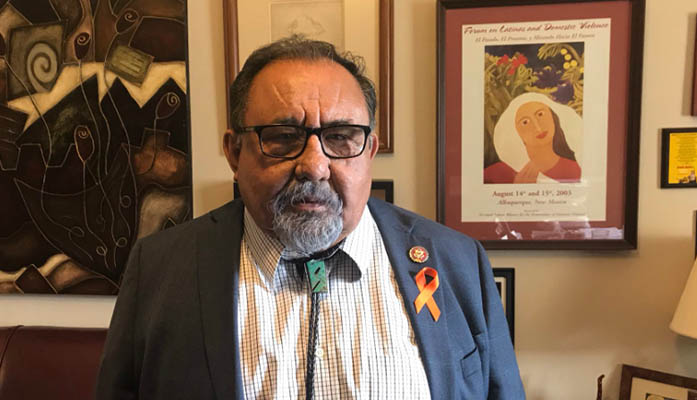
Constituents of the seventh congressional district are calling on their congressman, Rep. Raúl Grijalva, to retire from office due to his failing to show up for key votes this session.
Per House Clerk records, Grijalva hasn’t cast a vote on legislation this session yet. His last vote was for Hakeem Jeffries for House Speaker at the start of this month.
Critics of Grijalva’s continued absence in the House pointed out how Grijalva urged former President Joe Biden to drop out of last year’s presidential race.
House Clerk records also show that Grijalva last cast votes in November 2024 during the second session of the last Congress. There were nearly 40 roll call votes taken that second session, during which Grijalva was registered as “not voting.”
Grijalva sat on the committees for Education and Workforce, and Natural Resources. The congressman stepped down from his leadership position in the latter last month. Grijalva entered Congress in 2003.
Grijalva’s lack of presence in Congress is attributable to his lung cancer diagnosis, which he announced last April. Despite undergoing cancer treatments, Grijalva committed to running another term — his final, he promised.
Last October, Cronkite News reported that Grijalva didn’t cast any votes since mid-February, several months before he announced his cancer diagnosis. Those missed votes amounted to over 300.
Altogether, Grijalva missed about 480 out of the 490 roll call votes from mid-February through last week. As Arizona Daily Star columnist and constituent Tim Steller pointed out, that amounts to 97 percent of voting opportunities missed.
Grijalva told KOLD at the time that his failing to vote made no difference in Congress.
“They’re inconsequential because the Republicans are in charge and it’s the worst performing Congress in decades, if not a hundred years,” said Grijalva.
This session, Grijalva has missed out on 25 key votes on 19 pieces of legislation:
- House Resolution 5: Adopting the Rules of the House of Representatives for the One Hundred Nineteenth Congress, and for other purposes
- House Resolution 29: The Laken Riley Act
- House Resolution 23: Illegitimate Court Counteraction Act
- House Resolution 192: Amtrak Executive Bonus Disclosure Act
- House Resolution 152: Federal Disaster Assistance Coordination Act
- House Resolution 153: Post-Disaster Assistance Online Accountability Act
- House Resolution 28: Protection of Women and Girls in Sports Act
- House Resolution 164: POWER Act
- House Resolution 144: Tennessee Valley Authority Salary Transparency Act
- House Resolution 33: To amend the Internal Revenue Code of 1986 to provide special rules for the taxation of certain residents of Taiwan with income from sources within the United States
- House Resolution 30: Preventing Violence Against Women by Illegal Aliens Act
- House Resolution 186: Hershel “Woody” Williams National Medal of Honor Monument Location Act
- House Resolution 187: MAPWaters Act
- House Resolution 53: Providing for consideration of the bill (H.R. 471) the Fix Our Forests Act; and providing for consideration of the bill (S. 5) the Laken Riley Act
- House Resolution 165: Wounded Knee Massacre Memorial and Sacred Site Act
- Senate Bill 5: Laken Riley Act
- House Resolution 375: Continued Rapid Ohia Death Response Act
- House Resolution 471: Fix Our Forests Act
- House Resolution 21: Born-Alive Abortion Survivors Protection Act
AZ Free News is your #1 source for Arizona news and politics. You can send us news tips using this link.
by Staff Reporter | Jan 23, 2025 | News
By Staff Reporter |
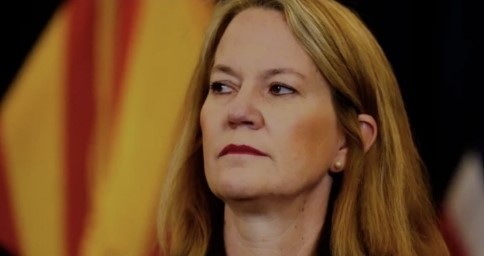
Attorney General Kris Mayes signed onto a lawsuit with other Democratic attorneys general against President Donald Trump’s executive order ending birthright citizenship.
Mayes called the order “unconstitutional” in a press release published Tuesday.
“No executive order can supersede the United States Constitution and over 150 years of settled law,” said Mayes. “While President Trump may want to take this nation back to a time before all American citizens were treated equally under the law – we will not allow him to do so.”
Mayes defended the modern interpretation of birthright citizenship — which inspired popularity of the pejorative “anchor baby” — as an accurate reading of the Fourteenth Amendment. Mayes cited the 1898 Supreme Court landmark decision in United States v. Wong Kim Ark.
In its ruling, the court declared that the defendant, Wong Kim Ark, had obtained citizenship through his birth on U.S. soil to parents who were legally residing in the U.S. but not citizens, and that those subject to U.S. jurisdiction apply to all domiciled within the country. The ruling remains precedent.
“Every person born in the United States, and subject to the jurisdiction thereof, becomes at once a citizen of the United States, and needs no naturalization,” ruled the court.
Mayes’ lawsuit against the Trump administration estimated there were about 255,000 children born in the U.S. to illegal immigrant mothers and about 153,000 children born to illegal immigrant parents in 2022. In Arizona that year, the lawsuit reported those numbers to be around 6,000 children born to illegal immigrant mothers and around 3,400 children born to illegal immigrant parents. Based on those latest totals, the lawsuit estimated that there are over 12,000 children born to illegal immigrants every month throughout the nation.
Additionally, Mayes’ lawsuit argued that the end to birthright citizenship for children born to illegal immigrant parents would harm Arizona and other states because they would lose federal funding.
Joining Arizona in this lawsuit against the Trump administration in the Washington Western District Court are Washington, Illinois, and Oregon.
The lawsuit is a separate one from another joint lawsuit filed earlier this week in the Massachusetts District Court by 18 states, along with Washington, D.C. and both the city and county of San Francisco: New Jersey, Massachusetts, California, Colorado, Connecticut, Delaware, Hawaii, Maine, Maryland, Michigan, Minnesota, Nevada, New Mexico, New York, North Carolina, Rhode Island, Vermont, and Wisconsin.
In his executive order, “Protecting the Meaning and Value of American Citizenship,” Trump asserted that the Fourteenth Amendment never interpreted the extension of citizenship universally to all born within the U.S., highlighting the provision excluding those “not subject to the jurisdiction thereof.”
Those that lack subjection to U.S. jurisdiction, the order says, include any individual whose mother was unlawfully present in the country and whose father wasn’t a citizen or lawful permanent resident at the time of their birth, or; any individual whose mother’s presence in the country at the time of their birth was lawful but temporary, and whose father wasn’t a citizen or lawful permanent resident at the time of their birth. For the latter case, “lawful but temporary” means those eligible to reside in the country under the Visa Waiver Program or those visiting on a student, work, or tourist visa.
The executive order is not retroactive. The order only applies to those born 30 days after the order’s issuance: February 19, 2025.
AZ Free News is your #1 source for Arizona news and politics. You can send us news tips using this link.
by Staff Reporter | Jan 21, 2025 | News
By Staff Reporter |
Congressman Andy Biggs is planning to run for Arizona governor, per a statement of intent filed on Tuesday.
The 2026 gubernatorial race may be a showdown between a veteran lawmaker known for challenging the D.C. status quo and the Biden administration, and the state’s first Democratic leader in over a decade, Governor Katie Hobbs.
Biggs, a longtime member and former chair of the House Freedom Caucus, has made his mark in Congress as a fiscally conservative hardliner. This was made especially clear during the pandemic, when other Republicans unified with Democrats time and again on increasing spending to offset emergency government mandates which crippled the economy.
Biggs was just one of the only two representatives to vote against the $8 billion for COVID-19 pandemic aid in early March of 2020. The congressman remarked in a public statement at the time that President Donald Trump had requested a fraction of that “bloated” amount ($2 billion) to fund a federal response to the outbreak.
Biggs’ assessment of the political climate at the time — issued exactly a week before Trump declared a national emergency for the COVID-19 pandemic — ultimately proved a wise warning unheeded:
“Throwing money at a potentially serious issue does not alleviate the American people’s concerns. Nor does politicizing the issue to score points for future elections,” said Biggs. “Congressional Republicans and Democrats should join the White House to calmly, wisely, and pro-actively communicate a unified response to their constituents. We must rise to the occasion and do what is best for this situation – as well as for future generations.”
Biggs was also one of only a few dozen who voted against the $15 billion Families First Coronavirus Response Act passed days later.
In all, the federal government spent $4.6 trillion on COVID-19.
Biggs would continue to oppose efforts to mitigate unchecked spending. In 2023, Biggs fought against Congress’ plan to raise the debt ceiling.
Biggs’ other key votes included his opposition to the National Defense Authorization Act of 2022, in large part on the basis of since-removed provisions requiring women to register for the draft.
The congressman has consistently supported legislation to close and prioritize the U.S. border over aid to foreign countries’ military efforts. Consistent with his dedication to securing American interests first, Biggs has consistently voted against the billions in funding afforded to Ukraine under the Biden administration.
In 2021, that first year of the border crisis, Biggs sponsored a resolution to impeach then-Secretary of Homeland Security Alejandro Mayorkas. In subsequent years, Biggs signed onto several efforts to impeach former President Joe Biden as well as former Attorney General Merrick Garland.
During his eight years in Congress, Biggs has sponsored over 900 bills and cosponsored nearly 1,300 bills.
Only one of Biggs’ bills has passed Congress, made it to the president’s desk, and became law: HR 4983, designating the Department of Veterans Affairs community-based outpatient clinic in Gilbert as the Staff Sergeant Alexander W. Conrad Veterans Affairs Health Clinic.
35 of Biggs’ cosponsored bills made it to the president’s desk. Three were vetoed, and 32 became law.
This session, Biggs has introduced over 80 proposed bills on a wide scope of red-meat Republican issues to strengthen and enforce immigration laws, modify individual health coverage requirements, restrict executive national emergency authority, prohibit vaccine and mask mandates, roll back foreign intelligence surveillance, require greater performance measures from various agencies, tie congressional salaries to budgeting agreements, pull back on various agencies’ spending or authority, abolish certain agencies, expand veteran care options, undo spying on Americans, simplify congressional bills, eliminate DEI funding in federal government, expand oil and gas production, ban abortion, and establish school choice, to name a few.
Biggs currently sits on the Committee on Oversight and Government Reform and Committee on the Judiciary.
Other declared Republicans who filed statements of interest: Christopher Ames, Scott Neely, and George Nicholson. One declared Libertarian, Barry Hess, filed a statement of interest.
AZ Free News is your #1 source for Arizona news and politics. You can send us news tips using this link.
by Staff Reporter | Jan 21, 2025 | News
By Staff Reporter |
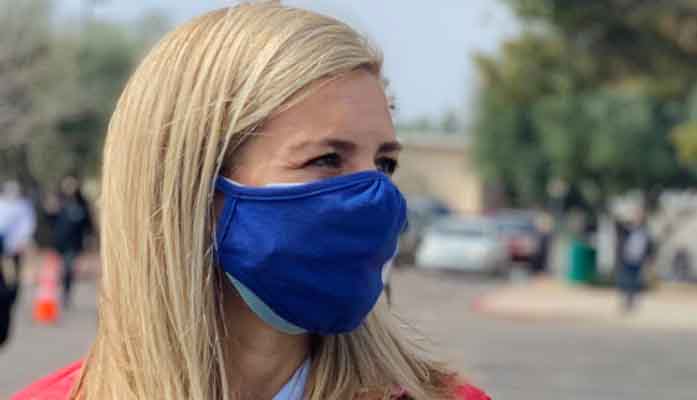
Phoenix Mayor Kate Gallego will now lead Climate Mayors, a coalition of 350 American mayors across 46 states working to advance progressive climate policies.
In a press release from the organization, Gallego committed to supplementing federal funding for climate initiatives using the private sector and philanthropy, expand influence of the Western Water Security Cohort into local governance, “extreme heat” mitigation, and further align member cities’ actions with Climate Mayors initiatives.
“I’ll focus on addressing extreme heat, strengthening partnerships, and ensuring all cities have the tools they need to advance climate action,” said Gallego.
Other members of Climate Mayors leadership include Boise, Idaho, mayor Lauren McLean; Atlanta, Georgia, mayor Andre Dickens; and Cleveland, Ohio, mayor Justin Bibb.
Last month, Climate Mayors committed to supporting the Biden administration’s new National Determined Contribution (NDC) target of 61 to 66 percent economy-wide greenhouse gas emissions reductions by 2035.
Climate Mayors executive director Kate Wright indicated the goals were feasible through commitments to energy and water efficiency programs and the expansion of “green” and “clean” infrastructure.
“Today’s announcement of a new U.S. NDC serves as an important goalpost for our unwavering ambition as subnational actors continue to lead the fight against climate change and advance America’s economic competitiveness,” said Wright. “Our membership of over 350 U.S. Mayors is ready to do its part to achieve our national target and build on the progress we’ve made over the last decade.”
The organization’s climate change initiatives include electric vehicle expansion, data collection on each city’s emission levels, a tracker for federal funding and grant opportunities, and provision of grants for partnerships between local governments and nonprofits.
Climate Mayors launched an electric vehicle purchasing collaborative in 2018 to expand city governance control and influence into county governments, transit agencies, port authorities, and colleges and universities. The coalition also committed to electrifying at least 50 percent of municipal fleets by 2030, and increasing electric vehicle chargers by at least 500 percent by 2035 (with 40 percent at least benefitting “disadvantaged” communities).
Last week, Climate Mayors announced a framework to develop equity-oriented electric vehicle plans. The coalition developed the framework alongside UC Berkeley’s Center for Law, Energy and Environment, The Greenlining Institute, and Forth Mobility. According to the framework, electric vehicle infrastructure should prioritize lower-income, non-white communities.
The coalition partnered with C40 Cities and the Urban Sustainability Directors Network to organize allocation of federal funding at the local level. Climate Mayors’ webpage for this planning links to the C40 Cities Knowledge Hub, which indicates that C40 Cities leads on the agenda for this initiative.
Gallego also sits on the steering committee of C40 Cities, serving as the North American representative on the international scale. As reported previously, a priority of C40 Cities is to eliminate meat and dairy consumption, new clothing purchases, and private car ownership.
Climate Mayors was founded in 2014 by three top Democrats: Biden’s ambassador to India and former Los Angeles Mayor Eric Garcetti, president/CEO of the LGBTQ+ Victory Fund and former Houston mayor Annise Parker, and former Philadelphia mayor Michael Nutter.
Several other Arizona mayors retain memberships within Climate Mayors: Tucson Mayor Regina Romero, Tempe Mayor Corey Woods, Sedona Mayor Scott Jablow, Nogales Mayor Jorge Maldonado, and Flagstaff Mayor Becky Daggett.
AZ Free News is your #1 source for Arizona news and politics. You can send us news tips using this link.