by Staff Reporter | Mar 23, 2026 | Education, News
By Staff Reporter |
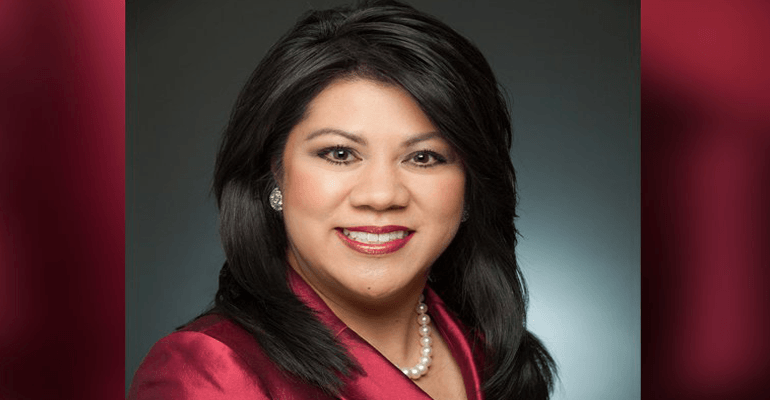
Arizona Treasurer Kimberly Yee is advocating for reforming the Empowerment Scholarship Account (ESA) Program to reduce improper spending.
The treasurer’s office manages the contract with the vendor operating the portal through which ESA holders submit reimbursement payments.
Yee shared that she directed her office to seek out vendors proposing to innovate better means of facilitating the expanding ESA program. The treasurer’s office will publish a formal request for information to secure a platform better suited to support the current scope of the program.
Over 100,000 families participate in the ESA Program.
“If there is a financial platform, or are updates to the current platform, that can provide families ESA program funds efficiently and identify any misspending or misuse, then Arizona taxpayers deserve to use that system,” said Yee.
Yee announced her RFI plan following a public dispute between Arizona Department of Education (ADE) Superintendent Tom Horne and the media over fraud, abuse, and waste within the ESA Program.
Horne maintains the program has low levels of those problems, but 12News argues they’re much higher.
12News claimed based on a risk-based audit that 20 percent of purchases under $2,000 within the ESA Program were fraudulent. Horne disputed that total as a “ridiculous” misunderstanding of data.
“Only 20 percent of that 20 percent were improper — that’s only four percent,” said Horne in an interview with KTAR News. “The other thing to know is, [those improper expenditures are] not all fraud. A lot of times it’s innocent mistakes, a paper that needs to be submitted, things that people think are okay but don’t fall into our standards. The amount of actual egregious purchases or fraud is 0.3 percent.”
The 0.3 percent figure came from a randomized study by a Stanford PhD, per Horne, which reviewed 3,000 random ESA orders between July 2025 and February 2026.
12News relied on public records to estimate in a report published last month that misspending “could” amount to 20 percent of all purchases in the ESA Program. According to their report, at least 18,000 of the 102,000 ESA Program participants had one or more unallowable purchases over the course of one year, which amounted to nearly 84,000 unallowable purchases.
Horne has demanded that 12News issue a retraction of their reporting perpetuating the 20 percent claim.
“A ridiculous figure of 20 percent fraud has been circulating concerning ESA purchases which resulted from a total misinterpretation of data provided to Channel 12. The 20 percent figure represented program participants that ADE had selected for risk-based auditing,” said Horne in a press release last week. “Continued use of the 20% fraud allegation is an outrageous misrepresentation to the public that must stop.”
AZ Free News is your #1 source for Arizona news and politics. You can send us news tips using this link.
by Staff Reporter | Mar 23, 2026 | News
By Staff Reporter |
An appointed group of Scottsdale residents used to approve land and development plans, but state law now requires city staff to do it.
Municipalities must adhere their development review processes to HB 2447, legislation sponsored by House Majority Leader Michael Carbone (R-LD25) passed by the Arizona legislature last year.
The bill made it a requirement, rather than an option, for municipalities to have administrative personnel to review and approve site and development plans, land divisions, lot line adjustments and ties, and preliminary and final plats without a public hearing. It also requires administrative personnel to review and approve design review plans based on objective standards, also without public hearing.
Additionally, the bill requires municipalities to allow at-risk submittals for certain on-site preliminary grading and draining work on infrastructure, and applicants with a history of compliance with building codes and regulations to be eligible for expedited permit review.
The goal behind the legislation was to accelerate development approvals, according to Rep. Carbone.
“It’s more about expediting versus the long process which takes anywhere from six months to two years,” said Carbone during the House Commerce Committee hearing last February.
The city of Scottsdale announced on Thursday that they would still rely on their citizen-led board as they adopt the changes required by law.
Previously the city relied on appointed citizens to its Development Review Board (DRB) to undertake those responsibilities modified by HB 2447. Although residents will no longer be charged with handling all development approvals, the city says the DRB will continue “under a revised structure” in which the board will review applicant-requested deviations from objective design standards.
Additionally, the city said the board will be the one to ensure compliance with state requirements by transitioning existing design guidelines into clear, objective standards.
DRB’s staff liaison and the city’s Planning & Development area manager, Brad Carr, said city staff would play more of an assisting role to the DRB.
“The Development Review Board has always had a mission to uphold the highest standards for development in Scottsdale,” said Carr. “While the new state law alters the scope and practice that the DRB has employed in the past, the mission remains the same. City staff is committed to assisting the board in that mission.”
The city of Scottsdale notified the public in a press release that city staff are also evaluating and updating city code and zoning ordinances to align with the new state law, and had already amended the Land Division Ordinance in December for administrative processing of land division plats.
Scottsdale leadership has been critical of the changes.
Scottsdale Councilwoman Jan Dubauskas told Scottsdale Progress that the legislation removed community control over development processes.
“Local control ensures that our communities remain distinct and in Scottsdale helps us keep our unique charm,” said Dubauskas. “In Scottsdale, our design and planning commissions bring residents to the table to help keep our city special. The legislature’s effort to erode local control is concerning because it will eventually homogenize all communities.”
The bill received support from a number of builder advocate groups and some municipalities: the Arizona Chapter of NAIOP; Arizona Chamber of Commerce; Arizona Multihousing Association; the cities of Goodyear, Glendale, Buckeye, Maricopa; the town of Queen Creek; Home Builders Association of Central Arizona; and League of Arizona Cities and Towns.
AZ Free News is your #1 source for Arizona news and politics. You can send us news tips using this link.
by Staff Reporter | Mar 22, 2026 | News
By Staff Reporter |
Arizona lawmakers revealed during a committee hearing that Maricopa County’s former recorder, Stephen Richer, is being investigated for obstruction.
The investigation into Richer was disclosed during last week’s House Federalism, Military Affairs, & Elections Committee meeting. The committee discussed an investigation by the office of State Rep. John Gillette (R-LD30), chair of the committee, into Arizona’s voter registrations. The findings of that investigation were packaged as part of a criminal referral to the Department of Homeland Security, Department of Justice, and Office of the Director of National Intelligence.
As part of his layout of the criminal referral packet, Gillette touched on an action by Richer in which the former recorder, while president of the Arizona Association of County Recorders (AACR) in 2023, advised other county recorders to not comply with a records request from Arizona lawmakers concerning the 2022 election.
“Stephen Richer telling recorders not to comply with the legislative public records request. That is not a glitch. That’s on purpose,” said Gillette.
State Rep. Rachel Keshel (R-LD17), vice chair of the committee, asked Gillette whether Richer reaching out to all of the county recorders qualified as obstruction. Keshel characterized Richer’s recent public engagements as a “CYA campaign.”
“Is there something there that he broke the law by telling other recorders to basically obstruct on that point? Is anything being looked into on that front?” asked Keshel.
Gillette disclosed that he discussed Richer’s actions with former DHS Secretary Kristi Noem and “her assistant,” and that Richer was being investigated for that communication with other recorders.
“There appears to be some obstruction or intent to obstruct other recorders from doing their job because they have an association, he was president of the association at the time, but he was instructing other elected officials that are not of Maricopa County how to comply or not comply in this case with a lawful public records request from the House,” said Gillette. “That is being looked at, and thus we’ve had a subpoena issued since.”
Richer commented on a video posted of the exchange with an “lol” in an X post, which he later deleted.
Earlier this month, federal investigators seized election-related records from Maricopa County as part of an investigation into the 2020 presidential election.
In response to that investigation, Richer wrote in a Dispatch op-ed defending the official outcome of the 2020 election. Richer characterized Arizona Republicans as being “maniacally obsessed [with] theories of a stolen election” and questioning the necessity of continuing scrutiny over Arizona elections.
“The years of investigations, tests, reviews, and audits are also worth revisiting because any future allegations would have to account for why all the previous probes didn’t uncover any material fraud or error,” wrote Richer. “I would politely suggest that the reason is because no such fraud or error exists. The voters of Arizona chose Joe Biden more than five and a half years ago. It’s time to move on.”
AZ Free News is your #1 source for Arizona news and politics. You can send us news tips using this link.
by Staff Reporter | Mar 22, 2026 | News
By Staff Reporter |
A federal judge ordered Kari Lake to undo her work to dismantle the federally funded international broadcast network, Voice of America (VOA).
President Donald Trump initially announced Lake’s appointment to serve as director of VOA shortly after his election in 2024. Lake was instead installed as special advisor to U.S. Agency for Global Media (USAGM), the parent agency which oversees VOA.
Trump later expanded Lake’s authority and control over USAGM and VOA by appointing her to serve as acting CEO of the USAGM last summer.
At the time of Lake’s takeover, VOA provided news and cultural programming in nearly 50 languages online, over airwaves, and through broadcasting.
Under an executive order from Trump to downsize and cut government waste with VOA and elsewhere, Lake embarked on a mission to size down the bureaucracy within USAGM and VOA.
Lake cut all but about 70 VOA employees. Over 1,000 of the 1,100 VOA employees were placed on administrative leave or fired; over 500 contractor roles at USAGM were eliminated.
District of Columbia District Court Judge Royce Lamberth ruled last week that Lake needed to bring those employees back by Monday, March 23, and to resume the scope of operations that were occurring prior to Lake’s takeover of the broadcasting network.
In response to the ruling, Lake reposted commentary by Andrew Kloster — general counsel for the Office of Personnel Management from January to December 2025 — which called Lamberth’s decision “wild overstepping” and “bad statutory analysis of federal employment law.”
The last social media activity from VOA occurred last March, when the cuts took place. Remaining VOA employees told media outlets that their work has been greatly limited under Lake’s administration, with some saying they’re left to do no work at all.
Tuesday’s ruling didn’t seem to deter the Trump administration from continuing their arrangements to bring VOA and USAGM to heel.
On Wednesday, USAGM named a new deputy director to the VOA: Newsmax news director Christopher Wallace, per an email obtained by The New York Times.
Lake led USAGM until last November amid a legal challenge of her eligibility to serve as director.
Last summer Lake testified to the House that USAGM had institutional flaws of incompetency, corruption, and bias which allegedly threatened America’s national security and standing in the world. Lake said VOA was also troubled with similar alleged problems.
Earlier this month Lamberth declared in a separate ruling that Lake was ineligible to take over USAGM leadership, and therefore her actions while in that position were illegitimate and voided.
Trump has nominated Sarah Rogers to take Lake’s place, pending Senate approval. Rogers is secretary of state for public diplomacy within the State Department.
A spokesperson for the White House, Anna Kelly, said the Trump administration would fight the ruling.
“President Trump was elected to eliminate waste, fraud, and abuse across the administration, including at the Voice of America — and efforts to improve efficiency at USAGM have been a tremendous success. This will not be the final say on the matter,” said Kelly.
On Thursday the Trump administration asked the judge to push back its March 23 deadline to reinstate the fired VOA employees, citing their intention to appeal.
AZ Free News is your #1 source for Arizona news and politics. You can send us news tips using this link.
by Staff Reporter | Mar 21, 2026 | News
By Staff Reporter |
Arizona is proving to be a key bridge between deadly drug traffickers and Americans.
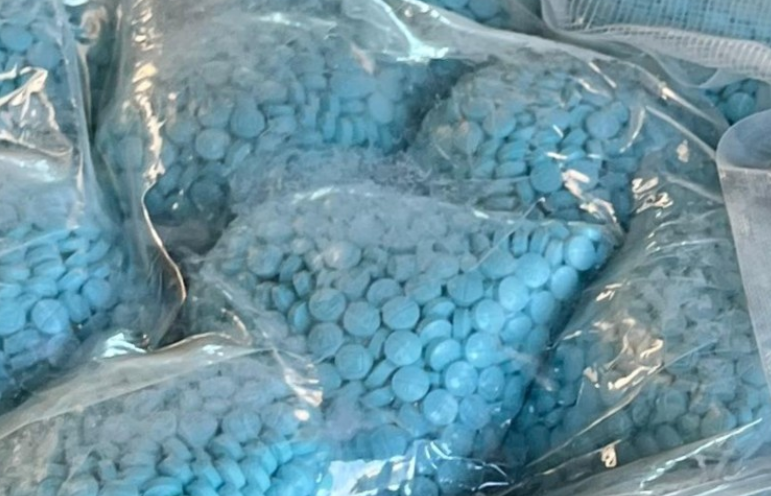
Out of the nearly five million fentanyl pills and powder seized in its most recent enforcement action by the Drug Enforcement Administration (DEA), about three million came from Arizona.
The DEA disclosed this discovery within its action, the second phase of Operation Fentanyl Free America, in an exclusive report to ABC15. The second phase occurred from early January to early February.
The 4.7 million fentanyl pills and 3,000 pounds of fentanyl powder amounted to over 57 million deadly doses of fentanyl. The DEA also seized 147,800 pounds of cocaine, 21,000 pounds of meth, over 26 million meth pills, 1,200 pounds of heroin, 65,000 pounds of illicit marijuana, and over 1,500 firearms.
Arizona consistently leads in fentanyl pill seizures, per the DEA. Special Agent in Charge Apolonio Ruiz said Arizona’s border remains very accessible to cartels and their drug traffickers.
“The Sinaloa Cartel, they have tentacles not only on the south side but pushed over here on the north side. They bring cell members here to develop and start shops in these areas and start pushing the drugs into different areas of Arizona,” said Ruiz.
The DEA plans to roll out more phases of Operation Fentanyl Free America, and agents will target other illicit drugs in addition to fentanyl — heroin, meth, and cocaine — as well as the money and equipment used in the criminal enterprise.
In the fall of 2024, Customs and Border Protection (CBP) seized the largest singular fentanyl seizure in CBP history: approximately four million fentanyl pills.
The seizure weighed over 1,000 pounds.
Last January, three men from Arizona were arrested in Wisconsin over the largest fentanyl seizure in that state’s history. Over 40 pounds of fentanyl disguised as prescription medication were taken. The drugs were estimated to be worth nearly $6 million.
Two of the three men, Dylan and Trevor Hock, were convicted. Dylan received 10 years of prison and 10 years of extended supervision. Trevor also received 10 years in prison. The third man, Jose Gamez, is awaiting trial.
Drug traffickers don’t just use Arizona as a front door to bring in fentanyl and other illicit drugs to the rest of the country.
Fentanyl emerged rapidly during the pandemic as the top drug epidemic in Arizona, then the nation. Fentanyl overtook meth as the deadliest drug in the state. Fentanyl deaths increased by nearly 5,000 percent since 2015.
At present, an average of over three people die every day in Maricopa County due to fentanyl. Similarly, over five people die from opioid overdoses throughout the state, most due to fentanyl.
Last year, there were over 4,900 verified non-fatal opioid overdose events. There were over 2,000 deaths.
The totals for 2025 marked an increase from 2024. Non-fatal opioid overdose events were about 4,000, and there were just under 1,700 opioid deaths.
So far in 2026, there have been over 600 verified non-fatal opioid overdose events and 30 confirmed opioid deaths.
AZ Free News is your #1 source for Arizona news and politics. You can send us news tips using this link.