by AZ Free Enterprise Club | Oct 31, 2025 | Opinion
By the Arizona Free Enterprise Club |
The Green New Scam got its start in Arizona two decades ago when a 5-0 Republican Commission (including then Republican Kris Mayes) adopted the Renewable Energy Standard and Tarriff Rules, or the REST Rules. Among other things, most significantly it ushered in the first “renewable” mandates in our state, forcing utilities to obtain at least 15% of their power from “renewables.” Ratepayers have been paying the costs (over $2 billion) ever since.
The REST Rules had a target date: 2025. Well, it’s now 2025, and the utilities have not only met that mandate, but they have also voluntarily exceeded it. Now our current 5-0 Republican Commission has started the process of repealing them.
Repealing the REST Rules is important, but the targets have already been met, and the price has already been paid. Substantively, the repeal won’t really affect ratepayers all that much. Why? Because mandate or no mandate, our utilities are completely committed to going “Net Zero” by 2050, and so far, they’ve been allowed to do it…
>>> CONTINUE READING >>>
by AZ Free Enterprise Club | Oct 25, 2025 | Opinion
By the Arizona Free Enterprise Club |
In 2022, the Arizona legislature passed—and then-Governor Ducey signed into law—a landmark election integrity bill: HB 2492. Authored by the Arizona Free Enterprise Club, the law bolsters safeguards to our election process by requiring proof of citizenship to register to vote, ensuring that only U.S. citizens are voting in our elections.
It’s commonsense legislation that is popular with the public and a blueprint for other states looking to adopt nearly identical bills. And why wouldn’t it be? U.S. citizens cannot go into France, Australia, or any other country throughout the world and vote in their elections, so why should citizens from other countries be allowed to vote in our elections?
Yet immediately after HB 2492 was passed, a consortium of liberal organizations and the Biden Justice department sued to stop the law from going into effect. Now, after multiple trips to the Ninth Circuit Court of Appeals, one of which included a bizarre ruling that required an emergency appeal to the U.S. Supreme Court to let Arizona enforce our proof of citizenship requirements for the 2024 election (which we won), the entire law will now be going to the nation’s highest court.
We are confident that the Supreme Court will uphold the law in its entirety, but one issue about the litigation has been simmering beneath the surface: Arizona Attorney General Kris Mayes…
>>> CONTINUE READING >>>
by AZ Free Enterprise Club | Oct 22, 2025 | Opinion
By the Arizona Free Enterprise Club |
This November, Tucson voters will decide whether they would like to continue doubling down on Tucson’s failed policies that have invited rampant crime, made it impossible to navigate the city without extreme frustration, and drain its wealth and livability to pursue virtue-signaling but poverty-inducing policies. Or if they would rather get off the merry-go-round of insanity.
Prop 417 is the city’s updated 10-year general plan, and a ‘Yes’ vote continues the madness. A ‘No’ vote on Prop 417 is the only reasonable choice for anyone who wants to save Tucson from itself.
A Blueprint for Failure
“Plan Tucson” is essentially a bundle of every bad idea the city has produced over the past decade including the Housing Affordability Strategy for Tucson (HAST), People, Communities, and Homes Investment Plan (P-CHIP), Move Tucson the transportation masterplan, and the Tucson Resilient Together climate plan. Each of these plans has helped create the mess Tucson is in today. Codifying them into 14 goals and 190 policies through Prop 417 would simply lock in these failures in for another decade.
Crazy Climate Commitments
Take for example the city’s climate action plan published in 2023 which set the delusional goal of having 40% of Tucson residents to be walking, biking, taking public transit or “rolling” around the city by 2050. The plan includes a commitment to “net zero” by 2030 for government operations and by 2045 city-wide—including private residents and businesses.
To achieve this fantasy, the city plans to build out a massive transit agency that if they meet their targets of hiring 900 new people every year will eventually eclipse Raytheon as the largest employer in Tucson by more than double (despite collapsing ridership and a 100% taxpayer subsidy since fares were permanently eliminated in 2020.)
The plan requires residents to hold to a “Zero Waste” commitment to empty out the landfills, imposes new road diets, and even pays city employees to not use their cars. This list of insane ideas is also very very expensive, with a price tag of roughly $365 million…
>>> CONTINUE READING >>>
by AZ Free Enterprise Club | Oct 18, 2025 | Opinion
By the Arizona Free Enterprise Club |
Ever since Arizona passed universal school choice, the Empowerment Scholarship Account (ESA) program has been the target of the Red for Ed teachers’ union, Democrat lawmakers and their corporate media allies. They demand transparency and accountability for alleged abuse of ESA dollars—all while scandal after scandal continues to pop up in our state’s K-12 public schools.
We saw it at the beginning of the year when the Isaac Elementary School District (IESD) was placed under a state receivership after it was determined that it had a budget shortfall of over $12 million! And this wasn’t a surprise. The Auditor General had been sounding the alarm on IESD’s mismanagement of funds for five years!
But where was the corporate media? Where was the digging? Where was the series of articles and threads on X exposing the corruption?
We got none of it. Instead, we have certain Red For Ed reporters, like Craig Harris, attacking Arizona’s popular ESA program with liberal talking points about unspent funds and alleged waste and abuse.
But if the failures of IESD weren’t enough, now we have the sordid financial tale of Tolleson Union High School District, a story so scandalous that it should make every taxpayer’s blood boil…
>>> CONTINUE READING >>>
by AZ Free Enterprise Club | Oct 15, 2025 | Opinion
By the Arizona Free Enterprise Club |
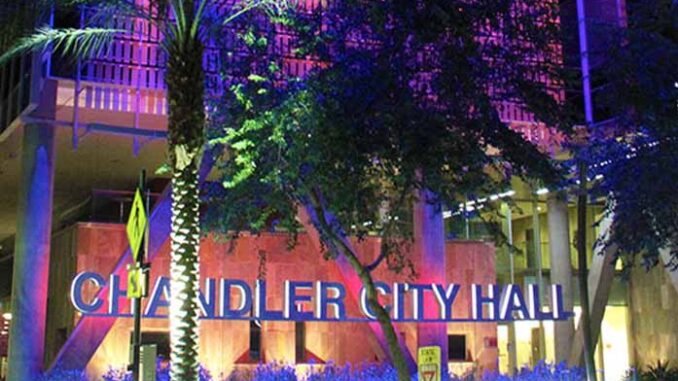
What’s most likely to get your local officials fired up to fight for you? Lower utility rates? Wrong. Removing sexually explicit material from our libraries? Nope. How about just filling potholes in our roads? You’d think so. But what really gets the local officials in Chandler going is making sure they can sit on city council or as mayor longer.
Proposition 410, a local ballot measure, seeks to amend the city charter’s term limit section to extend the term for how long councilmembers and the mayor can serve. The measure is particularly problematic because it directly benefits a sitting councilmember, Matt Orlando, allowing him to run for mayor in 2026 without interruption after finishing his second consecutive council term. This proposition is not about reigning in political power; it’s about conveniently clearing the path for one councilmember to extend his political career. If it doesn’t pass in November, Orlando will face issues being elected mayor after his stint on the council, and clearly, he can’t have that.
The current city charter provision essentially says that one person can serve no more than two consecutive terms as councilmember, mayor, or a combination of both, and must wait four years before running again for either office. Therefore, someone can only serve two consecutive terms total.
However, some argue this language is ambiguous, allowing for another interpretation, one that allows a person to serve up to sixteen consecutive years: eight as a councilmember and eight as mayor. This interpretation has been the practice in Chandler for the past three mayors. Kevin Hartke, Boyd Dunn, and Jay Tibshraeny each served eight years as councilmembers and eight years as mayor – sixteen consecutive years.
The proposed language change on the ballot effectively attempts to legitimize the last three mayors by expanding the term limits in the city’s charter. It now states that a person can serve up to two consecutive terms as councilmember and two consecutive terms as mayor, sixteen years total. After reaching either limit, or a combined sixteen consecutive years in both offices, they must wait four years before running again for either position.
Why the rush for a change?
>>> CONTINUE READING >>>