by AZ Free Enterprise Club | May 14, 2026 | Opinion
By the Arizona Free Enterprise Club |
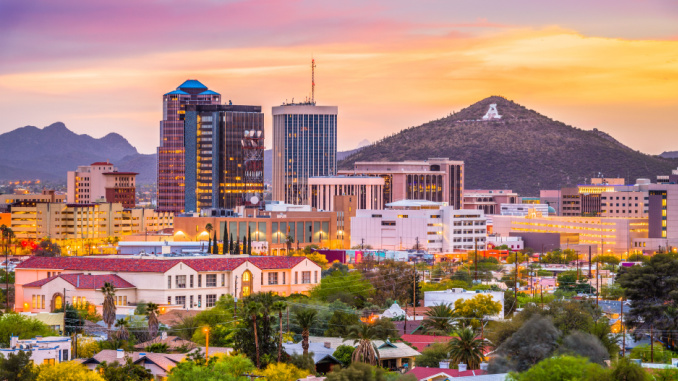
This November, Tucson voters are being asked (again) to approve a 25-year franchise agreement between Tucson and Tucson Electric Power (TEP). Franchise agreements are generally standard arrangements that allow utilities to use public rights-of-way for poles, wires, and infrastructure. But there is nothing standard about this deal. Bundled with it is an “Energy Collaboration Agreement” that will quietly embed climate policy into Tucson’s governance for the next quarter century. Voters should read the fine print (and the price tag) before checking the box.
If Tucson voters are having déjà vu reading this proposal, it’s because it is awfully similar to what they have already said no to. In May 2023, Proposition 412 put a nearly identical TEP franchise agreement before the public, and voters rejected it by a 55-45 margin. That deal included a new 0.75% “community resilience fee” on top of the existing 2.25% franchise fee, with proceeds earmarked for undergrounding utility lines as well as funding the city’s Climate Action Plan. Despite voters already telling the city they don’t want it, city leaders and TEP have assumed residents really just want a more expensive version of the same thing – rebranding and trying to ream through for a second time the same agenda but at a cost of $64 million instead of $56 million.
What the franchise agreement really does is help TEP maintain infrastructure, expedite permitting, and improve outage response. But TEP can still operate without a franchise agreement, meaning this vote is not about whether Tucson continues receiving electricity. Instead, it creates the legal foundation for a broader political partnership between the city and the utility…
>>> CONTINUE READING >>>
by AZ Free Enterprise Club | May 8, 2026 | Opinion
By the Arizona Free Enterprise Club |
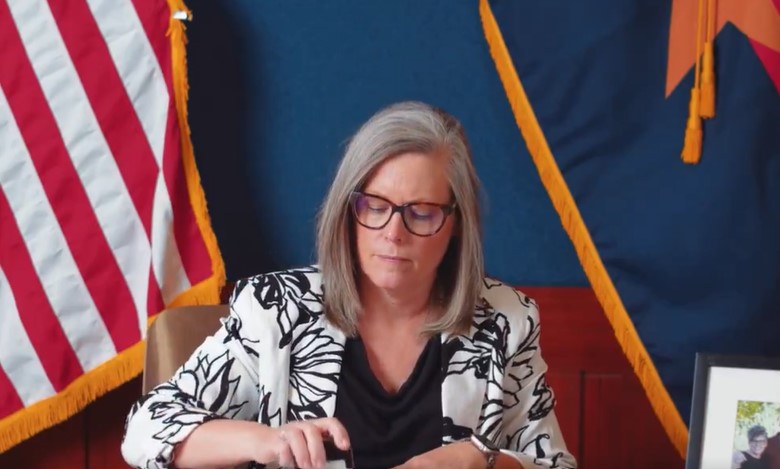
Less than an hour had passed from when Republicans delivered a budget to Katie Hobbs desk yesterday to when she stamped it with a ‘veto.’ No one is surprised, since from the moment she walked out of negotiations six weeks ago and “challenged” Republicans to show their budget hand, she had already made up her mind about vetoing it. She just needed them to do all the work first.
Hobbs has grown far too comfortable being the only one setting conditions on budget negotiations, considering every condition she has set has been unreasonable, unworkable, or erratic.
She tried to anchor the entire budget to an unprecedented raid of the state land trust, speculative revenue requiring voter approval that could never functionally bridge her reckless spending. She wanted to deliver only half the conformity relief Arizona taxpayers are entitled to under the One Big Beautiful Bill, in direct contradiction to tax forms her own Department of Revenue already issued, creating tax filing chaos. She tried to “trade” not forcing that tax hike on Arizonans for kicking kids off the ESA program (insane). And when Republicans said no to all of it, she flipped the table and stormed off, openly admitting she was out of ideas, and demanding Republicans produce a budget on their own.
While the veto from Hobbs was largely expected, Hobbs’ explanation for her veto was such brazen hypocrisy that it raises the genuine question of whether she is being ironic or fails to see the numerous contradictions in her opposition to the GOP budget…
>>> CONTINUE READING >>>
by AZ Free Enterprise Club | May 4, 2026 | Opinion
By the Arizona Free Enterprise Club |
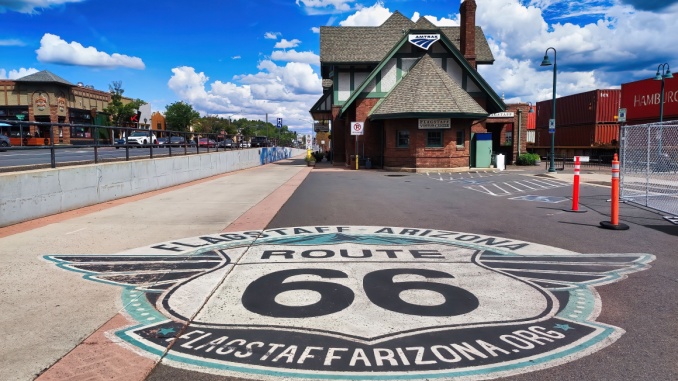
Flagstaff residents have until May 19th to vote on the Flagstaff Regional Land Use Plan 2045, a mail-in only election that will determine whether this becomes the city’s guiding blueprint through 2045. The plan will shape “growth, development, conservation, housing, transportation, and other long-term community priorities.” It is a roadmap for how city leaders want Flagstaff to grow, move, build, and live for the next two decades.
The main themes of this Regional Plan are Climate Action, Housing Attainability and Equity. Climate and equity, two of the left’s favorite virtue-signaling obsessions. The plan runs roughly 250 pages and buried inside the planning jargon is a much bigger agenda: a comprehensive restructuring of everyday life in Flagstaff.
The plan repeatedly sounds the alarm over the so-called “climate emergency,” declaring that “climate change, driven by human-induced GHG emissions, is intensifying global weather disruptions.” Translation: the climate is spiraling into chaos, and it’s your fault, therefore the city government now needs to center major policy decisions around climate activism.
The plan repeatedly references Flagstaff’s Carbon Neutrality Plan (CNP) that has the goal to “achieve carbon neutrality by 2030.” What is supposed to be a land use and regional planning document instead reads like an environmental manifesto. In city government’s attempt to “save the planet,” residents should expect pressure for more mandates, regulations, and costly transitions as officials target emissions from “buildings, transportation, waste, etc.” Their call for the “displacement of fossil fuel-based generation with zero-carbon sources such as wind, solar, and nuclear energy,” will inevitably drive-up costs – even in the areas, like housing affordability, they claim to be trying to reduce.
Transportation is another major target…
>>> CONTINUE READING >>>
by AZ Free Enterprise Club | Apr 30, 2026 | Opinion
By the Arizona Free Enterprise Club |
Last year, Katie Hobbs, by executive order, established a “task force” headed by her Office of “Sustainability” to develop a report on energy affordability and reliability. This month, her task force submitted their plan which would do the opposite of that: make energy more expensive and less reliable. This shouldn’t come as a surprise considering the “task force” called by Hobbs is made up of solar special interests, environmental activists, her own agencies, and utilities that have all committed to going Net Zero anyway.
Instead of reading 81 pages that brings nothing new to the table, the only questions that need to be asked (and answered) about the report are below.
Does it call for new natural gas generation? Not really.
Does it call on utilities to keep our coal plants open? No, they want to shut them down and “repower” them to “clean” energy.
Does it pave the way for new nuclear? Not until the mid-2040s, at the earliest.
What, then, does it advocate doing? Subsize special interests by blanketing state trust land and government buildings with even more solar, wind, and battery storage. The very thing causing utility rates to increase and leading to blackouts…
>>> CONTINUE READING >>>
by AZ Free Enterprise Club | Apr 16, 2026 | Opinion
By the Arizona Free Enterprise Club |
Proximity to the people does not prevent abuse of power. In fact, it often does the opposite. Municipal governments enact restrictive policies just as easily as state or federal governments and often with less scrutiny.
There is a myth in America that the closer government is to the people, the more checks exist and the better the governance. By that logic, local governments, city and town councils, being closest to the people, must be the least corrupt and most responsive. Because of this, municipalities and their proponents constantly argue that they should be free to govern their communities without interference, or as it’s often framed, maintain “local control.”
The local control argument might seem intuitive, however, does shifting power from one level of government to another actually protect individual freedom? The burden on the people is the same, if not more, whether bad policy comes in the form of higher taxes, increased fees, restrictive regulations, or costly utility rate hikes from federal, state, or local government.
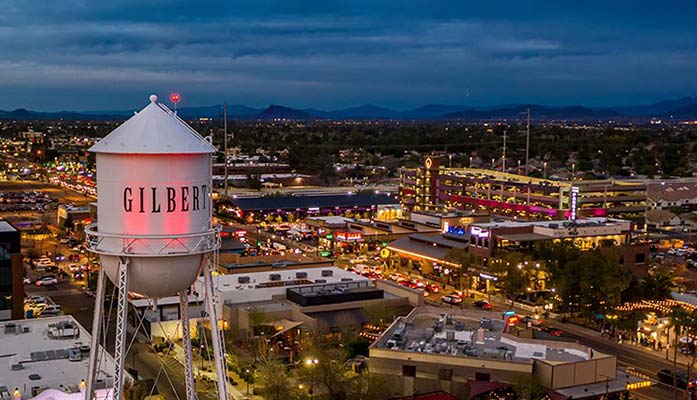
In Gilbert, residents have been outraged by astronomical water bills and rate increases, decisions made not in Washington, D.C. or in Phoenix, but by their own local government. Proximity did not protect them; it made the impact more immediate. Gilbert is not the only town with unceasing increased costs, municipalities across Arizona are raising taxes, fees, and rates (good thing there is a resolution moving through the legislature to alleviate this)…
>>> CONTINUE READING >>>