by Matthew Holloway | Mar 22, 2026 | News
By Matthew Holloway |
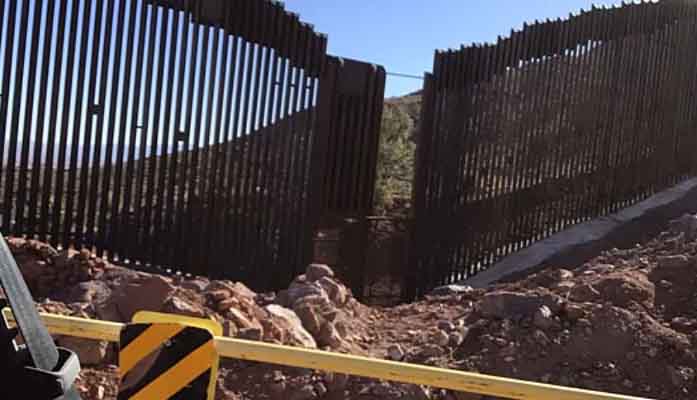
The Arizona Senate approved a package of border security legislation that would direct $40 million toward detention reimbursements, supplemental fencing, and expanded use of aerial surveillance technology.
The bills passed were SB 1156, SB 1157, and SB 1457, and they now move to the House for further consideration.
SB 1156, sponsored by Sen. Wendy Rogers (R-LD7), would appropriate $20 million to reimburse cities, towns, and counties for costs associated with short-term detention holds for individuals unlawfully present in the United States.
“For years, Arizona has been dealing with the consequences of a border crisis created by the Biden administration,” Rogers said in a statement. “Now that President Trump has restored order and delivered the most secure border in modern history, we need to make sure our state is doing its part to support that progress. This funding helps local law enforcement manage detention responsibilities and ensures we are not backsliding.”
SB 1157 would provide $20 million to support the construction of supplemental fencing and barriers in high-crossing areas along Arizona’s southern border, according to the Senate Republican Caucus. It was also sponsored by Rogers.
“We know strong physical barriers work because we have seen it firsthand,” Rogers said. “President Trump proved that when you take border security seriously, crossings drop. Arizona is reinforcing that progress by investing in the areas where crossings have historically been the highest.”
SB 1457, sponsored by Sen. David Farnsworth (R-LD10), would expand the use of the state’s Advanced Air Mobility Fund to include border security operations, allowing for the purchase of aerial technology and the development of infrastructure to support surveillance and response efforts, with priority given to border counties.
“Maintaining a secure border takes more than policy, it takes the right tools in the field,” Farnsworth said. “This legislation supports law enforcement with advanced technology so they can respond in real time and keep Arizona communities safe.”
According to the caucus, the measures are intended to support local law enforcement, strengthen infrastructure at high-traffic crossings, and expand the tools available for border security operations.
Matthew Holloway is a senior reporter for AZ Free News. Follow him on X for his latest stories, or email tips to Matthew@azfreenews.com.
by Staff Reporter | Mar 4, 2026 | News
By Staff Reporter |
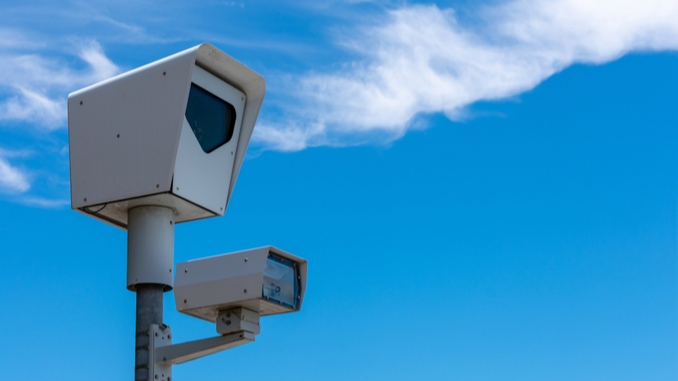
The Arizona Senate passed legislation to allow voters to decide whether or not they have photo radar.
SCR 1004 would allow voters to decide whether they should be the ones to decide on photo radar installations in their communities. If passed and approved, jurisdictions with photo radar would need to receive voter approval or shut that form of automated policing down within 90 days. The bill passed with all Republicans in support and all Democrats against.
Sen. Wendy Rogers (R-LD7), who is behind the bill, says Arizonans should have the final say on installations of photo radar in their communities.
“Arizonans deserve a direct voice in whether automated ticketing systems operate in their communities,” said Rogers. “This measure restores accountability and makes sure enforcement decisions are made by voters specific to each town or city, not outsourced systems that many residents believe prioritize fines over fairness. If these programs truly have public support, they should be able to earn it at the ballot box.”
Rogers previously got a bill through the legislature to ban photo radar. Gov. Katie Hobbs vetoed that bill.
Several citizens spoke in favor of the bill.
Among them was Shawn Dow, who referenced in his testimony an investigative report that $140 million went to political candidates from the 11 percent cut of photo radar tickets, and that in one case the city of Mesa was forging judge signatures on photo radar tickets.
In the latter instance, the city continued using autopen signatures for judges who retired months before.
“This is unconscionable that you are taking $140 million and taking it and putting it into your campaign coffers,” said Dow.
Mesa issued a notification that they wouldn’t issue notices to the recipients of forged autopen tickets, nor would they dismiss them. Mesa’s assistant city manager, Ken Cost, told AZ Family last month that the judges’ signatures were ornamental.
“It’s legally valid. The name is inconsequential. Totally understand where people are coming with their concern, but people need to understand their tickets were valid in the city of Mesa,” said Cost. “It was a process error, not a legal error.”
Not all were on board with how the original form of the bill would have empowered voters to decide on photo radar statewide. An approved amendment to the bill does allow local authorities and state agencies to implement photo enforcement systems by December 2026, but would require local voter approval every 10 years.
Police leadership from Phoenix, Paradise Valley, Mesa, and Scottsdale urged lawmakers to allow more room for voter input.
Commander Nick Diponzio with the Phoenix Police Department explained to the committee that law enforcement relies on photo radar due to the ongoing officer shortage.
“Ideally, I would have a motor officer on every corner. However, during these challenging times technology can serve as an effective tool to reduce collisions and enhance roadway safety,” said DiPonzio.
Chief Freeman Carney with the Paradise Valley Police Department said photo radars assist with reducing fatalities, citing their low rates of road fatalities despite getting tens of millions of drivers on their roads a year.
Commander Stephanie Derivan with the Mesa Police Department emphasized their local community support for photo radar. Derivan shared city statistics reflecting low recidivism among drivers who received photo radar tickets.
“This is an important tool that we need to slow people down near our children,” said Derivan.
Should the House approve the bill, the resolution would be referred to the ballot for Arizona voters to decide.
AZ Free News is your #1 source for Arizona news and politics. You can send us news tips using this link.
by Staff Reporter | Feb 27, 2026 | News
By Staff Reporter |
The Arizona Senate approved legislation to facilitate coordination between law enforcement and federal immigration agents.
SB 1055 passed 16-11, with all Republicans in support and all Democrats against.
The bill requires law enforcement to notify either Immigration and Customs Enforcement (ICE) or Customs and Border Protection (CBP) immediately following the arrest of an individual who is discovered to be an illegal alien.
The bill sponsor, Sen. Wendy Rogers (R-LD7), says this will give law enforcement the sense of security they deserve to appropriately process individuals with deportation orders. Rogers said her legislation was necessary to support safe neighborhoods and consistent enforcement within public safety.
“When someone is under arrest and unlawfully present in our country, law enforcement should never have to hesitate, second-guess, or worry about whether doing the right thing will jeopardize their career,” said Rogers. “For too long, unclear policies and political pressure have created confusion that undermines public safety and puts officers in an impossible position.”
Given the partisan nature of the bill, it’s highly likely the legislation will die under Gov. Katie Hobbs’ veto pen should it pass the House.
The first to speak against the bill during Monday’s floor vote was Assistant Minority Leader Catherine Miranda (D-LD11). She said the bill wasn’t needed. Miranda discouraged the idea that Arizona law enforcement needs to support ICE in deportation proceedings, since ICE agents were “terrorizing” communities across the nation.
“[SB1055 is] unnecessary and strives to increase fear in communities and empowers all law enforcement to act as ICE agents,” said Miranda.
During the committee hearing on the bill last month, Miranda said she carries all of her sensitive personal documents in her car — her birth certificate, Social Security card, and passport — just in case law enforcement questions her citizenship.
Sen. Sally Ann Gonzales (D-LD20) claimed the bill would cause racial profiling.
“Our communities are already, you know, not feeling well, not wanting to go to work, school, or otherwise because of what is happening in our communities with the federal immigration process that’s happening in and around our communities,” said Gonzales.
Sen. Analise Ortiz (D-LD24) called it an “anti-public safety bill” and “cruel.” Ortiz said the detainment facilities were “death camps.” She opposed the concept of deporting illegal aliens
“It is going to invite a violent, armed paramilitary force to have more unnecessary interactions with our communities,” said Ortiz. “ICE out of Arizona, ICE out of our communities.”
Similarly, Sen. Lauren Kuby (D-LD8) said ICE was too dangerous and relying on poorly trained and violent forces.
Majority Leader John Kavanagh (R-LD3) said it was effective government to have local law enforcement cooperating with federal law enforcement. Kavanagh lamented the likely veto from Hobbs.
“People who are accused of being here illegally need to be brought to justice,” said Kavanagh. “We shouldn’t be trying to hamper [the lawful execution of our laws].”
Sen. Jake Hoffman (R-LD15) reminded his colleagues across the aisle that the bill impacts individuals who were already arrested for committing a crime and in custody.
“It’s absurd that you would not want the criminals who come over illegally removed from this country. Apparently it’s just lawlessness run amok in this chamber. We are hearing [Democrats] advocate for not turning over illegal alien criminals to federal immigration law enforcement,” said Hoffman.
As a response to Democratic lawmakers citing the Minnesota deaths of anti-ICE activists Alexi Pretti and Renee Good, Hoffman read off a handful of the names of individuals murdered by illegal aliens, which prompted an outburst from the audience.
Minority Leader Priya Sundareshan (D-LD18) dismissed Hoffman’s list of victims, saying all illegal aliens who committed those crimes were facing charges unlike the officers involved in the Pretti and Good deaths. Sundareshan took issue that individuals arrested for civil violations, not just criminal violations, may face deportation.
“In this country we are innocent until proven guilty,” said Sundareshan.
Sen. Mitzi Epstein (D-LD12) said this would allow “perfectly innocent” individuals to be arrested and attacked.
“ICE has become an agency of thugs who do not follow the law,” said Epstein. “I am afraid of ICE agents.”
AZ Free News is your #1 source for Arizona news and politics. You can send us news tips using this link.
by Staff Reporter | Feb 23, 2026 | News
By Staff Reporter |
The Republican-led Senate is poised to vote on multiple bills that would impose greater restrictions on gender transition procedures in Arizona.
The Senate Health and Human Services Committee passed four bills targeting different aspects of gender transition procedures: Senate Bills 1014, 1177, 1094, and 1095. All with the exception of SB 1095 were heard in committee last week. All were passed without the support of Democratic lawmakers.
Progressive activists lined up to testify against the bills during the several committee hearings.
SB1095, which would ban gender transition procedures for minors, provoked testimony from several activist adults who identify as transgender.
Former Liberty Elementary School District governing board member, Paul Bixler, said SB1095 would harm, not help, children. Bixler, a man, identifies as a transgender woman.
Ruth Carter, an attorney, said SB1095 amounted to discrimination. Carter, a woman, identifies as a nonbinary individual.
Marilyn Rodriguez, Creosote Partners founder and lobbyist representing the ACLU, said SB1095 was impermissibly broad as written.
Sen. Lauren Kuby (D-LD8) called the bill discriminatory, and argued that lawmakers shouldn’t ban gender transition procedures since certain healthcare experts support those procedures as treatments for gender dysphoria.
“These are private, personal decisions, healthcare decisions, we shouldn’t be discriminating against transgendered youth or those who have gender dysphoria as is described,” said Kuby.
Sen. Analise Ortiz (D-LD24) said the legislature would be better focusing on making healthcare more affordable. Ortiz said the legislation was not only discriminatory but violative of parental rights laws.
“It bans healthcare for a specific group of people solely based on gender identity; that is discrimination no matter how you want to paint it,” said Ortiz.
Sen. Mark Finchem (R-LD1), the bill sponsor, disputed the narratives of his Democratic colleagues that healthcare experts were to be trusted fully and that gender transition procedures were appropriate for minors.
“To those who worship the grounds that doctors walk on: they also said cigarettes were good for you,” said Finchem. “[Permanently altering treatments like mastectomies] are decisions that kids are being talked into, in some cases. I didn’t just dream this bill up myself. This came from kids and parents. More kids than parents.”
Majority Leader John Kavanagh (R-LD3) questioned the logic of his Democratic colleagues that parents had a right to submit children to irreversible medical treatments, but not the right to decide whether their children should be called by certain pronouns or alternative names in school.
SB 1014 would require health insurers to offer coverage for detransition procedures should those insurers provide coverage for gender transition procedures. It would also issue reporting requirements on insurance claims for gender detransitions.
“Detransitioners are people too; they deserve the same care as those who are manipulated into believing they have gender dysphoria, which leads them to undergo gender transition surgery that they later regret,” said the bill sponsor, Sen. Janae Shamp (R-LD29), in a press release. “This legislative package puts their long-term well-being above politics and ideology.”
Jeanne Woodbury, a lobbyist for the ACLU, argued the reporting requirements within the bill would result in discriminatory outcomes.
Bixler, the transgender-identifying former school board member, claimed the bill would result in providers refusing to provide gender transition procedures.
SB 1177 would ban public funding for gender transition procedures.
Sen. Wendy Rogers (R-LD7), the bill sponsor, explained during Wednesday’s HHS hearing that she discovered taxpayers were funding gender transition treatments for prisoners. Rogers also discovered that individuals were being arrested on purpose in order to receive free gender transition treatments.
“Taxpayer dollars should never be used to bankroll irreversible procedures on children,” said Rogers in a later press release. “This legislation draws a hard line and makes clear that public funds will not subsidize experimental or life-altering interventions on minors.”
Ashton Allen expressed support on behalf of Center for Arizona Policy. Allen said subsidies should be tied to valid medical treatments, which he said gender transition procedures weren’t.
Woodbury, the transgender-identifying ACLU lobbyist, argued against Rogers’ claims and said the treatments were affordable. Woodbury also said an end to subsidization would lead to excessive medical risks associated with forced detransitions.
Minority Whip Rosanna Gabaldon (D-LD21) said ending subsidies was “extreme and punitive,” as well as “unfair and dangerous.”
Sen. Sally Ann Gonzales (D-LD20) accused Rogers of faking a story that individuals were getting themselves arrested in order to receive free gender transition treatments. Gonzales called the bill discriminatory.
Sen. Shamp questioned why drugs historically considered to be dangerous were suddenly ethical in the context of gender reassignment.
“Lupron was deemed cruel and unusual punishment being utilized in the prison system for sex offenders, rapists. But now we want Arizona taxpayers to pay for that drug to be utilized for gender reassignment? How the heck did we get here?” said Shamp.
SB 1094 would allow individuals to seek damages in court against physicians who performed gender reassignment surgeries on them as minors. Kavanagh sponsored the bill.
“When permanent procedures are performed on minors who suffer harm, there must be consequences,” said Kavanagh in a press release. “These reforms restore transparency and provide a pathway to just compensation for those harmed.”
AZ Free News is your #1 source for Arizona news and politics. You can send us news tips using this link.
by Matthew Holloway | Feb 12, 2026 | News
By Matthew Holloway |
The Arizona House of Representatives passed a bill unanimously on Monday to intensify prison sentences for fentanyl traffickers. Supporters say it will strengthen law enforcement’s tools against the opioid crisis.
House Bill 2132, sponsored by Rep. Quang Nguyen (R-LD1), lowers the amount of fentanyl that triggers enhanced prison terms in state law. Under current law, mandatory enhanced sentences apply at the 200-gram threshold; the measure approved by the House would apply those penalties at 100 grams.
The bill passed the chamber with unanimous support and now advances to the Arizona Senate for further consideration.
“Fentanyl is killing Arizonans, destroying families, and driving crime across our state,” Nguyen said in a statement following the Monday vote. “HB 2132 targets the dealers who profit from death and puts serious prison time on the table. This bill backs law enforcement, protects our communities, and makes clear that Arizona will not tolerate fentanyl trafficking.”
According to the Arizona House GOP leadership, enhanced sentence ranges under existing law carry mandatory terms of five to 15 years, with longer terms for repeat offenders. Nguyen’s office says applying those penalties at a lower fentanyl threshold better reflects how the drug is moved and sold in real-world trafficking cases.
Critics of stricter sentencing, such as Rep. Alma Hernandez (D-LD20), have argued that enhanced penalties alone may not significantly deter addiction or drug distribution. She told the Judicial Committee in January, “I am just concerned that we continue to move the goal posts,” as reported by the AZ Mirror.
Yavapai County Sheriff’s Office Chief Deputy Jeff Newnum described fentanyl as “a drug of mass destruction,” speaking to the committee. He explained that 100 grams amounts to approximately 1,000 pills, adding that an average sale in his county involves about 30 grams.
“I would love an amendment that lowers it to 30 grams, but I’ll take 100 grams today,” Newnum said per the Mirror. “These are not people, in my opinion, that need to be placed on probation. They need to be put in prison.”
“Public safety is non-negotiable,” Nguyen said in his statement. “House Republicans are taking direct action against fentanyl dealers because Arizona families deserve safe streets, strong laws, and accountability for those who profit from destruction.”
The next stop for HB 2132 is the state Senate, where it will be assigned to a committee before a potential floor vote. A similar measure from Sen. Wendy Rogers (R-LD7), Senate Bill 1061, would lower the enhanced sentencing threshold to nine grams. The bill passed the Senate Judicial Committee in January and is pending a floor vote.
Matthew Holloway is a senior reporter for AZ Free News. Follow him on X for his latest stories, or email tips to Matthew@azfreenews.com.
Page 2 of 10«12345678910»