Arizona taxpayers can’t catch a break from their local governments. From water rates and utility bills to property taxes and sales taxes, city councils have spent the last several months approving one increase after another. No matter the justification, the result is always the same: higher costs for the people paying the bills.
Here are some of the top offenders of the last couple of months:
Florence
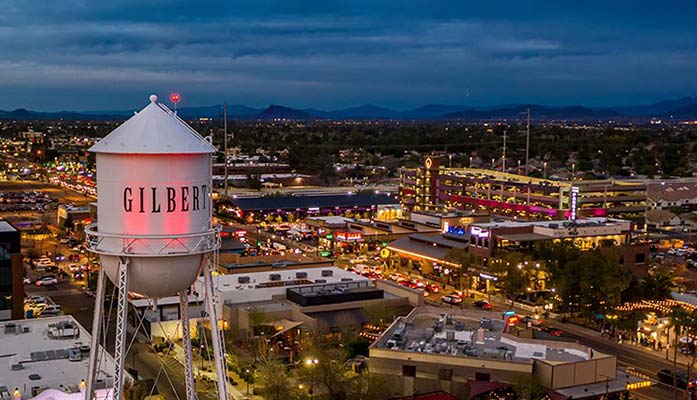
In the Town of Florence, the town council approved a multi-year water and wastewater rate hike plan that starts with roughly 6–8% increases but compounds over several years into what many residents estimate will amount to around a 64% increase in total utility costs. At a time when families are already struggling with affordability, approving rate hikes of that magnitude is a serious burden on Florence residents. With increases that steep, one would think they’re trying to compete with Gilbert (100%+ increase over 3 years). The increases will start on July 1st, just in time for summer, so get your pocketbooks ready, Florence residents.
Tempe
Tempe has their own slew of problems that deserves an article of its own, self-imposed by mismanagement, obviously. The Tempe City Council recently voted on sending a 0.5% sales tax increase to the ballot for voters in November. This will tax all non-grocery food and is said to give 0.3% to public safety, 0.1% to transit such as light rail and buses and 0.1% to Tempe PRE, a city run free preschool.
As usual, local leaders are putting all blame on the legislature. One Tempe councilmember said, “Let me remind you what we set out to do with this initially: to address a … deficit that was created not by us but by the Arizona Legislature and the federal government.”
Meanwhile, this is occurring while the council has decided on things like a $2 million “Mill Ave” sign. Just plain, silver metal. Nothing special or aesthetic and $2 million is going towards this thing? Right, and it’s the legislature’s fault that they are in a budget deficit of about $24 million. It’s almost as if they didn’t spend your tax dollars on stupid things, they wouldn’t need to keep raising taxes…
It’s not an accident that the top issue talked about by politicians these days is affordability. Over the last 5 years the cost of pretty much everything has gone through the roof, largely caused by the trillions in reckless spending by Joe Biden and the Democrats in Washington.
Taming inflation must remain our top economic priority, and the good news is that Arizona Republicans are taking meaningful steps to bring costs down. After adopting a 2.5% flat income tax under Governor Doug Ducey in 2022, state lawmakers have fought to slash grocery taxes, residential rental taxes and eliminate regulations that are driving up the cost of energy and housing.
Yet while the Republican controlled legislature is doing everything it can to make sure hardworking taxpayers get to keep more of their hard-earned dollars, municipalities throughout Arizona are passing an avalanche of tax and fee increases that are costing taxpayers hundreds of millions of dollars every year…
The citizens of Gilbert are bracing for a third water rate increase since 2024 on top of the 2025 sales tax increase that resulted in legal action against the town in January 2025. The new rate increase, following a 95% increase in the town’s utility wastewater rate, could see the town’s water rate jump up another 25%.
Gilbert Water Manager Rebecca Hamill revealed in a Town Council study session last week that the rate hike could be necessary based on Gilbert’s biannual utility rate analysis and adjustments, according to the Gilbert Sun News.
As previously reported by AZ Free News, there were no utility rate increases from 2019 to 2021, until a 29.6 percent jump in 2022, followed by a 48 percent increase in 2024 and a 25 percent increase in 2025, resulting in a staggering hike of 102.4 percent over 2021 rates.
“Arizona and Gilbert are facing uncertainty in water resources and providing a secure water supply is a top priority for our department,” Hamill told the council. “One of the main impacts on the budget is these increasing water resources costs, and we have seen since 2020 a 73% increase in the per acre-foot cost of CAP (Central Arizona Project) water, and we continue to see an increase in the percentage of the water resources as a component of the overall water budget,” she added.
Hamill explained that the Town of Gilbert’s water portfolio includes 40 percent of its potable water coming from the Salt and Verde Rivers, with 41 percent coming from the Colorado River via the CAP, 15 percent coming from the reclaimed recharge system water, and just four percent coming from groundwater. She described the town’s water sources as “diverse,” despite 81 percent of it being dependent on surface water and 41 percent subject to fluctuations in Colorado River water allocation.
As noted by the Gilbert Sun News, the town is in the early stages of reconstructing the North Water Treatment Plant to supply 70 percent of the town’s needs or approximately 60 million gallons per day, but it is only nearing the halfway point of its completion in October and is not expected to come online until 2028, according to the most current project update. This leaves the Town of Gilbert effectively at the mercy of a myriad of factors beyond the town’s control for at least the next two and a half years, with the town forced to defer $151 million in future water system improvements.
“The bill is typically made up of rates and fees for four lines of service, including water, sewer, solid waste, recycling and environmental compliance,” Hamill told the outlet. “We refer to each of these four lines of service as enterprise funds, which means that each fund operates as a self-sustaining business entity within the town. Revenue collected for each service is only used to fund that service.”
The increase is part and parcel to the cash/bond gradual approach the Town approved in February 2024.
“This is where we are now – we are working with our rate consultant to determine that 25% is the proper number for the fund,” Hamill told the council. “This option provided the (water) fund with sufficient revenue for critical capital projects, ongoing $5 million capacity in the operating fund, and an ongoing $66 million capacity in the repair and replacement fund starting in FY29.”
As a result of the delays in the Water Treatment Plant reconstruction, caused in part by an increase in the cost of chemical and electrical components, coupled with its dependence on sources susceptible to environmental and political factors, the Town government is turning to the public and conservation efforts in an attempt to stem the rising costs of the water system. Mayor Scott Anderson explained, “We have to remember it costs, and it’s going to cost more over time, to purchase the water, to transport the water, to treat the water, and to distribute the water. It’s going to cost more all the time – we can’t lose sight of that,” he emphasized. “Conservation is the key.”
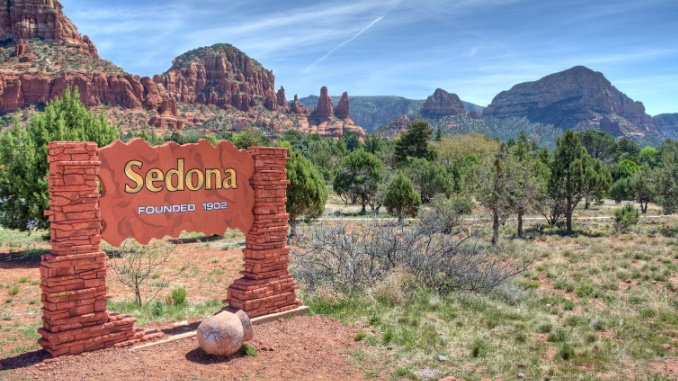
During its July 24th Contingency Open Meeting, the Arizona Corporation Commission (AZCC) unanimously assigned the construction cost of a massive 1.5-million-gallon subterranean water tank to the Sedona customers of Arizona Water Company. The decision follows a nearly four-decade efffort to find a location for the water tank that was agreeable with the City of Sedona and local residents.
According to the AZCC, the “extra costs incurred” by the water tank, concealed with a fake home, will fall “solely on the Sedona customers of Arizona Water Company.” However, Pinetop Lakes, Munds Park, and Payson will also see a significant rate increase.
According to a press release from the AZCC, for Sedona residents, the estimated rate increase is 45%, which would bring the average residential bill to approximately $60 per month. Meanwhile, other Northern Group customers will see an increase of roughly 34%, with a billing estimate of $52 per month.
The ACC held a very robust and meticulous discussion w/Arizona Water Company and Community members during Thursday's Meeting about who's responsible for extra costs from aesthetic additions to utility infrastructure. A new underground water tank in Sedona was a top issue. pic.twitter.com/P2FdduMn1U
— Arizona Corporation Commission (@CorpCommAZ) July 24, 2025
Prior to the meeting, the notion of assigning the costs to the ratepayers outside of Sedona was opposed by Republican Arizona Rep. David Marshall (R-LD7), who publicly condemned it in a press release. Marshall cited the “City’s requirement that Arizona Water Company bury a new water storage tank underground and disguise it with a fake home built on top—an aesthetic demand that made the project one of the most expensive the utility has ever undertaken.”
Rep. Marshall stated, “Arizona Water Company’s northern Arizona ratepayers—including the good people of Pinetop-Lakeside, Heber-Overgaard, Rimrock, Munds Park, and the Village of Oak Creek—did not ask for these costly design features. Quite frankly, it’s absurd to ask them to fork over millions to subsidize the excessive, big-government design mandates of a city nearly 200 miles away. This is a matter of fairness and affordability. Sedona chose to inflate the cost of this project for its own benefit. The rest of northern Arizona shouldn’t be stuck footing the bill for Sedona’s multi-million-dollar expectations.”
Rep. David Marshall Condemns Sedona’s Proposed Multi-Million-Dollar Cost Shift to Other Communities’ Ratepayers
“Arizona Water Company’s northern Arizona ratepayers—including the good people of Pinetop-Lakeside, Heber-Overgaard, Rimrock, Munds Park, and the Village of Oak… pic.twitter.com/D2IZhsiPtw
— Arizona House Republicans (@AZHouseGOP) July 23, 2025
According to the AZCC release, an amendment to the decision by Commissioner Rachel Walden resulted in the “non-operational aesthetic expenses” being shifted to Sedona Residents. “My job is to ensure expenses are just, reasonable, and prudent,” Walden said. “That is why I offered my amendment to ensure that non-operational aesthetic expenses will not be paid for by those who do not benefit from them. I thank my fellow Commissioners for fully supporting my amendment.”
The Corporation Commission said in a statement, “The Commission deemed a new tank was prudent and appropriate; however, it was adamant that the extra costs from the aesthetic requirements were not to be assigned to the other 15,000 customers who do not reside in Sedona. The City and residents expressed disapproval for construction of an above ground water tank, which is the conventional design. The Sedona Project is one of only three water tanks that have been undergrounded in the state, by Commission regulated companies.“
The construction tab for the East Sedona Water Storage Tank and Booster Project came to approximately $20 million, as reported by the Arizona Daily Independent. The Arizona Water Company explained that to obtain approval for a conditional use permit (CUP) by the Sedona Planning and Zoning Commission and City Council, it was required to comply with requirements to bury the storage tank and “camouflage” the tank by building a structure on top of the tank that resembles a home for aesthetic purposes, so that it will blend in with the neighborhood and scenery.
“Hopefully this is a strong signal to all water companies, local governments, and residents moving forward that if you require special conditions or place limitations on infrastructure based upon aesthetic preferences, you may be responsible for those extra costs,” said Chair Thompson. “I’m sympathetic to the majority of the Sedona customers who will be solely responsible for these added costs, but it is not an equitable requirement for the 15,000 customers in other communities to be responsible for millions in extra costs because a vocal minority didn’t like the way a water tank looked.”
“After a robust discussion today, the Commission reached a Decision in Arizona Water Co.’s Northern Group’s rate case that strikes a fine balance between ratepayer protections and company viability,” Commissioner René Lopez said. “Thursday’s Decision also signals to ratepayers and local governments that, even in a consolidated group, the Commission will equitably allocate costs to certain customer groups when extraordinary expenses are incurred at their request or for their exclusive benefit. Nevertheless, the compromises and decisions made ensures ratepayers continue to have access to reliable and safe drinking water in some of Arizona’s most beautiful terrains.”
“The final determination of rates for Arizona Water came after a very thoughtful discussion at the Commission about the additional requirements by the City of Sedona for the undergrounding of the water tank and the appropriateness of the financial burden on other ratepayers within their northern division,” stated Commissioner Lea Márquez Peterson, who voted in support of the amended case. “I am appreciative of my fellow Commissioners’ support for my amendment that requires the company to present possible improvements to their customer assistance programs within their next rate case.”
“I’m pleased the Commission directed Arizona Water to engage in discussions with the City of Sedona about funds to help cover the incremental costs to bury the East Sedona Storage Tank,” Vice Chair Nick Myers added. “Because the City required and is directly benefitting from undergrounding the tank, it’s only fair that they contribute financially to cover the City-imposed aesthetic costs. Otherwise, the entire incremental cost of burying the tank will be borne by Arizona Water’s Sedona System customers.”
The Tucson City Council began the process for increasing residents’ water rates in order to incentivize greater water conservation. The council motioned in a study session on Tuesday to increase rates by reclassifying winter months, which have lower rates, into summer months.
A customer’s water usage over the winter months determines the Average Winter Consumption (AWC), which is charged at a year-round base rate; in the summer months, water usage between 101 to 145 percent of AWC is billed at a higher rate, and over 145 percent at an even higher rate.
The rate increase comes at the behest of the water efficiency and conservation program goals outlined in the city’s Natural Environment Plan. On Tuesday, the city approved Options 1A and 1B to restructure water rates. Those options direct city staff to proceed with the rate adoption process, commence a notice of public intent with a 60-day public outreach and communication hearing prior to a public hearing and rate adoption.
Councilman Kevin Dahl said the water crisis defined by PFAs in the water supply and the Colorado Water River drought necessitated the restructuring of rates. Dahl also claimed that the rate restructure would create equitable change, noting that wealthier entities like homeowners associations and golf courses pay lower water rates while larger families and garden owners pay more.
Rather than allow the traditional policy process, which would take four or five months per proposed change, Dahl moved to expedite both options together rather than separately. The council adopted his motion.
“We need to have a quick start on this,” said Dahl.
The 1A option changes winter months from the current definition of six months to three months. The 1B option then adds on another tier, greater than 145 percent, to the block structure. City staff explained that 1A allows the commercial and industrial class to get used to the three-month winter quarter average for several years, then follow up to determine conservation effectiveness.
Councilman Paul Cunningham said that he appreciated the notice of public intent and hearing, sharing that it alleviated his concerns that residents would experience “sticker shock” over the hike in water rates.
“This is the direction we’re going. We might as well be transparent about it,” said Cunningham.
Cunningham voiced concern over the possibility of specialized rates for different businesses. He also brought up a desire to establish conservation-compliant water parks in the city, noting that they lose residents in the summer to the water parks housed in surrounding cities and states.
“Water, like it or not, is becoming a commodity and is becoming a quantifiable and limited resource,” said Cunningham.
Mayor Regina Romero called the city’s water situation “bleak.” Vice Mayor Steve Kozachik concurred.
“Our goal is to send a strong conservation signal,” said Kozachik.
Tucson hasn’t been the only city to hike its water rates for conservation’s sake. The city of Phoenix proposed increasing water rates over the next year by a minimum of 25 percent.
Watch the city council discussion of the water rates here:
Corinne Murdock is a reporter for AZ Free News. Follow her latest on Twitter, or email tips to corinne@azfreenews.com.