by Staff Reporter | Feb 21, 2026 | News
By Staff Reporter |
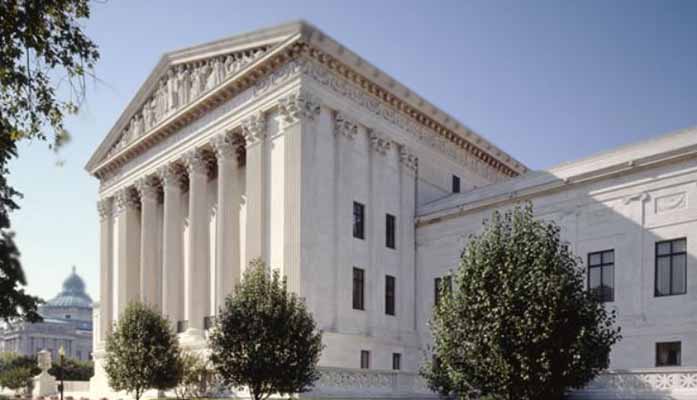
Arizona state lawmakers requested the U.S. Supreme Court to take up an appeal on the state’s proof of citizenship for voter registration.
Last February, the Ninth Circuit Court of Appeals struck down two laws which established proof of citizenship requirements. That court declared Arizona’s laws attempting to add more requirements on voter registrations were preempted by the simpler registration requirements of federal voting rights laws under the National Voter Registration Act (NVRA) and were therefore invalid.
Those laws, passed in 2022 under then-Gov. Doug Ducey, restricted mail-in voting for registrants lacking citizenship verification in addition to requiring recorders to check federal citizenship databases and applicants to provide documentary proof of citizenship and residence. These pieces of legislation emerged following the Supreme Court’s 2013 decision against an Arizona law requiring proof of citizenship when registering to vote in federal elections.
Several years later, in 2018, the state entered into a consent decree requiring county recorders to search Arizona Department of Transportation (ADOT) records for state registration forms lacking proof of citizenship. Those applications without verifiable citizenship proof through ADOT would only be allowed to cast ballots in the federal election, otherwise known as “federal-only voters.”
A number of progressive activist organizations joined in a lawsuit to challenge these laws: Mi Familia Vota, Voto Latino, Living United for Change in Arizona, League of United Latin American Citizens, Arizona Students Association, ADRC Action, Arizona Coalition for Change, Poder Latinx, Chicanos Por La Causa and their affiliated action fund, Democratic National Committee, Arizona Democratic Party, Arizona Asian American Native Hawaiian and Pacific Islander for Equity Coalition, Promise Arizona, and the Southwest Voter Registration Education Project.
The Inter-Tribal Council of Arizona, San Carlos Apache Tribe, Tohono O’odham Nation, and Gila River Indian Community also were among the challengers to proof of citizenship laws, citing concerns with challenges tribal members face to obtain proof of residency. Several tribal members were named independently in the lawsuit: Keanu Stevens, Alanna Siqueiros, and LaDonna Jacket.
The leaders of the Republican-led Arizona legislature filed their petition with the Supreme Court this week.
Sen. President Warren Petersen (R-LD4) issued a press release announcing the Supreme Court petition in which he accused the Ninth Circuit judges of having “rewrote” federal law and ignored Supreme Court precedent.
“For more than two decades, Arizona has required proof of citizenship to register to vote, because only American citizens should decide American elections,” said Petersen. “This case is about whether states still have the power to enforce commonsense safeguards to ensure only eligible voters participate in our elections. Arizona is standing up not just for our state, but for every state’s constitutional authority to secure its own elections.”
The filing argues that the Ninth Circuit ruling against Arizona law stretches federal voting law far beyond its allowable interpretation.
“This case, which comes to the Court on a non-expedited basis and underpinned by a comprehensive evidentiary record, offers an ideal vehicle for clarifying the NVRA’s preemptive scope, affirming that federal consent decrees cannot perpetually paralyze state legislative bodies, and vindicating the presumption of legislative good faith,” read the filing.
AZ Free News is your #1 source for Arizona news and politics. You can send us news tips using this link.
by AZ Free Enterprise Club | Jan 31, 2026 | Opinion
By the Arizona Free Enterprise Club |
For years, the Left has been working tirelessly to flip Arizona blue. Armed with a secret network of tax-advantaged funds, political nonprofits, and union dollars, their aim has been to turn our beloved, freedom-loving state into the next Colorado or California. In fact, many groups on the Left waged high stakes to flip Republicans’ paper-thin control of the state legislature in 2024.
And how did that turn out? A historic landslide victory for President Trump while the Left actually lost ground in Arizona’s legislature. Apparently funneling millions of dollars to liberal causes doesn’t make up for bad ideas.
Now, with the 2026 midterm election a little over nine months away, the latest voter registration numbers are in, and they show an encouraging trend. Republicans have expanded their registration advantage over Democrats to 7.64%—the largest lead in state history—while Democrats continue their free fall in party registration.
Even more impressive is that these gains are not isolated to a few particular areas of our state. Every single county in Arizona has become MORE Republican since the 2024 election. That’s right. In the counties where Democrats have larger voter registration numbers than Republicans, the gap has closed. And in counties where Republicans have larger voter registration numbers than Democrats, the gap has widened. In fact, the gap between registered Republicans and Democrats in Maricopa County has increased by more than half a percent in just the past year.
Yet perhaps the most surprising trend behind this growing Republican advantage is that while Republicans have been able to register a lot of new voters, the same cannot be said for the Democrats…
>>> CONTINUE READING >>>
by Staff Reporter | Jan 8, 2026 | News
By Staff Reporter |
The Department of Justice (DOJ) sued Arizona for refusing to turn over voter registration records.
Arizona joins 22 other states and the District of Columbia facing legal action from the DOJ for withholding access to the voter rolls.
A press release issued on Tuesday from the DOJ also named Connecticut as the latest to be sued.
“Accurate voter rolls are the foundation of election integrity, and any state that fails to meet this basic obligation of transparency can expect to see us in court,” said Attorney General Pam Bondi.
The requested records would include each voter’s full name, date of birth, residential address, and either their state driver’s license number, last four digits of their Social Security number, or HAVA unique identifier.
The DOJ’s lawsuit asserts the agency maintains legal authority under the Civil Rights Act (CRA) to access any election records it desires.
“If the custodian to whom the written demand is made refuses to comply, the CRA requires ‘a special statutory proceeding in which the courts play a limited, albeit vital, role’ in assisting the Attorney General’s investigative powers,” stated the lawsuit.
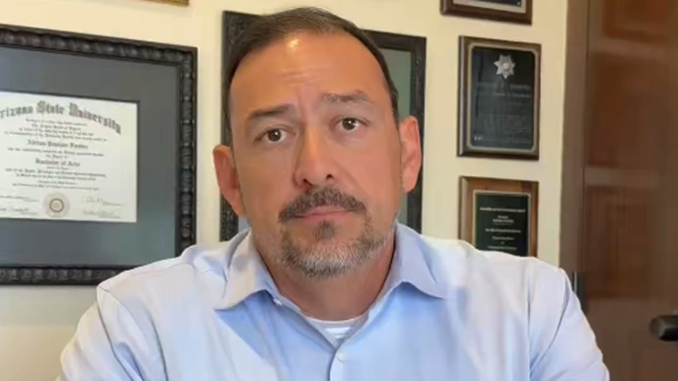
The DOJ requested the records from Secretary of State Adrian Fontes last July, and again in August. Both times Fontes responded with refusals, claiming that state and federal privacy laws prevent him from turning over the requested records.
Fontes rejected another follow-up request by the DOJ last month. The secretary of state claimed that voter rights to privacy trumped the federal government’s chief authority over elections.
“Arizona voters also have important privacy rights that cannot be infringed because they choose to exercise their constitutionally protected voting rights,” said Fontes.
Fontes said in a statement to Democracy Docket that he would rather be imprisoned than cooperate with the Trump administration.
“They’re going to have to put me in jail if they want this information,” said Fontes.
In a video statement on X, Fontes again declared compliance would break state and federal law.
“Pound sand,” said Fontes.
Arizona Attorney General Kris Mayes backed Fontes’ take on privacy laws negating the authority of election oversight laws.
“Both state and federal law prohibit the unrestricted release of Arizona’s complete voter registration database to the DOJ,” said Mayes.
Fontes also published a blog post on Tuesday commemorating the fifth year to pass since the January 6 invasion of the Capitol. The secretary of state claimed that the government remains under active threat, and compared the political climate to the Civil War era.
“Today’s challenges — polarization, misinformation from the top down, foreign interference — are real and daunting. But they pale in comparison to the existential crisis of 1864, when the nation itself was at risk of dissolution. If democracy could survive that, it can survive now — provided we do our part,” said Fontes. “Confidence in our electoral system is not naïve; it is necessary. Election officials across the country are working tirelessly to secure voting infrastructure, expand access, and ensure transparency. These efforts deserve not only our trust but our active participation. Cynicism is easy. Engagement is harder — but it is the only way forward.”
AZ Free News is your #1 source for Arizona news and politics. You can send us news tips using this link.
by Matthew Holloway | Dec 11, 2025 | News
By Matthew Holloway |
The Arizona Republican Party is calling a recent court ruling a major victory for election integrity, but how much the decision will actually change voter roll maintenance remains an open question.
In a statement released this week, Arizona GOP Chair Gina Swoboda announced that the Arizona Court of Appeals, in Petersen, et al. v. Fontes, upheld an Arizona law that requires counties to begin the cancellation process when a voter swears on a jury questionnaire that they no longer live in the county. Swoboda described the ruling as a necessary correction that will help ensure clean voter rolls ahead of future elections.
“This ruling is a major victory for our state and for every Arizona voter,” Swoboda said in the update, framing the ruling as part of a broader effort to restore public confidence in the state’s elections.
“Cleaner rolls protect voters. That’s the bottom line. No more dodging the law, no more loopholes, and no more games with Arizona’s voter rolls. Republicans in Arizona are fighting to ensure our elections are secure and stopping extreme leftist policies that would have thrown our elections into chaos. This is a huge step forward, but our work continues. We’ll keep working to restore trust, enforce the law, and deliver an election system every Arizonan can count on.”
In the AZGOP statement, the party referred to the ruling as “a significant defeat for Secretary of State Adrian Fontes,” noting that the state’s second-highest-ranking Democrat was “forced to abandon his extreme rule that would have allowed counties to toss out every vote cast if a canvass was submitted late,” describing the policy as “reckless,” and saying it “jeopardized lawful ballots and undermined public confidence.”
Republicans are celebrating the decision as a significant victory for structural reform; however, the ruling itself paints a more nuanced legal picture.
On the jury-questionnaire issue, the court held that federal law does not preempt Arizona’s statute, A.R.S. § 16-165(A)(9)(b), which directs county recorders to cancel a voter’s registration if the voter fails to respond to a mailed notice after telling a jury commissioner they no longer reside in the county. The opinion explains that the National Voter Registration Act (NVRA) allows removal when a voter “confirms in writing” that they have changed residence and does not require that confirmation go directly to the county recorder. Instead, the court found that a signed juror questionnaire can qualify as that written confirmation:
“Because the Seventh Circuit precedent does not conflict with A.R.S. § 16-165.A.9, the NVRA does not preempt that Arizona statute. … Here, the county recorder sends the notice only when a person signs (under penalty of perjury) a written juror questionnaire saying the person no longer resides in the county. A.R.S. § 16-165.A.9(b). That notice satisfies the NVRA.”
Under the statute, the juror form does not lead to automatic cancellation. Instead, it triggers a process: the recorder must send a notice by forwardable mail warning that, if the voter does not respond within 35 days, “the county recorder shall cancel the person’s registration.” The 2023 Elections Procedures Manual had directed counties to move such voters to an inactive list instead of canceling their registrations, but the court concluded that approach conflicted with the statute and therefore exceeded the Secretary of State’s authority.
Swoboda and other GOP leaders also highlighted language in the 2023 manual that would have instructed the Secretary of State to proceed with a statewide canvass without counting any county whose official canvass arrived late. The appeals court, however, declined to rule on that provision, finding the challenge moot because Fontes had already replaced it in the draft of the 2025 manual with language committing to use “all available legal remedies” to compel a county board of supervisors to complete its canvass and “protect voters’ right to have their votes counted.”
While the ruling clearly reinforces that the Secretary of State’s election manual authority is bounded by statute, the judges also sided with Fontes on a key question involving the active early voting list. Upholding the superior court, the panel agreed that a separate statute governing removal notices for the active early voting list, A.R.S. § 16-544(H)(4), is not retroactive and applies starting with the 2024 election cycle:
“The 2023 Manual thus has the removal notice statute process start with the 2024 election cycle. The 2024 election cycle started on January 1, 2023. The superior court agreed with the Secretary. We thus affirm.”
Arizona counties regularly maintain their voter rolls using multiple data sources, including death records, address changes, and federal databases. Several prominent Republicans have argued that those procedures remain insufficient. The jury-form issue addressed in this case represents a narrow slice of that broader process. The practical number of registrations affected by the ruling is not yet known.
Arizona GOP leaders, including Swoboda, Arizona House Speaker Steve Montenegro, Senate President Warren Petersen, and former Speaker Ben Toma, have pursued multiple legal challenges over election procedures and voter-roll maintenance in recent years. Some of those efforts have succeeded in forcing procedural changes, while others have been dismissed on standing or jurisdictional grounds.
That track record makes this latest ruling politically significant even if its technical impact proves limited. For election integrity activists, it represents steady, gradual progress toward tightening controls. Critics, meanwhile, characterize them as partisan attempts to re-litigate election processes long after votes have been cast.
Swoboda’s update also criticized past election-related deadlines and procedures that Republicans argue undermined public trust, particularly citing disputes over ballot processing timelines and late canvassing.
Supporters of the ruling argue it restores a basic principle: if a voter swears they’ve left a county, that sworn statement can be used, under existing law, to start the notice-and-cancellation process so the registration does not remain active indefinitely, akin to voters trying to leave “the Hotel California,” as Swoboda quipped in a video posted to X. Opponents counter that aggressive roll maintenance must be handled carefully to avoid mistakenly removing eligible voters.
For now, the ruling directs how counties must treat sworn jury-form declarations moving forward, reaffirming the statutory process: notice, a waiting period, and eventual cancellation if there is no response. Whether that translates into large-scale voter-roll changes or simply a modest administrative correction will depend on how often such declarations occur and how county recorders opt to implement the ruling.
Matthew Holloway is a senior reporter for AZ Free News. Follow him on X for his latest stories, or email tips to Matthew@azfreenews.com.
by Ethan Faverino | Oct 28, 2025 | News
By Ethan Faverino |
U.S. Senator Ted Cruz (R-TX) and Representative Eli Crane (R-AZ-02) led a bicameral coalition of lawmakers in submitting a formal comment letter to the U.S. Election Assistance Commission (EAC) in strong support of a petition by the America First Legal Foundation.
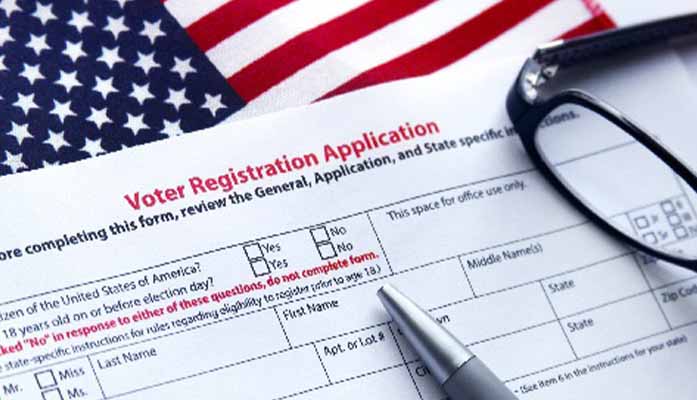
The petition calls for amending federal regulations and the National Mail Voter Registration Form to mandate documentary proof of U.S. citizenship (DPOC) for registering to vote in Federal Elections.
The current federal form relies exclusively on self-attestation, allowing applicants to check a box affirming citizenship under penalty of perjury, creating what lawmakers describe as an “honor system” with no meaningful safeguards against ineligible registrations.
The proposed reform would require verifiable proof of citizenship at the point of registration, aligning voter enrollment with common identification requirements.
“Requiring documentary proof of citizenship is a simple, common-sense reform,” wrote the lawmakers in the formal comment letter. “Just as Americans are asked to show identification for far less consequential activities—boarding an airplane, opening a bank account, or even attending certain events—it is entirely reasonable to require proof of citizenship to participate in our elections. This step would not burden eligible voters but would provide an essential check to ensure that only citizens are added to the voter rolls.”
The lawmakers cited recent incidents as evidence of systemic vulnerabilities:
- In Iowa, officials identified 277 noncitizens on voter rolls, with at least 35 confirmed to have cast ballots in the 2024 election.
- All 15 counties in Arizona are actively working to identify and remove noncitizens from voter rolls.
- In Texas, election integrity units have documented multiple cases of noncitizen voting and registration fraud, including a conviction in Starr County for illegal voting, prosecutions in Hidalgo County for falsifying applications with fictitious addresses, and instances in Tarrant County where noncitizens registered using the federal form without proof of citizenship.
Under the National Voter Registration Act (52 U.S.C. § 20508(a)(1)–(2)), the EAC has both the authority and duty to develop the National Mail Voter Registration Form and prescribe necessary regulations to protect the integrity of the electoral process and maintain accurate voter rolls.
“I’m proud to support this effort to strengthen our election system. In our constitutional republic, only American citizens should be able to vote, and requiring proof of citizenship at registration is a commonsense safeguard,” said Representative Crane. “Considering we already show ID to drive, fly, or open a bank account, this is not a novel concept. It’s simply a necessary step to ensure the integrity of our elections.”
Along with Senator Cruz and Representative Crane were cosigners:
Senators: Jim Banks (R-IN), Marsha Blackburn (R-TN), Ted Budd (R-NC), John Cornyn (R-TX), Cindy Hyde-Smith (R-MS), Roger Marshall (R-KS), Ron Johnson (R-WI), and Bernie Moreno (R-OH).
Representatives: Andy Biggs (R-AZ), Byron Donalds (R-FL), Pat Fallon (R-TX), Andy Harris (R-MD), Clay Higgins (R-LA), Ronny Jackson (R-TX), Mary Miller (R-IL), Barry Moore (R-AL), Riley Moore (R-WV), Derek Schmidt (R-KS), and Greg Steube (R-FL).
The lawmakers concluded with, “Requiring documentary proof of citizenship will strengthen the integrity of our elections, safeguard the voices of American citizens, and ensure that every lawful vote is protected from being diluted by unlawful ballots.”
Ethan Faverino is a reporter for AZ Free News. You can send him news tips using this link.