by Ethan Faverino | Apr 8, 2026 | News
By Ethan Faverino |
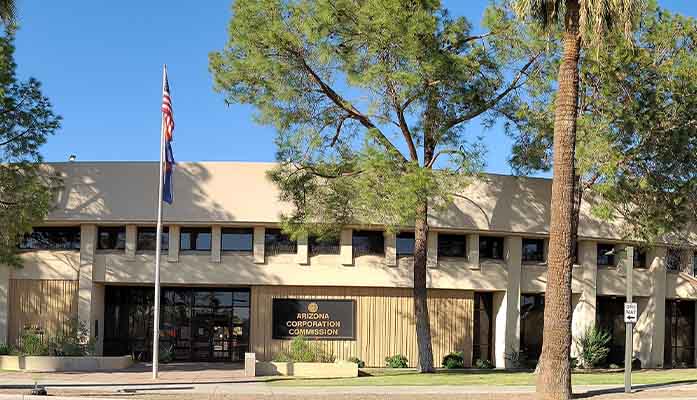
The Arizona Corporation Commission (ACC) will host its annual 2026 Summer Preparedness Workshop on Tuesday, April 14, at 9:00 a.m. in Hearing Room One at the Commission’s Offices. The workshop will also be available virtually.
This annual event serves as a critical exercise in which Arizona’s regulated electric utilities present detailed plans to the Commission outlining their readiness to meet peak electricity demand during the state’s intense summer heat.
The workshop allows the ACC to review utility preparations, verify proactive grid maintenance efforts year-round, and confirm that infrastructure remains safe, reliable, and resilient for customers.
Arizona’s summer temperatures routinely drive record-breaking electricity demand as residents rely heavily on air-conditioning. In recent years, major utilities—including Arizona Public Service (APS), Salt River Project (SRP), and Tucson Electric Power (TEP)—have repeatedly set new peak demand records amid scorching heat, with highs often exceeding 115 degrees in the Phoenix area.
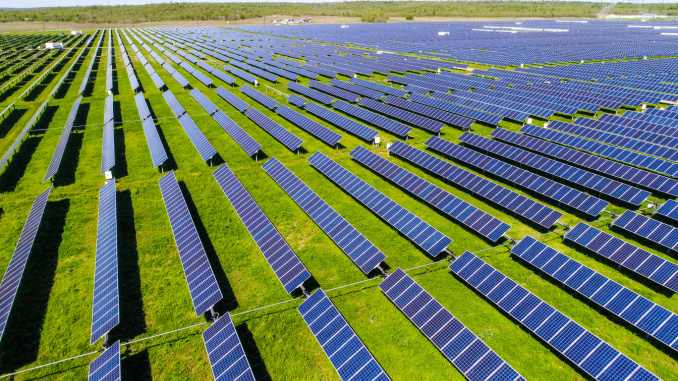
In 2025, utilities forecasted and prepared for peaks exceeding 8,400 MW for APS and SRP each, while emphasizing additions of solar, battery storage, and other resources alongside adequate reserves to maintain reliability.
The commission uses the workshop to ensure utilities demonstrate sufficient generating capacity, transmission readiness, maintenance schedules, emergency response protocols, and contingency measures for high-demand periods.
Ethan Faverino is a reporter for AZ Free News. You can send him news tips using this link.
by Matthew Holloway | Mar 31, 2026 | News
By Matthew Holloway |
The Arizona Corporation Commission (ACC) has opened a formal inquiry into how regulated utilities are using artificial intelligence in system operations, including planning, forecasting, and infrastructure management.
According to a March 24 announcement, Commissioner Lea Márquez Peterson initiated the docket titled In the Matter of Researching and Discussing the Use of Artificial Intelligence (AI) to More Efficiently and Reliably Deliver Energy and Water to Customers (Docket No. AU-00000A-26-0060).
Arizona Corporation Commission records show the inquiry directs regulated electric, natural gas, and Class A and Class B water utilities to provide information on their current and potential use of artificial intelligence in operations, including planning and forecasting, storm response, and equipment procurement. The docket also outlines plans for a public workshop later this year to gather input from stakeholders and subject matter experts.
“Our regulated utilities operate energy and water plants and distribution systems that are identified as critical infrastructure for Arizona,” Márquez Peterson said. “Discussions have been occurring frequently at national and regional conferences on the use of AI to automate and improve services. It’s important that our Commission engage in the dialogue surrounding these technological advancements on behalf of our regulated utilities and their ratepayers.”
The docket states that the Commission is seeking information to better understand how artificial intelligence may be used “to more efficiently and reliably deliver energy and water to customers,” while ensuring systems remain secure and resilient.
The proceeding will begin the Commission’s review of how artificial intelligence could be integrated into daily plant operations and distribution systems used by Arizona’s regulated utilities.
As part of the inquiry, utilities are being asked to detail how artificial intelligence is currently used or may be deployed in the future, particularly in areas such as system planning, demand forecasting, response to outages and severe weather events, and infrastructure and equipment procurement.
The Commission stated that the inquiry will also examine how utilities are implementing artificial intelligence to maintain system reliability and protect critical infrastructure.
According to the announcement and docket filing, a workshop will be held before the end of the year to allow stakeholders and subject matter experts to provide input and discuss information submitted into the proceeding.
Matthew Holloway is a senior reporter for AZ Free News. Follow him on X for his latest stories, or email tips to Matthew@azfreenews.com.
by AZ Free Enterprise Club | Dec 17, 2025 | Opinion
By the Arizona Free Enterprise Club |
Our country is facing an energy crisis. No, not because of new demand from data centers or AI. Instead, it’s because utilities in nearly every state, due to government imposed “renewable” mandates, self-imposed mandates, and the supercharging of the Green New Scam under the so-called “Inflation Reduction Act,” have been shutting down vital coal resources and building out almost exclusively intermittent and costly resources like solar, wind, and battery storage.
President Trump understands this, and that is why on day one of his administration, he declared an Energy Emergency. Then, a few months later, the President signed a trio of Executive Orders designed to keep our “beautiful, clean coal” burning and providing the reliable, baseload, and affordable electricity Americans have benefited from for generations. Those orders have been used to keep coal generation online that was slated to shut down in Michigan and will potentially keep two units operating that were scheduled to shut down in Colorado this December. In Arizona, however, the Cholla Power Plant in Navajo County was shuttered by the utility just weeks after President Trump explicitly called out the plant for saving in a press conference.
Unlike states with green mandates, Arizona essentially has none. Instead, our utilities, like many around the country, have self-imposed commitments to go “Net Zero” by 2050. To meet that target, they have planned to shut down all coal generation in the state by 2032 and plan to build out almost exclusively solar, wind, and battery storage to meet an expected explosive growth in demand, at a cost of tens of billions of dollars. So, it is no surprise that like much of the rest of the country, Arizona is facing an energy crisis.
>>> CONTINUE READING >>>
by Matthew Holloway | Oct 20, 2025 | News
By Matthew Holloway |
Arizona Corporation Commissioner (ACC) Rachel Walden brought an amendment during the commission’s Wednesday meeting to require detailed, extensive oversight over electrical utilities. Gaining unanimous approval in a 5-0 vote, Walden pushed to ensure Arizona’s electrical grid doesn’t become a ratepayer-funded venue for green projects.
At the October 15th open meeting, Walden pushed through an amendment demanding a more granular kind of report than the industry has provided for the past 26 years, exceeding what is required under Arizona Revised Statutes. Utilities like APS and SRP already owe the ACC their ten-year forecasts under state law, but Walden’s call for more detail: business confidential filings on line congestion, load-growth hotspots, and every grid-hardening method from reconductoring to storm-proofing—are a seismic departure from the more hands-off era that preceded.
“Finding the least cost, most reliable model includes transmission, not just electricity generation. None of the answers from our state utilities today inspired any confidence in me that these issues are a priority,” Commissioner Walden told the meeting. “I am not convinced that additional build out of renewables, while also having to add firm capacity as well as back up generation, is saving Arizonans money. I know that Arizonans are concerned with these issues, especially as we head into accelerated growth in our state. The Commissioners, as elected by the public, are faced with these questions and comments almost daily, and our actions are held accountable to the public.”
The move from Walden and the ACC seems to have been carefully timed. The Thirteenth Biennial Transmission Assessment projects a 3 percent annual growth surge through 2033, significantly faster than previous forecasts, reflecting Arizona’s population boom colliding with a deluge of intermittent ‘renewable’ sources. With solar and wind flooding the system, utilities are rerouting power across state lines, inviting operational headaches from California’s aggressive decarbonization push.
“Arizonans will not bear the costs and impacts of supporting neighboring states’ Green New Deal policies,” Walden said.
Walden’s amendment mandates confidential reports on congestion and bottlenecks, where new solar farms fail to provide a consistent load or data centers increase demand, along with projections to gauge how interconnection requests ripple through the system. Supporting Commissioner Lea Márquez-Peterson’s additions, Walden is requiring complete disclosures on enhancement efforts, ensuring the ACC can vet if utilities are truly fortifying the state’s transmission system.
With major data centers like Microsoft and Google cropping up in Maricopa County, pulling gigawatts from an already strained grid, peak demand strains are a genuine concern. The disastrous 2023 heat wave that had Texas utilities scrambling is fresh in mind. Arizona is hardly immune to such issues. As renewables providers require load balancing and battery installations, the costs are passed on to ratepayers, and Walden is questioning the utilities’ math.
“Ensuring our utilities have sufficient generation capacity to serve our customers during peak demand along with a reliable transmission grid to handle that capacity is paramount,” she said. “The Commission must ensure that any transmission or generation solutions to mitigate grid concerns, such as line congestion created by the interconnections from new generation sources, or offtakes from the grid by large customers such as data centers and hyperscalers, are borne by the creators of those grid concerns, not Arizona ratepayers.”
Walden pledged to scrutinize future Biennial Assessments and Integrated Resource Plans in a distinct pivot from the ACC’s historically more hands-off stance.
“I will be watching the Biennial Transmission Assessments and Integrated Resource Plans closely, and investigating these issues in all future rate cases,” Walden concluded.
Matthew Holloway is a senior reporter for AZ Free News. Follow him on X for his latest stories, or email tips to Matthew@azfreenews.com.
by Jeff Caldwell | Oct 9, 2023 | Opinion
By Jeff Caldwell |
Radical Leftists and solar panel companies are freaking out over the upcoming Arizona Corporation Commission meeting on Wednesday, October 11 at 10:00am! But, based on the available public comments, they are the only ones who have contacted the Corporation Commission to express their desired actions regarding what’s on the agenda.
Currently, Arizona regulations force utility companies in the state to buy the extra solar power each solar customer puts into the grid. The Arizona Corporation Commission sets the rates that utility companies pay those customers.
On Wednesday, the Corporation Commission could vote to change the amount utility companies pay to match the break-even cost of the companies. This would reduce the vast majority of Arizonans’ energy bills.
In 2007, the Corporation Commission implemented a policy that required utility companies to pay retail price of solar power to their customers who put solar power back into the grid.
Those customers are still getting that rate today, even though the price of solar power has decreased tremendously over time. The customers are locked into that amazing deal for 20 years from the date of installation.
The 2007 policy ended in 2016 when the Corporation Commission decided utility companies should pay wholesale pricing to customers. However, there was a “great negotiation” between those who wanted the policy to remain in place—the Radical Left & solar power companies—and the Corporation Commission. The new policy implemented allowed for a maximum of only a 10% reduction in the price utility companies pay these customers every year. Since 2016, customers are locked into the rate they are paid for 10 years from the date of installation. Oh, and yes, those customers who installed solar panels between 2007-2016 are still locked in to get paid retail pricing for 20 years from the date of installation.
Because the maximum reduction of the rate utility companies pay to solar power customers who give to the grid is only 10% per year, there is still a huge discrepancy between the true wholesale solar power price and the rate utility companies are forced to pay these customers.
APS calculates their “Avoided Cost” at almost $0.05. This means APS would nearly break even on paying five cents per kWh to solar panel customers giving power to the grid. However, APS is forced to pay nearly $0.09 per kWh. For ten years, APS has to pay this rate to every solar panel customer who gives power to the grid, even though solar power is more than likely going to continue to fall.
The Arizona Corporation Commission sets the maximum profit rate of utility companies. APS’ is set at 8.7%. Being forced to pay customers more for their energy than the break-even cost causes utility companies to charge customers who do not have solar and are not giving to the grid a higher price for energy to meet profits.
If APS is allowed to truly match wholesale pricing for all solar panel customers giving to the grid and pay each one of them just under five cents per kWh, APS would be forced to cut the cost of energy for all of their customers, use the extra funds left over to reinvest, and/or expand its energy providing capabilities.
That’s why, if you really believe in clean energy or just want cheaper utility bills, it’s important to make your voice heard by speaking up, giving public comments, or submitting written public comments.
Right now, the only folks who have been doing so are those who own solar panels and don’t want their pay to decrease or solar panel companies who may face tougher economic hardship. But all customers deserve a say in our state’s energy prices both now—and in the future.
Jeff Caldwell currently helps with operations at EZAZ.org. He is also a Precinct Captain, State Committeeman, and Precinct Committeeman in Legislative District 2. Jeff is a huge baseball fan who enjoys camping and exploring new, tasty restaurants! You can follow him on X here.