by Daniel Stefanski | Nov 3, 2024 | News
By Daniel Stefanski |
Arizona’s Senate President is working to defend state laws and to elect President Donald J. Trump to the White House.
Last week, Senator Warren Petersen, the leader of his chamber, issued a statement after sitting in depositions for legal cases that he is a part of, involving two laws passed by the Arizona Legislature – a citizens-only voting law and the Save Women’s Sports Act.
In his statement, Petersen asserted that he intervened in the defense of both these laws because of the refusal of Arizona Attorney General Kris Mayes to do so. He also said, “You might ask why I have to sit through a grueling deposition when I have legislative immunity. The answer is that the liberal 9th Circuit Court does not believe I enjoy that constitutional right. It is hard to believe they could get something so simple wrong but this is a perfect example of why they are the most overturned circuit in the nation.”
Petersen promised to appeal both of the cases to the Supreme Court of the United States, adding, “I am confident we will prevail. The 9th Circuit may not know what a woman is but most of the Supreme Court still does. The 9th Circuit may no longer believe that only citizens should vote but the majority of the Supreme court does. I am also confident the Supreme Court will rule that elected officials are not subject to such depositions.”
He finished by highlighting the necessity of electing former President Donald J. Trump to the White House, writing, “Just another reminder to me of why we need President Trump. He will appoint more judges that believe in the original intent of the Constitution.”
Petersen’s statement was greeted by praise for his efforts from many of his followers. State Senator Sylvia Allen said, “Thanks Senator for standing strong on behalf of the citizens of Arizona.” Another grassroots activist replied, “Warren Petersen for Attorney General 2026!!”
The Senate President’s prolific defense of state and federal laws over the past two years in the Arizona Legislature has launched him into a conversation for state Attorney General as politicos start to look at the fast-approaching 2026 cycle. Petersen has joined several briefs and lawsuits from Republican attorneys general around the country in lieu of Mayes’ involvement, giving him first-hand experience in the world of a state’s top prosecutor for select issues. If he would run for the post, it is unknown who – if anyone – might contend with him for the primary election nomination.
Mayes is expected to run for re-election as Attorney General, yet her public and private disagreements with Arizona Governor Katie Hobbs have led some to wonder if there could be a significant Democrat primary election brewing for the office of the state’s chief executive.
Daniel Stefanski is a reporter for AZ Free News. You can send him news tips using this link.
by Daniel Stefanski | Oct 22, 2024 | News
By Daniel Stefanski |
Arizona Republicans continue to fight to protect the integrity of women’s sports.
Last week, Arizona Senate President Warren Petersen, House Speaker Ben Toma, and Superintendent of Public Instruction Tom Horne filed a cert petition at the Supreme Court of the United States, asking the nation’s high court to accept a case to decide the fate of the state’s Save Women’s Sports Act, which was signed into law in 2022.
“We cannot remain silent and allow these wrongs against women and girls to continue. We must stand up and fight to protect our daughters, nieces, sisters, and granddaughters from bigger and stronger males who are claiming their identities, their private spaces, their sports, and are putting their safety at risk,” said Petersen. “What’s even more disheartening is that we have a Democratic Governor and Attorney General that claim to support women, but they refuse to keep boys out of girls’ sports. Republicans stand in solidarity to defend women and girls, and I’m confident the U.S. Supreme Court will make it clear- Arizona’s Save Women’s Sports Act should be enforced.”
In their brief to the U.S. Supreme Court, the Republicans argue that “the Ninth Circuit decided an important question of federal law in an opinion that contradicts this Court’s precedent and splits with other circuits on multiple issues, [and that] this case presents an ideal vehicle to address these important questions.”
In July, Judge Jennifer Zipps granted a preliminary injunction against SB 1165, the Save Women’s Sports Act, which blocked the law from going into effect. Arizona’s Republican Superintendent of Public Instruction Tom Horne, the defendant in the case, promised to appeal the ruling, saying, “This will ultimately be decided by the United States Supreme Court, and they will rule in our favor. The Plaintiffs in this case claimed that this only involves pre-pubescent boys, but we presented peer-reviewed studies that show pre-pubescent boys have an advantage over girls in sports. The only expert presented by the Plaintiffs was a medical doctor who makes his money doing sex transition treatments on children and who has exactly zero peer-reviewed studies to support his opinion.”
On the other side, one of the representatives of the plaintiffs, Justin R. Rassi from Debevoise & Plimpton LLP, lauded the judge’s ruling, writing, “The Court’s well-reasoned decision exposes the lack of any legitimate justification for this discriminatory law, which inflicts severe and irreparable harm on transgender girls like Megan and Jane. We are very happy that, as a result of this ruling, Jane and Megan will be immediately able to resume playing sports with their friends.”
A panel from the Ninth Circuit Court of Appeals previously ruled that the district court’s opinion was in order, agreeing that “before puberty, there are no significant differences in athletic performance between boys and girls;” and that “Arizona’s transgender ban discriminates on its face based on transgender status.” This decision led to the appeal to the nation’s high court by the Republican petitioners.
Republican State Senator Wendy Rogers cheered on the filing at the U.S. Supreme Court, writing, “Arizona Senate Republicans protecting women!”
Daniel Stefanski is a reporter for AZ Free News. You can send him news tips using this link.
by AZ Free Enterprise Club | Sep 21, 2024 | Opinion
By the Arizona Free Enterprise Club |
Only United States citizens should be voting in our elections. That shouldn’t be a controversial statement. But of course, it’s 2024, and the Left hasn’t instituted its open border policies under the Biden-Harris administration for nothing.
The fact is that U.S. citizens can’t go into France, Australia, or any other country throughout the world and vote in their elections. Why should citizens from other countries be allowed to vote in our elections?
While it’s certainly illegal for non-citizens to vote here, the law is only as good as the mechanism in place to make sure it’s followed. That’s why it is critical for the integrity of our nation’s elections that voters prove their citizenship prior to voting. And the SAVE Act is a much-needed remedy that would address this issue head on.
Sponsored by Rep. Chip Roy from Texas, who has certainly experienced firsthand the issues that arise from the current surge at the border, the SAVE Act would require individuals to provide documentary proof of citizenship (DPOC) in order to vote in federal elections. It’s a constitutional solution to keep non-citizens from voting.
But given Congress’s propensity for inaction, states should not wait around to see if our federal lawmakers will pass the SAVE Act or another reasonable solution. Arizona has been a leader on this issue for years and has already enacted a comprehensive solution that every state should follow.
>>> CONTINUE READING >>>
by Paul Parisi | Aug 19, 2024 | Opinion
By Paul Parisi |
A modern-day example of voter integrity is the picture of an Iraqi woman holding up her finger colored in purple indelible ink, indicating that she voted. In 2005, an Iraqi woman posed for an iconic picture after leaving a polling station in Southern Iraq in the country’s first free election in over a half-century. She did so in defiance of deadly suicide bombings and mortar strikes at polling stations.
The recorded history of democracy dates back to the 5th century in ancient Greece. The word democracy is derived from two Greek words – demos, which means people and kratos, which means rule. In the first elections in Athens, only the ruling class could vote.
Even though the United States of America is a democratic country, the path to “one person, one vote” has been a checkered one. In 1789, when the US Constitution was ratified, most states only allowed white landowners to vote.
The 15th Amendment to the US Constitution in 1870, gave Black men the right to vote. It wasn’t until 1920 when the 19th Amendment was passed that women in all states were allowed to vote. The passage of the Voting Rights Act of 1965 put teeth in prohibiting racial discrimination when voting.
Though we have come a long way since the concept of democracy was born, voter integrity is still on the forefront. The recent phenomena of widespread mail-in ballots have created a whole new potential of voter fraud. Ballot harvesting, which is legal in many states, puts the concept of the secret ballot into question. Is the person filling out the ballot actually the person registered to vote?
Congress has recently passed the Safeguard American Voters Eligibility Act (SAVE). This bill is waiting to be heard in the Senate. The act requires that all people registering to vote provide proof of citizenship in federal elections. Though it’s already against the law for non-citizens to vote in federal elections, the National Voter Eligibility Act of 1993 prohibits states from confirming citizenship status in federal elections.
On August 1, 2024, the 9th Circuit Court put a stay on a recent Arizona law that required showing proof of citizenship in all elections including federal. In 2020, 11,600 individuals voted in Arizona on federal only ballots without showing proof of citizenship. The 9th Circuit Court decision is now being appealed to the US Supreme Court.
With the recent influx of undocumented individuals entering the United States, the importance of citizens only voting is a front burner issue that the SAVE Act might resolve. Just showing ID when registering to vote and casting your ballot at the polls will bring back a level of confidence in our elections.
With stronger legislation addressing voter integrity, Americans may have even more trust in our elections—akin to the Iraqis proudly holding up their purple-stained fingers.
Paul Parisi is the Arizona Grassroots Director for Our America.
by Matthew Holloway | Jul 2, 2024 | News
By Matthew Holloway |
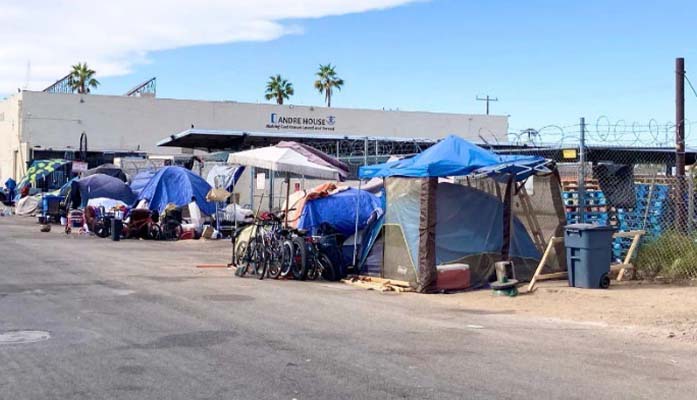
The United States Supreme Court ruling in Johnson v. City of Grants Pass, has settled the question of a city’s ability to arrest and fine people for sleeping and encamping in public spaces.
In the 6-3 ruling, the high court found that enforcing laws against camping on streets, sidewalks, and public lands does not constitute “cruel and unusual punishment,” and therefore survives a challenge based on the Eighth Amendment. Communities beleaguered with an entrenched homeless population living illegally on city streets, in vacant lots, and even parks will now be able to clear them and get the homeless, and frequently mentally ill and/or addicted off the streets and hopefully to the resources they need. As noted by AZFamily, the small city of Grant’s Pass, Oregon, was vindicated by the Supreme Court in its assertion that forbidding homeless encampment is not unconstitutional.
Along with Grant’s Pass, the City of Phoenix was also cleared for a new city law to take effect in two months making it illegal to camp within 500 feet of a school, childcare center, or city-owned park as previously reported by AZ Free News. According to The Center Square, Arizona Senate President Warren Petersen is quite pleased with the SCOTUS ruling. He told reporters, “This ruling is a victory in our state’s efforts to tackle the humanitarian crisis destroying lives and livelihoods within our communities on a daily basis.”
“Our children shouldn’t be forced to walk to school on streets littered with needles, feces, and trash. The individuals camping out should be discouraged from this practice through enforceable laws and be provided with the mental health or substance abuse services they need to overcome this terrible situation.”
Phoenix’s Democrat Mayor Kate Gallego said in written statement Friday, “Phoenix has continued to make meaningful progress on this issue while simultaneously navigating a web of conflicting legal opinions.” She added, “Today’s Supreme Court ruling provides the necessary clarity we need to help even more people find safe, stable shelter,” as AZFamily reported.
Independent City Councilman Kevin Robinson observed, “We want to have the flexibility (to issue citations). I think it needs to be there if it’s a critical type of situation. But the expectation is we lead with services first. We look for ways to help people.” Democrat Councilwoman Kesha Hodge Washington added, “The decision provides municipalities with an accountability tool, if and when appropriate.”
Her fellow Democrat Councilman Carlos Galindo-Elvira explained that Phoenix needs to achieve a balanced approach between law enforcement and the dignity of the homeless. “It cannot be open season on the unhoused. That’s not acceptable to me,” he said. “I worry about that everywhere in the United States.”
Although he noted, “Citations have to be an option to ensure equity and to maintain space and access to it.”
Republican Councilwoman Ann O’Brien, who led the encampment ban in the council, told the Arizona Republic that the ruling has affirmed the new ordinance but stressed that Phoenix will continue offering services to the homeless, although for those who refuse assistance, she supports enforcement.
“We want to get them back on their feet. … If we can lead with services, that’s my preference. When they say, ‘No,’ then if that means they need to be ticketed, then I would welcome them to go through the community court process,” O’Brien said.
“What’s important to remember is this isn’t just about the homeless community. It’s about all the citizens of Phoenix and quality of life issues for everyone,” she added.
The City of Phoenix issued a statement published by ABC15 saying in part, “The City of Phoenix has worked strategically over the last several years to balance court orders from two different lawsuits, community needs, and available resources to address homelessness in our community. The City will continue to lead with services and will not criminalize homelessness, while we evaluate our programs based on the court’s ruling today. The City is confident in the processes created by the Office of Homeless Solutions and supporting departments to address encampments in a dignified and compassionate manner, connecting our most vulnerable residents with services while preserving the quality of life in our neighborhoods for all residents.”
Writing for the majority of the court, Justice Neil Gorsuch reached for the work of Alexis de Tocqueville to conclude his ruling:
“Homelessness is complex. Its causes are many. So may be the public policy responses required to address it. At bottom, the question this case presents is whether the Eighth Amendment grants federal judges primary responsibility for assessing those causes and devising those responses. It does not. Almost 200 years ago, a visitor to this country remarked upon the ‘extreme skill with which the inhabitants of the United States succeed in proposing a common object to the exertions of a great many men, and in getting them voluntarily to pursue it.’ 2 A. de Tocqueville, Democracy in America 129 (H. Reeve transl. 1961).
If the multitude of amicus briefs before us proves one thing, it is that the American people are still at it. Through their voluntary associations and charities, their elected representatives and appointed officials, their police officers and mental health professionals, they display that same energy and skill today in their efforts to address the complexities of the homelessness challenge facing the most vulnerable among us.
Yes, people will disagree over which policy responses are best; they may experiment with one set of approaches only to find later another set works better; they may find certain responses more appropriate for some communities than others. But in our democracy, that is their right. Nor can a handful of federal judges begin to ‘match’ the collective wisdom the American people possess in deciding ‘how best to handle’ a pressing social question like homelessness. Robinson, 370 U. S., at 689 (White, J., dissenting).
The Constitution’s Eighth Amendment serves many important functions, but it does not authorize federal judges to wrest those rights and responsibilities from the American people and in their place dictate this Nation’s homelessness policy. The judgment below is reversed, and the case is remanded for further proceedings consistent with this opinion.”
Matthew Holloway is a senior reporter for AZ Free News. Follow him on X for his latest stories, or email tips to Matthew@azfreenews.com.