by Matthew Holloway | May 6, 2025 | News
By Matthew Holloway |
Tucson Border Patrol Specialty Units and Homeland Security Investigations agents have arrested an illegal immigrant wanted by the Mexican government for smuggling weapons across the border.
“Gun runner runs out of luck. The arm of the law caught up to a Mexican arms smuggler when Tucson Border Patrol Specialty Units from Casa Grande teamed up with Homeland Security Investigations to arrest a man wanted by the Government of Mexico,” said Chief Patrol Agent (CPA) of the Tucson Sector Sean McGoffin on X.
The Chief Patrol Agent added that the man arrested was living in Phoenix illegally and was handed over to Mexican ‘Federales’ or La Agencia de Investigación Criminal who were shown in a posted image in uniform with their backs turned and faces obscured along with HSI Agents and the suspect. McGoffin added, “Now he will face the music in Mexico, as he was promptly removed from the U.S. into the custody of Mexican Officials.”
U.S. Customs and Border Protection (CBP) hosted a press conference Friday morning with law enforcement partners in Tucson highlighting DHS and interagency efforts to interdict firearms being smuggled into Mexico.
CBP’s Director of Field Operations for Tucson Guadalupe Ramirez, who led the presser, told reporters that the Department of Homeland Security alongside local and federal partners have in recent days successfully “stopped child abduction, interdicted criminals fleeing prosecution, interdicted illegal contraband such as controlled substances, precursors, arms, and recovered myriad of other violations involving currency and stolen vehicles.”
He added, “Our successful interdiction and seizures play a critical role in protecting America’s borders, the national security by preventing illegal weapons, reaching dangerous criminal networks in Mexico. CBP has the authority for departure control of any person, baggage vehicle or material departing the United States and all are subject to inspection and search by CBP officers to ensure compliance with applicable outbound laws.”
Ramirez concluded, “Together with our partners, we’ll continue to target and examine high risk outbound conveyance destined to Mexico, we’ll increase outbound interdiction focused on weapons and currency trafficking of weapons and ammunition intended for terrorism. It is not just a border violation, it is a direct act of supporting terrorism that threatens national security and international security. Engaging in weapons trafficking, particularly to support designated foreign terrorist organizations comes with severe legal consequences including terrorism related charges and long sentences and financial penalties.”
Brendan Iber, Special Agent with the Bureau of Alcohol, Tobacco Firearms and Explosives (ATF) noted during the conference that the ATF has “determined that cartels prefer large caliber and or belt-fed rifles such as the Ohio Ordinance M2 50 caliber rifle, the Ohio Ordinance M240 7.62 millimeter, the FN M249 5.56 millimeter, and the Barrett M82 50 caliber Semi-Automatic rifle.”
He continued, “These cartels and terrorist organizations are often responsible for the most heinous violent crimes affecting the communities and neighborhoods of the United States. Under President Trump and Attorney General Bondi’s leadership, and since January 20th of this year, ATF has prevented nearly 9,700 firearms from falling into the hands of dangerous criminals or terrorists.” Iber added, “Since the announcement from Attorney General Bondi earlier in the week of the 9,700 firearms, I will tell you here in Arizona alone, that number is now up to 11,000.”
Matthew Holloway is a senior reporter for AZ Free News. Follow him on X for his latest stories, or email tips to Matthew@azfreenews.com.
by Matthew Holloway | May 4, 2025 | News
By Matthew Holloway |
Arizona Congressman Eli Crane (R-AZ2) is bringing attention to a “robust border security funding package” that advanced out of the House Committee on Homeland Security.
The funding recommendation proposes massive investments in physical barriers at the border, the improvement of existing facilities, a major manpower investment, including retention bonuses and signing incentives, as well as an urgently needed overhaul of border surveillance technology.
“As Arizona’s only member of the House Committee on Homeland Security, I’m proud to support President Trump and his team as they secure the border. By heavily investing in overlapping deterrents, our plan will significantly reduce human trafficking, fentanyl overdoses, and unlawful entries,” said Rep. Crane.
“This package will provide reinforcements for our brave agents on the ground and fortify our defenses for years to come. I appreciate Chairman Green’s leadership and look forward to sending the President long-overdue assistance.”
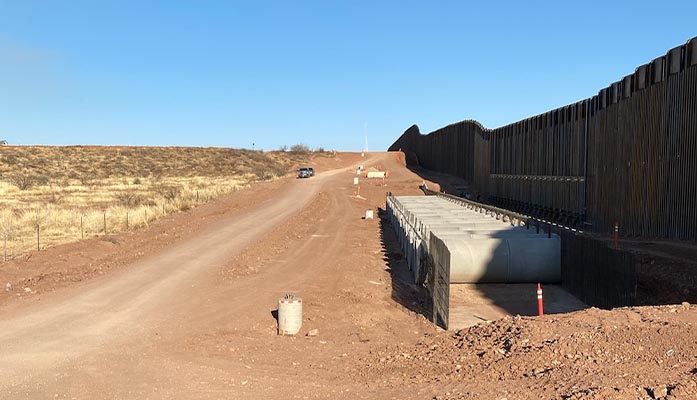
Among the recommendations, the Committee advanced an allocation of $46.5 billion for an “integrated border barrier system—an advanced solution that includes not only physical infrastructure but also technological enhancements.”
According to the Committee, the improvements will include: “internally reinforced steel bollards, fencing, all-weather access roads, lighting, surveillance cameras, and other cutting-edge technologies to support real-time monitoring and response.”
In terms of physical barriers, the package would allocate $46.5 billion for:
- Completion of 701 miles of primary wall
- Construction of 900 miles of river barriers
- Construction of 629 miles of secondary barriers
- The replacement of 141 miles of vehicle and pedestrian barriers.
Technological advances would include a $2.7 billion investment in:
- Ground detection sensors
- Integrated surveillance towers
- Tunnel detection capability
- Unmanned aircraft systems (UAS)
- Enhanced communications equipment.
In terms of personnel-facing investments, the package directs $4.1 billion toward filling the need for “additional Frontline CBP Personnel,” $2 billion for annual Retention Bonuses for existing personnel, and signing incentives for new hires.
“After hours of Democrat objections to commonsense border security funding, Homeland Security Committee Republicans held the line to advance budget recommendations that provide Customs and Border Protection with the resources needed to continue President Trump’s success in securing our border for years to come,” said Chairman Mark E. Green.
Matthew Holloway is a senior reporter for AZ Free News. Follow him on X for his latest stories, or email tips to Matthew@azfreenews.com.
by Jonathan Eberle | Apr 16, 2025 | News
By Jonathan Eberle |
U.S. Border Patrol agents from the Tucson Sector conducted two separate rescue operations over the weekend, saving the lives of two U.S. citizens who became stranded in remote desert terrain in southern Arizona.
The rescues, which took place on Saturday and Sunday, highlight the role of Border Patrol agents not only in enforcing immigration laws, but also in providing critical life-saving assistance in dangerous and often isolated parts of the state.
On Saturday, agents from the Border Patrol’s elite Search, Trauma, and Rescue (BORSTAR) team were called to assist the Pinal County Sheriff’s Office after a hiker was reported injured and stranded near the Superstition Mountains, east of Phoenix.
The hiker, who reported a possible broken ankle and was unable to walk, was located by air aboard Pinal County’s rescue helicopter, Pinal Air 1. Given the rugged mountainside terrain, a BORSTAR agent was lowered by hoist to reach and stabilize the hiker, who was then airlifted to a safe area for further medical evaluation.
The following day, Border Patrol agents assigned to the Sonoita Station responded to a call from the Santa Cruz County Sheriff’s Office involving a lost hiker on the Arizona Trail near Pauline Ridge. The hiker, who had been missing for two days, was spotted by a U.S. Customs and Border Protection (CBP) Air and Marine Operations helicopter. However, thick vegetation and challenging terrain made a helicopter landing impossible.
Instead, ground-based agents hiked into the remote area, reached the hiker, administered immediate medical care, and transported him to the Sonoita-Elgin Fire Department for further treatment.
“These rescues are a testament to [our agents’] training, teamwork, and unwavering commitment to public safety,” said Tucson Sector Chief Patrol Agent Sean L. McGoffin. “Our agents and teams continuously demonstrate their dedication to saving people’s lives.”
While U.S. Border Patrol is primarily known for its immigration enforcement mission, especially in southern border states like Arizona, its agents—particularly those assigned to specialized units like BORSTAR—frequently respond to emergencies involving lost, injured, or distressed individuals in remote regions.
Established in the late 1990s, BORSTAR was created in response to a rising number of migrant deaths in the desert but has since expanded its mission to include public safety rescues involving U.S. citizens and migrants alike. Arizona’s vast and often unforgiving terrain, particularly during extreme weather, can pose life-threatening risks to hikers, outdoor enthusiasts, and undocumented migrants attempting to cross the desert.
Border Patrol agents in the Tucson Sector conduct many rescues each year, often working in partnership with local law enforcement and fire departments to locate and evacuate individuals from areas where traditional emergency services may be unable to reach quickly.
CBP and Border Patrol officials continue to encourage outdoor recreationists to be prepared and exercise caution when entering remote areas of the Arizona desert. Basic recommendations include carrying sufficient water, a charged cell phone or GPS device, and informing others of planned travel routes and return times.
Jonathan Eberle is a reporter for AZ Free News. You can send him news tips using this link.
by Matthew Holloway | Apr 8, 2025 | News
By Matthew Holloway |
Chief Patrol Agent (CPA) of the U.S. Border Patrol Tucson Sector Sean McGoffin posted to social media Thursday detailed the apprehension of a Phoenix couple in Benson, AZ.
According to McGoffin’s account, a Phoenix couple, allegedly on a trip to Bisbee, AZ were stopped by the Arizona Department of Public Safety Highway Patrol in Benson and were found to be transporting three illegal immigrants. Border Patrol working with the AZ DPS took the driver and his girlfriend into custody along with the three illegal immigrants.
In his post McGoffin wrote, “The driver claimed he and his girlfriend were picking up some belongings in Bisbee when the 3 illegal aliens from Mexico asked for a ride.” Reportedly this wasn’t the driver’s first brush with human smuggling however, as McGoffin added, “Apparently, he didn’t learn not to smuggle aliens when he was sent to prison in 2022 for the same crime.”
According to the release, both the driver and his girlfriend are now facing charges under 8 USC 1324 for smuggling illegal aliens and the three illegal aliens will face charges under 8 USC 1182 for Alien Inadmissibility as well as re-entry restrictions under section 212 of immigration law.
McGoffin noted that the incident is under investigation by the Tucson Sector Border Patrol working in collaboration with the U.S. Attorney’s Office for the District of Arizona under U.S. Attorney Timothy Courchaine. According to USCBP statistics, the Border Patrol has arrested 4,323 Criminal Non-Citizens encountered from Fiscal year 2025 to February, 289 of whom had outstanding warrants or wants, out of a total of 193,164 encounters including both Title 8 Apprehensions and Title 42 Expulsions.
The arrests are just the latest in a series of apprehensions in southern Arizona as previously reported by AZ Free News, that have seen local and state authorities working in conjunction with the U.S. Customs and Border Protection. Later the same day, McGoffin shared video footage of agents assigned to the Willcox Border Patrol Station interdicting and arresting a human smuggler who was transporting four illegal immigrants into the U.S. including one in the trunk of the car. He wrote, “Luckily, agents where there to thwart the illegal operation potentially saving lives.”
The smuggler will also be charged under 8 USC 1324 and the illegal aliens he was transporting will likewise be charged under 8 USC 1182. Matthew Holloway is a senior reporter for AZ Free News. Follow him on X for his latest stories, or email tips to Matthew@azfreenews.com.
Matthew Holloway is a senior reporter for AZ Free News. Follow him on X for his latest stories, or email tips to Matthew@azfreenews.com.
by Staff Reporter | Apr 4, 2025 | News
By Staff Reporter |
An American citizen is in critical condition after evading Border Patrol agents while smuggling illegal aliens over the weekend.
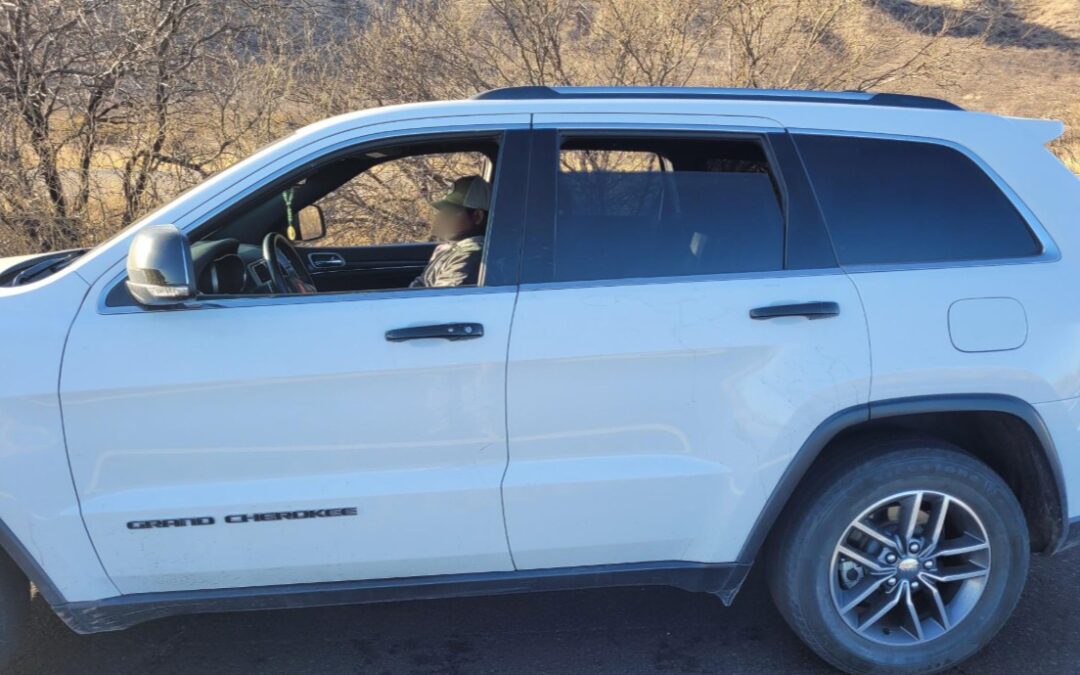
Customs and Border Protection (CBP) detailed the incident in a Tuesday press release. Detection technology observed the unnamed citizen driving a “suspicious” white Nissan Rogue traveling northbound from the border near Parker Canyon Lake around Sonoita around 3 pm on Saturday. The pursuit leading to the crash began after field agents located the car driving on state Route 83.
The vehicle stopped briefly to allow three individuals to exit, where they ran into the surrounding high desert. The vehicle continued northbound to evade Border Patrol agents along the highway, driving further for about four miles before apparently losing control and rolling onto its side. The driver lost consciousness on impact and sustained critical injuries.
Agents arrested two Guatemalan illegal immigrants and one Mexican illegal immigrant following the crash. All face charges for illegal reentry into the country, while the incapacitated driver faces alien smuggling charges.
U.S. citizen involvement in illegal alien smuggling has continued even amid heightened border security and mass deportation efforts under the Trump administration. A key initiative concerned Mexico and Canada committing 20,000 total troops and personnel to the southern and northern borders, respectively, to stop illegal immigration and drug smuggling.
Border Patrol also recently teamed up with the Department of Defense to beef up border security.
Field agents apprehended other Americans smuggling seven illegal aliens on Tuesday, also in the Sonoita area. The illegal aliens faced illegal entry and illegal reentry charges.
Two vehicles driven by two American citizens were apprehended in Willcox earlier this week.
AZ Free News is your #1 source for Arizona news and politics. You can send us news tips using this link.