by Matthew Holloway | Jan 25, 2026 | News
By Matthew Holloway |
The Goldwater Institute is asking a federal judge to allow Maricopa County taxpayers to see how public funds have been spent during more than a decade of federal oversight of the Maricopa County Sheriff’s Office (MCSO).
In a friend-of-the-court brief filed on Tuesday, Goldwater urged the U.S. District Court to reconsider a 2014 order that keeps the federal monitor’s invoices confidential. Under that order, the court-appointed monitor, Warshaw & Associates, submits billing records exclusively to the judge, placing them outside public view.
Scrutiny of the court-appointed monitor has been growing in recent weeks. Over $300 million has been spent on oversight in the past 14 years, with approximately 10% going to the court monitor, Robert Warshaw, according to Maricopa County Board of Supervisors Chairman Thomas Galvin. The Board submitted a court filing in December asking the U.S. District Court for the District of Arizona to end federal oversight of MCSO. Maricopa County Attorney Rachel Mitchell agreed in a post to X, writing, “There is no defense for this ‘federal monitor.”
Vice President for Legal Affairs at the Goldwater Institute, Timothy Sandefur, explained, “That means Maricopa County taxpayers have no way of knowing how their tax dollars are being spent on one of the most important services the county provides.”
“Although the Goldwater Institute has repeatedly requested copies of these invoices, the county does not have itemized statements, and the federal monitor refused to produce them,” he added. “But as we point out in the brief we filed on Tuesday, the government should not be allowed to keep such information secret unless there’s good reason, and even then, they’re required to specify what those reasons are. The court in this case has never done so—and even if it had, circumstances have changed in the decade since the lawsuit began.”
The filing comes as Maricopa County separately argues that continued federal oversight of MCSO under the Melendres v. Arpaio ruling is no longer justified. In a pending motion, the county contends that the sheriff’s office has implemented substantial reforms and that the monitorship should be terminated.
In its brief, Goldwater argues that the continued sealing of the monitor’s invoices prevents taxpayers from knowing how their money is being spent and undermines transparency principles embedded in Arizona and federal law.
“History did not end in 2014, and continued federal oversight of MCSO cannot be based on decade-old facts,” the brief states. “It’s crucial that Maricopa County taxpayers be permitted to know where their tax dollars are going — and that’s hindered by the existing orders and continued federal oversight without a full public accounting.”
The court has not yet ruled on either Maricopa County’s motion to end federal oversight or Goldwater’s request for public access to the monitor’s billing records.
Matthew Holloway is a senior reporter for AZ Free News. Follow him on X for his latest stories, or email tips to Matthew@azfreenews.com.
by David Winstanley | Nov 6, 2025 | Opinion
By David Winstanley |
I recently conducted an informal survey among about 50 of my neighbors, asking them, “What do you think your City of Mesa utility payment is used for at the city?” Some said ‘water.’ Some said, ‘water and sewage.’ And a few said, “water, sewage, and trash.” But only 2 of 5o included ‘other city government services including police and fire.’ Those two individuals had been at an Encore Conservative Club meeting where we had discussed this exact subject.
I believe this simple survey is representative of the entire City of Mesa, where more than 90% of the residents are totally unaware that 30% of their utility bill is transferred from utility payments to the “General Governmental Fund” for the City.
According to the Oxford English Dictionary, there are two definitions of “transparency” that are relevant to this discussion: 1) the quality of something, such as a situation or an argument, that makes it easy to understand, and 2) the quality in something, such as an excuse or a lie, that allows somebody to see the truth easily. The current City of Mesa utility bill is not “transparent” according to these definitions because it does not make clear to those paying the bill what they are being charged for: 70% for city utilities and 30% for other government services. I would like to challenge the mayor, and city council to make Mesa utility bills more transparent by including exactly what is paid for. And I might also suggest that the 30% of utility bills for general governmental uses should not have sales tax applied to it.
Councilman Adams stated in the September 22nd council meeting that the City was transparent about this subject because “if you looked you could find it.” But I would argue based on the above informal survey that you have to know that you need to look and further, that you need to understand where to look! While I applaud the City posting a special link to proposed utility rate adjustments on its website, including dates of relevant city council meetings, an informative video, and an online comment card, the information is somewhat obtuse. A 164-page “Current Utility Rate Book” is not at all helpful for the average Mesa resident; the staff presentations from the September 22nd council meeting are helpful but take multiple steps in website navigation to find (if you know they exist there).
I want to be abundantly clear. I am not accusing anyone, council nor staff, of concealing or hiding anything. Council and staff are following the existing process. But it has taken me more than a year of making mistakes and misinterpretations to understand how the City works, including being politely but repeatedly corrected by city financial staff (thank you!). I am a former Director of Engineering who has managed budgets of millions of dollars. If it takes me this much effort to understand, what chance does the average resident have?
Even for those who know that their utility payments contribute to the general governmental fund, few understand the consequences of the rigid application of the 30%. Because it is a percentage applied to the total revenues, it means that there is an “automatic tax increase” due to the corresponding increase in General Funds Transfers every time there is a utility rate increase. The City Ordinance (#5559) does not require 30%, but both city council and staff very rigidly apply it each year. In past years, there has been no discussion of whether this tax increase is needed or not. It just happens. I would like to challenge the city council to hold that tax increase to zero (no increase, no decrease) for this upcoming year, rather than just applying the 30%; the net result will be 28.8% instead. This will have zero impact on utilities because their requested increases can be approved as requested.
But this proposal (to fix the Transfer to General Fund from Utility Fund) illustrates another complication: the value for the General Fund Transfer, currently shown as $147M, was set during the budget process in May/June of this year. So, any change now would require city staff to revise the budget. That’s not impossible but highly unlikely especially considering these funds are earmarked for public safety. Public safety funding can be held constant by using other funds such as Environmental and Sustainability.
Another place for unintended obfuscation is in the Debt Service Transfers, with a proposed increase of $18.7M or 16.1% for FY25/26. This line item covers paying for principal and interest on utility bonds. This is the biggest increase for this year and, all future years, based on the 5-year plan presented to the council. Debt Service Transfers total 38% over the next 5 years leading to a total projected increase of 51%! These bonds are approved in a wholly separate meeting in June by the council, so most of these increases are required or major construction projects will be stopped. Most residents of Mesa assume that they get to vote on “bonds,” which is true of bonds supported by secondary property taxes (and school bonds), but not utility bonds, which are approved by city council vote. What the average resident does not understand is that when utility bonds are approved at a council meeting in June, it is a commitment to increase utility rates for up to 30 years into the future. And we already have a commitment of 38% increases in the next 5 years!
Taken together, the General Fund Transfer increase ($9.3M), and the Debt Service Transfer increase ($18.7M) constitute 65% of the requested utility rate increase but are effectively pro forma because they were approved previously. While not at all hidden, is that transparent to the typical Mesa resident?
Finally, I do support the proposed “Water/Wastewater Capacity Fee,” which is related to the utility rate adjustments because if passed, it removes $400M in future utility bonds from current Mesa residents and instead charges developers and new growth users to pay for the additional capacity. If passed, this capacity fee will result in a smaller increase in this year’s adjustments but will reduce future increases even more.
One last picky comment: the utility rate adjustment presentations use a “typical user,” but the exact definition of which seems to be a pretty minimal water user. I would suggest that the city staff use a statistically significant definition by presenting a “median” user, someone for whom 50% of city water users pay (or use) more, and 50% pay (or use) less.
I hope there will be good conversations on these subjects at the city council meetings on November 17th, for introduction of the utility rate adjustments and December 1st, for the public meeting on utility rates.
David Winstanley is a retired Director of Engineering at Honeywell Aerospace, former Chair of LD15 Republicans, and a conservative activist for local issues in the East Valley.
by Ethan Faverino | Sep 24, 2025 | News
By Ethan Faverino |
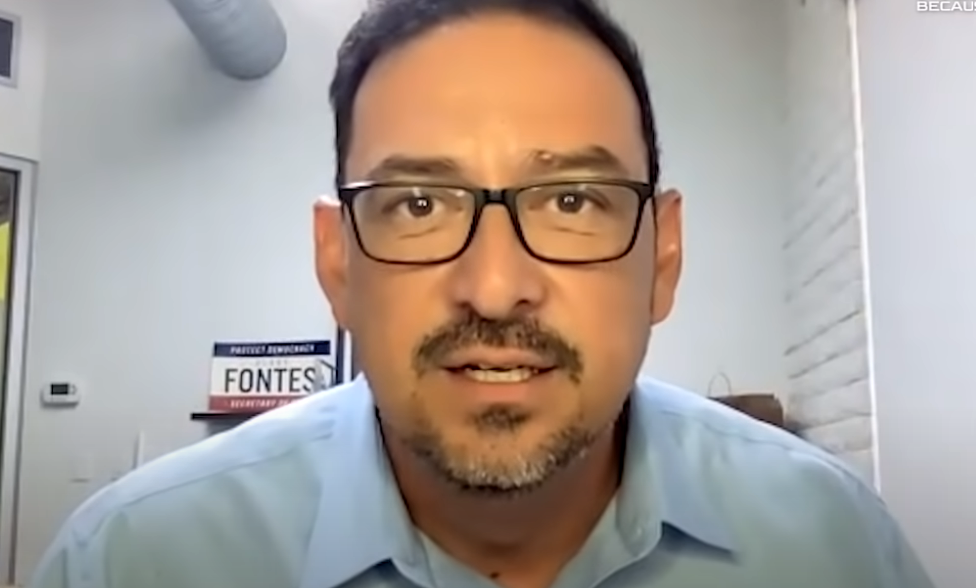
Arizona House Speaker Steve Montenegro, alongside Senate President Warren Petersen and House Republicans, announced the filing of an amicus brief with the Arizona Supreme Court in the case Republican National Committee v. Fontes.
The brief urges the Court to require Arizona Secretary of State Adrian Fontes to adhere to Arizona’s Administrative Procedures Act (APA) when drafting the Elections Procedures Manual (EPM), a critical set of rules governing the state’s election process.
The APA mandates a transparent public notice and comment period before new rules take effect, ensuring accountability and alignment with Arizona’s election statutes.
The brief, filed in support of the Republican National Committee, the Republican Party of Arizona, LLC, and the Yavapai County Republican Party, argues that the EPM must comply with the APA’s procedural requirements, as neither the APA nor the authorizing statute (A.R.S. § 16-452) explicitly exempts it.
“The integrity of Arizona’s elections is absolutely vital. House Republicans are committed to the rule of law and to ensuring that Secretary Fontes stays within the limits of his authority,” said Speaker Montenegro. “We already convinced a judge to strike down unlawful provisions in the 2023 EPM in our own lawsuit. We fully support this case, which asks only that Secretary Fontes follow long-standing notice and comment requirements when drafting the manual. Arizonans deserve accountability and transparency from every public officer, especially when it comes to election rules.”
The brief emphasizes that Arizona’s comprehensive election laws, which cover voter registration, early ballots, polling places, and vote tabulation, limit the Secretary of State’s authority to draft an EPM.
The APA’s notice and comment process serves as a check, promoting transparency and preventing deviations from legislative intent.
The brief cites the Court of Appeals’ ruling in Republican National Committee v. Fontes, which affirmed that the EPM is subject to the APA’s requirements due to clear statutory language.
The filing highlights two key benefits of APA compliance. First, it reinforces constitutional and statutory limits on the Secretary’s authority, preventing overreach. Second, the public comment process allows for early identification of legal or practical flaws in the EPM drafts, potentially reducing litigation and supporting public confidence in Arizona’s elections.
The brief also notes issues with the 2023 EPM, where provisions added without public input led to legal challenges.
The ongoing litigation, Petersen v. Fontes, further highlights the importance of APA compliance, as it challenges the 2023 EPM’s deviation from state law. The amicus brief, submitted by Montenegro and Petersen in their official capacities, reflects the Arizona Legislature’s commitment to upholding the rule of law and protecting the integrity of the state’s electoral process.
Ethan Faverino is a reporter for AZ Free News. You can send him news tips using this link.
by William Beard | Jul 12, 2025 | Opinion
By William Beard |
Reprinted with permission from the Goldwater Institute.
In 2006, voters in Pima County made a deal: an increase in the sales tax for better roads and infrastructure. But now, after nearly two decades of taxpayers holding up their end of the bargain, the results are underwhelming. Of the 35 projects originally promised, only 18 have been completed—and much of the unfinished work lies within Tucson’s jurisdiction. The question is no longer whether the plan was fulfilled, but why one city fell so far short.
The mismanagement is staggering. Tucson’s unfinished Regional Transportation Authority (RTA) projects are estimated to be $400–$600 million short. At the current pace—roughly $50 million in spending per year—completing the work would take at least eight more years. There’s one big problem, however: the sales tax that funds the RTA is set to expire in 2026, and time is running out. Tucson officials have responded by throwing up their hands and admitting defeat, postponing four projects for inclusion in a future “RTA Next” plan.
Every infrastructure plan faces risks, and Pima County’s strategy was no exception. The 2008 recession slowed tax collections, and inflation has since driven construction costs well beyond the 10% buffer allowed by law. Tucson, however, made matters worse by repeatedly altering project scopes to appease neighborhood groups, further delaying timelines and driving up costs. Each time, Tucson failed to take responsibility by allocating more supplemental resources. Instead, city leaders appeared to hope the problem would simply go away.
Tucson’s leaders clearly misunderstand the purpose of the RTA, viewing it more as a construction manager responsible for overruns than a basic funding mechanism distributing tax dollars. Each city was responsible for designing and building its own projects. Any change in scope—additional lanes, neighborhood preferences, unforeseen costs—was theirs to fund, not the RTA’s. State auditors reinforced this responsibility repeatedly over multiple years, including in 2017, 2022, and 2024. While overruns in other areas were previously paid for by partner municipalities under the RTA, Tucson now appears ready to go hat in hand to the rest of the county asking for a bailout.
Why should voters trust them this time around?
Taxpayers deserve clarity. Tucson’s chronic delays mean taxpayers will be asked to pay more. Approval of any extension or revision to the existing projects should depend on city leaders being transparent with the public. Why should all of Pima County be asked to pay for Tucson’s poor planning and execution? Kicking the can down the road is not a transportation strategy—it’s a sign of dysfunction. If Pima County taxpayers are expected to foot the bill yet again, they deserve full accountability before a single dollar is spent.
William Beard is the Municipal Affairs Liaison at the Goldwater Institute.
by AZ Free Enterprise Club | May 14, 2025 | Opinion
By the Arizona Free Enterprise Club |
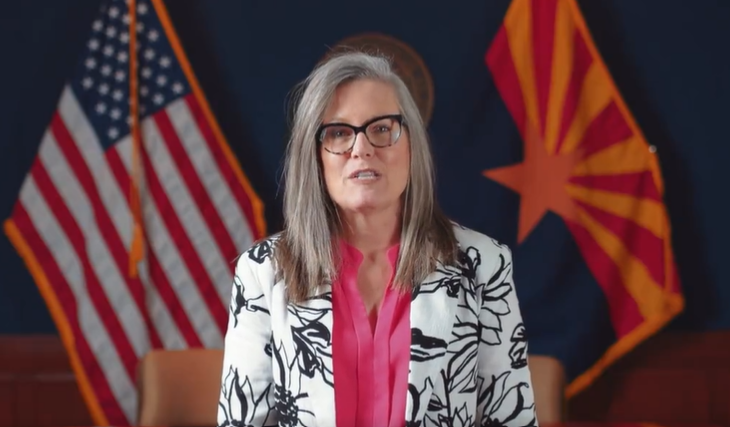
Since becoming Governor of Arizona in 2023, Katie Hobbs’ name has been synonymous with corruption. Now, one of her latest vetoes shows the lengths she is willing to go to protect her own schemes.
Buried on the afternoon of Friday, May 2, Hobbs vetoed SB 1612, along with 21 other bills. Sponsored by Arizona State Senator TJ Shope, SB 1612 would have required anyone applying for grants to various state agencies to disclose gifts, donations, or other support provided to the sitting governor. That sort of transparency should be something that every Arizonan can get behind—Republicans, Democrats, Independents, you name it—unless, of course, your agenda doesn’t involve the best interests of Arizona citizens, right Katie Hobbs?
This whole story starts at the very beginning of Hobbs’ tenure as governor. If you’ll recall, at the time, Hobbs set up a shady slush fund to provide donors with a conduit to buy political favor from her administration. While setting up and managing the fund, Hobbs illegally used public resources—like the state’s website—to solicit money for her inauguration. And she also tried to stop the disclosure of the names of those who donated to her inaugural fund.
But after immense political pressure and public records requests filed by groups like the Arizona Freedom Foundation (who operates AZ Free News), Hobbs finally released the names of the donors. One of the names of the groups on the list was Sunshine Residential Homes Inc., a for-profit company that contracts with the State of Arizona to provide some child welfare services. At the time, Sunshine Residential Homes made a donation of $100,000. But in June 2024, an eye-opening report revealed a deeper level of corruption—an alleged pay-to-play scheme between Hobbs and the group home…
>>> CONTINUE READING >>>