by Ethan Faverino | Sep 24, 2025 | News
By Ethan Faverino |
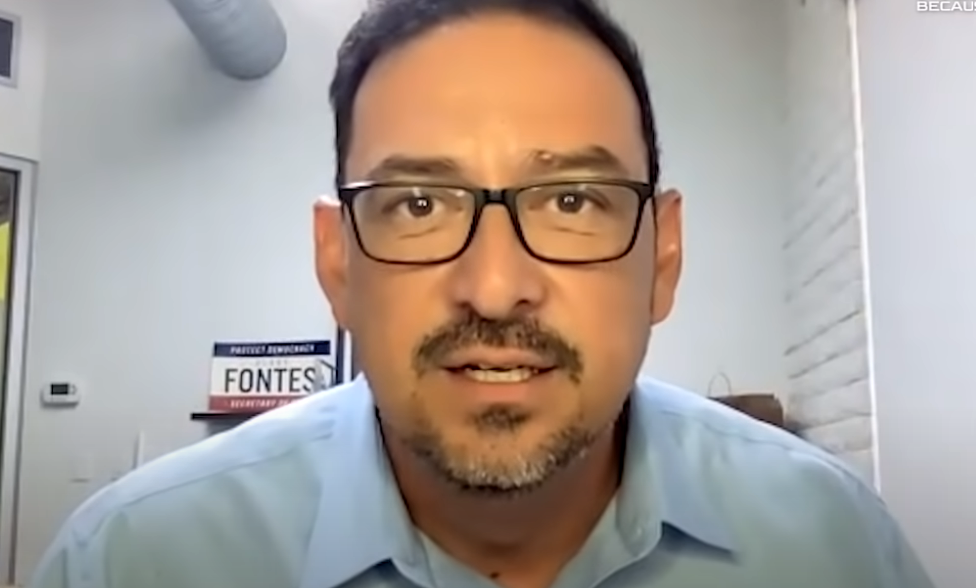
Arizona House Speaker Steve Montenegro, alongside Senate President Warren Petersen and House Republicans, announced the filing of an amicus brief with the Arizona Supreme Court in the case Republican National Committee v. Fontes.
The brief urges the Court to require Arizona Secretary of State Adrian Fontes to adhere to Arizona’s Administrative Procedures Act (APA) when drafting the Elections Procedures Manual (EPM), a critical set of rules governing the state’s election process.
The APA mandates a transparent public notice and comment period before new rules take effect, ensuring accountability and alignment with Arizona’s election statutes.
The brief, filed in support of the Republican National Committee, the Republican Party of Arizona, LLC, and the Yavapai County Republican Party, argues that the EPM must comply with the APA’s procedural requirements, as neither the APA nor the authorizing statute (A.R.S. § 16-452) explicitly exempts it.
“The integrity of Arizona’s elections is absolutely vital. House Republicans are committed to the rule of law and to ensuring that Secretary Fontes stays within the limits of his authority,” said Speaker Montenegro. “We already convinced a judge to strike down unlawful provisions in the 2023 EPM in our own lawsuit. We fully support this case, which asks only that Secretary Fontes follow long-standing notice and comment requirements when drafting the manual. Arizonans deserve accountability and transparency from every public officer, especially when it comes to election rules.”
The brief emphasizes that Arizona’s comprehensive election laws, which cover voter registration, early ballots, polling places, and vote tabulation, limit the Secretary of State’s authority to draft an EPM.
The APA’s notice and comment process serves as a check, promoting transparency and preventing deviations from legislative intent.
The brief cites the Court of Appeals’ ruling in Republican National Committee v. Fontes, which affirmed that the EPM is subject to the APA’s requirements due to clear statutory language.
The filing highlights two key benefits of APA compliance. First, it reinforces constitutional and statutory limits on the Secretary’s authority, preventing overreach. Second, the public comment process allows for early identification of legal or practical flaws in the EPM drafts, potentially reducing litigation and supporting public confidence in Arizona’s elections.
The brief also notes issues with the 2023 EPM, where provisions added without public input led to legal challenges.
The ongoing litigation, Petersen v. Fontes, further highlights the importance of APA compliance, as it challenges the 2023 EPM’s deviation from state law. The amicus brief, submitted by Montenegro and Petersen in their official capacities, reflects the Arizona Legislature’s commitment to upholding the rule of law and protecting the integrity of the state’s electoral process.
Ethan Faverino is a reporter for AZ Free News. You can send him news tips using this link.
by William Beard | Jul 12, 2025 | Opinion
By William Beard |
Reprinted with permission from the Goldwater Institute.
In 2006, voters in Pima County made a deal: an increase in the sales tax for better roads and infrastructure. But now, after nearly two decades of taxpayers holding up their end of the bargain, the results are underwhelming. Of the 35 projects originally promised, only 18 have been completed—and much of the unfinished work lies within Tucson’s jurisdiction. The question is no longer whether the plan was fulfilled, but why one city fell so far short.
The mismanagement is staggering. Tucson’s unfinished Regional Transportation Authority (RTA) projects are estimated to be $400–$600 million short. At the current pace—roughly $50 million in spending per year—completing the work would take at least eight more years. There’s one big problem, however: the sales tax that funds the RTA is set to expire in 2026, and time is running out. Tucson officials have responded by throwing up their hands and admitting defeat, postponing four projects for inclusion in a future “RTA Next” plan.
Every infrastructure plan faces risks, and Pima County’s strategy was no exception. The 2008 recession slowed tax collections, and inflation has since driven construction costs well beyond the 10% buffer allowed by law. Tucson, however, made matters worse by repeatedly altering project scopes to appease neighborhood groups, further delaying timelines and driving up costs. Each time, Tucson failed to take responsibility by allocating more supplemental resources. Instead, city leaders appeared to hope the problem would simply go away.
Tucson’s leaders clearly misunderstand the purpose of the RTA, viewing it more as a construction manager responsible for overruns than a basic funding mechanism distributing tax dollars. Each city was responsible for designing and building its own projects. Any change in scope—additional lanes, neighborhood preferences, unforeseen costs—was theirs to fund, not the RTA’s. State auditors reinforced this responsibility repeatedly over multiple years, including in 2017, 2022, and 2024. While overruns in other areas were previously paid for by partner municipalities under the RTA, Tucson now appears ready to go hat in hand to the rest of the county asking for a bailout.
Why should voters trust them this time around?
Taxpayers deserve clarity. Tucson’s chronic delays mean taxpayers will be asked to pay more. Approval of any extension or revision to the existing projects should depend on city leaders being transparent with the public. Why should all of Pima County be asked to pay for Tucson’s poor planning and execution? Kicking the can down the road is not a transportation strategy—it’s a sign of dysfunction. If Pima County taxpayers are expected to foot the bill yet again, they deserve full accountability before a single dollar is spent.
William Beard is the Municipal Affairs Liaison at the Goldwater Institute.
by AZ Free Enterprise Club | May 14, 2025 | Opinion
By the Arizona Free Enterprise Club |
Since becoming Governor of Arizona in 2023, Katie Hobbs’ name has been synonymous with corruption. Now, one of her latest vetoes shows the lengths she is willing to go to protect her own schemes.
Buried on the afternoon of Friday, May 2, Hobbs vetoed SB 1612, along with 21 other bills. Sponsored by Arizona State Senator TJ Shope, SB 1612 would have required anyone applying for grants to various state agencies to disclose gifts, donations, or other support provided to the sitting governor. That sort of transparency should be something that every Arizonan can get behind—Republicans, Democrats, Independents, you name it—unless, of course, your agenda doesn’t involve the best interests of Arizona citizens, right Katie Hobbs?
This whole story starts at the very beginning of Hobbs’ tenure as governor. If you’ll recall, at the time, Hobbs set up a shady slush fund to provide donors with a conduit to buy political favor from her administration. While setting up and managing the fund, Hobbs illegally used public resources—like the state’s website—to solicit money for her inauguration. And she also tried to stop the disclosure of the names of those who donated to her inaugural fund.
But after immense political pressure and public records requests filed by groups like the Arizona Freedom Foundation (who operates AZ Free News), Hobbs finally released the names of the donors. One of the names of the groups on the list was Sunshine Residential Homes Inc., a for-profit company that contracts with the State of Arizona to provide some child welfare services. At the time, Sunshine Residential Homes made a donation of $100,000. But in June 2024, an eye-opening report revealed a deeper level of corruption—an alleged pay-to-play scheme between Hobbs and the group home…
>>> CONTINUE READING >>>
by Jonathan Eberle | Mar 14, 2025 | News
By Jonathan Eberle |
Arizona lawmakers are advancing a series of bills aimed at increasing transparency, accountability, and taxpayer protection. These measures tackle issues ranging from government spending on elections to school board meetings and travel, with a focus on ensuring that public funds are used responsibly and efficiently. With strong support from various groups, these bills reflect ongoing concerns about how taxpayer money is spent and how local government actions are conducted.
One of the most significant pieces of proposed legislation, HB2722, is backed by the Arizona Free Enterprise Club and sponored by Rep. Neal Carter (R-LD15). The bill seeks to prevent taxpayers from indirectly subsidizing private businesses through government gifts. Specifically, it targets “gift clauses” in state and local government contracts, which some argue allow for inappropriate use of taxpayer funds to benefit private entities.
The Arizona Free Enterprise Club has been vocal about the need for stronger protections against such expenditures. The organization has stated that this bill is necessary to curb the growing trend of government spending on private corporations without clear public benefit.
“Taxpayers should not be used as a backdoor financing mechanism for private companies,” said Arizona Free Enterprise Club officials. “This bill is about ensuring that public dollars are spent in a way that directly benefits the public, not private interests.” If passed, this bill would create stricter guidelines on how public funds can be spent and would allow taxpayers to hold officials accountable when misused funds are discovered.
Another bill making its way through the Arizona legislature is SB1036, supported by the Goldwater Institute and sponosred by Sen. John Kavanagh (R-LD3). This bill targets government spending on influencing elections, a topic that has sparked considerable debate in recent years. SB1036 would create a private right of action for taxpayers, allowing individuals to sue if they believe government funds are being spent on efforts that influence an election. This would make it easier for citizens to challenge the use of taxpayer money in elections, particularly when the spending appears to be partisan or otherwise improper.
The Goldwater Institute has argued that taxpayers have a right to ensure their money isn’t used to sway political outcomes. According to a recent report by the organization, there have been multiple instances of local governments spending taxpayer funds to advocate for policies that align with political interests, which has raised concerns about government overreach.
“Governments should not be using taxpayer money to influence the political process,” said Goldwater Institute officials. “This bill provides taxpayers with the ability to stand up for their rights and ensure public resources are not misused.”
Another bill, HB2169, which was introduced by Representative Matthew Gress (R-LD4), seeks to address transparency within Arizona’s public school districts. The bill would require school board meetings to be held in public facilities within the district, ensuring that they are easily accessible to the communities they serve. Additionally, the bill mandates that school boards must receive public approval before engaging in out-of-state travel, making it more difficult for administrators to make costly decisions without community oversight.
This legislation gained near-unanimous support, with proponents arguing that it ensures greater accountability for how public schools operate and how funds are spent. Critics of the current system have pointed to examples of school board members using taxpayer money for luxury travel without clear, public approval or benefit. A notable incident involved a local school district that faced backlash after spending taxpayer funds on extravagant trips while simultaneously requesting additional funding from voters for educational needs.
“Public education is about serving the community,” said Representative Gress in a statement. “We need to make sure that the actions of school boards are always in the public interest. This bill strengthens public trust in our school systems.”
Jonathan Eberle is a reporter for AZ Free News. You can send him news tips using this link.
by Kurt Rohrs | Aug 15, 2022 | Opinion
By Kurt Rohrs |
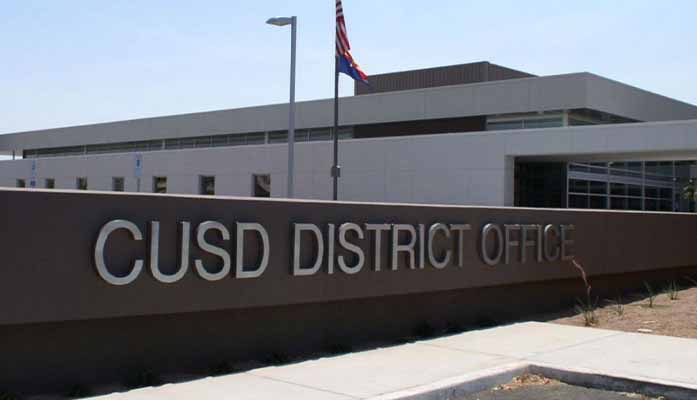
Just what exactly are the priorities of the Chandler Unified School District (CUSD)?
Every parent and taxpayer would love to know. But unfortunately, these priorities do not seem to be clearly presented in any readily available public communication. This makes it difficult to understand what the district is doing, why they are doing it, or hold them accountable for their performance. It’s time for the district to be much more transparent with the public.
That’s why I would like to suggest these five priorities for CUSD, which should be communicated clearly and made readily available to the taxpaying public that supports them.
- Catch up on learning loss from recent school closures. Some information indicates that our students are up to two years behind on their academic achievement. Many are falling behind, and CUSD must take this seriously.
- Ensure that Reading and Math proficiency is greater than 50% at every school. CUSD should direct massive amounts of resources to any school that falls far below this standard.
- Increase student retention. The district must compete effectively to increase their headcount by better satisfying the demands of parents who will ultimately make the decisions on which schools their children attend.
- Increase staff retention. It is critical to reduce the turnover rate for Certified (Teaching) Staff and Classified (non-Teaching) Staff. But CUSD must remember that issues with staffing aren’t always about money. While that is certainly something that needs to be examined, staff working conditions should be carefully considered as well. And the district should ultimately work to determine the primary reasons that staff leave their positions and take appropriate corrective actions.
- Improve career and technical education. CUSD should refocus attention back to developing practical knowledge instead of social conditioning. The primary mission should be to develop functional adults capable of supporting themselves and contributing economically to the community.
If CUSD is serious about the future of its students, it must refocus its priorities. And it should take a much more pragmatic approach to its communication. This will not only make the district more relevant, but it will improve engagement with the community, especially the parents who have the ultimate say in how their children are educated.
Kurt Rohrs is a candidate for the Chandler Unified School District Governing Board. You can find out more about his campaign here.