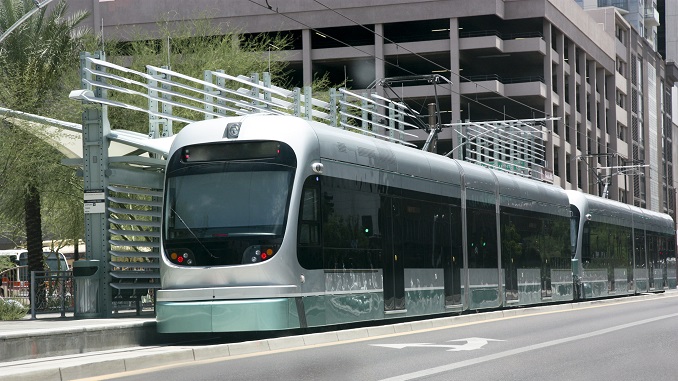
The idea to extend light rail to the State Capitol has occupied the dusty shelves of bureaucratic transit plans for ages. Phoenix first floated it in their 2000 “Transit 2000” plan, their 2015 Transportation 2050 initiative, and the concept has taken up space in every MAG and regional planning cycle since 2004. The idea’s longevity is not a testament to how good ideas endure; rather how bureaucrats remain unaffected regardless of light rail’s failure; unwilling to change course despite low ridership, high costs, high crime, or changing travel patterns. The world changes but a transit plan apparently never dies.
In fact, it turns out it can’t be stopped from destroying the Capitol corridor even when lawmakers pass a law to stop it.
In 2023, Republican legislators negotiated Proposition 479, Maricopa County’s half cent sales tax for transportation, which included a clause prohibiting the use of any public resources for light rail coming within 150 feet of the State Capitol. The goal of the provision was to insulate lawmakers from the disruption and destruction caused by light rail. This neat trick of making the “Capitol Line” someone else’s problem would likely backfire.
Well, it turns out we were right, and what Phoenix has in store for the Capitol corridor is worse than anyone could have imagined.
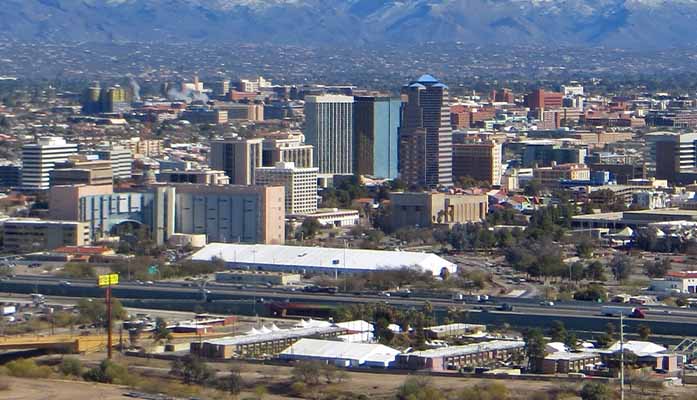
Beard warned in his column that as we approach 20 years of the 2006 vintage Regional Transportation Authority (RTA), only 18 of the 35 projects promised to the taxpayers of Pima County have been completed.
He wrote, “The mismanagement is staggering. Tucson’s unfinished Regional Transportation Authority (RTA) projects are estimated to be $400–$600 million short. At the current pace—roughly $50 million in spending per year—completing the work would take at least eight more years. There’s one big problem, however: the sales tax that funds the RTA is set to expire in 2026, and time is running out. Tucson officials have responded by throwing up their hands and admitting defeat, postponing four projects for inclusion in a future ‘RTA Next’ plan.”
Beard directly attributes the RTA’s financial woes and lack of productivity to a series of economic factors, exacerbated by the City of Tucson’s project mismanagement, delays, and unwillingness to shoulder the added cost burden. He explained, “Every infrastructure plan faces risks, and Pima County’s strategy was no exception. The 2008 recession slowed tax collections, and inflation has since driven construction costs well beyond the 10% buffer allowed by law. Tucson, however, made matters worse by repeatedly altering project scopes to appease neighborhood groups, further delaying timelines and driving up costs. Each time, Tucson failed to take responsibility by allocating more supplemental resources. Instead, city leaders appeared to hope the problem would simply go away.”
He added, “Tucson’s leaders clearly misunderstand the purpose of the RTA, viewing it more as a construction manager responsible for overruns than a basic funding mechanism distributing tax dollars. Each city was responsible for designing and building its own projects. Any change in scope—additional lanes, neighborhood preferences, unforeseen costs—was theirs to fund, not the RTA’s.“
A bigger tax bill should mean better results… not a broken system. So why is Tucson’s transit still falling short?
— Goldwater Institute (@GoldwaterInst) July 11, 2025
Speaking with AZ Free News, Beard elaborated:
“I’m from Tucson. I grew up there, so this is a little personal for me. But there’s a history of kicking the can down the road by the community writ large, leadership, etc. A ‘Why deal with it today when we can postpone to tomorrow’ attitude. And it’s only when things truly reach a critical point that something happens politically.
“The powers that be down there would prefer to kind of maintain the status quo. They don’t want their boat rocked. They don’t want anybody coming in and potentially undermining their political power, so let’s maintain things as they are.
“To the point of the article, the problem fundamentally is two things. One, was it a failure to plan or a plan to fail? And number two, remember when voters vote on these long-term things, you always end up with a situation where the compromises politically that were made in order to get the thing past the voters that were approved in the beginning, political leadership that are elected further on into the cycle, they don’t believe that they are obligated to follow the wishes of whatever compromises were made in the first place.”
As for the political fallout, Beard predicted that an attempt from Tucson Mayor Regina Romero to extricate the city from the RTA, as she threatened in 2022, might not “end well for her politically speaking.”
He noted, “The problem is she is basically telling all of the voters across Pima County, not just the other communities, but the voters throughout Pima County, including her own voters, ‘eff you’. And I don’t think, given what happened with (Proposition) 414 a few months ago in the city of Tucson, I don’t think that will end well for her politically speaking.”
City voters soundly rejected Prop 414 or the “Safe & Vibrant City” proposition, which would have enacted a half-cent sales tax increase for the next 10 years to fund various city projects. City Manager Tim Thomure told AZCentral that the Proposition’s rejections sent city planners “back to the drawing board [to] sharpen our pencils and work it out so that we live within the budget that will be available to us.”
Beard continued saying that Romero, “is, of the opinion, and there are other people, including Supervisor Hines on the Board of Supervisors, of the opinion that the City can basically go its own way and make its own sales tax. They’re forgetting, of course, that if that happens, roughly… a third of the total revenue that would come to the region would disappear because it would revert back to the state legislature to determine whether or not those funds get distributed based on the regional planning that southern Arizona currently enjoys.”
He added that Tucson’s deviation from the RTA planning adopted in 2006 could leave the city open to legal consequences. He observed, “I’m not an attorney, so I don’t give legal advice, but I spent 30 years in the contracting world and I’ve read enough of the documents, the intergovernmental agreements, the procedures, policy procedures of the RTA that was adopted in 2006, all of them keep referring to voter language, you know, the amount of money that was set aside by the voters that could go to these projects.
“Under state law, you can vary that up to 10 % overrun, because it’s the vagaries of construction, that happens. But anything above and beyond that, you’ve got to go back to the voters in order to get their approval to make that kind of scope change. Again, I’m not an attorney, but I can read what’s in the language and it’s pretty clear.”
According to Beard, the RTA board did send its new legal counsel a question with the hope of getting an answer by the end of July at their next formal board meeting, asking: “What is the legal obligation of the RTA board to complete all of the projects if the revenue has not come in to satisfy all of the needs that the voters … determined 20 years ago?”
He concluded: “To be blunt, the city of Tucson’s got nobody to blame but themselves. You can point fingers at the RTA all you want to. You can point fingers to the leadership. The reality is in the numbers; the math is the math. And for all of these projects the City of Tucson kept postponing, it only dramatically increased the amount of money they would have to bring to the table, even assuming the RTA never had a revenue shortfall.
“Because the City of Tucson kept postponing these projects, the costs were going through the roof and there was no way legally for the RTA to step forward and say, oh yeah, we’ll cover those extra costs. That’s not possible.”
Tucson taxpayers are likely to be on the hook for the costs of public transit indefinitely.
The city council voted last Tuesday to make public transit free for good, according to Councilman Steve Kozachik, after three years of not charging for transportation services.
Kozachik clarified to the University of Arizona (UArizona) student newspaper that the council’s actions last week meant that they wouldn’t reinstate transit fares until the council took an affirmative vote to do so.
The council voted to extend free public transit through this December during last Tuesday’s study session at a cost of $4.6 million. According to Kozachik, this motion was within the context of the council’s true intention to keep public transit free indefinitely.
The council also moved to establish a task force of stakeholders to determine how to keep public transit free. Mayor Regina Romero expressed concern that the council was essentially kicking the can down the road.
“To be honest, we’re moving the item every six months, and so I think we really need to figure out what is the long-term solution,” said Romero. “If we don’t have long-term funding options, then we need to start talking about what’s a fair fare. We just need to make sure that we do have the possible stakeholders and investors in the system.”
Councilman Steve Kozachik cautioned that this strategy of holding out to inspire funding from stakeholders was likely to backfire. He added that it was “highly improbable” the council would actually move to reinstate fares after December.
“I don’t agree that us treading water on the decision about fares is necessary to get the other stakeholders to the table. I don’t agree with that as a negotiating strategy,” said Kozachik.
Councilman Paul Cunningham raised the concern that the task force may not actually accomplish its appointed task of sourcing adequate funding or structuring the reinstatement of fares, pointing back to a three-year trend over the COVID-19 pandemic of alleged complacency and falling behind on goals due to virtual meetings.
“As much as I wish I was Obi-Wan Kenobi who could, like, use the Force to see what’s going to unfold, I can’t,” said Cunningham.
The council opted to maintain their position of free public transit, despite not having funding secured beyond December. Current funding sources for the remainder of the year, totaling $4.1 million — a $486,000 deficit, which Tucson will cover through the public Investment Plan funds — come from hotel and motel taxes, the Tucson Medical Center partnership, SunTran efficiency expense reductions, and a Visit Tucson funding formula adjustment.
UArizona also gave about $780,000 gleaned from student fees to fund the public transit. However, the estimated annual cost of public transit reaches around $11 million.
Some council members also mentioned that they’re attempting to tap Raytheon for long-term funding.
Prior to this year, federal COVID-19 relief funds covered the transit costs. Fares were scheduled to resume on January 1 of this year, but the city opted to source funds to cover the cost.
Back in December, the council considered additional parking garage fees or property taxes to cover the transit costs.
Tucson isn’t the first city to attempt totally free transit in the state, let alone in the country. Phoenix’s Valley Metro offers free busing for its neighborhood circulators, and the first year of its streetcar services is free. The city also subsidized a limited number of free public transit passes in 2021 using $1 million of American Rescue Plan Act (ARPA) funds.
There are dozens of other cities around the country, as well as university campuses, that offer free public transit.
As AZ Free News reported just prior to the Tucson City Council’s most recent decision, community members have criticized the three-year-long trial run of free public transit as more of a burden than a help. Locals have complained to several media outlets that the free transit enables criminal behavior and public nuisances.
Unionized bus drivers have also complained, claiming that free transit has lowered the quality of passengers and required them to become the “transit police.”
Watch the Tucson City Council study session here:
Corinne Murdock is a reporter for AZ Free News. Follow her latest on Twitter, or email tips to corinne@azfreenews.com.