by Mike Bengert | Oct 23, 2025 | Opinion
By Mike Bengert |
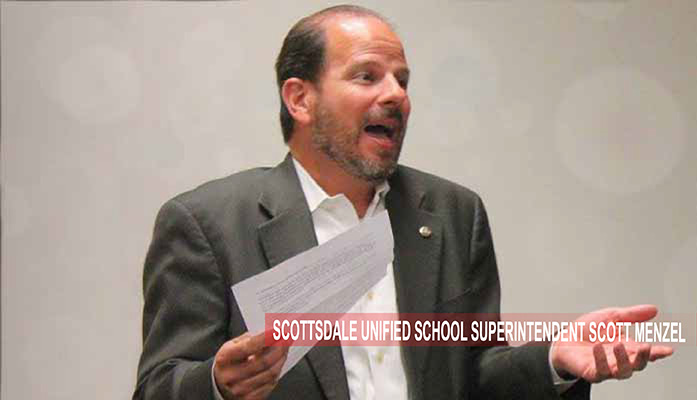
Scottsdale Unified School District (SUSD) is entering a period of upheaval, one that is very concerning to parents, teachers, and taxpayers. Superintendent Dr. Scott Menzel recently announced that the district staff will bring forward proposals for consideration by the Governing Board to deal with the impact of declining enrollment in SUSD, which will reshape several campuses and alter the educational landscape of Scottsdale for years to come.
The first recommendation by district staff under consideration is for Echo Canyon K–8, Pima Elementary schools, and Desert Canyon Elementary and Middle Schools to be repurposed. Dr. Menzel has not made clear exactly what repurposing means. The official explanation for this is straightforward: declining enrollment and a need for “operational efficiency.” But as anyone who has followed SUSD’s trajectory over the past several years knows, declining enrollment is not isolated to a few schools. It is a district-wide problem — one that has deep roots in leadership decisions, cultural conflicts, and misplaced priorities.
A District in Decline
Beyond these four schools, six others have been placed on a “watch list.” These campuses, too, are being monitored for potential closures or repurposing as enrollment continues to fall. Since Dr. Menzel’s arrival in July 2020, the district has lost more than 2,500 students, dropping from over 22,300 to 19,700, an 11% decline in just five years. This decline represents not only a fiscal crisis for the district but also a crisis of confidence among Scottsdale parents.
So, how did we arrive here?
The Menzel Philosophy: Disrupt and Dismantle
If you want to understand how we got here, you need to understand Dr. Menzel’s philosophy of education. In a 2019 interview titled “Public Schools and Social Justice: An Interview with Dr. Scott Menzel,” he explained that understanding how systems operate gives leaders “the opportunity to dismantle, disrupt, and then recreate something that’s socially just and more equitable.”
This wasn’t a throwaway line. It was a mission statement.
Since arriving in Scottsdale, Menzel has followed this blueprint:
- He has recommended firing respected teachers while hiring unlicensed social workers and “wellness” staff.
- He has proposed cutting classroom budgets while expanding administrative overhead.
- He has recommended reducing opportunities for public comment at board meetings.
- He has directed teachers not to inform parents about students’ gender transitions unless asked directly.
- He has consolidated power and minimized accountability, all while using district communications, podcasts, and social media to promote his leadership as a success story.
- He has championed the elimination of valedictorian honors and class rank.
Unfortunately for the students and parents, the board has approved every recommendation made by Dr. Menzel.
At board meetings, Menzel regularly dominates the discussion, often interacting with the board president as though he were chairing the meeting himself. He highlights a few exceptional student achievements as evidence of district success, perhaps a few hundred students out of nearly 20,000, while ignoring the systemic academic underperformance that affects the majority.
The Illusion of Success
The numbers tell a sobering story. In 2024, SUSD reported a 92% graduation rate (down from 94% in 2022) and a 98% promotion rate. Yet proficiency in core academic subjects remains around 52%. In other words, nearly half of all students graduate or advance to the next grade level without mastering reading, writing, math, or science at grade level.
When questioned about these numbers, Menzel points out that SUSD still outperforms the statewide average of roughly 30% proficiency. But comparing yourself to the bottom of the barrel isn’t a standard of excellence — it’s an excuse for mediocrity.
Despite this record, the Governing Board continues to reward Menzel with pay raises, bonuses, and contract extensions. Two successive boards have failed to impose any meaningful accountability or measurable academic goals.
The “Woke” Agenda and Its Consequences
In Scottsdale, Dr. Menzel’s leadership has been defined by his emphasis on Social Emotional Learning (SEL), Diversity, Equity, and Inclusion (DEI), gender identity programs, and related “woke” initiatives, all fully endorsed by the leftist majority on the current Governing Board. These programs were sold as a way to build empathy, inclusion, and belonging. Instead, they have deepened division, distracted from academics, and driven families out of the district.
At the same time, the district has invested heavily in administrative roles tied to “behavioral health,” “equity,” and “inclusion,” while cutting classroom teaching positions. This inversion of priorities is not only financially unsustainable, it’s academically disastrous.
Parents Are Walking Away
Arizona Superintendent of Public Instruction Tom Horne recently provided a candid explanation for the declining enrollment. In a public statement, he argued that “the promotion of woke ideology is a significant reason behind potential school closures in several school districts,” explicitly calling out SUSD’s efforts to promote gender ideology among elementary and middle school students.
He went further:
“This happens because of the expenditure of a large amount of campaign funds to elect woke school board members who do not represent their communities. Parents have a choice, so they move their children. The school boards in these districts have no one to blame but themselves for allowing the classroom to be corrupted from a place of learning to a venue for indoctrination in woke principles.”
Love him or hate him, Horne’s diagnosis resonates with many SUSD parents who feel that the district has prioritized social engineering over education.
The Voter’s Responsibility
While Dr. Menzel and the Governing Boards are directly responsible for what has happened to SUSD, the truth is that Scottsdale voters bear responsibility as well.
In the last election cycle, three board seats were up for grabs, an opportunity to shift power away from the progressive bloc that rubber-stamps every one of Menzel’s initiatives. Instead, voters elected candidates who reinforced the status quo: one a former superintendent from a failing Phoenix district, another who told parents to effectively butt out and leave education decisions to “experts,” and another whose own child attends private school, since it was a “better fit.”
Can SUSD Be Saved?
It’s a painful question to ask, but one that must be faced honestly: Can SUSD be saved under current leadership?
Dr. Menzel has shown no willingness to shift his priorities. The Governing Board has shown no appetite for holding him accountable. Parents are leaving, teachers are demoralized, and the district is closing schools while insisting that everything is fine.
The future of Scottsdale’s public schools doesn’t depend on clever slogans, glossy podcasts, or PR campaigns. It depends on leadership that values education over ideology and on citizens willing to demand it.
Scottsdale’s parents, taxpayers, and voters have few options. With the three progressive members’ terms extending to 2028 and the remaining two members up for re-election next year, the balance of power will remain firmly in Menzel’s camp for the foreseeable future. The progressive board members will allow Dr. Menzel to continue “dismantling and disrupting” SUSD until there’s little left to rebuild.
If we want to restore SUSD to its rightful mission, educating children in reading, writing, math, science, and the arts, parents need to speak up, and demand change now. Waiting for an election in 2028 will be too late.
You can start by attending the public meeting scheduled for November 13, 2025, at 6:00 p.m. in the Governing Board Room located at Coronado High School. The purpose of this meeting is to obtain public comment regarding the potential closure and repurposing of Echo Canyon K-8 School and Pima Elementary School. Each speaker will be given two minutes to voice their opinion on the closure/repurposing of the schools. Don’t feel constrained; you can also voice your opinion on Dr. Menzel and the board members’ actions that have led us to this point.
All SUSD parents should attend the meeting, even if their child does not attend Echo Canyon or Pima. Remember, as enrollment continues to decline, these schools are just the beginning; your child’s school may well be next.
Mike Bengert is a husband, father, grandfather, and Scottsdale resident advocating for quality education in SUSD for over 30 years.
by Matthew Holloway | Oct 6, 2025 | Education, News
By Matthew Holloway |
The Arizona Department of Education (ADE) announced on Thursday that it has entered a multi-year partnership with The Jed Foundation (JED) to expand the state’s training options for school mental health professionals. According to the ADE, JED is a resource that “protects emotional health and prevents suicide among teens and young adults nationwide.”
The ADE and JED shared that nearly 1 in 4 high school students in Arizona report seriously considering a suicide attempt every year, with 1 in 10 attempting.
Arizona Superintendent of Public Instruction Tom Horne said in a press release, “Across student age groups, suicide is one of the leading causes of death. It is imperative that our mental health professionals are provided with the latest information to help recognize and the best practices to respond to the warning signs that may help families avert these devastating tragedies.”
The initiative with JED will provide school mental health professionals with “an evidence-informed suicide prevention training course,” according to the ADE. The initiative was designed based on Arizona’s policies, staffing structures, and cultural and educational contexts, the Jed Foundation stated.
“School-based mental health supports are critical to student well-being, stronger academic outcomes, and preparing young people for the workforce and future opportunities,” Dr. Tony Walker, senior vice president of school programs and consulting at JED, said in a statement. “We’re proud to partner with ADE and help to ensure Arizona’s school-based mental health professionals are prepared and confident to identify warning signs, act quickly in a crisis, and connect students to the right support so they can thrive in school and in life.”
According to JED, the two-hour training course, entitled “Suicide Prevention for Arizona School Mental Health Professionals,” will train attendees to:
- Identify signs of self-injury and crisis, including signs of suicidal thoughts or intense emotional distress.
- Understand the role of suicide risk screening in a comprehensive prevention approach and learn how to administer screening tools.
- Take action when a student is in crisis by engaging the support team, ensuring immediate safety, and documenting and following school protocols (or helping to establish protocols, when needed).
Matthew Holloway is a senior reporter for AZ Free News. Follow him on X for his latest stories, or email tips to Matthew@azfreenews.com.
by Jonathan Eberle | Oct 3, 2025 | Education, News
By Jonathan Eberle |
State Superintendent of Public Instruction Tom Horne is sounding the alarm over what he describes as “catastrophic” levels of chronic absenteeism among Arizona high school students, citing a new report from the Helios Foundation. The Helios report defines chronic absenteeism as missing nine days in a semester or 18 days in a school year. According to the findings, 28.1 percent of Arizona students in grades 1–8 are chronically absent. That number climbs to 37 percent among high school students.
“This is catastrophic. We cannot teach students who are not in school,” Horne said. “The high school student who misses more than one third of his classes is facing a bleak future.”
Horne highlighted the Dysart Unified School District in the Phoenix area as a standout example of combating the problem. Dysart has significantly lower absenteeism rates—9 percent in grades 1–8 and 8.69 percent in grades 9–12—compared to state averages.
According to Horne, Dysart enforces strict accountability measures: students in grades 1–8 who miss 18 days in a year must repeat the grade, while high school students who miss more than nine days in a semester cannot receive credit for their courses.
“They got there because they held students and parents accountable,” Horne said. “The Dysart method is successful and makes sense. It is what schools mostly did in the past before our culture got so much more permissive. Academic loss is the price we have paid for that permissiveness.”
Horne also pointed to the role of parents in ensuring daily attendance. He said the pandemic shifted some attitudes, with parents viewing absences as less serious than before. He argued that once parents understand the direct link between absenteeism and on-time graduation, they become more engaged.
“As a former member of a school board for 24 years, I can testify that it is very important to parents that their children graduate on time,” Horne said. “The data show the Dysart method is the most effective way to reduce chronic absenteeism.”
Jonathan Eberle is a reporter for AZ Free News. You can send him news tips using this link.
by Staff Reporter | Oct 1, 2025 | Education, News
By Staff Reporter |
Superintendent Tom Horne and Treasurer Kimberly Yee are at odds over a sizeable loan to a school district.
Horne wants Yee to approve a $3 million cash advance to Nadaburg Unified School District (NUSD), located inside Wittman. He stated in a Monday press release that Yee failed to conduct a proper review of the district’s finances before denying the advance.
The superintendent cleared up previous reports of a projected deficit as a “clerical error.” Horne called Yee’s denial “irresponsible” and urged her to reconsider.
“Our Finance Division did its research and determined that Nadaburg is operating within its budget, and by the end of the year they will have a projected positive cash balance of $1.3 million. Initially it was thought that they would have a negative cash balance at the end of the year, but the Department of Education, being a service institution, checked the forms and found the district made an unintentional clerical error that they can correct,” said Horne. “The Treasurer could have done the same review because she has the necessary forms, which were provided to her by our office, and her office failed to follow up with us to determine why we approved the advance.”
Yee not only denied the district a $3 million cash advance to address a $5 million deficit, she asked the Joint Legislative Audit Committee to direct a special investigation of the district through the Auditor General. The reported deficit amounted to three times the total amount of revenue NUSD anticipates from property taxes.
Yee’s announcement came last week, several days before Horne issued his response.
The treasurer expressed concern that Horne and the Arizona Department of Education had approved an advance to a district “in considerable financial crisis.” Although Horne alleges Yee failed to conduct a proper review of NUSD finances, Yee claimed in that preceding press release that she identified poor financial practices.
“The state’s top education agency should have been able to identify, as the Arizona Treasury has, that this District may desperately need financial experts to bring their books into the black,” said Yee.
In the denial letter to NUSD Superintendent Aspasia Angelou, Yee said the district failed to justify the necessity of the expenses the advance would cover and failed to show efforts to reduce current expenses to the minimum.
“[This] raises concern that the deficit is not necessary due to the timing of property tax collections, but could potentially be indicative of gross financial mismanagement,” said Yee. “[Our office] is seriously concerned that an advancement of funds now will only compound the district’s deficit and harm the financial stability of the district for years to come.”
In his Monday press release, Horne dismissed Yee’s claim of financial mismanagement as lacking any evidence. Rather than evidence of impropriety, Horne said the request was normal.
“District cash advances are common because a school district’s income and expenses may fluctuate,” said Horne. “As long as the district’s cash position is positive by the end of the year, and the funds will be paid back, cash advances are allowable.”
NUSD cited a low ending fund balance from the prior fiscal year and decreased property tax collections in 2024 as the main reasons for the deficit.
There are nearly 1,500 students in NUSD.
AZ Free News is your #1 source for Arizona news and politics. You can send us news tips using this link.
by Jonathan Eberle | Sep 30, 2025 | Education, News
By Jonathan Eberle |
Arizona is introducing a new apprenticeship program aimed at tackling the state’s ongoing teacher shortage, according to Superintendent of Public Instruction Tom Horne. The Arizona Teacher Registered Apprenticeship Program (AZ TRAP), developed in collaboration with the Arizona Office of Apprenticeship, provides aspiring educators with a pathway to certification at little to no cost. Participants gain classroom experience while earning a wage and receiving mentoring and professional development.
“There is a crisis in Arizona, and we must take strong action. We are losing more teachers than are coming into the profession,” Horne said. “If we don’t do something major, we could end up with zero teachers. Apprenticeship programs are another tool to be used alongside efforts to improve teacher pay and administrative support.”
Horne emphasized that the program is designed to increase accessibility to teacher certification and build a stronger pipeline of educators. “The Arizona Department of Education is a service-oriented agency, and this effort is part of my commitment to training quality educators for Arizona classrooms,” he said.
The program has received $1.5 million in funding from the Maricopa County Workforce Development Board to support apprentices in Maricopa County for the 2025–2026 school year.
Key features of AZ TRAP include:
- Pilot partnerships with Mesa Public Schools, Phoenix Union High School District, The Arizona Teacher Residency Program, and PLC Charter Schools, which will employ teacher apprentices and collaborate with the Department of Education.
- Hands-on experience, giving aspiring teachers thousands of hours of on-the-job learning under the guidance of mentor teachers.
- Grow Your Own Model, allowing schools to select prospective employees and integrate them into their culture early, with the goal of improving teacher retention.
The apprenticeship program represents a targeted effort to prepare educators for Arizona classrooms while addressing one of the state’s most pressing education challenges.
Jonathan Eberle is a reporter for AZ Free News. You can send him news tips using this link.