by Ethan Faverino | Jan 12, 2026 | Education, News
By Ethan Faverino |
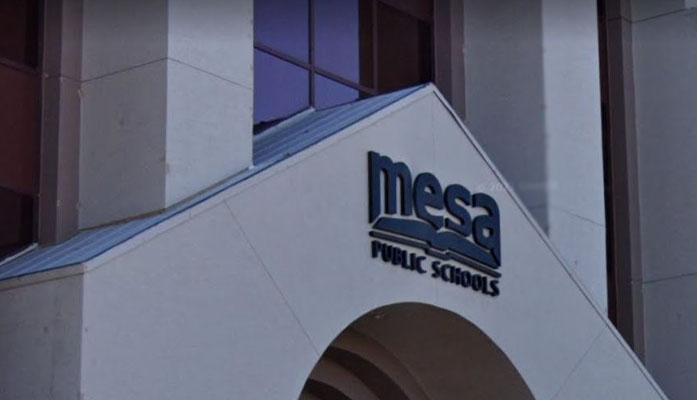
Arizona State Superintendent of Public Instruction Tom Horne hailed a unanimous decision by the Arizona Court of Appeals that reinstates a lawsuit against the Mesa Unified School District (MPS), reinforcing parental rights in cases involving children’s gender identity.
The ruling allows parents to pursue legal action against public schools that withhold critical information about a child’s intent to identify as a gender different from their biological sex.
“Schools are not substitutes for parents, and they have zero right to withhold information that parents are entitled to know,” said Horne. “Arizona law is very clear on the right of parents, and they should be informed when a child expresses a desire to be identified as a sex other than the one to which they were born. The Court of Appeals was unanimous in their decision allowing a lawsuit filed against the Mesa school district by a parent to proceed. I am very pleased that the Court made the correct ruling to defend parental rights and remind schools they should follow the law or risk legal action.”
The case is of a parent whose daughter, referred to as “Megan” (a pseudonym), was a student at an MPS junior high school during the 2022-23 school year. According to court documents, MPS had implemented “Guidelines for Support of Transgender and Gender Nonconforming Students” since at least 2015. These guidelines included procedures for school staff to support students asserting a gender identity different from their sex assigned at birth, such as updating their name or pronouns in internal systems without necessarily notifying parents.
In “Megan’s” situation, school personnel allowed her to use the male name “Michael” among teachers and students, while deliberately avoiding updates to the district’s electronic system to prevent automatic parental alerts.
The guidelines instructed staff not to disclose a student’s transgender status or gender nonconforming presentation without the student’s consent, even to parents.
This included options for students to specify whether their identity could be shared with school leadership, teachers, or peers—but parental notification was not mandated unless a change was requested in the school’s internal system.
“Megan’s” parents discovered the name change in October 2022 and confronted the school officials. In a December 2022 meeting with the principal, they learned that the school had intentionally bypassed the notification system to keep the matter secret.
The principal admitted that even if the parents had requested updates on name changes, pronouns, or gender-related issues, MPS policy prohibited informing parents.
The parents demanded that all staff cease using “Michael” and revert to Megan’s given name, but at a February 2023 meeting with teachers, all but one continued using the preferred name.
The parents further claimed that the school’s actions encouraged Megan to lie to her parents, straining the family relationship and delaying necessary mental health support.
Once her parents were fully informed, Megan was able to speak openly with them and a mental health counselor. Within a month, her issues were resolved, and she became comfortable presenting herself as female and using her given name. The lawsuit, joined by MPS board member Rachel Walden, alleges violations of Arizona’s Parents’ Bill of Rights, which protects parents’ authority over their children’s upbringing, education, health care, and mental health. It also cites prohibitions against public employees compelling children to withhold information from parents, requirements for advance notification on sexuality-related instruction, and bans on mental health screening without consent.
Ethan Faverino is a reporter for AZ Free News. You can send him news tips using this link.
by Staff Reporter | Dec 11, 2025 | Education, News
By Staff Reporter |
The Arizona Board of Education (ASBE) removed language relating to diversity, equity, and inclusion (DEI) from state teaching standards and English language learning courses.
This follows a delay in their decision on the matter several months ago.
State Superintendent of Public Instruction Tom Horne published a press release approving ASBE’s decision to go forward with removing DEI language from Arizona education.
Arizona’s federal funding for 2026 amounts to about $870 million; should Arizona schools not purge DEI, that federal funding may be refused, per the Trump administration.
Horne said the DEI divestment not only counted as compliance with President Donald Trump’s executive order conditioning federal funding on the absence of DEI, but as a philosophical good for students.
“All people should be judged based on their character and ability, not their race or ethnicity. DEI language and programs promote the exact opposite, and they have no place in the classroom,” said Horne. “These terms do not belong in teaching standards, which are meant to direct educators on the most effective ways to teach students’ core academics. Every instructional minute is precious, and DEI efforts distract from that essential mission.”
Multiple federal courts issued nationwide preliminary injunctions against the DEI ban earlier this year. However, the proceedings of those cases were impacted by the Supreme Court ruling in June through Trump v. CASA that declared these and other nationwide injunctions improperly exceed the authority of federal courts. The Supreme Court determined that lower courts must offer specific relief to the involved parties, and generally can’t issue nationwide injunctions to non-plaintiffs.
Following this decision by ASBE, a dedicated working group launching in February will draft materials purging DEI from the Arizona Professional Teaching Standards and Structured English Immersion (SEI) Endorsement Course Frameworks.
These materials will define DEI-related language in order to determine which language to remove or revise.
All 15 counties will have representation in this working group. There will be special considerations to include teacher representatives from General Education, Special Education, and the various teacher subgroups such as English Language Learning, Gifted, and Talented programs.
Stakeholder input will be collected from the three public universities, county education superintendents, school administrators, Arizona Rural Education Association, Arizona Educators Association, and current Structured English Immersion course providers.
ASBE is scheduled to consider these materials next September.
While the state’s top education authority supports these modifications, other stakeholder groups oppose them.
The Arizona Education Association (AEA) submitted a letter to ASBE urging rejection of the proposed changes. AEA leadership claimed over 22,000 educators statewide signed onto the letter in their press release. That’s roughly one-third of the teacher workforce in the state. However, the letter clarified that AEA counted mere membership with their organization as equivalent to all members signing on to their letter.
AEA President Marisol Garcia said without DEI Arizona education would cause a “race to the bottom” — vulnerable to constant changes and little of the continuity required for imparting a strong education — as well as a purging of history.
The other major teachers unions at the national level — the American Federation of Teachers and National Education Association, as well as the civil rights organization, the National Association for the Advancement of Colored People — sued the Trump administration to stop the DEI ban.
AZ Free News is your #1 source for Arizona news and politics. You can send us news tips using this link.
by Ethan Faverino | Dec 4, 2025 | Education, News
By Ethan Faverino |
Eight Arizona state lawmakers have joined Superintendent of Public Instruction Tom Horne in demanding immediate action to revise the Structured English Immersion (SEI) framework, warning that the current language, loaded with Diversity, Equity, and Inclusion (DEI) ideology, violates state law, undermines classroom neutrality, and jeopardizes $866 million in federal education funds.
In a November 25 letter to the State Board of Education, Representatives Michele Peña (LD-23), David Marshall (LD-7), Michael Carbone (LD-25, Majority Leader), James Taylor (LD-29), Leo Biasiucci (LD-30), Lisa Fink (LD-27), and Senators Hildy Angius (LD-30) and Tim Dunn (LD-25), threw their full support behind the Arizona Department of Education’s (ADE) proposed revision.
The legislators accused universities and institutions of exploiting “vague and permissive language” to inject “ideological, divisive, and race-based content” into mandatory SEI coursework—material that has no place in research-based English language instruction.
The lawmakers cited constituent complaints that SEI courses, intended solely for neutral English acquisition methods under A.R.S. § 15-756.01, have instead become vessels for racialized theories that divide classrooms, distract educators, and shift instructional time away from statutory requirements.
The letter also highlighted a direct threat to federal funding. President Trump’s recent Executive Order explicitly prohibits the use of federal dollars for DEI programming. The existing SEI Endorsement Course Framework is not compliant, and keeping it as-is exposes Arizona to unnecessary and avoidable risk, the legislators warned, urging the Board to authorize ADE to open the rulemaking process immediately.
Superintendent Horne echoed the urgency in a statement released December 2, praising the legislative coalition. “I am very thankful to the eight lawmakers who sent a letter calling on the Board to start the process to revise Arizona’s teaching standards and remove DEI language,” Horne said. “This is essential not just because DEI language improperly emphasizes race over individual merit, but it threatens $866 million in federal education funds under the President’s recent Executive Order.”
He added, “Removing DEI terms from state teaching standards is the right thing to do. We must rid race-based ideology from the classroom and ensure teachers spend their time teaching math, science, language, history, and the arts. The support of these legislators is especially helpful to convey the importance and urgency of this task, and I urge my fellow board members not to further delay this process.”
The lawmakers criticized the Board’s decision to table the issue at its October 27 meeting and form a study committee, calling the move a delay tactic designed to slow or obstruct needed reforms. They insisted that the question before the Board was never about voting on specific changes but simply whether to begin the public stakeholder process to restore instructional neutrality and legal compliance.
ADE has prepared to launch the month-long rulemaking process covering teacher standards at Arizona’s three public universities. The State Board of Education is scheduled to revisit the proposal at its December 8, 2025, meeting.
Ethan Faverino is a reporter for AZ Free News. You can send him news tips using this link.
by Matthew Holloway | Nov 29, 2025 | Education, News
By Matthew Holloway |
Arizona lawmakers are urging the State Board of Education to fix the state’s Structured English Immersion (SEI) Endorsement Course Framework at its December 1st meeting, according to a letter from Rep. Michele Peña (R-LD23).
A group of State Representatives and Senators cosigned the letter from Peña, warning that existing rules risk placing Arizona out of compliance with federal funding mandates and allow the insertion of politics and racial rhetoric into courses designed to prepare educators, in violation of state law.
“Parents expect English-language instruction to focus on English-language instruction,” Peña said in a statement. “Instead, they’re finding courses with ideological material that has nothing to do with helping students learn English. The Board can’t ignore federal requirements, and it shouldn’t look the other way while universities inject political content into SEI training. The framework needs to be corrected now, and delays only create further problems for students, teachers, and the state.”
Peña warned the board that the present rule set “is harming instructional quality and undermining classroom integrity statewide.”
As noted by Peña, A.R.S. § 15-756.01 requires that the Board of Education “shall adopt and approve research-based models of structured English immersion.” In the letter, Rep. Peña adds, “SEI is intended to be a model focused only on research-based English language acquisition. That is all.”
She continued:
“The insertion of DEI-aligned language, political ideology, or racialized theories is not only outside the scope of the statute, but it also actively undermines the purpose of SEI by introducing content that divides classrooms, distracts educators, and shifts instructional time away from what the law actually requires. Arizona’s students deserve better than to have their language instruction diluted by ideological philosophies and turned into a political debate…
… We expect the Board not to delay corrective action or hide behind process barriers that were never required when these controversial provisions were inserted. Our students, teachers, and districts deserve a framework grounded in objective, research-based instruction, not ideological experimentation.”
The legislators who cosigned the letter include State Representatives David Marshall (R-LD07), James Taylor (R-LD29), Leo Biasiucci(R-LD30), Lisa Fink (R-LD27), and House Majority Leader Michael Carbone (R-LD25), as well as Senators Hildy Angius (R-LD30) and Tim Dunn (R-LD29).
As previously reported by AZ Free News, Arizona Superintendent of Public Instruction Tom Horne issued a similar statement in October, calling upon the Board to strip Diversity, Equity, and Inclusion (DEI) language from Arizona’s teaching standards.
Note: As of this report, the State Board’s public calendar shows the meeting scheduled for Dec. 1, 2025, as a meeting of the Accountability Technical Advisory Committee, while the regular State Board of Education meeting is scheduled for December 8th; this conflicts with the December 1st date provided in Rep. Peña’s statement.
Matthew Holloway is a senior reporter for AZ Free News. Follow him on X for his latest stories, or email tips to Matthew@azfreenews.com.
by Staff Reporter | Nov 21, 2025 | Education, News
By Staff Reporter |
Over 100 out of about 400 schools in Arizona have advanced out of federal school improvement status, per the Arizona Department of Education.
There are over 2,800 schools in the state. That means approximately 14 percent (after this latest update) of all schools statewide remain on the Arizona Department of Education (ADE) list.
Schools on the federal list consist of those with low graduation rates and test scores per the Every Student Succeeds Act (ESSA), a federal law passed by the Obama administration in 2015 that, essentially, reauthorized the Elementary and Secondary Education Act of 1965.
ESSA was responsible for every state and district publishing a report card for public review, as well as publishing how much is spent per student at every school, broken down by federal, state, and local monies.
ESSA’s predecessor was the No Child Left Behind Act (NCLB), enacted in 2002. NCLB received criticisms for its heavily federal approach to education, where many thought the states could yield student outcomes better.
ADE identifies these schools — classified as Comprehensive Support and Improvement – Low Achievement (CSI-LA) schools — every three years. Schools have four years upon identification to exit this status.
CSI-LA schools are those that don’t meet the 60 percent proficiency, 20 percent growth or graduation rate, 10 percent English Learners achievement and growth, and 10 chronic absenteeism (K-8) or 10 percent drop out rate (high school).
The Arizona Department of Education monitors these schools through its Office of School Improvement.
Superintendent Tom Horne said in a statement that these schools’ advancements prove that dedication to the basics — namely through Project Momentum Arizona (PMA) — does work.
“The schools we are honoring today have proven that when students are challenged academically and class time is devoted to teaching core subjects like reading and math, test scores will go up, and students will succeed,” said Horne. “It is a highly effective program that emphasizes academic knowledge and helps educators do the right work to ensure that all students succeed.”
Horne hosted a press conference on Wednesday to praise these schools, including Roosevelt School District, which had four schools leaving the list. Horne also issued a similar announcement on Thursday.
PMA has schools select one or more from a list of guiding questions around which to frame their improvement plans. These questions focus on recognizing the specifics of desired student outcomes, evidence of student comprehension, highest-yielding instructional practices, responses to lack of student learning, planned responses to student mastery of materials, and goals for improving, cataloging, and saving work.
Spring state assessment results showed that an average of 33 percent were passing math, and 40 percent were passing English. These results aligned with those from the previous year.
COVID-19 caused student proficiency to drop significantly. They were on an upward trend, achieving 42 percent in math and English.
Oversight of failing schools may soon become more of a state problem, with ongoing efforts to dismantle the Department of Education.
Horne told The Center Square that he’s “pleased” with the Trump administration’s decision.
“[I am] pleased with the administration’s work to move the work of education back to the states and addressing the needless bureaucracy of the federal department,” said Horne.
AZ Free News is your #1 source for Arizona news and politics. You can send us news tips using this link.