Two Utah residents have been indicted for defrauding Arizona’s school choice program.
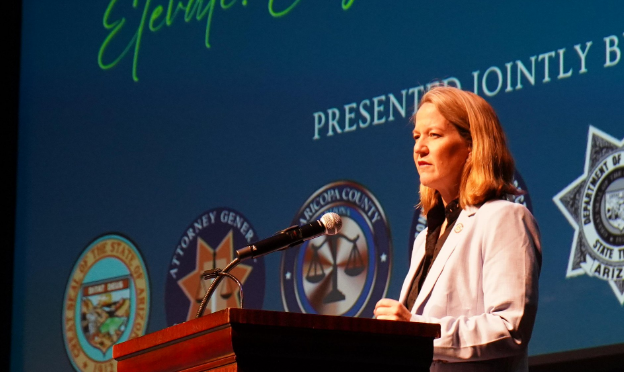
The alleged culprits, Johnny Lee Bowers and Ashley Meredith Hewitt (aka “Ashley Hopkins”), were indicted for the theft of about $110,000 from December 2022 through this May, Attorney General Mayes announced on Monday.
Bowers and Hewitt allegedly used the Empowerment Scholarship Account (ESA) program funds for their personal living expenses in Colorado. The pair are now believed to be living in Utah, per Mayes’ office.
Bowers and Hewitt allegedly submitted applications to the Arizona Department of Education (ADE) for seven real and 43 fictitious children using false, forged, or fraudulent documents such as birth certificates, utility bills, and lease agreements. Bowers and Hewitt applied under their own names as well as under fake identities, called “ghost parents.”
The pair put the false identities under fictitious “families” with the surnames Gil, Cole, Diaz, and Dobbs, as well as another “family” going by Hewitt’s surname.
Bowers and Hewitt were indicted on counts of the class two felonies of conspiracy (one count) and fraudulent schemes and artifices $100,000 or more (one count), as well as the class four felony of forgery (58 counts).
In a statement on the indictments, Arizona Superintendent Tom Horne said that the fraud was found out thanks to the auditor he hired to oversee the ESA Program, a position he noted was not previously established under his predecessor, Kathy Hoffman. Horne clarified that it was his office who referred the findings of fraud to Mayes’ team.
“As a former Arizona Attorney General, I am determined as Superintendent to eliminate any fraud within the ESA program. Upon taking office, I hired an auditor who had been in the Auditor General’s office for 15 years, and who is now in charge of the ESA program as well as an investigator. Those two positions had not existed under my predecessor,” said Horne. “I am pleased that prosecutions are following in the cases we sent to The Attorney General’s office.”
Earlier this year, five others were indicted in a similar $600,000 “ghost children” scheme to defraud the ESA program. 17 children were used in those applications — five of whom were discovered to be fake — associated with false birth certificates and false disability documents to obtain more funding. Those indicted were Dolores Sweet, Dorrian Jones, Jennifer Lopez, Jadakah Johnson, and Raymond Johnson, Jr.
Sweet allegedly approved applications for three fictitious children she claimed as her own while working as an ESA account specialist from 2019 to 2023. Both Johnsons are Sweet’s real adult children.
Lopez allegedly approved applications for two fictitious children she also claimed as her own while working as an ESA program lead specialist from 2019 to 2023.
Jones worked with the ADE as an administrative services officer.
As with these most recent indictments, the five indicted earlier this year were hired by Horne’s predecessor and later caught by Horne’s auditor.
In an October meeting, Horne announced that ESA reimbursements have proved to be “an overwhelming problem” for ADE due to low staffing, resulting in long wait times and a growing backlog.
Prior to last year, the ESA program paid through ClassWallet. The legislature approved tuition payments through reimbursement last year, something Horne says is the root of the problem.
Horne explained that efforts to combat the backlog have allowed for fraud to enter, citing an attempt to streamline reimbursements earlier this year by automatically reimbursing purchases at $75 or less leading to an instance of seven account holders discovered to have bought $13,000 of Amazon gift cards.
The ESA program has over 83,000 students enrolled as of mid-November.
AZ Free News is your #1 source for Arizona news and politics. You can send us news tips using this link.
Arizona Republicans raised serious allegations Thursday around Democrat Gov. Katie Hobbs’ approval of a $700,000 upgrade of the state logo by Urias Communications, owned by the brother of Office of Tourism Director Lisa Urias. On Friday morning, the Governor’s office announced that Urias would resign. Hobbs told reporters, ”This appearance of conflict is not acceptable.”
Arizona State senator Jake Hoffman laid out his allegations in a lengthy post to X in which he cited a report from Arizona Agenda. The Agenda reported that the Arizona Office of Tourism spent a sum of $700,000 originating from COVID-19 federal relief funds “on 57 in-person and digital listening sessions across the state, not to mention the $27,500 that went to the brother of the CEO of Urias’ marketing agency. He helped work on the logo with a separate graphic design company.”
Hoffman wrote, “’And of all the artists in the state who could have drafted that logo, the contract just happened to go to one who has close ties to the Office of Tourism Director Lisa Urias’—her brother.”
🚨 KATIE HOBBS CORRUPTION EXPOSED
AZ Democrat @KatieHobbs approved illegally shelling out $700,000 for a new state logo
Hobbs' fake director of tourism has been caught funneling MASSIVE contracts to her own brother.@realTomHorne is wrapped up in this scandal too
Hoffman added, “Katie Hobbs continues to exploit her office, break the law, and take advantage of the people of Arizona. This is what it looks like when Democrats are in control of your government.”
Senator John Kavanagh, when briefed by the outlet, reportedly called the matter “clearly an ethical violation. Whether or not it’s a legal violation is another issue.”
According to the report from Arizona Agenda, Urias’ mandate upon taking office included the hefty rebranding of Arizona to include “elements of Arizona’s Native American cultures in the design.” To that end the Office of Tourism engaged the services of Urias Communications, a company that is still owned by the director, although she “doesn’t have any role in its day-to-day operations,” as claimed by the tourism department’s communications director Josh Coddington.
The outlet noted that the Office of Tourism under Urias is leveraging a tax-funded budget of $8 million to woo tourists to come to Arizona, adding, “The appointment seems to have been an economic driver for Urias Communications as well.”
The Agenda concluded, “But even if she isn’t involved with the day-to-day operations of the company that she founded, Urias seems to be financially benefiting from the state’s contract with her company at the same time she is pulling a salary from the state.”
The report added that over a year after Urias became Director of Arizona’s Office of Tourism, her firm went on to win a $250,000 five-year contract from the Arizona Department of Education. This led Hoffman to remark that Superintendent of Public Instruction Tom Horne “is wrapped up in this scandal too.”
However, Horne refuted this in a response posted to X saying “Senator, we paid $15K on an expiring 1-year contract with Urias. ADE does not, nor will it, have a $250K contract with Urias. Get your facts straight.”
Documents are at your office. Unlike the Governor we don't know Urias personally. Next time ask first. pic.twitter.com/eHBw6Yggio
Hoffman replied, “Public reporting says otherwise. Send the receipts to back up what you’re saying to my Senate office. Would be glad to find out the public reporting is wrong. Need the receipts though.” Horne followed up that the documentation had been sent to Hoffman’s office, even posting an image of the documentation. He added, “Documents are at your office. Unlike the Governor we don’t know Urias personally. Next time ask first.”
In a letter to Arizona Attorney General Kris Mayes and Maricopa County Attorney Rachel Mitchell, Majority Whip Sen. Teresa Martinez called for an investigation into the allegations. Within twenty-four hours, Urias’ resignation was announced.
Urias responded to the allegations in a statement Friday saying, “In light of the Senate Confirmation members making it clear they will not confirm me as Tourism Director—despite the recent allegations being untrue and unfounded—I have tendered my resignation to the Governor.”
Arizona schools will be receiving a supply of overdose kits to address the increased impact of drugs on students.
The Arizona Department of Emergency & Military Affairs (DEMA) began delivering over 16,000 Narcan anti-overdose kits to schools on Wednesday. The Arizona Department of Education (AZED) oversaw the initial deliveries across all 15 counties.
In a press release, Superintendent Tom Horne said these kits were a lifesaving preventative to the increased presence of illicit substances in the state.
“Lives will be saved because these kits will be in schools throughout Arizona,” said Horne. “The STOP-IT Task Force has done incredible work to address the Fentanyl crisis among school-aged children and this is a major step to protecting the lives of students and raising awareness of this terrible scourge.”
The Narcan kit deliveries are part of AZED’s Overdose Preparedness & Intelligence Taskforce (STOP-IT), a new task force established this year to address the growing opioid epidemic. The idea for placing kits in schools came out of a meeting back in May.
The Arizona Department of Health Services (AZDHS) provided the Narcan kits at no cost to the state, and the Arizona Health Care Cost Containment System (AHCCCS) will provide training.
The kits come with flyers on training resources, information on county health agency partners, an announcement of an upcoming comprehensive STOP-IT Toolkit release, and a QR code taking the user to real-time training on Naloxone Resources from AHCCCS.
STOP-IT co-chairs are Holly Geyer from the Mayo Clinic and Mike Kurtenbach with AZED, leading over 60 representatives across various government agencies, schools, healthcare entities, law enforcement, and other organizations.
Geyer credited the initiative’s success to the collaborative strengths of Arizona agencies in Thursday’s press release.
“The STOP-IT naloxone distribution initiative could not have materialized without the unprecedented collaboration between the Department of Education, the Department of Health, AHCCCS and the National Guard,” said Geyer. “The representatives appointed through these agencies proved themselves strategic problem solvers who prioritized the mission and produced outcomes that far exceeded the taskforce’s original targets. Because of their resolve, we are proud to offer schools more than just naloxone. We can offer confidence in the safety of our school campuses and parental peace of mind.”
DEMA director Kerry Muehlenbeck said that their team’s logistical support for tackling drug overdose incidents ensured a better approach to their ultimate goal of reducing drug demand.
“Through this multi-agency initiative, we build stronger communities and support wellness in our future generations,” said Muehlenbeck.
Schools signed up for Narcan kits through the AZED’s online form, with the permission of their district or charter approval first. Further information about the kit distribution and application was submitted in a memo sent to schools across the state last month.
Per AZED, these overdose kits will be continually replenished to ensure schools’ continued ability to handle opioid emergencies.
Arizona reported over 1,900 opioid-related deaths and over 4,000 overdoses last year. 26 of those opioid-related deaths were among minors (those under the age of 17).
So far this year, AZDHS has recorded over 3,200 non-fatal opioid overdoses and over 1,000 confirmed opioid deaths. The total deaths among minors for this year amount to less than 10.
AZ Free News is your #1 source for Arizona news and politics. You can send us news tips using this link.
Arizona Attorney General Kris Mayes is facing serious criticism after legal threats issued to families using the Empowerment Scholarship Account (ESA) program. The threats slammed the brakes on purchasing “supplementary materials” considered self-evident in need by the State Board of Education.
As reported by the AZ Mirror, a July notice from Democrat Attorney General Kris Mayes’ office told the director of the ESA program that they may be in violation of Arizona law by issuing reimbursements to families for supplementary education materials, (i.e. flash-cards, periodic tables of the elements, early books for new readers) without requiring that parents provide documentation that it is required under a curriculum.
In the six-page letter, Assistant Attorney General Kathryn Boughton wrote, “Approving ESA funds for materials that have no nexus to the student’s actual curricular needs contradicts the intent of the program and constitutes a payment of funds made without authorization of law.” She went on to claim that doing so, “may enable account holders or vendors to engage in fraudulent behavior, such as purchasing items with ESA funds solely for the purpose of resale.”
She advised that director, John Ward stop authorizing the reimbursements immediately.
Faced with a potentially damaging legal battle, Superintendent of Public Instruction Tom Horne told parents in a statement that he would have to concede the point for now. “When I received the attorney general’s message, I sent it to the most knowledgeable people in my department,” Horne wrote.
“I asked them to look at it, not as an advocate, because we all disagree with the Attorney General, but in a neutral way, as though they were judges to determine if they could give me a reasonable assurance of success. They analyzed the statutes on which the attorney general relied, and indicated to me that as a neutral judge, they would rule against me if I made a fight out of it and refused to comply. Getting into a fight and losing, would be much more damaging.”
However, the tune from Mayes’ office changed sharply just one day after the Goldwater Institute filed lawsuit challenging the blatantly partisan determination. Attorneys from Goldwater representing two Arizona mothers wrote, “Following …unsuccessful legislative attempts, the office of Arizona Attorney General Kris Mayes initiated a new effort in July 2024 to dramatically limit the use of ESA funds, calling for a prohibition on the purchase of basic educational materials, including books, workbooks, and other ‘supplementary materials’ unless parents could provide an explicit ‘curricular’ document justifying the use of each specific book title or material for their child.”
“Arizona law expressly allows the purchase of such materials with ESA funds, however. In fact, state lawmakers added clarifying language in 2020 with the explicit purpose of ensuring that such purchases would not be denied, following the actions by former State Superintendent Kathy Hoffman that had restricted the purchase of many such items. The State Board of Education has likewise approved rules for the program explicitly permitting the purchase of these materials without additional documentation.”
The AG’s Office then began a campaign of feverishly walking back their determination with a statement responding to the suit. “The Attorney General has simply stated what is required by law,” adding, “The law doesn’t prevent parents from purchasing paper and pencils, but it does require that materials purchased with ESA funds be used for a child’s education.”
But this isn’t what Mayes’ office said in July when they demanded Superintendent Tom Horne’s department “promptly cease approving supplementary material expenses without the requisite documentation of a curriculum nexus,” no matter how self-evidently educational the materials are, as Matt Beienburg,the Director of Education Policy at the Goldwater Institute pointed out in an Arizona Daily Independent op-ed.
As Beienburg notes, Mayes’ office, far from simply targeting extravagant spending, threatened ESA administrators with legal liability unless they applied the same requirements on the list of obviously educational materials approved in the State Board of Education’s ESA Handbook: things like “books,” “workbooks,” “writing utensils,” “atlases/maps/globes,” “calculators,” “flash cards”, etc.
“Thesematerials are what Attorney General Mayes’ intervention is now blocking en masse—unless parents can cite a specific pre-established curriculum calling for the individual book title or resource,” Beienburg explained.
“In other words, the Attorney General’s office still demands that flashcards and other self-evidently educational materials be allowed only if a parent can produce an arbitrary piece of paper calling for their specific use.
The Attorney General’s attempted public deflection away from this fact demonstrates the absurdity of her summer demands. Perhaps she really does believe that families should have to justify their purchases of books like ‘Brown Bear Brown Bear, What do You See?’ and ‘Little People Who Became Great’ to wiser government bureaucrats. But for the rest of us, such restrictions are clearly nonsensical and—under state law, illegal.
The Attorney General is supposed to uphold state law, not torture it to impose her policy preferences. We encourage the Attorney General to withdraw her summer demand letter, or else acknowledge flatly that her position is that families should have to justify why they picked ‘Brown Bear Brown Bear, What Do You See?’ to read to their own children.”
Arizona Republicans continue to fight to protect the integrity of women’s sports.
Last week, Arizona Senate President Warren Petersen, House Speaker Ben Toma, and Superintendent of Public Instruction Tom Horne filed a cert petition at the Supreme Court of the United States, asking the nation’s high court to accept a case to decide the fate of the state’s Save Women’s Sports Act, which was signed into law in 2022.
“We cannot remain silent and allow these wrongs against women and girls to continue. We must stand up and fight to protect our daughters, nieces, sisters, and granddaughters from bigger and stronger males who are claiming their identities, their private spaces, their sports, and are putting their safety at risk,” said Petersen. “What’s even more disheartening is that we have a Democratic Governor and Attorney General that claim to support women, but they refuse to keep boys out of girls’ sports. Republicans stand in solidarity to defend women and girls, and I’m confident the U.S. Supreme Court will make it clear- Arizona’s Save Women’s Sports Act should be enforced.”
In their brief to the U.S. Supreme Court, the Republicans argue that “the Ninth Circuit decided an important question of federal law in an opinion that contradicts this Court’s precedent and splits with other circuits on multiple issues, [and that] this case presents an ideal vehicle to address these important questions.”
In July, Judge Jennifer Zipps granted a preliminary injunction against SB 1165, the Save Women’s Sports Act, which blocked the law from going into effect. Arizona’s Republican Superintendent of Public Instruction Tom Horne, the defendant in the case, promised to appeal the ruling, saying, “This will ultimately be decided by the United States Supreme Court, and they will rule in our favor. The Plaintiffs in this case claimed that this only involves pre-pubescent boys, but we presented peer-reviewed studies that show pre-pubescent boys have an advantage over girls in sports. The only expert presented by the Plaintiffs was a medical doctor who makes his money doing sex transition treatments on children and who has exactly zero peer-reviewed studies to support his opinion.”
On the other side, one of the representatives of the plaintiffs, Justin R. Rassi from Debevoise & Plimpton LLP, lauded the judge’s ruling, writing, “The Court’s well-reasoned decision exposes the lack of any legitimate justification for this discriminatory law, which inflicts severe and irreparable harm on transgender girls like Megan and Jane. We are very happy that, as a result of this ruling, Jane and Megan will be immediately able to resume playing sports with their friends.”
A panel from the Ninth Circuit Court of Appeals previously ruled that the district court’s opinion was in order, agreeing that “before puberty, there are no significant differences in athletic performance between boys and girls;” and that “Arizona’s transgender ban discriminates on its face based on transgender status.” This decision led to the appeal to the nation’s high court by the Republican petitioners.
Republican State Senator Wendy Rogers cheered on the filing at the U.S. Supreme Court, writing, “Arizona Senate Republicans protecting women!”