by Staff Reporter | Jan 24, 2026 | Education, News
By Staff Reporter |
Republican state lawmakers want to improve accountability for school superintendents.
Several packages of bills released Thursday would reform superintendent contracts and duties, school board governments, and school district leasing and financial arrangements.
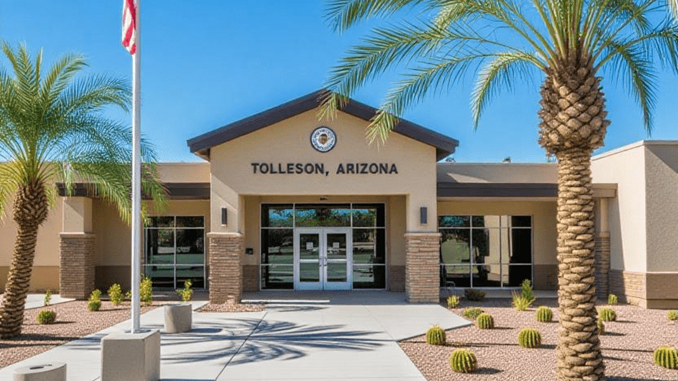
The bill package was a result of the Tolleson Union High School District (TUHSD) scandal that emerged last year. TUHSD entered a controversial $25 million leaseback agreement with a failing school district, which began without an appraisal and in which TUHSD Superintendent Jeremy Calles operated as a consultant for the deal.
The lawmaker behind the proposed reforms, State Representative Matt Gress, said in a press release that some districts have strayed from their intended purpose of educating students.
“Public schools exist to serve students, not administrators or board members who disregard their responsibilities,” said Gress. “This legislative package sets clear rules and ensures education dollars stay focused where they belong — on instruction and students.”
Gress also stated that the events at TUHSD made it clear that additional oversight was needed.
“When school leaders control large public budgets with little oversight, taxpayers and classrooms pay the price,” said Gress. “Arizona families deserve confidence that education dollars are managed responsibly and that those in authority are held to clear, enforceable standards.”
Arizona lawmakers unanimously approved an audit of the district.
TUHSD has delayed sending its financial transaction records despite repeated legislative requests. The district insisted the legislature pay over $26,000 for the records.
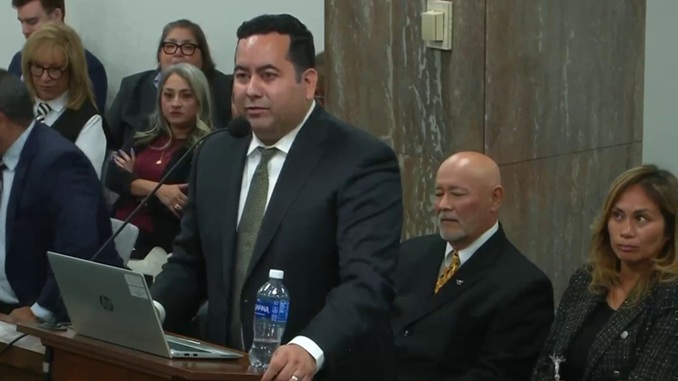
During a hearing by the Joint Legislative Audit Committee over the summer, TUHSD Superintendent Calles admitted to using his superintendent office to conduct the business of his private consulting firm. Several district staff or governing board members also work for Calles’ consulting business.
Calles is the highest-paid superintendent in the state.
This conflict between the district and legislature over the leaseback agreement and Calles’ conduct was a major influence on voters. They rejected two key funding measures proposed by TUHSD in this recent election.
The district faces a shortfall of $95 million at minimum, $200 million minimum more likely.
In 2024, TUHSD was busted for arranging “luxury vacations” for school board members and administrators.
The first bill package to reform superintendent contracts and duties contains House Bills 2387, 2386, 2381, 2382, 2377, and 2385. Reforms include limiting secondary employment for school district officials, raising standards for superintendents’ performance based-pay, limiting benefits and other perks given to superintendents like cell phone and vehicle allowances, and reducing the employment term for first-time superintendents to one year.
The second bill package to reform school governance contains House Bills 2318, 2380, and 2379. Reforms include establishing governing board member term limits, requiring convenient public venues for school board meetings, and requiring more training for school board members on governance, finances, policymaking, legal and ethical responsibilities, stakeholder and community engagement, and relevant professional development topics.
The third bill package to reform school district leasing and financial arrangements contains House Bills 2384, 2376, and 2383. Reforms include limiting allowed circumstances of leasing school property; excluding lease-purchase agreements for sites where charter or private schools operate; and limiting leases to 10 years without voter approval or 20 years with voter approval.
AZ Free News is your #1 source for Arizona news and politics. You can send us news tips using this link.
by Jonathan Eberle | Dec 8, 2025 | Education, News
By Jonathan Eberle |
More than one hundred days after receiving a legislative request for detailed financial transaction records, the Tolleson Union High School District has yet to turn over the documents, prompting renewed scrutiny from Arizona lawmakers.
State Rep. Matt Gress (R-LD4), a Phoenix Republican who chairs the House Education Committee and co-chairs the Joint Legislative Audit Committee, marked the milestone with a sharply worded statement criticizing the district’s continued refusal to release the information.
Gress first requested electronic copies of the district’s financial transactions on August 26, following a legislative audit hearing on Tolleson Union’s fiscal practices. A follow-up letter was issued on September 17. According to Gress, the district has not complied with either request.
“In that time, the district has refused to provide electronic copies, demanded more than $26,000 in fees meant to discourage oversight, and ignored repeated clarifications,” Gress said. “No other public entity in Arizona has ever tried to block access to routine financial information.
The lawmaker said the Legislature has an obligation to track how taxpayer funds are allocated and questioned why the district is resisting disclosure of what he described as basic purchase order and transaction data. He noted that other school districts routinely produce similar exports from their financial software within days.
Tolleson Union has faced heightened public scrutiny in recent months. In November, voters rejected both a bond and budget override measure by wide margins—an outcome Gress pointed to as evidence of waning community trust. “Their message was clear: restore accountability,” he said. “A 100-day refusal to cooperate is unacceptable and cannot continue.”
Gress urged the district’s governing board to direct staff to immediately release the requested records and pledged that lawmakers would “continue pressing for these records until they are produced.”
Jonathan Eberle is a reporter for AZ Free News. You can send him news tips using this link.
by Jonathan Eberle | Nov 20, 2025 | Education, News
By Jonathan Eberle |
A community watchdog group is calling for a full stop to all major construction projects in the Tolleson Union High School District (TUHSD), citing overwhelming voter opposition and stark financial projections that point to a looming deficit that could reach into the hundreds of millions.
Citizens for Schools Accountability (CSA), a local 501(c)(4) organization focused on transparency and responsible spending, says the district should halt work on all ongoing and planned facilities including High School #8, a proposed domed stadium, and a new district office until an independent audit is completed and a clear financial plan is released.
The group also criticized Superintendent Jeremy Calles and Governing Board President Steven Chapman for declining to follow a board directive requiring a full budget presentation before any further action on High School #8 is taken.
The warning comes just weeks after voters decisively rejected both a bond and an override sought by TUHSD, a dramatic reversal from past elections in which district measures routinely passed by wide margins. CSA leaders say the election outcome underscores widespread public concern over spending, transparency, and priorities within the district.
“Continuing construction without public support or a sustainable funding plan represents a dangerous breach of fiscal responsibility,” the group stated in its announcement. According to figures cited from district financial documents, TUHSD has approximately $294.6 million in bond, fund balance, and state School Facilities Board (SFB) resources available. Yet the projected costs of its construction plan far exceed that total.
Even under the lowest cost estimates, the district faces a minimum shortfall of $95 million. Under more likely scenarios, the deficit could approach $200 million. “This district is on the edge of a financial cliff,” said CSA Chairman Kino Flores. “Any organization facing a minimum $100 million deficit would hit the brakes immediately. Yet TUHSD is accelerating.”
Flores said that between the voter rejection, the cost projections, and the pending audit, continuing construction would be “reckless and irresponsible.”
CSA argues that until these steps are taken, any continued spending could jeopardize the district’s long-term stability. The organization says its concerns are not philosophical or political but grounded in the district’s own data and the unmistakable rejection voters delivered at the ballot box. “The voters said no. The math says no,” Flores said. “Fiscal responsibility demands the board stop every non-essential building project until the audit is complete, and a transparent financial plan is presented to taxpayers.”
CSA leaders say they will continue monitoring district actions and expect the board to respect both the financial realities and the community’s clear mandate.
Jonathan Eberle is a reporter for AZ Free News. You can send him news tips using this link.
by Jonathan Eberle | Nov 10, 2025 | Education, News
By Jonathan Eberle |
Voters in the Tolleson Union High School District decisively rejected two funding measures last week, signaling a sharp reversal from past election outcomes and raising new questions about public trust in district leadership.
Both a proposed bond and budget override failed by wide margins, marking what state leaders are calling a significant shift in community sentiment. According to Arizona State Representative Matt Gress, who chairs the House Education Committee and co-chairs the Joint Legislative Audit Committee, the margin represents an estimated 40-point swing from the district’s last round of voter-approved measures.
“That kind of reversal doesn’t happen by chance,” Gress said in a statement. “It reflects taxpayers’ deep concern over how their money is being managed and the direction of district leadership.”
The vote comes as the district faces ongoing scrutiny from lawmakers over financial transparency. Gress first requested detailed financial transaction data from Tolleson Union on August 26 following a legislative audit hearing. The district declined to provide electronic records and instead issued an estimate exceeding $26,000 to fulfill the request. A follow-up clarification was sent on September 17, and as of last week the district had not complied.
Gress said the lack of cooperation has only fueled public skepticism. He pointed to delayed responses to official requests and continued planning for an $80 million domed stadium as examples of misplaced priorities, particularly as some governing board members face an active recall effort.
“When a school district refuses to provide basic financial records to the Legislature … public trust deteriorates quickly,” he said. “The Tolleson Union Governing Board should halt any further work on the stadium until transparency is restored and confidence is rebuilt.”
Supporters of the failed measures argued the additional funding was needed to maintain educational programs, address facility needs, and manage enrollment growth. But Tuesday’s results underscore a shifting climate in which voters appear more reluctant to approve additional spending without stronger fiscal assurances.
“The people of Tolleson have made their position clear: accountability must come before new spending,” Gress said. He added that lawmakers will continue to press for the financial records needed to assess how taxpayer funds are being used. School districts often rely on bonds to finance major capital projects and budget overrides to supplement operational funding. The rejection of both measures could force Tolleson Union to adjust spending plans or scale back initiatives in the months ahead.
Jonathan Eberle is a reporter for AZ Free News. You can send him news tips using this link.
by Tiffany Benson | Oct 29, 2025 | Opinion
By Tiffany Benson |
The report on Average ACT Test Scores By State Graduating Class of 2025 shows that Arizona public schools are still failing our students. A Legal Process highlighted the results, stating:
“From the data on the class of 2025, college admissions officers and future employers can reasonably conclude that if the applicant is a graduate of Arizona schools, more likely than not, they cannot proficiently read, write, perform math, or understand science in comparison to their peers.”
A Legal Process also noted that a majority of Arizona’s 2025 graduates failed to meet one core academic benchmark. “55% of Arizona’s students can graduate high school and still not demonstrate college-ready level competency in a single core academic subject matter,” the publication said.
World Population Review published Public School Rankings by State 2025, which shows Arizona dead last overall in four categories: K-12 performance, school funding and resources, higher education quality, and safety. This is corroborated by Consumer Affairs, which rated Arizona number one on its list entitled, “Which states rank poorly for education?”
Arizona wastes between $10,000 and $14,000 per student, depending on the source. Meanwhile, the average ESA is estimated between $6,000 and $9,000 for students in 1st through 12th grade. Current trends also reveal that K-12 families are ditching government education at an impressive rate. Even if these calculations are off by 10 decimal points, my conclusion remains the same: The A-F School Letter Grade classification system is a complete joke, and school choice is the one good thing happening in Arizona education.
On September 21, 2025, the Goldwater Institute published a report titled, “The Hidden Ways Arizona School Superintendents Are Paid.” In the opening paragraph, it states:
“Arizona school district superintendents receive high salaries. Yet, the true scale of that pay is often obscured by a triangle of complex contract provisions that school boards, and the superintendents themselves, deliberately design to mask the full measure of compensation from taxpayers…
These same school districts go to great lengths to block access to superintendent contracts—in some cases even from their own board members—shielding from the public how tax dollars enrich those who often are their community’s highest-paid public employees.”
Goldwater requested more than 40 superintendent contracts—official records that should be accessible to the general public—only to receive the documents after four months of repeated requests and warnings of potential litigation. The following information is also sourced from their report:
- Not including health insurance or pension costs, Arizona superintendents’ base salaries average $215,000 a year, while taxpayers are charged up to $490,000 per superintendent after accounting for “lucrative perks.”
- In addition to pension benefits, several school districts are double-charging taxpayers for superintendents’ retirement packages.
- Taxpayers are funding superintendents’ personal and vacation leave to the tune of 15 weeks off, when combined with school holidays. When vacation days are unused, superintendents receive a payout in the form of additional compensation.
Goldwater rightly called attention to Tolleson Union High School District Superintendent Jeremy Calles, who makes off with roughly $500,000 a year. Although Tolleson ranks as the 16th largest district in the state, Calles earns at least $100,000 more than any other Arizona Superintendent. Not surprisingly, he was accused of financial misconduct and, according to ABC 15, the auditor general’s investigation into Calles is expected to be completed by January 2027.
Notably, Calles also stands accused of inflating enrollment numbers, loaning $25 million to the Isaac School District, and allowing one teacher to resign with full benefits after complaints that the former employee had an inappropriate relationship with a student. Regardless, Calles appears to have an explanation for everything. And, despite the embarrassing controversy, he still finds half a million reasons to show up for work.
In his October 2025 superintendent message, Calles declared:
“There are so many good things happening [in] our district right now that it is difficult to put them all into one newsletter…Our letter grades continue to rise…Success is not without consequence. If we are going to be the best district in the state, then we cannot get there by trying to do what everyone else is doing; we have to innovate.”
He signed off by stating that how Tolleson residents respond to a bond and override this November will “reveal how the community feels about the direction of the district.” I know how I would vote if I lived in Tolleson—it’s the same way I’m voting in Peoria.
If you’re anything like me, you’re a fish out of water when it comes to district finance. Simple is the only way I know how to be. Thus, maintenance and overrides (M&O) allow school districts to exceed their budget for salaries and daily operations by 15% in most cases. M&Os are marketed to the public as a means to “enhance student safety and special education programs.” Districts sell educators on increased pay, so (radical) teachers’ unions generally support overrides as well.
Tax increases are presented to homeowners in fractions and decimals and crumbs, rather than the sum total. Consequently, landowners must research their property value before they can know the full size of their “fraction.” Note that since overrides have literally been in place for decades, district representatives automatically expect taxpayers to honor the tradition of compliance as they’ve done in previous elections.
In August 2025, AZ Free News reported:
“Despite a 5% drop in district school enrollment since 2019, Arizona’s public-school districts have continued to expand facilities, increase capital spending by 67% to $8.9 billion, and boost transportation costs by 11.3% to $561.2 million, even as eligible bus riders plummeted by 45%…The fastest-shrinking districts have increased capital spending the most, with 20% of districts (serving 73% of students) receiving 81% of capital funding.”
Let’s be real. Taxpayers are not investing in gifted programs or sponsoring all-day kindergarten. This, my fellow proletariats, is what you call a bailout.
Rather than telling Arizonans how to vote in this election, I will instead refer you back to the information covered in this post. I encourage parents, property owners, and slighted educators to use sound judgment at the ballot box. Remember, the most basic definition of insanity is doing the same thing over and over again, expecting a different result.
Again, I’m no mathematician. But I’m willing to believe that at least a significant portion of the funds required to increase teacher salaries, enhance special needs programs, and implement cutting-edge safety plans can be found in the bank accounts of every district’s highest-paid employee.
Tiffany Benson is the Founder of Restore Parental Rights in Education. Her commentaries on education, politics, and Christian faith can be viewed at Parentspayattention.com and Bigviewsmallwindow.com. Follow her on socials @realtiffanyb.