The Arizona Court of Appeals has ruled that prevailing wage ordinances enacted by the cities of Phoenix and Tucson violate state law, ruling in favor of the Associated Minority Contractors of Arizona, represented by the Goldwater Institute in a lawsuit challenging those laws.
The decision holds that local ordinances requiring contractors on certain public works projects to pay “prevailing wages” are prohibited under a 1984 state statute, A.R.S. § 34-321(B), that forbids cities from imposing prevailing wage requirements. The appellate court affirmed the lower court’s judgment that the ordinances conflict with state law.
Goldwater’s lawsuit was brought on behalf of the Associated Minority Contractors of Arizona, the Arizona Builders Alliance, and the Arizona Chapter of the Associated General Contractors of America, who argued that the ordinances exceeded cities’ authority under Arizona statute.
In a statement, Timothy Sandefur, Vice President for Legal Affairs at the Goldwater Institute, said, “The real winners in today’s ruling are Arizona taxpayers—as the court itself made clear.”
Sandefur then quoted the court’s language, writing: “The Cities’ interpretation would grant the Cities broad power. With that power, the Cities could dictate how much any employer pays any employee anytime an employer contracts or subcontracts with the Cities. Put differently, the Cities by ordinance could dictate pay whenever an employee works under a public contract, regardless of the contract’s value or the nature of the work performed.”
He added, “That, of course, would cost taxpayers more—reducing their freedom of choice and their ability to invest in their own futures—all for the benefit of politicians and politically well-connected lobbyists.”
In a post to X, he wrote, “The decision’s an important victory for taxpayers throughout the state, who’d otherwise be forced to pay inflated prices for public works projects even though a state law approved by voters abolished ‘prevailing wages’ over 40 yrs ago.”
The AZ Court of Appeals today sided w @GoldwaterInst in a lawsuit challenging city-wide "prevailing wage" laws in Phoenix & Tucson—laws that are expressly forbidden by state statute. The decision's an important victory for taxpayers throughout the state, who'd otherwise be forced…
Prevailing wage laws, distinct from minimum wage laws, require employers on public contracts to pay workers based on wage rates calculated by formula, often higher than standard minimum wages. The 1984 state law expressly prohibits cities from requiring public works contracts to include prevailing wage provisions.
In the case before the appellate court, Phoenix and Tucson had passed ordinances applying prevailing wage rates to city contracts exceeding defined monetary thresholds, $4 million for Phoenix and $2 million in Tucson, and set wage requirements by reference to federal Davis-Bacon Act wage schedules.
Attorneys for the cities had argued that subsequent voter-approved minimum wage measures, including the 2006 voter-approved Minimum Wage Act and subsequent amendments, allowed local governments to regulate minimum wages and thus could support prevailing wage requirements. The court rejected that interpretation, finding that the statutory authority for cities to regulate minimum wage does not extend to prevailing wage mandates.
In its ruling, the appellate panel wrote that prevailing wage provisions do not qualify as “minimum wages” under the relevant Arizona statutes, noting that prevailing wage requirements apply only to a subset of workers on specific public contracts, whereas minimum wage laws apply generally to all employees once employed.
“Section 34-321(B) prohibits political subdivisions from requiring contractors or subcontractors to pay the prevailing rate of wages on public works contracts,” the court wrote. The panel further held that Phoenix’s and Tucson’s ordinances “conflict with § 34-321(B) and are therefore invalid.”
The court concluded that the 1984 prohibition on prevailing wage requirements remains in effect and was not repealed by later minimum wage laws, determining that the newer statutes and the prevailing wage prohibition can coexist without conflict.
“The Local Permission Provision authorizes regulation of minimum wages,” the court wrote, referring to § 23-364(I). “Prevailing wages are not minimum wages.”
Prevailing wage ordinances have been the subject of multiple legal challenges in Arizona. In 2024, a Maricopa County Superior Court judge similarly ruled against prevailing wage ordinances in Phoenix and Tucson, finding they violated the same state prohibition.
The appellate decision affects not only Phoenix and Tucson but also any Arizona city considering similar prevailing wage mandates under state law, consistent with the court’s interpretation of A.R.S. § 34-321(B) on municipal wage-setting authority for public works contracts.
The Goldwater Institute is asking a federal judge to allow Maricopa County taxpayers to see how public funds have been spent during more than a decade of federal oversight of the Maricopa County Sheriff’s Office (MCSO).
In a friend-of-the-court brief filed on Tuesday, Goldwater urged the U.S. District Court to reconsider a 2014 order that keeps the federal monitor’s invoices confidential. Under that order, the court-appointed monitor, Warshaw & Associates, submits billing records exclusively to the judge, placing them outside public view.
Scrutiny of the court-appointed monitor has been growing in recent weeks. Over $300 million has been spent on oversight in the past 14 years, with approximately 10% going to the court monitor, Robert Warshaw, according to Maricopa County Board of Supervisors Chairman Thomas Galvin. The Board submitted a court filing in December asking the U.S. District Court for the District of Arizona to end federal oversight of MCSO. Maricopa County Attorney Rachel Mitchell agreed in a post to X, writing, “There is no defense for this ‘federal monitor.”
Vice President for Legal Affairs at the Goldwater Institute, Timothy Sandefur, explained, “That means Maricopa County taxpayers have no way of knowing how their tax dollars are being spent on one of the most important services the county provides.”
“Although the Goldwater Institute has repeatedly requested copies of these invoices, the county does not have itemized statements, and the federal monitor refused to produce them,” he added. “But as we point out in the brief we filed on Tuesday, the government should not be allowed to keep such information secret unless there’s good reason, and even then, they’re required to specify what those reasons are. The court in this case has never done so—and even if it had, circumstances have changed in the decade since the lawsuit began.”
The filing comes as Maricopa County separately argues that continued federal oversight of MCSO under the Melendres v. Arpaio ruling is no longer justified. In a pending motion, the county contends that the sheriff’s office has implemented substantial reforms and that the monitorship should be terminated.
In its brief, Goldwater argues that the continued sealing of the monitor’s invoices prevents taxpayers from knowing how their money is being spent and undermines transparency principles embedded in Arizona and federal law.
“History did not end in 2014, and continued federal oversight of MCSO cannot be based on decade-old facts,” the brief states. “It’s crucial that Maricopa County taxpayers be permitted to know where their tax dollars are going — and that’s hindered by the existing orders and continued federal oversight without a full public accounting.”
The court has not yet ruled on either Maricopa County’s motion to end federal oversight or Goldwater’s request for public access to the monitor’s billing records.
The Arizona Supreme Court recently declined to review an Appeals Court ruling holding the City of Tucson liable for a public nuisance caused by homeless encampments, siding with three property owners who suffered property damage and financial losses. The Goldwater Institute highlighted this case as “welcome news for all Arizonans,” following the adoption of voter-approved Proposition 312.
The case, Bradford v. City of Tucson, comes on the heels of a similar court ruling against the City of Phoenix over its “Zone” encampment and is now being highlighted by the Goldwater Institute alongside voter-approved Proposition 312—a 2024 measure that lets property owners seek refunds when cities decline to enforce basic public nuisance laws.
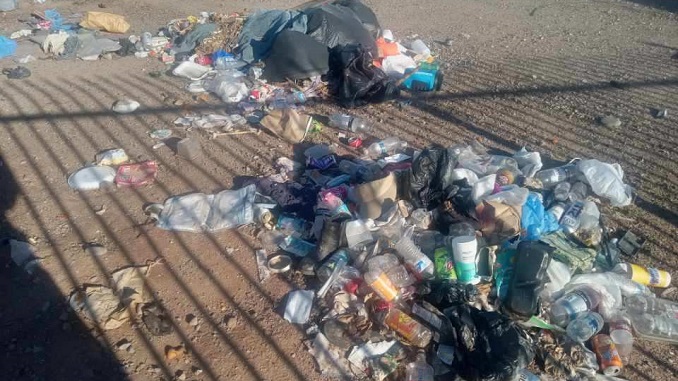
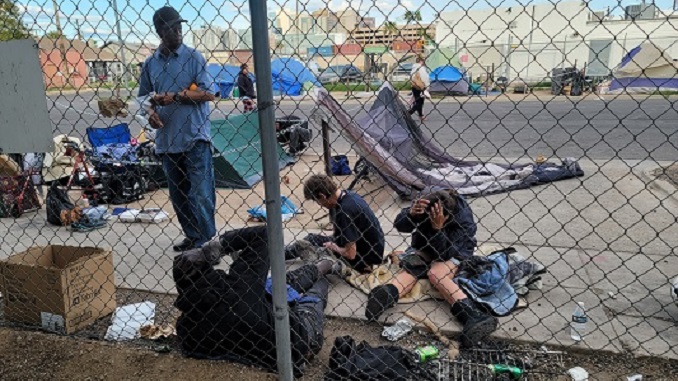
Filed on behalf of three Tucson residents, the lawsuit sought injunctive relief against the City of Tucson, after homeless encampments near their homes and businesses in the Navajo Wash developed with makeshift toilets, dangerous fires, and individuals engaging in violent and criminal behavior.
The appellate court, reversing a trial court ruling against the residents, found that the “record is replete with testimony of specific incidents which proved that camping in the Navajo Wash has caused unsanitary and indecent conditions that invade the rights of the neighboring residents and business owners,” and demonstrated that Tucson was not shielded from liability “because the City knew the activity of homeless camping in this location was being carried on and that it repeatedly and continually caused a nuisance, yet consented to it anyway.”
Prop 312 now gives property owners a reimbursement tool in situations like those described in Bradford v. Tucson, allowing Arizonans to seek relief when a municipality “follows a policy, pattern, or practice of declining to enforce existing nuisance laws prohibiting illegal camping, obstructing public thoroughfares, loitering, panhandling, public urination or defecation, public consumption of alcoholic beverages, or possession or use of illegal substances, or maintains a public nuisance,” according to the Goldwater Institute’s explanation of Prop 312 claims.
Reimbursements are capped at the amount of property taxes paid the prior year, with any excess eligible for reapplication later.
You or someone you know may be entitled to reimbursement under Prop. 312. You can find out how to seek such a payment at https://t.co/1jVIQhQJFe
Goldwater explained the law’s necessity on its website:
“Rampant homelessness is overtaking Arizona’s cities, as municipalities refuse to enforce laws against public camping, loitering, intoxication, and other nuisances. The result has been a rise in violent crime, biohazardous pollution, property destruction, and even death. Residents and business owners have had to take matters into their own hands, installing fences, hiring security, and cleaning up garbage, human waste, and other hazardous materials themselves—services the city is supposed to provide with the tax money these residents pay every year.”
Under Prop 312, once the Department of Revenue notifies a municipality of a claim, the city has 30 days to accept or reject it. If rejected, property owners may challenge the decision in superior court; if the city does not respond in time, the refund is deemed approved. Goldwater has offered to assist residents, saying, “If you believe your claim was improperly denied and you would like legal assistance, please contact us! Our lawyers may be able to help you.”
Claims are filed through the Department of Revenue’s online portal at prop312reimbursement.aztaxes.gov, which requires proof of property ownership, tax payment, and mitigation costs. The department notifies cities and issues approved reimbursements by check.
The decision represents a major blow to a large Arizona city’s assertion of immunity and underscores growing frustration with Tucson’s approach to homelessness amid public safety concerns.
In an op-ed Monday, Timothy Sandefur, Goldwater’s vice president for legal affairs, urged city leaders to act:
“Homelessness is a tragic and frustrating issue. But policies that leave people living on the streets aren’t the answer. Instead, they only create a new set of victims: the innocent taxpayers who must pay for police protection that they don’t receive. The time has come for city officials to shoulder their responsibilities—instead of forcing homeowners to shoulder the costs.”
Sandefur also warned that property owners in other states lack similar protections, citing Utah, and encouraged lawmakers elsewhere to “follow Arizona’s lead” by adopting Goldwater’s proposed Safe Neighborhoods Act.
Correction Notice: A previous version of this story incorrectly linked the Bradford v. Tucson case to the Goldwater Institute and cited an unrelated ruling.
A varied coalition of political voices will be the newest contributors to the Arizona Republic opinions page.
Those joining as representatives of the center and the right are former Maricopa County recorder Stephen Richer, former state lawmaker Paul Boyer, and Goldwater Institute vice president Timothy Sandefur.
Those joining from the left are Navajo Nation member and founder and director of Arizona Native Vote Jaynie Parrish, and the founder, CEO, and board chair of Aliento Reyna Montoya.
Since losing reelection to the recorder’s office, former Maricopa County recorder Stephen Richer has joined multiple leftist organizations including: States United Democracy Center (board member), State Democracy Defenders Fund (board member), and Harvard Kennedy School Ash Center Reimagining Democracy Program (senior fellow). Last year, Richer announced his intention to vote for Joe Biden over Donald Trump.
Goldwater Institute leader Timothy Sandefur’s latest opinion urges for laws to come from Congress again, not presidential dictate, citing former President Joe Biden’s executive order prohibiting farming and mining on one million acres of northern Arizona land and President Donald Trump’s tariffs. Sandefur was previously a litigator with the Pacific Legal Foundation.
Both Richer and Sandefur are adjunct scholars with the Cato Institute.
While in the legislature, former state lawmaker Paul Boyer maintained his stance as an independent among Republicans. Boyer introduced the bill that successfully became law allowing in-state tuition and financial aid to illegal immigrant students. Boyer also consistently stood against the Republican flock when it came to supporting election integrity bills.
Boyer maintains he left the legislature following death threats for his resistance to election legislation advanced by fellow Republicans. Presently, he teaches Latin at Heritage Academy Schools.
Both Boyer and Richer were on the board of Save Democracy Arizona, a now-defunct nonprofit that aimed to make primary elections nonpartisan through a ballot initiative.
Arizona Native Vote leader Jaynie Parrish was previously the executive director for Navajo County Democrats and social media manager for abortion activist group EMILY’s List. Arizona Native Vote runs ballot curing, voter registration, and voter education campaigns. Like Richer, Parris attended the Harvard Kennedy School of Government.
Parrish has made clear the goal is to mobilize Native American voters for Democratic candidates.
“We are fighting against structures that weren’t built for us. They weren’t meant for us there. They were trying to kill us all. We’re not supposed to be here,” Parrish said. “We’re not supposed to be voters.”
The nonprofit led by Montoya, a recipient of the Deferred Action for Childhood Arrivals (DACA), provides illegal immigrants with plans to counter immigration enforcement efforts and resources to evade immigration enforcement. Montoya received seed money from George Soros’ Open Society Institute.
Montoya was 10 years old when her mother smuggled her from Tijuana, Mexico, into the state. Montoya has expressed concerns that she will be deported under Trump.
Montoya worked closely alongside Boyer for the passage of in-state tuition and financial aid for illegal immigrants.
AZ Free News is your #1 source for Arizona news and politics. You can send us news tips using this link.
Downtown Phoenix’s residents experienced a glimmer of hope in the ongoing homeless crisis last month after a court declared the city to blame. If the city doesn’t appeal the court’s order, it may be the end of the massive encampment known as “The Zone.”
The decision flies in the face of the precedent set by other cities: plans and spending that yield no favorable results, ultimately forcing the residents to learn to live with the crime and squalor. Yet, Phoenix may no longer be resigned to the same fate borne by most other major cities. Downtown property and business owners were vindicated in their belief: city officials’ plans, spending, and promises alone don’t qualify as results.
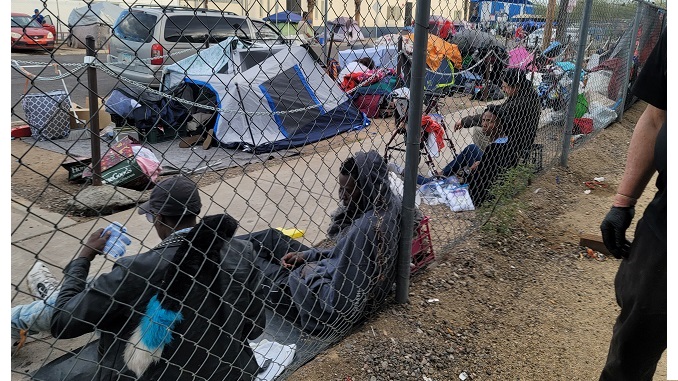
Requiring results of the city could mean The Zone may cease to exist in the near future — restoring a square mile of the current wasteland of city-sanctioned slums into a healthy business district — but only if the city of Phoenix decides to follow through on the court-ordered action to resolve the homeless crisis. Cleaning up The Zone would mean finding shelter and services for around 800 homeless residing in the area, according to a census conducted by the Human Services Campus late last month.
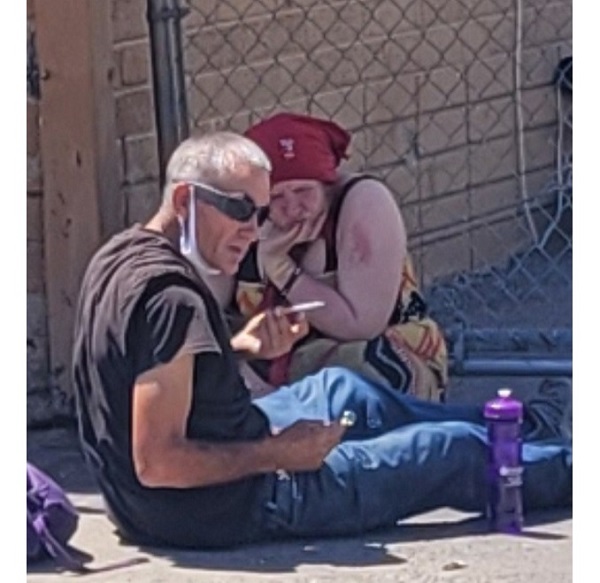
Homeless sit outside a business in The Zone.
The first bout of legal relief came for The Zone’s residents and business owners after the Maricopa County Superior Court ruled last month that the city of Phoenix was at fault for The Zone. The court ordered the city to show that it’s taking “meaningful steps” toward fixing The Zone. They have until July 10 to do so, with a trial date scheduled for June.
The ruling came days after the city of Phoenix promised to finally meet to fix The Zone, a promise prompted by back-to-back murders in the encampment.
Vice President for Legal Affairs at the Goldwater Institute, Timothy Sandefur, who submitted an amicus brief in the case, told AZ Free News that this ruling was a good first step toward remedying The Zone — but that the city has a ways to go.
“I think this is a first step and a very important one,” said Sandefur.
Sandefur said that the superior court indicated the best next steps for the city would be to build structured campgrounds and establish treatment programs, rather than continue with their current “housing first” approach.
However, notice of a settlement in a separate, federal case issued recently may complicate matters in finally getting the city of Phoenix to fix The Zone.
In the Arizona District Court case, the ACLU and the city held mediation about three weeks ago.
Details of the settlement weren’t made public. The Phoenix City Council plans to convene April 18 in an executive session — a meeting not open to the public — to discuss the terms of the settlement. At some point after, the Phoenix City Council will announce the settlement terms during a public meeting.
Of note, the city attempted to dismiss the superior court case — but not the federal case. The city also spent just shy of $100,000 fighting the superior court case.
Ilan Wurman, another lawyer on the lawsuit against the city, told AZ Free News that the court’s order to fix The Zone was thorough to the point where he imagined it would be difficult for the city to fight it.
“The court’s ruling is such a thorough victory for the business and property owners that it will be very hard for the city to overcome it at a full trial on the merits,” said Wurman. “We hope the city does the right thing and considers a settlement or simply follows through on the court’s instructions — that will save a lot of expense to taxpayers and it will be better for the unsheltered community as well.”
In remarks to the press, the city stresses that it has allocated around $140 million to solve the homeless crisis. However, there’s a difference between commitment and spending. Of the $120 million in COVID-19 relief funds received to address the homeless crisis, the city has only spent about 10 percent.
Of what little the city has spent for the homeless crisis, the Maricopa County Superior Court assessed that none of this spending has actually mitigated the crisis.
Homeless use drugs inside Phoenix’s sprawling encampment known as The Zone.
“With few exceptions, the action items about which city representatives testified centered around the creation of more bureaucracy, additional staff positions, and obtaining additional funding for programs to vaguely address homelessness in general,” stated Judge Scott Blaney. “The Court received very little evidence — if any — that the City intends to take immediate, meaningful action to protect its constituent business owners, their employees, and residents from the lawlessness and chaos in the Zone.”
However, in a recent interview, Mayor Kate Gallego indicated that the city was attempting to follow through on a “housing first” approach, and claimed that the city was “working very hard” to fix the homeless crisis.
As AZ Free News previously reported, “housing first” — also referred to as “permanent supportive” or “affordable” housing — holds the theory that the homeless will choose to seek employment, become financially responsible, and receive mental health care and/or substance abuse treatment if food and housing are provided. The theory also posits that enabling the homeless to choose their housing and support services will make them more likely to remain in that housing and stick with self-improvement initiatives.
Gallego shared that the city was working on launching seven new shelter options in partnership with various organizations, and that the city is hoping to receive additional help from both the state and federal government. She mentioned that she would meet with the Maricopa County Board of Supervisors.
Gallego disclosed that she recently spoke with Gov. Katie Hobbs about the homeless crisis — a conversation that had last occurred during Hobbs’ inauguration week in January. The mayor said that Hobbs was looking for additional resources to provide the city.
“Residents should feel confident that they’re going to see changes,” said Gallego. “The message we want to send to the public is that we recognize it’s a problem and we want to solve it.”
When questioned, Gallego didn’t directly deny that the city wouldn’t appeal the superior court’s decision.
In another interview, Gallego claimed that adequate law enforcement was taking place in The Zone. Gallego’s claim conflicted with the various investigative reports and witness accounts that depicted minimal law enforcement in The Zone.
“We treat every member of our community the same when they commit a crime. We want to be consistent and to enforce breaking the law,” said Gallego. “If you commit a crime, it is the same regardless of your housing status.”
However, the “Gaydos and Chad Show” testified to witnessing a myriad of criminal activity during a recent excursion in The Zone — including drug use, public defecation and urination, and prostitution — but not seeing any police presence. In response, Gallego claimed the city’s police were “too aggressive” when handling the homeless. The mayor cited the Arizona District Court case against the city as justification for her claim. However, that lawsuit concerned whether the city could enforce camping and sleeping bans, as well as whether the city had a right to seize or throw away items from homeless encampments as part of cleanup efforts. The lawsuit does not address police response to criminal activity.
Watch: The Zone – Homelessness and Crime Rampant in Phoenix
Corinne Murdock is a reporter for AZ Free News. Follow her latest on Twitter, or email tips to corinne@azfreenews.com.