by Matthew Holloway | Aug 25, 2025 | News
By Matthew Holloway |
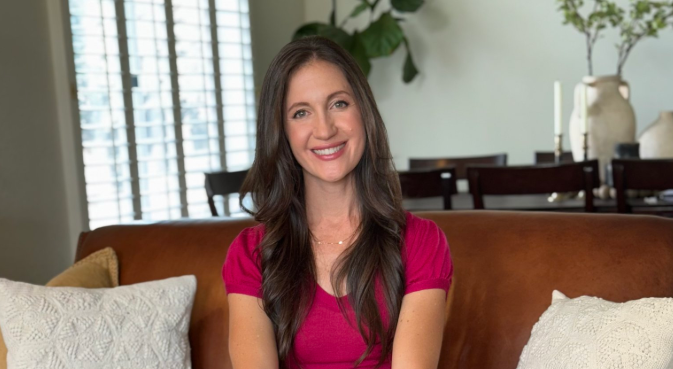
Following the announcement of her candidacy for the Mesa City Council seat currently held by Julie Spilsbury, who is facing a recall election, Dorean Taylor (DT) was willing to answer a few questions for AZ Free News to provide voters with a background on her and her candidacy. Taylor called out Spilsbury for repeatedly voting “to harm the people of Mesa with woke and ineffective government policies that violate our deeply held community principles.” She also placed blame on Spilsbury for increases in homelessness and utility costs.
Taylor announced her candidacy in July after Councilwoman Spilsbury faced serious challenges to her self-proclaimed status as a Republican for her enthusiastic endorsements of Vice President Kamala Harris in the 2024 Presidential Election as well as endorsements from prominent Arizona Democrats U.S. Rep. Greg Stanton, Arizona Secretary of State Adrian Fontes, and U.S. Sen. Ruben Gallego.
Asked to provide a background on herself, Taylor told us:
“I’m originally from the beautiful sunny state of Florida. My family still resides on the East Coast, and I enjoy flying back to see them and visit any time I can. I moved to AZ to attend the same amazing church I still attend today and complete my bachelor’s degree. While I was in school and working full time, I met the love of my life, a Mesa native! We got married, started life together in Mesa, and are still living here today. I’ve come to know and love my community here and have lived in or near District 2 since 2010. Our first home was at Lindsay and Brown. One of my favorite things about Mesa is the small-town feel you can experience in a large suburb. For example, my neighbors will ride their horses down the street and wave to us while we sit on the front porch, but just down the street is a shopping center and public parks. It’s incredible.”
Taylor then answered some questions regarding her campaign, her motivations, and what differentiates her from her opponent.
AZFN: What inspired you to join the race for City Council?
DT: “Thank you for asking. I spoke on behalf of my household and my neighbors, witnessing others who felt the same way speaking up too, and watching all of us be politely ignored. It’s become clear to me that its long overdue for the great people of Mesa District 2 to have principled, honest, common sense leadership on the City Council — representation that actually cares about implementing policies that will improve the lives of the people who call our city home. I’m running to ensure that we have better roads, a safer community, we work to end the homelessness epidemic, and reduce taxes and fees while making our government smarter and more efficient.”
AZFN: How do you differentiate yourself from Councilwoman Julie Spilsbury?
DT: “Our core principles on what drives us to action are different. Unfortunately, my opponent has repeatedly voted to harm the people of Mesa with woke and ineffective government policies that violate our deeply held community principles. She has not remained non-partisan. My opponent has supported policies that have led to an historic epidemic of homelessness on our streets, wasteful spending on pet projects, an increase in utilities, and a currently proposed more than 40% increase in Mesa water rates — Ms. Spilsbury has broken her commitments to the people who elected her, and she has lost the trust of our community. Over five thousand residents signed to recall her. The people have spoken. I’m running to restore honest, objectively principled, commonsense leadership in District 2. I will honor the code of ethics.”
AZFN: What are your top policy priorities once you take office?
DT: “My priorities are simple and align with the priorities of the people I am running to represent — lower taxes and cost of living, smarter and efficient government, safer neighborhoods, better roads that allow for less congestion and faster commute times, and ending the homelessness epidemic that has plagued our streets these past few years. The people of Mesa are incredible and compassionate. They want a representative government that works for everyone, and when I’m elected, that’s exactly what I’ll aim to deliver. One of my first goals is to send out communication to my district to keep residents informed of what is upcoming and to host townhalls for them. People want honesty and government transparency.”
Matthew Holloway is a senior reporter for AZ Free News. Follow him on X for his latest stories, or email tips to Matthew@azfreenews.com.
by AZ Free Enterprise Club | Aug 22, 2025 | Opinion
By the Arizona Free Enterprise Club |
Entering year three of divided government, our expectations for the 2025 legislative session were admittedly not high. With Katie Hobbs occupying the governor’s office and demonstrating that her only skill set is setting new veto records of good public policy, it can be difficult to muster a lot of optimism.
Yet even in politics there is room to be pleasantly surprised and in fact there are several, though likely underappreciated, wins to be celebrated from the first session of the 57th legislature.
Freedom to Move is on the Ballot
After three sessions of introducing a ballot referral to protect every Arizonan’s freedom to move, finally, 2026 voters will have the chance to vote on SCR1004. The timing couldn’t be better as several states are moving forward with the imposition of their own tax per vehicle mile. Most ironically, in Massachusetts lawmakers have introduced legislation which in a masterclass in Double Speak they are calling “The Freedom to Move Act” as well. Every objection The Club has put on the record to VMT targets and taxes is being heralded by the radical liberals in Massachusetts as the benefits to passing the legislation. They proudly claim VMT taxes as a method to achieving their Net Zero goals, forcing people to “choose” other modes of travel like biking and public transit, and though they say there are no “prohibitions” in the bill, they give themselves away when they admit that the state may “facilitate reductions in vehicle miles travelled” in other words driving rations. With the passage of SCR1004, Arizona could be the first state in the country to cut this freedom-crushing policy off at the pass.
Closing the Revolving Door at the Corporation Commission
In an event that was probably rarer than a blue moon or maybe a solar eclipse (whichever is rarer), Governor Hobbs actually signed a bill that The Club supported and advocated for all session long…
>>> CONTINUE READING >>>
by Ethan Faverino | Aug 18, 2025 | Economy, News
By Ethan Faverino |
The One Big Beautiful Bill Act (OBBBA) marks the most transformative overhaul of federal tax policy since the 2017 Tax Cuts and Jobs Act (TCJA).
The OBBBA locks in the TCJA’s individual tax provisions, avoiding a tax increase for approximately 62% of tax filers in 2026, according to the Tax Foundation.
The group’s recent analysis also shows that the law will reduce federal taxes for individual taxpayers in every state, with an average national tax cut of $3,752 per taxpayer in 2026.
The economic impact is equally as big, with 938,000 new full-time equivalent jobs created over the long term, including 132,000 in California, 81,000 in Texas, and down to 1,800 in Vermont.
In Arizona, the Tax Foundation says that the OBBBA will deliver an average tax cut of $3,521 per taxpayer in 2026, providing relief to families and individuals across the state.
Maricopa County will see an average tax cut of $4,049 per taxpayer in 2026, driven by key provisions like:
- Income Tax Rate Cuts and Bracket Changes: $1,613 in savings per taxpayer.
- Standard Deduction Expansion: $821 in savings
- Child Tax Credit Expansion: $630 in savings
- Tip and Overtime Deductions: $50 and $229 in savings
- Business Provisions: $1,321 in savings
Other counties in the state will see major tax cuts in 2026, including Coconino County, with $3,096, Yavapai County, with $3,066, Greenlee County, with $3,011, Pima County, with $2,781, and Pinal County, with $2,553.
The Tax Foundation also projects that Arizona will gain approximately 18,014 full-time equivalent jobs in the long run, boosting local economies and supporting communities across the state.
OBBBA’s long-term outlook remains strong, with average tax cuts projected to dip to $2,505 in 2030 due to the expiration of temporary provisions like the tip and overtime deductions, before rising to $3,301 by 2035 as inflation enhances the value of permanent cuts.
Arizona’s business-friendly provisions, such as permanent 100% bonus depreciation and research and development (R&D) expense, will continue to drive investment and job creation.
Ethan Faverino is a reporter for AZ Free News. You can send him news tips using this link.
by Matthew Holloway | Jun 27, 2025 | News
By Matthew Holloway |
As the City of Scottsdale stands poised to enact a staggering $2.2 billion budget, city leaders must now contend with a new lawsuit from the Goldwater Institute challenging the city’s controversial sales tax increase.
As of the council’s June 10th meeting, the city has reportedly agreed to spend up to $90,000 in taxpayer dollars on the outside law firm Osborne Maledon to defend it.
In June 2024, the Goldwater Institute challenged the newly approved 0.15% sales tax, which was pitched to voters as a “replacement tax,” for an unrelated, expired 0.2% Land Acquisition Tax.
Goldwater won that legal battle, “forcing the city to admit that it was raising, rather than lowering taxes,” according to a press release.
Under the Arizona Constitution, such a tax hike must be approved by at least 60 percent of voters, a threshold the city did not meet in the 2024 election. Scottsdale leaders, however, have enacted the tax.
On Friday, June 3rd, the Goldwater Institute filed a lawsuit against the city, panning the tax as “unconstitutional.” It stated that, “Supermajority rules help protect minority voices, prevent special-interest-driven decisions, and force governments to clean up their budgets before reaching for more of your money. Just like any responsible household, city, county, and state officials should look at how they’re spending first—not just always demand more, regardless of what the law and economic commonsense demand.”
Scott Day Freeman, writing for Goldwater added, “Scottsdale is ignoring the state’s constitutional mandate—requiring us to go to court yet again.”
City Attorney Sherry Scott’s summary to the city council stated, “The budget implications of not defending this case are $25 million per year for the next 30 years.” The law firm, earning approximately $912 per hour at the taxpayer’s expense, is fighting the Goldwater Institute’s efforts to seek an injunction that would stop the tax from taking effect on July 1st, along with a declaratory judgment that the tax is unenforceable.
Freeman said, “Our clients seek only a declaration that the tax is unlawful and an injunction to stop it being enforced. Our clients do not seek a refund or damages.”
Scottsdale spokesman Kelly Corsette stated, “The city is confident its ballot item and election result comply with the Arizona Constitution and all applicable election laws.” He claimed that “the 60% tax approval threshold does not apply to local ballot measures: it is in a section of the constitution that regulates statewide initiatives and referendums, not in the separate section of the constitution applicable to city initiatives and referendums.”
In its press release, the Goldwater Institute maintained that, “In 2022, Arizonans strengthened those protections by amending the Constitution to require any tax passed through a citizen initiative or referendum receive at least 60 percent approval to become law—a requirement that applies not just to statewide, but also to local ballot initiatives.”
Matthew Holloway is a senior reporter for AZ Free News. Follow him on X for his latest stories, or email tips to Matthew@azfreenews.com.
by Matthew Holloway | May 27, 2025 | News
By Matthew Holloway |
The Maricopa County Board of Supervisors (MCBOS) has released a “Truth in Taxation Notice,” announcing that it will hold a hearing on June 23rd as part of its annual budget process. The new budget will lower the combined primary and secondary “overall tax rate.” However, the primary property tax rate is remaining flat which would increase homeowners’ property taxes due to the increase in property values in Maricopa County.
According to the County Supervisors, the FY 2026 Budget “lowers the overall tax rate” and “is $269.5 million below the maximum amount allowed by state law, meaning the county collects less in taxes than it could.” But as stated in the notice, it would increase the primary property tax levy by 1.81%, raising homeowners’ property taxes on a $100,000 house from $113.85 to $115.91. The Maricopa County Truth in Taxation Calculation factors the current primary property tax levy, and the net assessed valuation, excluding the value of new construction. The Maricopa County Truth in Taxation Calculation factors the current primary property tax levy, and the net assessed valuation, excluding the value of new construction, which appears to generate the net decrease in the overall tax.
The release from the MCBS also provided a disclaimer stating that, “The Board does not control property values. However, as property values increase, the tax levy for existing property owners will also increase. And as a result, some property owners may be subject to a slight tax increase due to positive property value market adjustments in a growing economy.”
In a statement released with the preliminary budget on May 19th Maricopa County Board of Supervisors Chairman Thomas Galvin, District 2 said, “I promised as Chairman that we would be good stewards of taxpayer dollars, and with this budget, we are showing how government can run efficiently and effectively to enhance public safety and promote economic prosperity. This budget ensures Maricopa County won’t just weather the storm of economic uncertainty but will thrive. And I’m pleased to be keeping a promise to improve compensation for the courageous and dedicated members of MCSO.”
The County Supervisors stated that they were able to “decrease the property tax rate slightly, bringing the overall rate to 1.348, down 0.37% from the prior year.” The new budget per the board does not decrease existing programs and services.
Supervisor Mark Stewart, District 1 stressed, “While many counties are imposing taxes at the maximum rate permitted under state law, Maricopa County’s tax levy remains $269.5 million below that limit. Our approach is not limited to reduced taxation—we’re also delivering significant cost savings through greater operational efficiency, such as moving county personnel out of expensive leased spaces, while also investing in public safety and making our parks more enjoyable for all Maricopa County residents.”
“The County’s conservative budgeting philosophy has long protected county taxpayers from potential economic downtowns or unanticipated costs,” Vice Chair Kate Brophy McGee, District 2 added. “I’m proud to vote for such a responsible budget that puts money where it matters—with nearly 50% going to public safety.”
Supervisor Debbie Lesko, District 4 emphasized the board’s partnership with Maricopa County Sheriff Jerry Sheridan in developing the budget, stating “The best way to keep our communities safe and crack down on criminal activity is to fully support our law enforcement professionals, not just with words, but with action. Over the past few months, the Board has worked in partnership with Sheriff Sheridan and our Human Resources and Budget teams on a fiscally responsible plan to boost compensation for MCSO patrol and detention staff. I’m looking forward to finalizing those details before the approval of a final budget in June.”
Editor’s Note – This article was updated to accurately reflect the distinction between the tax rate which the Maricopa County Board of Supervisors controls, and the overall tax levy which is a combination of property values and the property tax rate.
Matthew Holloway is a senior reporter for AZ Free News. Follow him on X for his latest stories, or email tips to Matthew@azfreenews.com.