by AZ Free Enterprise Club | Aug 13, 2023 | Opinion
By the Arizona Free Enterprise Club |
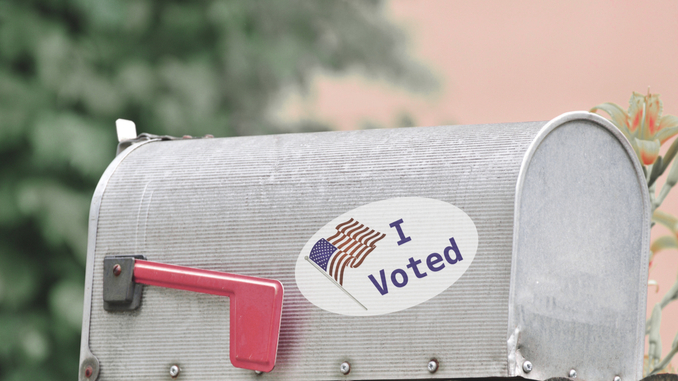
Clean and accurate voter rolls are a cornerstone to safe and secure elections. And they are required by both state and federal law. Section 8 of the National Voter Registration Act (NVRA) specifically obligates states to conduct a general program that makes a reasonable effort to remove the names of ineligible voters from the official lists of eligible voters due to death or change of residence. The U.S. Supreme Court even backed this up in its 2018 decision in the case Husted v. A. Philip Randolph Institute.
But Arizona’s current Secretary of State Adrian Fontes and its former Secretary of State (now Governor) Katie Hobbs have failed to perform the necessary voter list maintenance. And right now, 14 Arizona counties are in violation of Section 8 of the NVRA…
>>> CONTINUE READING >>>
by Corinne Murdock | Sep 18, 2022 | Economy, News
By Corinne Murdock |
Arizona has the highest inflation rate in the country — making this state the number one victim of President Joe Biden’s inflation crisis.
The Phoenix-Mesa-Scottsdale area suffers from 13 percent inflation, according to the latest Federal Bureau of Labor Statistics data released Tuesday. Nationwide inflation rate sits just over 8 percent.
According to recent polling, the inflation and border crises are of equal importance to Arizona voters.
Arizona Free Enterprise Club (AZFEC) President Scot Mussi told AZ Free News that the Biden administration has only worsened the economic woes of Arizonans. Mussi warned that consumers would continue to cut back on major purchases, and business owners would freeze expansions and hiring. He also pointed out that any reductions in inflation weren’t due to the Biden administration’s actions, but instead consumers cutting back.
“It’s pretty clear that the decision makers in Washington want to make this situation worse,” said Mussi. “The recession will continue to linger on until policy makers get serious about runaway spending.”
While Arizonans and the rest of America were taking in the federal government’s latest inflation report on Tuesday, President Joe Biden was celebrating the controversial Inflation Reduction Act (IRA).
Biden didn’t address how the latest inflation data reflected historic highs. Rather, the president asserted that the effects of inflation were improving, and that the state of the economy should come as good news for Americans.
Arizona’s Democratic state legislators also celebrated the IRA.
However, not all within Biden’s party agreed that the IRA and other recent actions by the president are wins. In an interview this week, Senator Mark Kelly (D-AZ) refused to affirm that Biden is doing a good job as president. Congressman Andy Biggs (R-AZ-05) assessed that Kelly treaded carefully due to Biden’s unpopularity among voters.
Mick McGuire, former Arizona National Guard general and failed senate candidate, told “The Conservative Circus” on Tuesday that Kelly was just as guilty as Biden for failing Arizonans with worsening inflation.
Mussi asserted that the IRA wasn’t anything to celebrate, calling it the “Inflation Destruction Act.” He explained that the IRA wouldn’t reduce inflation. Mussi noted that the government hasn’t even distributed all of the stimulus funds from the American Rescue Plan.
“We haven’t even finished rolling out the Biden COVID recovery act: the $1.9 trillion spending palooza. There’s no discipline right now, and there’s really no end in sight,” said Mussi. “Right now, we’ve hit what would be the definition of a recession. Even if you wanted to use the Biden administration’s viewpoint, at best you could say we’re in a bad state of stagflation. There’s absolutely no growth.”
Corinne Murdock is a reporter for AZ Free News. Follow her latest on Twitter, or email tips to corinne@azfreenews.com.
by Terri Jo Neff | Aug 27, 2022 | News
By Terri Jo Neff |
Arizona Free Enterprise Club (AFEC) is reveling in Friday’s Arizona Supreme Court ruling affirming that the attempt to get the Arizona Free and Fair Elections Act on the upcoming general election ballot as a voter initiative has failed.
“The ruling today vindicates what we knew all along: the radical Free and Fair election initiative lacked enough lawful signatures to qualify for the ballot,” AFEC President Scot Mussi said after the order was issued under Chief Justice Robert Brutinel’s name. “Arizona voters, the rule of law, and basic math were victorious today.”
What would have been known as Proposition 210 on the 2022 General Election ballot included numerous changes to state law drafted by the Arizona Democracy Resource Center (ADRC Action), such as a ban on legislative election audits and allowing election day voter registration.
AFEC took the lead in opposing the voter initiative, while some elections officials worried making that many hodge-podge changes to election and campaign finance laws at one time would have negative unintended consequences.
AFEC’s legal challenge alleged myriad problems with more than one-half of the 475,290 petition signatures submitted by ADRC Action. It ended with Brutinel’s order affirming Maricopa County Superior Court Judge Joseph Mikitish’s finding that the minimum 237,645 signature threshold was missed by 1,458 signatures.
The outcome is exactly what AFEC’s Mussi predicted. In a series of statements Friday, Mussi called out ADRC Action for the “rigged methodology” the group’s attorneys pushed the courts to use when calculating the number of valid signatures. He said the mathematic gymnastics was intended “to sneak their disqualified measure onto the ballot.”
“Their dubious formula cherry picked data that boosted their numbers, even including signatures that were disqualified by the counties in the random sample,” Mussi said. “None of their formula was rooted in statute or historical precedent and was a Hail-Mary attempt to resuscitate thousands of signatures that simply should not have counted.”
The justices ordered Arizona Secretary of State Katie Hobbs to rescind the prior determination that the initiative had qualified for the ballot.
by Corinne Murdock | Aug 24, 2022 | News
By Corinne Murdock |
On Wednesday, the Arizona Supreme Court invalidated signatures of a ballot initiative seeking to overhaul the state’s election processes, making it unlikely to appear on the November ballot.
Chief Justice Robert Brutinel ruled that Arizonans For Free and Fair Elections, or the Arizona Democracy Resource Center (ADRC) Action, failed to provide a valid mailing address to receive certified mail. Brutinel remanded the case back to the Maricopa County Superior Court to determine how many signatures his order impacts.
Based on the ruling — likely to invalidate tens of thousands of signatures — and sampling rejection rates, it appears unlikely that the initiative will have enough signatures to qualify for the ballot. ADRC Action submitted over 475,000 signatures, and needs just over 237,600 to qualify.
The Arizona Free Enterprise Club (AFEC) challenged the ballot initiative. In a statement to AZ Free News, AFEC President and Executive Director Scot Mussi asserted that the legal victory protected Arizonans from the harms of outside special interests.
“We are very pleased that the Supreme Court affirmed the lower court ruling that Arizonans for Free and Fair Elections failed to gather enough lawful signatures to qualify for the ballot,” said Mussi. “This radical initiative imported 60 different provisions from Washington, D.C. that would have increased fraud, harmed small business, and empowered special interests. They spent over $7 million trying to buy their way onto the ballot, and they failed.”
The Maricopa County Superior Court’s original ruling reduced valid signatures to about 10,000 short of qualifying for the ballot, which AFEC likened to being “on life support.”
Below are some of Arizonans for Free and Fair Elections’ proposed changes:
- eliminate voter ID and proof of citizenship for voter registration
- allow same-day voter registration
- bar election audits like the most recent one for the 2020 election
- raise small business taxes to increase political campaign funding
- restore private funding in election administration
- require universal vote centers
- extend in-person early voting through the day before Election Day
- require a court order to rule someone too incapacitated to vote
- implement automatic voter registration for driver’s license and state ID recipients, as well as of-age high schoolers
- allow curbside voting
- allow “nontraditional residential addresses” such as mile markers or “geographic or other identifying features” when registering to vote
- restore the permanent early voting list (PEVL)
- restore “inactive” voters to “active” status
- permit “signature-only” voter registration
- allow third parties to register voters
- reduce contribution limits
As reported previously, ADRC Action accrued over $7.6 million from a national network of Democratic dark money for this ballot initiative. Their group traces back to a national donor network called “Way to Win,” launched for the purpose of defeating Republicans in response to former President Donald Trump’s 2016 victory.
Way to Win asserted that its $110 million in funding to key states, including Arizona and Georgia, were the reason for the Democrats’ blue wave in 2020. Way to Win’s major sources of funding include George Soros’ Open Society Foundations and family, Stryker Corporation heiress Patricia Stryker, the prominent D.C. consulting firm Arabella Advisors’ Sixteen Thirty (1630) Fund, and the Tides Foundation-backed One Arizona.
Corinne Murdock is a reporter for AZ Free News. Follow her latest on Twitter, or email tips to corinne@azfreenews.com.
by Corinne Murdock | Jun 21, 2022 | News
By Corinne Murdock |
Less than 24 hours after the Joint Legislative Budget Committee published the proposed budget report late Monday, infighting broke out among Arizona’s House and Senate Republicans.
Tuesday marked lengthy budget discussions in the House Appropriations Committee, but in the Senate discussions were cut off abruptly with an indefinite recess of the Senate Appropriations Committee. Effectively, public budget talks ended before they started in half of the State Capitol.
State Senator David Gowan (R-Sierra Vista) said that the House didn’t honor its agreements to pass some bills; one of those significant ones being the Arizona Board of Regents (ABOR) continuation.
“The House has decided that they will not honor the deals we created together and move things forward. I know there’s some media out there, social stuff going on, that they’re trying to pin us and maybe leverage us. But the point is here, they blew the deal,” said Gowan.
Gowan added that he wasn’t willing to call the committee together later on in the day, either. It appears that House legislators reneged on some serious closed-door talks — enough to upset him.
“It would be pretty hard for me to want to come back and help people who wish not to honor deals. In that effort, it’s just not appropriate in what just occurred, so I want that out to the world,” said Gowan.
However, State Representative Travis Grantham (R-Gilbert) contended that he’d never heard of these deals as the House Rules Committee Chairman. He criticized Gowan’s preferences as “special interest” legislation that was “fat, bloated, […] unconstitutional,” and adverse to Republican interests. Gowan didn’t reply.
“I have never discussed a deal, agreed to a deal or been part of some secretive deal to move certain Senator’s special interest bills that are fat, bloated and in some instances likely unconstitutional,” wrote Grantham. “And further, why would we invite and pay an industry, with taxpayer dollars to come into our great state when they will ban, boycott and take away major meetings, corporations and events because of our Republican majorities and sound policies? #BadIdea”
Those weren’t the only serious breaks from presenting a unified Republican front on the budget. Several individual Republican legislators vocalized dissatisfaction with the budget emphatically on social media and during committee votes.
As the majority, the GOP will have to resolve those opposed within its membership if it hopes to secure the budget’s passage before the new fiscal year begins next Friday, July 1.
Among those opposed to the budget are State Senator Michelle Ugenti-Rita (R-Scottsdale). She asserted that the budget wasn’t fiscally responsible in the face of a looming recession. Ugenti-Rita scorned provisions of the bill as “pet projects” for fellow members.
That contradicted how State Representative Regina Cobb (R-Kingman) characterized the budget during the House Appropriations Committee on Tuesday. Cobb said that the proposed budget bills would afford the state with an 8 to 10 percent cushion — enough to “weather the storm” of a pending recession, asserting repeatedly that paying off the pension debt and rollovers would remove troublesome burdens in coming years.
“Are we going to flatline tomorrow or July 1? Absolutely not, but we’ve projected it to be fiscally conservative,” said Cobb. “I think if we’re going into a recession, we’re paying off a lot of debt that could be hanging over our heads during a recession.”
State Representative Jake Hoffman (R-Queen Creek) also opposed the budget. He declared that the budget would only worsen an impending sustained recession and current, serious economic destruction. Hoffman criticized the raises to state employees and judges of up to 15 percent. Although Hoffman was the only Republican committee member to vote against the bill, the legislator said that the budget doesn’t reflect the majority’s platform.
“Everything in [our constituents’] lives are going up, and they’re not getting raises right now. If they are, they’re under the inflation rate,” said Hoffman.
Arizona Free Enterprise Club, a free market policy and advocacy organization, asserted that extraneous funding for agendas contrary to the interests of Arizonans were sprinkled into the budget. In a statement to AZ Free News, President Scot Mussi declared that the budget largely fulfilled Democrats’ wishlist.
“The proposed budget deal includes hundreds of millions in new spending, subsidies for Hollywood liberals to make movies, tax hikes for a Green New Deal transit plan in Maricopa County and special interest pork to buy Democrat votes,” said Mussi. “We should be working toward a budget that has full Republican support, not a Build Back Broke budget supported by Democrats.”
By and large, Democrats focused their comments Tuesday on lamenting the budget’s K-12 spending. Some accused the budget’s design as a “shell game.” Several noted that they didn’t like the idea of funding more border security.
One of the most vocal opponents of the budget, State Representative Kelli Butler (D-Paradise Valley), called the ongoing revenue calculations “irresponsible” during committee. Butler also said that she and a majority of Arizona voters wanted $1 billion for K-12 education. Butler accused the budget of shell games related to taxation that made education funding more vulnerable.
Despite the ongoing economic turmoil and near-universal expectation of a recession, Butler asserted that the economy was “thriving.” Butler also took issue with the fact that she was still getting briefings by midnight and memos from staff at one am early Tuesday, arguing that no legislators had time to figure out what’s all in the budget.
Present at the State Capitol were educator activists with the Arizona Education Association (AEA) rallying for more teacher pay using the $5.3 billion surplus.
Those for the budget praised it for getting more things right to address the state’s current needs. One Democrat, State Representative Cesár Chávez (D-Maryvale) signaled support for the budget, pointing out during committee that the legislature had a little over a week before its deadline for the budget hits. He concurred with his Democratic peers that K-12 education needed a “true, historic investment,” but that he had a responsibility to make the budget work ahead of the deadline.
State Representative Michelle Udall (R-Mesa) offered a list of positives within the budget solving statewide problems: over $1 billion to solve water supply problems; over $1.6 billion overall increase in K12 spending, which meted out to $750 per pupil or a $23,000 increase per classroom; over $1 billion in debt payoff in unfunded liabilities and pensions; over $1 billion increase in public safety (police, fires, courts); and over $500 million to increase health care like in diabetes management training and postpartum care.
Corinne Murdock is a reporter for AZ Free News. Follow her latest on Twitter, or email tips to corinne@azfreenews.com.