Heading into November’s election, the Democratic Party felt good. They thought they had the presidency locked up. And here locally, they were convinced that they would gain control of Arizona’s legislature after outspending Republicans in every single race.
Then, a massacre happened. President Trump was handed a mandate by the American people, and Democrats actually lost ground in our state legislature. That had to feel like rock bottom for the Left, and yet, as we’ve seen so far in 2025, it wasn’t.
On the heels of their historic defeat, the Arizona Democratic Party (ADP) faced accusations of financial wrongdoing from one of its leaders, just days before its convention and officer elections in January. Then, in April, the ADP saw even more infighting between party leadership and the state’s top Democratic elected officials: Governor Katie Hobbs, Secretary of State Adrian Fontes, Attorney General Kris Mayes, U.S. Senator Mark Kelly, and U.S. Senator Ruben Gallego. Now, the latest news shows that, according to its own leadership, the Arizona Democratic Party will actually go broke by the end of this year.
That’s a lot of dysfunction in just a few short months, which is usually the domain for Republicans. But now it appears the Dems have become the standard bearer of political chaos…
Continued Republican infighting over the state of school choice in Arizona has resulted in another candidate entering the 2026 race for superintendent of public instruction. The friction concerns to what extent the superintendent should restrict the reimbursement of school choice funds.
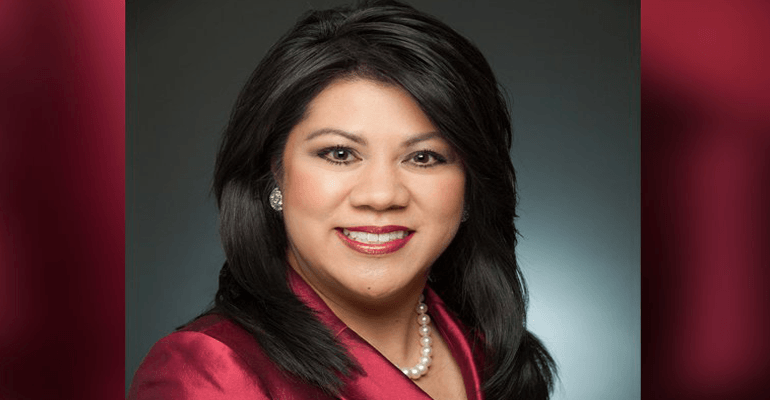
Arizona Treasurer Kimberly Yee formally announced her campaign on Wednesday with the Arizona Freedom Caucus. The caucus founder, Sen. Jake Hoffman, endorsed Yee at a press conference outside the state capitol. Hoffman believes the current superintendent, Tom Horne, limits school choice disbursements too much.
Hoffman justified Yee’s selection by alluding to “challenges” with the Empowerment Scholarship Account (ESA) Program, and reported “frustrations” experienced by parents navigating the program.
“We have identified an absolute all-star candidate; we have identified someone who has a proven track record uniting the Republican Party and winning elections at every level of government,” said Hoffman. “[Horne] is a better politician than he is a public servant.”
Yee said she would better partner with parents through a “student-first” system and pledged to create “a vocational pathway” for future leaders in the workforce. Yee also promised to strengthen school choice options for parents.
Yee accused Horne of committing “big government overreach” and “petty political games” in his administration of the office.
“We need a chief education officer in Arizona committed to delivering real, tangible results for Arizona children and families. Sadly, and for far too long, the leadership at the Arizona Department of Education has missed the mark, and our children and teachers are paying the price,” said Yee.
Arizona children, families and teachers deserve a State Superintendent who will deliver real results, and that includes someone who will fight to protect their educational freedom — I’m that candidate. 🇺🇸
Yee avoided answering whether she would put limits on permitted ESA Program spending. She insisted current legislative “guardrails” sufficiently prevent inappropriate expenditures.
Hoffman announced his intent last month to replace Horne next year, claiming the superintendent hadn’t sufficiently protected the ESA Program from efforts to undermine it by Governor Katie Hobbs and Attorney General Kris Mayes. A significant source of contention is the extent to which the superintendent’s office has denied reimbursement requests.
Horne has put the kibosh on significant reimbursement requests fought to be secured by parents in the program. Of late, his office says he has prevented the approval of a $16,000 cello; a $5,000 Rolex watch; a $24,000 golf simulator; $64,000 for nail art and crystals; a $2,300 freeze dryer; $1,500 for 250 cubic feet of potting soil; and $65,000 for 100 laptops, computers, and tablets for a family with six children.
In the case of the cello, 12 News reported the family — identified as living in “an upscale Gilbert neighborhood — received $11,000 in ESA funds for a piano, commercial KitchenAid mixer, private fitness lessons, a kayak, and Chinese calligraphy and painting lessons. After receiving their reimbursements, the family put their child in a public school.
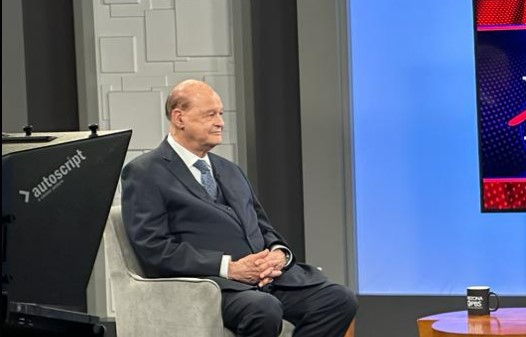
Horne has consistently doubled down on his position as “the main defender” of the ESA Program, citing his work as a lawmaker on the earliest forms of school choice conceived in the 1990s. The superintendent publicly challenged Hoffman to debate him on the matter.
“I brought school choice to Arizona in the 90s with my legislation. I’ve fought to protect school choice from a liberal Governor and Attorney General for the past two years,” said Horne. “I’m the only statewide candidate to beat an incumbent in the General Election in over 50 years. Let me know when and where you’d like to debate education policy.”
Yee’s platform focuses only on fiscal responsibility within the superintendent’s office. Contrary to Hoffman’s indication that the Arizona Freedom Caucus’s chosen candidate would lead their campaign with the ESA Program, there is no mention of school choice on her campaign website as of this report.
By comparison, Horne’s platform appears to be significantly more fleshed out with plans addressing the different areas of state education.
Yee previously considered running for governor in the crowded 2022 race that ultimately ended with the seat flipping from Republican to Democratic control.
Aside from Horne and Yee, the only other registered Republican to file a statement of interest in the race is Stephen Neal Jr., a school psychologist formerly with Legacy Traditional Schools.
Five Democratic candidates have also filed statements of interest: Michael Butts, a member of the Roosevelt Elementary School District governing board; Sam Huang, former member of the Chandler City Council and 2022 state legislative candidate; Joshua Levinski, an English teacher; Bret Newby, an associate professor with National University; and Teresa Ruiz, the former president of Glendale Community College.
AZ Free News is your #1 source for Arizona news and politics. You can send us news tips using this link.
Secrecy, control, and parents without a voice. These factors apparently comprise the current motto of Superintendent Tom Horne and John Ward, head of the ESA department. As a six-year veteran parent in the ESA program, I know what I am talking about. Over the past two years, the changes I have seen have been nothing short of appalling, frustrating, and alarming. Instead of empowering parents with trust and the ability to make free choices in educating their students, the current Superintendent has done all he can to rob parents of the freedom granted in the lawmakers’ legislative intent in the historic bill that was passed in 2020.
I could spend hours sharing all the abuses that parents have experienced at the hands of Tom Horne. To save us all a bunch of heartache, I’ll leave it at one major concern: the ongoing development of the most recent edition of the parent handbook. As a longtime shareholder, I can tell you the current protocol of closed-door meetings and a handpicked handbook committee led by a non-ESA parent has never been the norm of this program. Even under former Superintendent Kathy Hoffman, a clear opponent to the program, parents were offered townhalls to make their voices heard.
This year, despite the State Board of Education’s President demanding that Superintendent Tom Horne offer a townhall, Superintendent Horne has remained silent for months. Instead, prior to the last State Board of Education meeting, Mr. Horne sent an email to parents, demanding they sit down and shut up.
I quote, “This email is particularly directed to ESA users who have been in disagreement with the proposed handbook: We received some concern from state legislators. We therefore agreed to postpone the vote on the handbook until the June meeting to give us a chance to sit down with the legislators and hopefully reach mutually acceptable agreements. We therefore respectfully request that those who have signed up to speak on this issue wait until the June meeting and not come to the meeting next Monday. The handbook will not be on the agenda, and once agreement is reached with legislators, any objections you have might be solved. It is best to come to the meeting when you know what the final proposal will be in June.”
Clearly Superintendent Horne has no interest in listening to the concerns of the parents.
Now, let us explore some major issues in the handbook itself. A large portion of the parental outcry has primarily been against the mandated caps in different spending categories. While the caps seem to be contrary to the law, I firmly believe they are merely a diversion from the real agenda of the ESA department. Take a moment to examine two critical footnotes.
For the second time in the last two years, we see a footnote that an acceptable expense category is as follows: “Any fees that may be levied by the Department to cover the costs of managing of the Empowerment Scholarship Account program” (pg 15, footnote 10). This means that the ESA department really wants to pull fees out of students’ accounts to cover administrative fees. Students already only receive 90% of the funding they would in public schools – and now the department wants to steal money from the kids to cover their own expenses?
Even more concerning is footnote 22 on page 52, which says: “The Department may ask for repayment of any items approved in error, if items are improper or unallowable under your ESA contract, state law, administrative rule, program policies, or this ESA parental handbook.”
For the first time in my experience as an ESA parent, Superintendent Horne and John Ward have approved auto approvals of expenses in the ESA program. Before this, every single purchase had to be approved, thus protecting tax dollars from being used improperly. However, because the current ESA department cannot be run efficiently or effectively (despite the program being handed over to Mr. Ward with turnaround times being 24-48 hours for every single order), they now want the buck to stop with the parents, not themselves as the lawful administrators of the program. This leaves parents in a position that if rules change or future ESA parent handbooks remove categories, the state can demand repayment. This has nothing to do with improper spending, but everything to do with bureaucratic inefficiency.
It is clear that Tom Horne is no advocate for school choice and no advocate for making the voices of parents heard. We parents have had enough. We will scream until our voices are hoarse, because we are the primary educators for our children and we should have a say in the proposed ESA parent handbook.
Rosemary McAtee is a home-educating parent of 7 students and a 6-year veteran of the ESA program.
The Arizona Freedom Caucus (AFC) says it intends to replace Superintendent of Public Instruction (SPI) Tom Horne in 2026.
AFC’s chairman, State Senator Jake Hoffman, claimed to a press gaggle on Monday that Horne hasn’t put sufficient work into protecting the Empowerment Scholarship Account Program (ESA Program). Hoffman accused Horne of leaving the state legislature to do all the work to protect the state’s school choice program.
Hoffman called Horne “the single greatest threat” to the ESA Program.
“Thanks to the legislature and the conservative leadership that we have, Katie Hobbs is unable to make serious, negative, adverse reforms to school choice in this state. However, Tom Horne is the single greatest threat to school choice. Tom Horne is the single greatest threat to the ESA Program. Tom Horne is the single greatest threat to nearly 100,000 students and their families that are utilizing those programs right now. And so I will certainly be looking for a Superintendent of Public Instruction candidate to challenge Tom Horne.”
Horne denied the accusations from Hoffman in a direct response to the senator.
“I brought charter schools to Arizona when I served in the legislature in the 90s,” said Horne. “I’ve fought to keep ESAs and school choice from an Attorney General and Governor who want it gone. I’m happy to debate you anytime on these issues.”
I brought charter schools to Arizona when I served in the legislature in the 90s. I've fought to keep ESAs and school choice from an Attorney General and Governor who want it gone. I'm happy to debate you anytime on these issues @JakeHoffmanAZ. https://t.co/pPYFjkV5l9
Hoffman took issue with the proposed 2024-2025 ESA Handbook last month. Hoffman and fellow Republicans submitted a letter to the Arizona State Board of Education (ASBE) urging the draft’s rejection.
🚨 ESA ALERT 🚨
The 2024-2025 ESA Handbook was just published & has MAJOR problems!
ESA Parents are NOT happy.
The State Board of Ed is set to approve the flawed handbook THIS MONDAY.
ASBE declined to approve the new handbook during its meeting last week. The board delayed a decision on the proposed handbook for its next meeting toward the end of this month. Horne was the sole board member to motion for a board vote on the proposed handbook during their last meeting.
Horne has consistently presented himself as “the main defender” of the ESA Program. Horne explained the perceived limitations on ESA Program expenditures were necessary written safeguards against abuse of the program.
Per Horne, parents have attempted to take advantage of current unwritten limitations on reimbursements, such as requesting coverage for a $5,000 Rolex watch and a $24,000 golf simulator.
“[These are] abuse of things that are not really for the educational benefit of the child. It’s obvious there has to be some limitations,” said Horne.
The SPI has also pushed back against attempts by Attorney General Kris Mayes and Governor Katie Hobbs — both staunch opponents of the ESA Program and the concept of school choice in general — to undermine and cripple the ESA Program with allegations of poor oversight and management.
Horne says he has consistently referred cases of fraud to Mayes for investigation, as well as increased staffing for auditing and investigative purposes.
“Under my leadership, the department has done a full-court press against waste and fraud. I hired both a program auditor and an investigator, which had not been done before,” said Horne in a January response to Hobbs’ State of the State. “I require that every expenditure be for a valid educational purpose and have been attacked for doing that.”
Nearly 87,800 students participate in the ESA Program as of Monday’s count.
AZ Free News is your #1 source for Arizona news and politics. You can send us news tips using this link.
The Arizona State Board of Education (ASBE) declined to approve the new handbook for the Empowerment Scholarship Account (ESA) Program.
ASBE discussed the proposed 2025-2026 ESA Handbook during its meeting on Monday. Though it had the opportunity to approve the handbook during the meeting, a majority of the board indicated a desire to abstain from voting on the handbook until their upcoming April meeting.
Arizona Department of Education (ADE) Superintendent Tom Horne motioned for ASBE to take a vote on the handbook, but no other board member seconded his motion.
The ESA executive director, John Ward, said the new handbook was more user friendly, with information clarified and organized, redundancies reduced, hyperlinked statutes and rules, a clarified list of spending limits on items associated with risks of abuse, and a new chapter on enrollments.
A point of concern for ASBE board members related to ESA Program approvals of expenditures, namely of the sort opposed by Attorney General Kris Mayes.
Mayes’ Government Accountability Unit launched an investigation into the ESA Program over its expense authorizations last July. Mayes accused the ESA Program of approving supplementary materials without documentation of a curriculum nexus, approving certain curriculum materials without curriculum documentation, and approving textbook expenses without documentation demonstrating a qualified school or eligible postsecondary institution requires it.
During Monday’s meeting, Ward clarified there were certain “common” educational items for which the ESA Program didn’t require curriculum in order to not burden families, such as pencils and paper. Ward said the attorney general’s letter prompted them to split the supplemental materials listings into two: those that will always require a curriculum nexus and those that are general educational items which, pending the ongoing court case’s outcome on the matter, may never require a curriculum nexus.
There were over 87,600 students reported within the ESA program as of Tuesday.
The ESA Program continues to be a source of conflict between statewide officials.
Governor Katie Hobbs targeted the ESA Program during her State of the State address in January. Hobbs’ criticisms prompted a rebuttal from Horne; he said the governor was ignorant to the administration of the program.
In his explanation of the new ESA Program Handbook earlier this month, Horne dismissed one major opposing claim: that the program needs to reimburse parents without question of the expenses.
Horne said the ADE’s oversight of expenditures successfully prevented abusive charges, such as a $5,000 Rolex watch and a $24,000 golf simulator.
“[These are] abuse of things that are not really for the educational benefit of the child. It’s obvious there has to be some limitations,” said Horne.
Unlike his predecessor, Horne has repeatedly stepped up to defend the ESA Program.
“Parents should have the choice to be sure their child is in a school that meets the needs of that child,” said Horne. “The ESAs are really not really a challenge to the public schools; they supplement them and make sure that all students are in an environment where needs are being met.”
AZ Free News is your #1 source for Arizona news and politics. You can send us news tips using this link.