by Jonathan Eberle | Oct 30, 2025 | News
By Jonathan Eberle |
Arizona State Senator David Farnsworth (R-LD10), chairman of both the Senate Appropriations and Transportation committees, is pushing to bring private-sector innovation to Arizona’s public transportation system.
In a recent meeting with Uber policy officials, Farnsworth called for new partnerships that harness technology and market-based solutions to make transit in the East Valley more efficient, cost-effective, and responsive to residents’ needs.
The meeting focused on exploring how companies like Uber could play a larger role in shaping Arizona’s transportation future — particularly through autonomous vehicle technology. Farnsworth highlighted the success of similar programs by Waymo and urged Uber to consider developing comparable systems that could supplement or even replace traditional fixed-route bus services.
“We have a responsibility to find effective solutions for the people of Arizona, rather than simply maintaining inefficient systems that waste taxpayer funds,” Farnsworth said. “Meeting with companies like Uber highlights a significant opportunity to let innovation take the lead.”
Farnsworth emphasized that current bus routes often operate with minimal ridership, resulting in high operational costs with limited public benefit. By contrast, autonomous ride-share models could provide flexible, on-demand transit available around the clock — reducing taxpayer burden while improving reliability and safety.
The senator framed his proposal as part of a broader effort to prioritize fiscal responsibility and smart governance. “Autonomous vehicles can provide safer and more efficient transportation, and I will keep working to ensure that Arizona remains at the forefront of realistic and sustainable travel options for the future,” he added.
Farnsworth’s initiative reflects a growing movement among Arizona lawmakers to integrate private-sector innovation into state infrastructure systems. As the East Valley continues to grow, policymakers are looking toward new ways to connect residents to jobs, schools, and local businesses — without expanding costly and underused public transit routes.
If discussions progress, Farnsworth’s collaboration with Uber could mark a turning point for Arizona’s approach to public transportation, signaling a shift toward efficiency, adaptability, and technology-driven mobility.
Jonathan Eberle is a reporter for AZ Free News. You can send him news tips using this link.
by Staff Reporter | May 21, 2025 | News
By Staff Reporter |
The city of Phoenix will base its next climate, energy, and food policies on a community survey.
The city’s Office of Environmental Programs (OEP) has an ongoing survey this month in which they offer a $100 VISA gift card drawing as a reward.
The bulk of the questions provide insight as to the potential policy directions the city is looking to take to address climate, energy, and food.
The survey suggested the greatest barriers to addressing climate change may be lack of public information and education, motivation to address climate change, government mandated regulations/support, business or industry support, and public-private coordination; cost of implementation; and difficulty in changing individual behaviors.
The following were proposed incentives for public and alternative modes of transportation: increasing the options, routes, and frequencies of public busing and light rail; increasing infrastructure and safety measures for pedestrian and bicycle transportation; increasing electric vehicle infrastructure; and establishing subsidies for installing electric vehicle chargers in homes and businesses.
Potential policies for aiding in heat relief were also presented: improving access to affordable electricity to reduce electricity costs related to cooling systems; increasing shade by planting more trees and installing shade structures; incorporating heat reducing materials into construction of new or remodeled buildings; using cooling materials and techniques in street surfaces, parking lots, and roofing; and subsidizing the replacement of old cooling systems for energy efficiency.
The survey offered policy proposals for drinking water supply: offering residential and commercial tiered water rate structure plans and rebates for those who adopt water conservation and climate adaptation practices; increasing access to rainwater harvesting, water storage, and wastewater conversion infrastructure; incentivizing and subsidizing residential replacement of lawns to xeriscape or artificial grass or turf; and implementing an education initiative for residential and business/commercial/industrial water conservation.
The survey also requested some insight into residents’ current conservation practices.
Residents were asked to divulge information about their cooling and heating systems and their satisfaction with their function and cost. The survey also sought to learn residents’ financial stability, the impact of their utility bills on their finances, and energy assistance program participation.
Residents were also asked about their food acquisition and consumption practices. In relation to these questions, the survey asked residents to reflect on potential food-related policies: transportation support such as free shuttle services, transit passes, fruit and veggie home delivery; a map of community food access points such as gardens, farmers markets, food box sites; vouchers or assistance for food; neighborhood-based food outlets at corner stores, transit stops, schools, and community spaces; physical spaces to grow food in neighborhoods such as community gardens; and education programs with supplies and hands-on training for gardening.
Residents were also asked to prioritize policies to reduce the environmental impact of food reduction; encourage sustainable farming practices; reduce food insecurity and hunger; increase access to local food; prevent and reduce food waste; educate the community about healthy eating; develop opportunities for new local food businesses; and protect or add new space for farmland or greenspace.
The survey also asks respondents to share where they obtain their information on climate change, the word that comes to mind when they hear the term “climate change,” how often they think about climate change, and their feelings about climate change (whether they are worried, anxious, fearful, overwhelmed, or motivated to take action).
AZ Free News is your #1 source for Arizona news and politics. You can send us news tips using this link.
by AZ Free Enterprise Club | Mar 26, 2023 | Opinion
By the Arizona Free Enterprise Club |
In the midst of the COVID-19 pandemic in 2020, multiple government officials seized the opportunity to grab more power. Perhaps chief among them were the Tucson city council and Mayor Regina Romero, who exploited the moment by declaring a “climate emergency.” Now, the city of Tucson has finalized its plan to solve this “climate emergency”—to the tune of an estimated $326 million. But it’s not just the cost that should concern you.
Tucson’s Climate Action Plan, titled “Tucson Resilient Together,” is ripe with Green New Deal mandates that are aimed at forcing citizens out of their cars, controlling their lives, and destroying the community. By 2050, they plan to force 40% of all people living in Tucson to commute by walking, cycling, taking public transportation, or “rolling” (whatever that means). And that’s just the start.
>>> CONTINUE READING >>>
by AZ Free Enterprise Club | May 7, 2022 | Opinion
By the Arizona Free Enterprise Club |
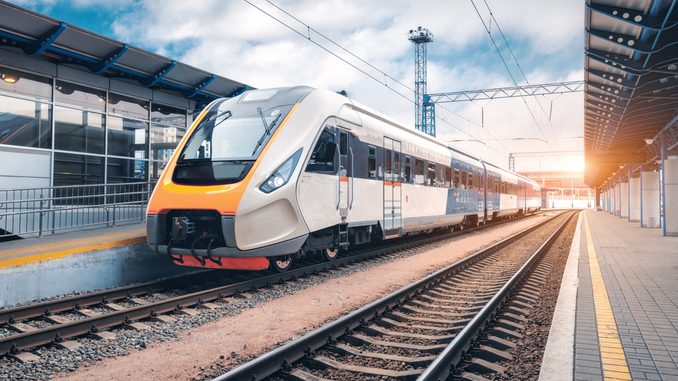
If there’s one entity that specializes in giving people something they don’t need—or aren’t even asking for—it’s the government. So, naturally, while the country faces sky-high inflation and Arizonans make sacrifices in their family budgets, the Town of Gilbert saw fit to discuss a potential…commuter rail.
That’s right. At the end of April, the Gilbert Town Council announced that it’s considering a $289,000 consulting contract for a feasibility study on establishing a commuter rail. What this would accomplish—and why anyone thinks this would be good for Gilbert—remains a mystery.
Even before COVID, public transit usage has been on the decline. And that’s only worsened since…
>>> CONTINUE READING >>>