by Matthew Holloway | Nov 11, 2025 | News
By Matthew Holloway |
Arizona GOP leaders are in court defending three abortion restrictions they say protect women and deter coercion after Attorney General Kris Mayes declined to defend the state laws. The Plaintiffs, supported by the Center for Reproductive Rights, argue that the statutes defy the 2024 constitutional amendment legalizing abortion up to fetal viability.
The lawsuit, Isaacson v. Arizona, was filed in May 2025 by Phoenix obstetrician-gynecologist Dr. Paul Isaacson, a Proposition 139 supporter. Isaacson was joined by Dr. William Richardson and the Arizona Medical Association in the lawsuit, which challenges:
- A “reason ban” barring abortions based solely on fetal abnormalities (non-lethal or otherwise), gender, or race.
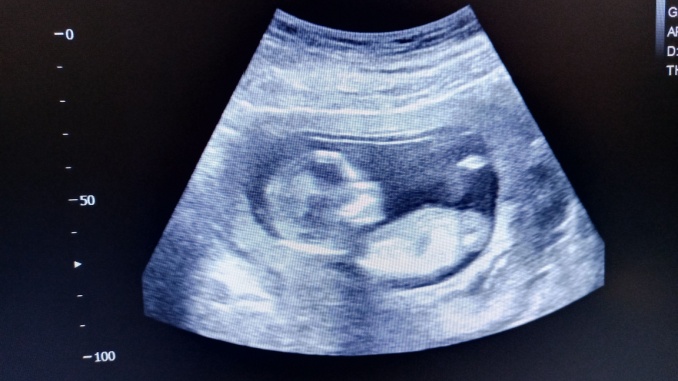
- A “two-visit requirement” requiring a second clinic visit and 24-hour delay after viewing an ultrasound.
- A telehealth ban prohibiting diagnosis, prescription, or mailing of abortion medication via phone or video.
Isaacson dropped a related federal case in April 2025 to advance this state challenge and was joined by the Arizona Medical Association and two other OB-GYNs.
Senate President Warren Petersen and House Speaker Steve Montenegro intervened to defend the laws, represented by attorney Emily Gould of Holtzman Vogel, after AG Kris Mayes declined to defend them, according to KJZZ. In June 2023, Governor Hobbs signed an executive order centralizing abortion-related prosecutions in the Attorney General’s office, a move Mayes said underscores their shared commitment to “fight … to protect the rights of Arizonans to make their own private medical decisions without interference.”
The case is before Judge Greg Como in Maricopa County Superior Court, who denied a motion for dismissal from Petersen and Montenegro, and ordered a three-day evidentiary hearing to explore the laws’ impact on abortion in Arizona.
Defendants’ witness, Phoenix OB-GYN Dr. Steven Nelson—who manages miscarriage care but has not performed abortions—backed the telehealth ban, stressing in-person exams detect coercion via nonverbal cues like facial expressions in trafficking scenarios. Gould, representing Petersen and Montenegro, cited American College of Obstetricians and Gynecologists data and argued that at least 10% of abortion patients later report coercion. Nelson urged limiting telehealth to emergencies, as it “prohibits all of this,” and said he would provide such services only in the most dire cases.
Plaintiffs’ Wednesday witnesses—including Isaacson and experts from the Center for Reproductive Rights and ACLU—argued the laws burden low-income and rural patients with over two-hour drives and confidentiality risks in abusive settings. They argued that pre-abortion ultrasounds are unnecessary for early dating with reliable menstrual tracking. Experts clashed on the 24-hour delay’s health value, with one testifying that it undermines women’s autonomy and timely care.
Isaacson claimed the restrictions “create unnecessary barriers to essential reproductive health care,” echoing concerns from the Arizona Medical Association about access for vulnerable groups.
On ultrasounds, Nelson countered these arguments and described them as “essential to dating” pregnancies, estimating 60% of patients misjudge gestational age due to implantation bleeding. He noted ultrasounds pinpoint asymptomatic ectopic pregnancies, often undetected until seven weeks, requiring specific interventions. Nelson suggested local physicians could handle initial visits to ease rural travel burdens.
On day two of the hearing on Thursday, Judge Como indicated he may treat the record as sufficient for a permanent injunction, with closing arguments pending, according to Courthouse News. The hearing was set to continue on Friday, but as of Monday, no additional information was publicly available regarding the case.
Matthew Holloway is a senior reporter for AZ Free News. Follow him on X for his latest stories, or email tips to Matthew@azfreenews.com.
by Staff Reporter | May 8, 2025 | News
By Staff Reporter |
A Maricopa County man was indicted for falsifying signatures for last year’s ballot petition to legalize abortion.
53-year-old Anthony “Tony” Lee Harris — who appears to be registered as a Democrat per voter records — was charged with two felonies and eleven misdemeanors for falsifying the signatures: one count of aggravated taking identity of another, one count of fraudulent schemes and practices, one count of circulator registration violation, and ten counts of petition false signature.
Harris falsified the signatures to help qualify Proposition 139 for the November ballot, or the Arizona Abortion Access Act (AAAA). The proposition passed with over 61 percent of the vote (over two million voters for the measure versus over 1.2 million against).
Maricopa County Attorney Rachel Mitchell clarified in a press release issued Tuesday that the “dozens” of falsified signatures submitted by Harris weren’t large enough to disqualify the initiative from the ballot.
AAAA activists submitted over 823,000 signatures to qualify the petition for the ballot last July. The secretary of state’s office verified about 578,000 of those signatures. The initiative required just shy of over 384,000 signatures to qualify for the ballot.
Harris was ineligible to work as a petition signature gatherer “despite past convictions,” per the Maricopa County Attorney’s Office (MCAO). Yet, last April, Harris registered as a circulator for AAAA.
Past arrest records show another individual with the same name and birth date as Harris previously faced charges for armed robbery and kidnapping over a decade ago.
Arizona law prohibits individuals from registering as a circulator if they: have a civil or criminal penalty imposed for violating petition circulation law; have a conviction for treason or a felony and have not had their civil rights restored; or have a criminal offense conviction involving fraud, forgery, or identity theft.
Before the secretary of state considers a circulator to be properly registered, the applicant must submit a notarized affidavit of eligibility.
According to the secretary of state’s circulator portal, Harris worked as a paid circulator for Fieldworks LLC under circulator ID AZ89842. Harris was one of over 2,300 petition circulators paid by Fieldworks for the AAAA petition.
Per his circulator registration, Harris was added to the system on April 19 of last year. The indictment alleges Harris forged the signatures just days after his registration, between April 22 and 27 of last year.
Harris wasn’t the only one indicted this year for falsifying signatures for the abortion ballot initiative. The MCAO indicted another Democrat, Michele Brimmer, 52, with five felonies and nine misdemeanors in association with her alleged crimes. Again, the MCAO said Brimmer’s signatures didn’t impact the qualification of the proposition for the ballot.
“I want to make it clear that the number of signatures we are talking about would not have made a difference as to whether this proposition got on the ballot,” said Mitchell in the February press release announcing Brimmer’s indictment. “That said, we are talking about a case that involved fraudulent signatures placed on an election petition. That is a crime, and it undermines public trust in elections. It will not be tolerated and those who engage in such conduct will be held accountable.”
Brimmer was also a paid circulator for One Fair Wage Action’s initiative, Raise the Wage AZ. The signatures for this initiative were withdrawn following challenges to their validity in August.
AAAA received and spent over $36 million on their initiative, respectively. Over $9.2 million went to Fieldworks for signature gathering.
AZ Free News is your #1 source for Arizona news and politics. You can send us news tips using this link.
by Garrett Riley | Jan 2, 2025 | Opinion
Counteracting the abortion culture requires us to celebrate the gift of children, and to uplift and empower the families who choose life.
By Garrett Riley |
As Arizona grapples with the implications of Proposition 139, a new dynamic in the state’s legislative landscape is emerging. Passed in 2024, the Arizona Abortion Access Act radically expands abortion rights beyond viability, through nine months and up to birth for virtually any reason. We are looking at a future in Arizona that enshrines unrestricted and nearly unregulated abortions.
Cathi Herrod, president of the Center for Arizona Policy, and a key figure in the pro-life community, expressed concerns about the broad and ambiguous language of Prop 139. Herrod and her organization fear that such terms may overturn well-established measures like informed consent and parental consent laws, which are reasonable safeguards. These laws ensure that women fully know the implications and alternatives before making an abortion decision.
From the pro-life perspective, these measures are not merely legal hurdles but essential ethical considerations that respect both the life of the unborn child and the informed autonomy of women. Herrod’s commitment to challenging vague terms within the proposition underscores a broader dedication to engaging in the democratic process, ensuring that all voices are heard and considered.
The legal battles anticipated over Prop 139 are not solely about restricting rights but are seen as a necessary defense of life and ethical medical practices. Of course, the emphasis on legal challenges to abortion laws must stem from the science that proves life begins from conception, and human rights must be conveyed to the unborn.
Tragically, the potential for existing laws to be swept away without thorough public discussion or consideration of the implications will begin unfolding in 2025 and beyond. As Arizona navigates these complex legal and ethical waters, all pro-life voices play an essential role in representing the electorate concerned with real healthcare, medical ethics, and human rights.
The passage of Prop 139 marks a critical juncture in Arizona’s history of abortion laws. This event not only triggers legal disputes but also offers our pro-life community a chance to promote a society that deeply values human life. Our advocacy transcends legal arguments, aiming to foster a culture committed to life’s intrinsic value, and the importance of the foundational roles children and family play in a healthy society. As we engage in these efforts, the goal is to nurture a community ethos that respects life from conception to natural end, thereby influencing legislative and policy frameworks.
Counteracting the abortion culture requires us to celebrate the gift of children, and to uplift and empower the families who choose life. Arizona Life Coalition (ALC) is dedicated to changing the culture by encouraging pro-life choices through education, collaboration, and acts of charity. We believe that to be pro-life is to be pro-family. By supporting pregnant women and struggling families, we stand as a community that affirms life, strengthens families, and nurtures hope, advocating that one life saved from abortion is worth all our time, money, and efforts.
Garrett Riley is the executive director of the Arizona Life Coalition, with a mission of inspiring pro-life choices through charity, education, and unifying collaboration.
by Jill Norgaard | Dec 4, 2024 | Opinion
By Jill Norgaard |
Too often, we hear that constituents and politicians vote for something and then review the content afterwards. That appears to be the case with Prop 139. So, let’s take a look at what exactly is in this proposition.
An Associated Press article in the Ahwatukee news (last month) publicized that this abortion measure allows women to terminate a pregnancy without state interference until the point of fetal viability. This is incorrect. As the proponent’s attorney, Austin Yost, stated under oath in superior court, this amendment will allow abortions before and after fetal viability. In layman’s terms, Prop 139 will allow abortion, up to birth, which includes late-term abortion.
Did the press not read and understand the language? Or did they choose not to print its true intent? Polling showed that 90 percent of Arizonans would not support abortion up to birth, and yet Prop 139 still passed. But the legacy media focused on defining fetal viability at 22 or 24 weeks while ignoring that the proposition allows for abortion up to birth.
So, what else does Prop 139 do?
The proposition takes away parental consent for a minor to have an abortion. So, let’s get this straight. Minors no longer need parental consent to have an abortion, but they need parental consent to get an aspirin at school. Are we serious? Not only that, but this will also allow child traffickers and rapists to go unchecked and find a way to avoid prosecution for their crimes. All these traffickers and rapists would have to do is take their victim to have an abortion without their parents’ involvement. How can we exclude parents from this life-changing decision?
But perhaps most chilling is that the doctor and the requirement for an ultrasound have been eliminated from the abortion procedure. That’s right. The subject matter expert — a medical doctor — is no longer required for an abortion. Any “healthcare professional,” which is vaguely defined, can perform an abortion with no certification or hospital privileges. On top of that, the elimination of the ultrasound means that there is no way to tell the gestation of the baby or if there is an ectopic pregnancy. If the “healthcare professional” cannot detect an ectopic pregnancy and initiates an abortion, the woman’s life is at risk. This is not healthcare.
But why was the ultrasound eliminated? Because 60% of women who see their baby with an ultrasound choose life. And therein lies their end game. When women choose life, it’s bad business for abortion clinics.
Thanks to Prop 139, abortion providers stand to make millions more, especially by eliminating the need to pay for doctors. This is the reality of what our state just passed, not the fake ads on television telling voters that this is about women’s rights or that if you have a miscarriage, you cannot get medical help.
But the battle is not over.
As Chair of Arizona Right to Life, our team will continue to speak the truth about abortion. We remain committed to the protection of the unborn and the health and safety of women, because every human being is valuable.
The Honorable Jill Norgaard served in the Arizona State House from 2014-2018. She is the former First Vice Chairman of the AZGOP and currently serves as the Chair of Arizona Right to Life.
by Matthew Holloway | Dec 2, 2024 | News
By Matthew Holloway |
With the certification of the 2024 Elections complete, the battle lines are being drawn in what could amount to a lengthy legal clash over abortion restrictions in the state.
As reported by the Associated Press, the next fight to break out will likely be to render the present abortion law, a 2022 ban on abortions after 15-weeks with the exception of saving a mother’s life, inoperative. Unless and until a court rules or the legislature passes a new statute to align with the newly minted amendment, the 15-week ban remains in effect. It is around this bulwark that pro-life parties are beginning to build a defensive case, or conversely one that attacks the constitutional amendment.
Democrat Attorney General Kris Mayes told reporters, “The position of the state of Arizona will be that we agree that abortion is legal in our state.”
Cathi Herrod, president of the Center for Arizona Policy (CAP) told reporters with the AP that the group is working to anticipate any legal challenges to the current statutes and are preparing to legally “intervene where appropriate.”
Darrell Hill, policy director at the American Civil Liberties Union of Arizona told the wire service, “All the laws that have currently been on the books are under question and are subject to possible challenges at some point.”
In a post to X, the Center for Arizona Policy commented, “Today, Arizona Governor Katie Hobbs ‘celebrates’ the passage of Proposition 139 to amend the Arizona Constitution to enshrine a constitutional, fundamental right to an abortion. It is not a time to celebrate. It is a time to mourn the legal taking of unborn children’s lives and the resulting harm to their mothers.”
The advocacy group warned, “Within days, Arizona will see one or more lawsuits that will prove the real intent of Proposition 139: to overturn up to forty of Arizona’s common sense safety standards. Standards that not only protect the viability of unborn children but also the well-being and lives of their mothers. These laws were passed to protect women and their unborn children. Prior to the election, Prop 139 proponents scoffed when we pointed out that the amendment would not only legalize abortion until birth but would put all of Arizona’s common sense abortion safety standards in jeopardy.”
In addition to the 15-week ban, as many as 40 additional statutes require abortion restrictions. They range from requiring pregnant women seeking abortions to have an ultrasound performed at least 24 hours beforehand, to forbiddding abortions explicitly performed due to the existence of a genetic abnormality in an unborn child.
CAP added, “The proponents of this disastrous amendment are revealing what their real agenda has always been: to expand abortion – and their profits – at any cost, even the cost of Arizona women’s health and lives. Governor Hobbs celebrates. Those who value the sanctity of human life at all stages weep. Our commitment remains what it had always been: protect both the woman and her unborn child. We will fight tirelessly to defend these critical, lifesaving measures. We will do all we can to limit the anticipated breadth of Proposition 139.”
Challenges to Prop 139 may range from the vagueness of its standard of “fetal viability,” to how “a compelling state interest,” is defined, with one argument being that preventing murder is in the state’s direct and compelling state interest. Further, allegations that the proposition was only approved through disinformation propagated by Governor Hobbs may lead to legal challenges as well.
Matthew Holloway is a senior reporter for AZ Free News. Follow him on X for his latest stories, or email tips to Matthew@azfreenews.com.