Gov. Katie Hobbs vetoed legislation that would have established financial transparency requirements tied to an alleged pay-to-play scandal involving her administration.
Hobbs called the legislation, SB 1186, a “political stunt” against her in a veto letter. The governor issued her veto last Friday as part of her office’s regular legislative action updates.
The governor also claimed that her proposed amendment to the financial disclosure reform bill — carried by Senate Minority Leader Priya Sundareshan (D-LD18) — was superior to what was vetoed by her.
“As I have made clear, this proposal is a political stunt that applies only to one elected official, when what we really need is real transparency and accountability for all elected officials, campaigns, and affiliated political committees,” said Hobbs. “Transparency and accountability are priorities I have acted on from day one.”
The Hobbs-Sundareshan amendment would have restricted lawmakers from receiving donations from state contract bidders.
Senate President Pro Tempore T.J. Shope (R-LD16), the bill sponsor, explained to Capitol Media Services that the governor’s office, not the legislature, handles procurement, and that the amendment would have weakened the legislation.
SB 1186 would have required companies holding or seeking state contracts and certain grants to disclose anything of value provided in the preceding five years to the governor or the governor’s campaign-related entities, inaugural funds, joint fundraising committees, and organizations supporting the governor or opposing the governor’s political opponents.
The bill also would have prohibited state agencies and employees from destroying contract proposal evaluation notes. Contracts tied to improperly destroyed records would be subject to resolicitation.
Multiple entities are investigating Hobbs for the alleged pay-to-play scheme, which involved $400,000 in campaign donations from group home operator Sunshine Residential Homes and a unique, multibillion-dollar rate increase contract nearly 40 percent above the average for other peer contractors, as awarded by the Arizona Health Care Cost Containment System (AHCCCS).
Hobbs was also the only Arizona candidate to receive contributions from Sunshine Residential Homes CEO Simon Kottoor and his wife, Elizabeth Kottoor, during the 2022 and 2024 election cycles.
Several investigations into this alleged scheme are occurring simultaneously: one by Attorney General Kris Mayes, one by Maricopa County Attorney Rachel Mitchell and Auditor General Lindsey Perry, and one by an advisory team within the Arizona House.
The agency told Capitol Media Services that the contract occurred because Sunshine Residential Homes threatened to increase intake of migrant children at the expense of the state’s foster children if it didn’t receive additional funding.
The Arizona Senate GOP stated in a press release that Hobbs had rejected essential safeguards to prevent government officials from rewarding financial supporters with taxpayer-funded contracts.
Shope accused Hobbs of denying Arizona taxpayers the right to transparency from their elected leaders.
“Arizona families work hard for every dollar they send to the government. They have every right to know whether companies seeking millions or even billions of taxpayer dollars have financial or political ties to the Governor’s inner circle before contracts are awarded, not after another scandal makes headlines,” said Shope. “If state contracting decisions are truly being made fairly and on merit alone, transparency should not be controversial.”
AZ Free News is your #1 source for Arizona news and politics. You can send us news tips using this link.
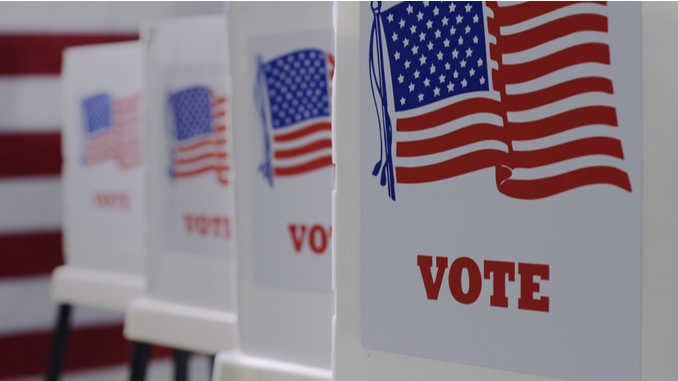
This November, voters will decide on a resolution amending the Arizona Constitution to further prevent noncitizen voting and foreign influence in elections.
House Concurrent Resolution 2001 passed the legislature along party lines last week. The Arizona Secure Elections Act, also known as the FAST Election Results Act, will appear on the general election ballot.
The resolution would amend the state constitution to repeat an existent declaration that only U.S. citizens may register and vote in Arizona elections. The resolution would also ban foreign nationals from contributing or expending money or anything of value to influence an Arizona election, and would require voters to show valid government-issued proof of identity for all voting methods prior to casting their ballot — including mail voting.
Republican State Sen. Alexander Kolodin (LD3), the resolution sponsor and secretary of state candidate, issued a press release describing the legislation as an opportunity for voters to establish better safeguards for elections by enshrining these proposed rules in the state constitution.
“For years, Arizonans have watched the same election problems repeat while trust in the system has eroded,” said Kolodin. “Election laws should be written by Arizonans, not dictated by bureaucrats, activists, or outside interests.”
Democrats and Republicans argued over the impact of the resolution during the Senate vote last Friday.
Senate Democrats criticized the legislation as redundant at best and a fatal threat to voting by mail at worst.
State Sen. Lauren Kuby (D-LD8) claimed the resolution was a “backdoor attempt” to end mail-in voting. Kuby accused Republicans of being stooges for President Donald Trump’s election policy preferences at the expense of Arizona voters.
“It’s disturbing to see the legislature put the desires of a sad, desperate man above their very own constituents,” said Kuby.
State Sen. Priya Sundareshan (D-LD18) called the bill “unnecessary” and filled with “vague” language, saying the state constitution’s present voter ID and citizenship proof requirements were enough.
State Sen. Analise Ortiz (D-LD24) said the bill was “voter suppression” and “a state-level SAVE Act.” Ortiz argued the resolution would enable lawmakers to repeal mail-in voting in the future. Ortiz claimed Trump was “plotting to meddle in the 2026 midterms.”
“The real goal of this is to make it harder for eligible voters to vote,” said Ortiz. “Our democracy is being systemically dismantled across the country.”
State Sen. Mitzi Epstein (D-LD12) said the legislation’s declaration that only citizens were eligible to vote was not only redundant and unnecessary, but that the other provisions would create an undue burden on mail-in voters.
“This bill opens the door to no more mail-in ballots,” said Epstein.
State Sen. Theresa Hatathlie (D-LD6) claimed the resolution was a template to “lay the groundwork for Project 2025.”
Republicans countered that existing voter registration requirements already require proof of citizenship, and that voters already anticipate security measures when casting ballots.
Majority Leader John Kavanagh (R-LD3) accused Democrats of “confusing the issue” and misleading voters.
“You’re only scaring people and creating a false argument,” said Kavanagh.
State Sen. David Farnsworth (R-LD10) said an increasing number of Arizonans have lost faith in their elections, and that this resolution was the means of remedying that sentiment.
“Our motive is not to make it more difficult to vote, but to make our elections more secure so that all of us can have confidence that those who vote their votes will be counted properly, and that those who win the most votes will be elected,” said Farnsworth.
State Sen. Jake Hoffman (R-LD15) argued that the “overwhelming majority” of Arizonans support these proposed provisions within the resolution.
AZ Free News is your #1 source for Arizona news and politics. You can send us news tips using this link.
Arizona’s top Democrats from Congress on down are coordinating to pass a ballot measure that would enshrine relaxed voter ID laws in the Arizona Constitution.
A coalition of top Democrats joined on a livestream earlier this week for a launch of the Protect the Vote Arizona Act political action committee: Reps. Greg Stanton (D-AZ-04), Yassamin Ansari (D-AZ-03), and Adelita Grijalva (D-AZ-07); Secretary of State Adrian Fontes; Attorney General Kris Mayes; and the minority leaders for the Arizona House and Senate, Rep. Oscar De Los Santos (D-LD-11) and Sen. Priya Sundareshan (D-LD-18).
The Democrats styled the ballot measure in their public comments as focused primarily on keeping mail-in voting as an option in Arizona. However, most of the ballot measure focuses on undoing the strictness of voter ID laws and ensuring that stricter voting requirements may not come to pass.
The Protect the Vote Arizona Act would require the acceptance of any IDs with the photograph, name, and address of an individual — not just limited to any government-issued form of identification.
The act also prohibits limiting allowable forms of identification to photo IDs, and requires acceptance of IDs so long as election workers can’t determine “on its face” that the identification provided had expired.
The act would also require the acceptance of “any two forms of identification that bear the name and address of the elector.” The non-exhaustive examples of valid voter ID included utility bills or bank or credit union statements dated within ninety days of the election, or any mailing labeled “official election material.”
Even if an individual doesn’t provide valid identification, the law would require that individual be allowed to cast a provisional ballot regardless. According to the ballot measure, that provisional ballot wouldn’t count unless the elector provides any of the myriad forms of ID to their county elections officer within a certain time frame.
Beyond identification laws, the act would prohibit any policies or laws that would “burden” voting, not just those that restrict or curtail voting. One of those measures would concern mail-in ballots. The act proposes to enshrine mail-in ballots within the Arizona Constitution.
Help us protect early voting and mail-in voting in Arizona! Join me for a ‘Protect the Vote’ livestream this evening to learn more about this key Arizona ballot initiative. We must count and protect every single vote 🗳️📩 pic.twitter.com/uqkqmfYOue
Ansari said in the livestream that Democrats need to gather 500,000 signatures by July 2 to get their constitutional measure on the ballot this November. The Protect the Vote Arizona website said a lower number will be needed: about 384,000 signatures.
Ansari estimated that they’ve already collected about 50,000 signatures in recent weeks.
During conversations on the ballot measure, Grijalva agreed with a claim that the SAVE Act and similar efforts to require voter ID were rooted in racist efforts to prevent non-whites from voting.
“We have to give people hope that there is a way out of this,” said Grijalva. “We know that our message is resonating with people.”
Other top Democrats on the livestream included Democratic Reps. Alexandria Ocasio-Cortez (NY), Greg Casar (TX), Jasmine Crockett (TX), Maxwell Frost (FL), and Robert Garcia (CA).
The political action committee behind the ballot measure, Protect the Vote Arizona, claimed to have had no funding or expenditures since its launch in January through the end of March.
Key members behind the ballot measure are Maritza Miranda Saenz, a lobbyist with Lumen Strategies, and Dacey Montoya, Gov. Katie Hobbs’ treasurer and a leading dark money handler for Arizona Democrats (see: “The Money Wheel”).
AZ Free News is your #1 source for Arizona news and politics. You can send us news tips using this link.
Arizona Senate lawmakers passed legislation on Monday that would explicitly prohibit the use of Sharia law in state courts, a proposal supporters say clarifies existing statutes governing the application of foreign law in judicial proceedings.
The measure, Arizona Senate Bill 1018, would amend Arizona law to specify that the definition of “foreign law” includes Sharia law, the religious legal tradition associated with Islam.
Under current Arizona law, state courts are prohibited from enforcing foreign laws when doing so would violate the U.S. Constitution, the Arizona Constitution, or state statutes.
SB 1018 would revise that framework by explicitly naming Sharia law within the statute governing the application of foreign law in state courts and by expanding the definition to include any legal system outside U.S. federal or Arizona law.
Supporters of the proposal say the measure is intended to clarify that religious or foreign legal codes cannot override constitutional protections in Arizona courts.
The legislation was introduced by State Sen. Janae Shamp (R-LD29) and passed the Senate floor in a 17-12 vote after receiving committee approval.
Opponents say the bill singles out a specific religious legal tradition and could stigmatize Muslim communities in the state. Senate Minority Leader Priya Sundareshan (D-LD18) told AZ Capitol Times that the bill specifically referenced the practices of female genital mutilation, forced marriage, and “domestic violence or spousal abuse that is justified by cultural, religious, or family authority,” stating that they could be considered related to some followers of Islam.
She told the outlet, “So really, what this bill does is it singles out a group of people, and it singles out a religion for harassment and discrimination merely by the fact that we are talking about this.” She added, “It is targeted discrimination. It is asking for more harassment and discrimination.”
In a statement to the California Globe, Sen. Shamp said, “This bill aims to defend American rights and ensure our legal system remains clear and consistent.”
She explained, “Sharia law is a religious legal system that, in practice, has been used to justify unequal treatment of women, restrictions on free speech, and punishment for religious dissent — all of which conflict directly with the U.S. Constitution. Allowing any foreign or religious law into our courts creates dangerous ambiguity. This legislation sends a strong message: in America, the Constitution takes precedence.”
A broader national trend has seen several states pass laws limiting the use of foreign or religious legal systems in court proceedings over the past decade. Measures prohibiting the application of Sharia law or other foreign legal codes have previously been adopted in 10 other states—Alabama, Arkansas, Louisiana, Kansas, Mississippi, North Carolina, Oklahoma, South Dakota, Tennessee, and Washington —according to the National Conference of State Legislatures.
Arizona already has statutory restrictions on foreign law in judicial decisions, and critics of SB 1018 argue the proposal is largely symbolic because those protections already exist. However, Sen. Hildy Angius (R-LD2) pushed back on the objection, telling the Times, “But that’s not the point,” adding that the bill is designed to address the judicial process after the law has already been broken.
— Capitol Media Services 📢 Telling it like it is (@azcapmedia) March 4, 2026
“This amendment addresses whether any external legal system may ever be invoked to justify, excuse, or pressure conduct that violates Arizona law,” Angius said. “Clarifying legal supremacy is not redundant. It is preventative.”
She also rebuked claims that the bill targets the Islamic faith, saying, “Sharia is a legal system. This amendment does not judge faith. It clarifies authority.”
The legislation is continuing through the Arizona Legislature and would require approval by the House of Representatives before being sent to Governor Katie Hobbs for consideration, where its adoption outlook is grim. Since taking office in 2023, Gov. Katie Hobbs has vetoed more than 390 bills passed by the Republican-led Legislature, more than any governor in Arizona history.
The Arizona Senate approved legislation to facilitate coordination between law enforcement and federal immigration agents.
SB 1055 passed 16-11, with all Republicans in support and all Democrats against.
The bill requires law enforcement to notify either Immigration and Customs Enforcement (ICE) or Customs and Border Protection (CBP) immediately following the arrest of an individual who is discovered to be an illegal alien.
The bill sponsor, Sen. Wendy Rogers (R-LD7), says this will give law enforcement the sense of security they deserve to appropriately process individuals with deportation orders. Rogers said her legislation was necessary to support safe neighborhoods and consistent enforcement within public safety.
“When someone is under arrest and unlawfully present in our country, law enforcement should never have to hesitate, second-guess, or worry about whether doing the right thing will jeopardize their career,” said Rogers. “For too long, unclear policies and political pressure have created confusion that undermines public safety and puts officers in an impossible position.”
If you’re an arrested illegal… you get turned over to ICE! Arizona Senate passed my SB1055 on this. Democrats absolutely melted down. It’s LAWFUL! pic.twitter.com/8asas0ZEv0
Given the partisan nature of the bill, it’s highly likely the legislation will die under Gov. Katie Hobbs’ veto pen should it pass the House.
The first to speak against the bill during Monday’s floor vote was Assistant Minority Leader Catherine Miranda (D-LD11). She said the bill wasn’t needed. Miranda discouraged the idea that Arizona law enforcement needs to support ICE in deportation proceedings, since ICE agents were “terrorizing” communities across the nation.
“[SB1055 is] unnecessary and strives to increase fear in communities and empowers all law enforcement to act as ICE agents,” said Miranda.
During the committee hearing on the bill last month, Miranda said she carries all of her sensitive personal documents in her car — her birth certificate, Social Security card, and passport — just in case law enforcement questions her citizenship.
Sen. Sally Ann Gonzales (D-LD20) claimed the bill would cause racial profiling.
“Our communities are already, you know, not feeling well, not wanting to go to work, school, or otherwise because of what is happening in our communities with the federal immigration process that’s happening in and around our communities,” said Gonzales.
Sen. Analise Ortiz (D-LD24) called it an “anti-public safety bill” and “cruel.” Ortiz said the detainment facilities were “death camps.” She opposed the concept of deporting illegal aliens
“It is going to invite a violent, armed paramilitary force to have more unnecessary interactions with our communities,” said Ortiz. “ICE out of Arizona, ICE out of our communities.”
Similarly, Sen. Lauren Kuby (D-LD8) said ICE was too dangerous and relying on poorly trained and violent forces.
Majority Leader John Kavanagh (R-LD3) said it was effective government to have local law enforcement cooperating with federal law enforcement. Kavanagh lamented the likely veto from Hobbs.
“People who are accused of being here illegally need to be brought to justice,” said Kavanagh. “We shouldn’t be trying to hamper [the lawful execution of our laws].”
Sen. Jake Hoffman (R-LD15) reminded his colleagues across the aisle that the bill impacts individuals who were already arrested for committing a crime and in custody.
“It’s absurd that you would not want the criminals who come over illegally removed from this country. Apparently it’s just lawlessness run amok in this chamber. We are hearing [Democrats] advocate for not turning over illegal alien criminals to federal immigration law enforcement,” said Hoffman.
As a response to Democratic lawmakers citing the Minnesota deaths of anti-ICE activists Alexi Pretti and Renee Good, Hoffman read off a handful of the names of individuals murdered by illegal aliens, which prompted an outburst from the audience.
Minority Leader Priya Sundareshan (D-LD18) dismissed Hoffman’s list of victims, saying all illegal aliens who committed those crimes were facing charges unlike the officers involved in the Pretti and Good deaths. Sundareshan took issue that individuals arrested for civil violations, not just criminal violations, may face deportation.
“In this country we are innocent until proven guilty,” said Sundareshan.
Sen. Mitzi Epstein (D-LD12) said this would allow “perfectly innocent” individuals to be arrested and attacked.
“ICE has become an agency of thugs who do not follow the law,” said Epstein. “I am afraid of ICE agents.”
AZ Free News is your #1 source for Arizona news and politics. You can send us news tips using this link.