How much do you like to walk in 110-degree heat? If you’re a resident of the city of Phoenix, you may need to start getting used to it if the city council gets its way.
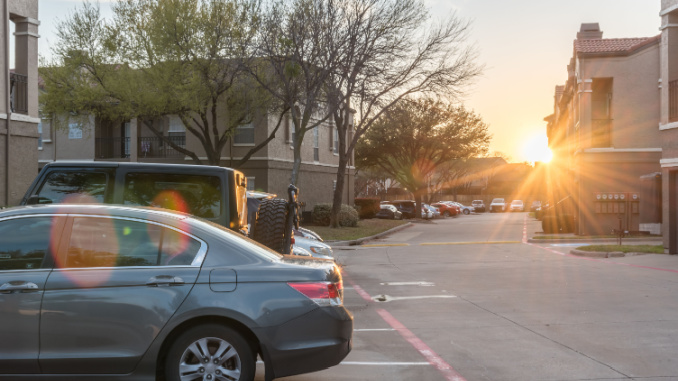
A proposed ordinance in Phoenix is looking to significantly reduce the minimum number of parking spaces it requires for apartments. Currently, Phoenix requires a minimum of 150 parking spaces for every 100 one or two-bedroom apartments. Under the proposed ordinance, that number would decrease to 125 spaces. But that’s not the end of it. For new affordable apartment complexes near light rail stations, the requirement for most would be reduced to zero! Yes. Zero parking spaces at an apartment complex. Have you caught on to their agenda yet?
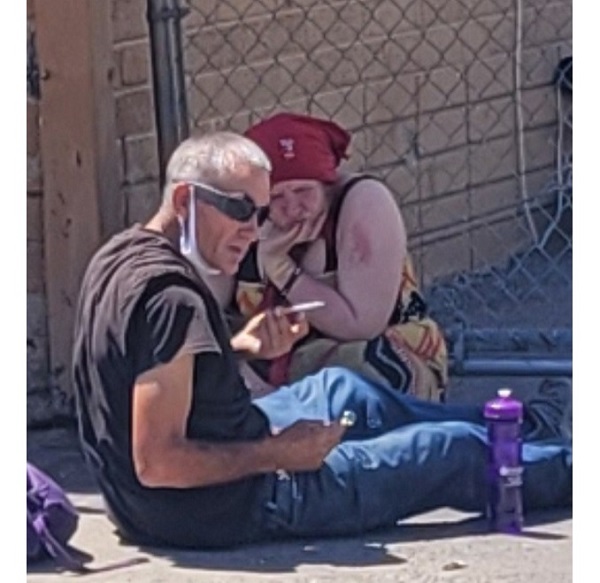
If you’ve been keeping score, you already know that—in just this year—climate change zealots have been seeking to prohibit gas stoves; put limits on things like lawn and garden equipment, motorized boating, and water heaters; and ban the internal combustion engine. Now, this latest attempt to reduce parking spaces makes it clear. They want to force you out of your air-conditioned car to walk in 110-degree heat with your reward being to wait for a bus or light rail. But that’s not all…
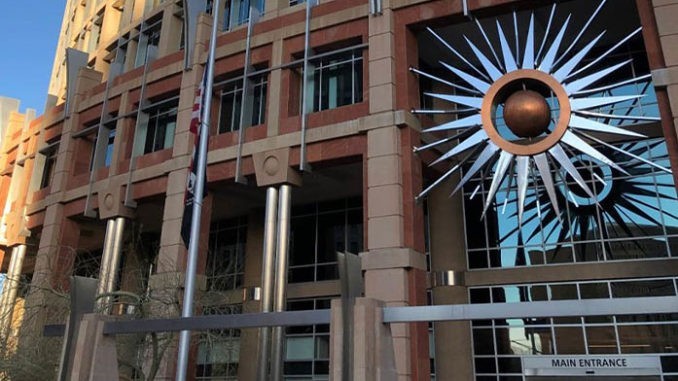
Phoenix City Council declared Indigenous Peoples’ Day an official city holiday, replacing the traditional Columbus Day commemoration.
The holiday, which will take place annually on the second Monday in October, was approved by the council during Wednesday’s meeting.
“Phoenix is proud to recognize the roots on which our city was founded,” stated Mayor Kate Gallego.
Yesterday, the City Council voted to make Indigenous Peoples' Day an official city holiday! Phoenix is proud to recognize the roots on which our city was founded.
The city’s resolution falls in line with the recent precedent set by President Joe Biden. The president first declared the replacement of Columbus Day with Indigenous Peoples’ Day in 2021.
Biden’s resolution followed up on a memorandum honoring Native Americans that he issued within the first week of his inauguration. The 2021 resolution declared that Indigenous communities had contributed greatly to American history and culture, and had been disproportionately impacted by the COVID-19 pandemic. Biden’s resolution also commended Native Americans for having some of the highest rates of COVID-19 vaccinations.
“History demonstrates that Native American people — and our Nation as a whole — are best served when Tribal governments are empowered to lead their communities and when Federal officials listen to and work together with Tribal leaders when formulating Federal policy that affects Tribal nations,” wrote Biden. “The Federal Government has a solemn obligation to lift up and invest in the future of Indigenous people and empower Tribal Nations to govern their own communities and make their own decisions.”
Biden’s presidential proclamation exists without holiday privileges like bank closures, however. Only a congressional act could establish Columbus Day as an official federal holiday.
Former President Franklin D. Roosevelt announced Columbus Day a national holiday in 1937 to commemorate Italian explorer Christopher Columbus’ landing in the Americas on October 12, 1492, attributed as the discovery of the “New World,” as the Americas were then known.
Christopher Columbus garnered controversy in recent decades for enslaving some of the Native Americans he encountered, as well as the perspective that he encroached and overtook land that wasn’t rightfully his. Efforts to replace Columbus Day with Indigenous Peoples’ Day trace back to post-Sexual Revolution movements. In 1977, a United Nations-sponsored conference combating discrimination against Native Americans discussed replacing the holiday.
It wasn’t until the 1990s that cities and states began to recognize Indigenous Peoples’ Day over Columbus Day.
While former Gov. Doug Ducey signed a proclamation in 2020 announcing Columbus Day as Indigenous Peoples’ Day, Phoenix is the first Arizona city to celebrate Indigenous Peoples’ Day. However, Ducey didn’t renew the proclamation by signing another in 2021 or last year.
I’m beyond excited that Gov. Doug Ducey has signed a proclamation declaring October 12th as #IndigenousPeoplesDay in Arizona! I fully support this at the local, state, and federal level, and I’m happy to share we will also recognize Indigenous People’s Day in #Tempe this year! pic.twitter.com/OtCpUrs10B
Some local leaders across the state, such as Pima County Recorder Gabriella Cázares-Kelly, have wished to see greater local support for the holiday. The recorder toldKOLD in 2021 that only her husband, who isn’t Native American, was able to take the day off.
“They had school, I had work, the only person in our household who had today off for Indigenous Peoples’ Day, is my husband, who is not Indigenous,” said Cázares-Kelly.
My husband has Indigenous Peoples' Day off. I'll be working and our kids have class. Our kid,"Wait…So the only non-Indigenous person in this household has Indigenous Peoples' Day off?!" Lol Smh. Next year, I'm taking it off. #IndigenousPeoplesDay#NotAFederalHolidayYet
Downtown Phoenix’s residents experienced a glimmer of hope in the ongoing homeless crisis last month after a court declared the city to blame. If the city doesn’t appeal the court’s order, it may be the end of the massive encampment known as “The Zone.”
The decision flies in the face of the precedent set by other cities: plans and spending that yield no favorable results, ultimately forcing the residents to learn to live with the crime and squalor. Yet, Phoenix may no longer be resigned to the same fate borne by most other major cities. Downtown property and business owners were vindicated in their belief: city officials’ plans, spending, and promises alone don’t qualify as results.
Requiring results of the city could mean The Zone may cease to exist in the near future — restoring a square mile of the current wasteland of city-sanctioned slums into a healthy business district — but only if the city of Phoenix decides to follow through on the court-ordered action to resolve the homeless crisis. Cleaning up The Zone would mean finding shelter and services for around 800 homeless residing in the area, according to a census conducted by the Human Services Campus late last month.
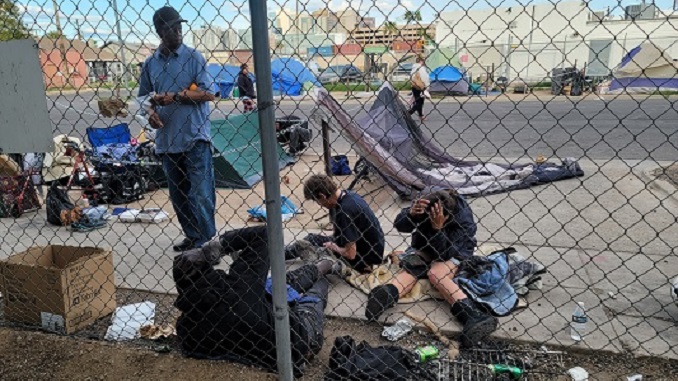
Homeless sit outside a business in The Zone.
The first bout of legal relief came for The Zone’s residents and business owners after the Maricopa County Superior Court ruled last month that the city of Phoenix was at fault for The Zone. The court ordered the city to show that it’s taking “meaningful steps” toward fixing The Zone. They have until July 10 to do so, with a trial date scheduled for June.
The ruling came days after the city of Phoenix promised to finally meet to fix The Zone, a promise prompted by back-to-back murders in the encampment.
Vice President for Legal Affairs at the Goldwater Institute, Timothy Sandefur, who submitted an amicus brief in the case, told AZ Free News that this ruling was a good first step toward remedying The Zone — but that the city has a ways to go.
“I think this is a first step and a very important one,” said Sandefur.
Sandefur said that the superior court indicated the best next steps for the city would be to build structured campgrounds and establish treatment programs, rather than continue with their current “housing first” approach.
However, notice of a settlement in a separate, federal case issued recently may complicate matters in finally getting the city of Phoenix to fix The Zone.
In the Arizona District Court case, the ACLU and the city held mediation about three weeks ago.
Details of the settlement weren’t made public. The Phoenix City Council plans to convene April 18 in an executive session — a meeting not open to the public — to discuss the terms of the settlement. At some point after, the Phoenix City Council will announce the settlement terms during a public meeting.
Of note, the city attempted to dismiss the superior court case — but not the federal case. The city also spent just shy of $100,000 fighting the superior court case.
Ilan Wurman, another lawyer on the lawsuit against the city, told AZ Free News that the court’s order to fix The Zone was thorough to the point where he imagined it would be difficult for the city to fight it.
“The court’s ruling is such a thorough victory for the business and property owners that it will be very hard for the city to overcome it at a full trial on the merits,” said Wurman. “We hope the city does the right thing and considers a settlement or simply follows through on the court’s instructions — that will save a lot of expense to taxpayers and it will be better for the unsheltered community as well.”
In remarks to the press, the city stresses that it has allocated around $140 million to solve the homeless crisis. However, there’s a difference between commitment and spending. Of the $120 million in COVID-19 relief funds received to address the homeless crisis, the city has only spent about 10 percent.
Of what little the city has spent for the homeless crisis, the Maricopa County Superior Court assessed that none of this spending has actually mitigated the crisis.
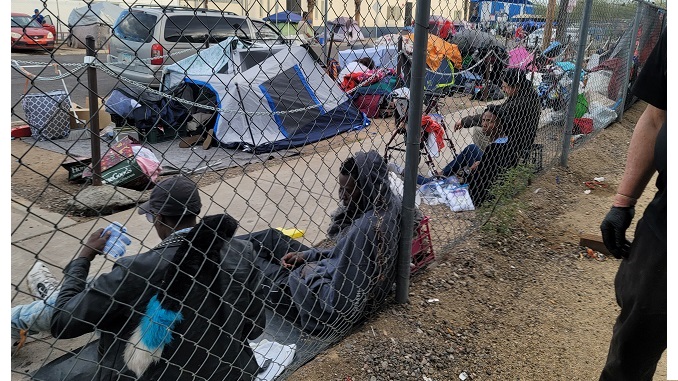
Homeless use drugs inside Phoenix’s sprawling encampment known as The Zone.
“With few exceptions, the action items about which city representatives testified centered around the creation of more bureaucracy, additional staff positions, and obtaining additional funding for programs to vaguely address homelessness in general,” stated Judge Scott Blaney. “The Court received very little evidence — if any — that the City intends to take immediate, meaningful action to protect its constituent business owners, their employees, and residents from the lawlessness and chaos in the Zone.”
However, in a recent interview, Mayor Kate Gallego indicated that the city was attempting to follow through on a “housing first” approach, and claimed that the city was “working very hard” to fix the homeless crisis.
As AZ Free News previously reported, “housing first” — also referred to as “permanent supportive” or “affordable” housing — holds the theory that the homeless will choose to seek employment, become financially responsible, and receive mental health care and/or substance abuse treatment if food and housing are provided. The theory also posits that enabling the homeless to choose their housing and support services will make them more likely to remain in that housing and stick with self-improvement initiatives.
Gallego shared that the city was working on launching seven new shelter options in partnership with various organizations, and that the city is hoping to receive additional help from both the state and federal government. She mentioned that she would meet with the Maricopa County Board of Supervisors.
Gallego disclosed that she recently spoke with Gov. Katie Hobbs about the homeless crisis — a conversation that had last occurred during Hobbs’ inauguration week in January. The mayor said that Hobbs was looking for additional resources to provide the city.
“Residents should feel confident that they’re going to see changes,” said Gallego. “The message we want to send to the public is that we recognize it’s a problem and we want to solve it.”
When questioned, Gallego didn’t directly deny that the city wouldn’t appeal the superior court’s decision.
In another interview, Gallego claimed that adequate law enforcement was taking place in The Zone. Gallego’s claim conflicted with the various investigative reports and witness accounts that depicted minimal law enforcement in The Zone.
“We treat every member of our community the same when they commit a crime. We want to be consistent and to enforce breaking the law,” said Gallego. “If you commit a crime, it is the same regardless of your housing status.”
However, the “Gaydos and Chad Show” testified to witnessing a myriad of criminal activity during a recent excursion in The Zone — including drug use, public defecation and urination, and prostitution — but not seeing any police presence. In response, Gallego claimed the city’s police were “too aggressive” when handling the homeless. The mayor cited the Arizona District Court case against the city as justification for her claim. However, that lawsuit concerned whether the city could enforce camping and sleeping bans, as well as whether the city had a right to seize or throw away items from homeless encampments as part of cleanup efforts. The lawsuit does not address police response to criminal activity.
Watch: The Zone – Homelessness and Crime Rampant in Phoenix
Corinne Murdock is a reporter for AZ Free News. Follow her latest on Twitter, or email tips to corinne@azfreenews.com.
A locked door will no longer be a barrier to first responders assisting the elderly or those with special needs.
Earlier this month, the Phoenix City Council launched a program to provide lock boxes for the elderly and those with special needs. Without an access point like a lock box, first responders like firemen may be forced to break into homes to provide assistance, potentially breaking doors and damaging the property in the process.
Firefighters from @PHXFire & @ScottsdaleFire safely evacuated two elderly homeowners during a 2nd Alarm House Fire near 44th St & McDonald Dr. On arrival crews found heavy fire and smoke coming from the roofline of a large residential home. pic.twitter.com/14jZvAa0cT
The council members approved the program unanimously. The city will launch a pilot version of the program in District 1 prior to work out any challenges and hone in logistics.
Councilwoman Ann O’Brien explained that the program would prevent significant property damage from occurring to those requiring firemen assistance. It comes at no cost to the city.
Other cities such as Glendale and Scottsdale have already coordinated with private entities to roll out similar programs.
The Phoenix Realtors donated 100 lock boxes to establish the program, called the “Residential Lock Box Access Program.” The Phoenix Fire Department will oversee the program, maintaining a database of installations, ensuring the Phoenix Fire Regional Dispatch Center codifies the data in a premise alter for responding units.
Those interested in the lock box program may contact the Phoenix Fire Department’s Community Involvement Section.
#PHXPD800Patrol Officers were called to a check on an elderly man (85) who missed his Dr. appointment. When they arrived, they saw he had no electricity, no food, no AC, as well as seven dogs.
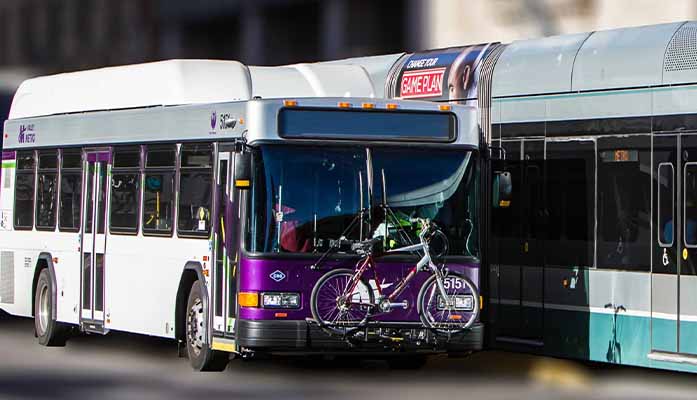
The Phoenix City Council unanimously approved a plan to spend $102 million to replace its bus fleet with electric vehicles. Outgoing councilmember Sal DiCiccio wasn’t present.
Over $86.7 million (85 percent) comes from federal funding; over $15.3 million (15 percent) comes from regional funding. The initiative is part of the council’s goal of achieving a total zero-emissions bus fleet by 2040. The current fleet consists of 500 buses.
The city will procure a variety of electric buses: battery, hybrid, and hydrogen fuel cell. The council waived standard competition in its procurement process to award the five-year contract due to supply chain issues; reportedly, the city learned it couldn’t acquire its first round of zero-emissions buses until after 2025, well after its planned timeline. The city selected a supplier who could meet their timeline: the Washington State Transit Bus Cooperative.
Mayor Kate Gallego indicated that their goal of true zero-emissions would come from future negotiations with power companies. Gallego noted that the plans to create an electric charging grid launched by the Biden administration and state would facilitate their efforts.
“It cannot be zero-emission if the power going in is not zero-emission,” stated Gallego.
Councilwoman Yassamin Ansari noted that this plan put the city on the same timeline to zero-emissions as New York City and California. Ansari promised that the council would accelerate their plan even further once the supply chain stabilizes and inflation costs reduce.
Ansari credited the Sierra Club, Arizona Public Interest Research Group (PIRG), Southwest Energy Efficiency Project (SWEEP), American Lung Association (ALA), and CHISPA AZ for allowing their plan to come to fruition.
“We will only be ordering hybrid and zero-emission buses after 2024, which will completely then end our dependence on fossil fuel transit in terms of new purchases,” stated Ansari. “This is a public health win, a quality of life win, a climate win, and a very big win for Phoenix.”
Public comment came from two organizations that advocated heavily for the $102 million expenditure:
Joanna Struther, ALA senior director of advocacy, cited ALA data ranking Phoenix as the fifth-most polluted city in the nation. Struther stated that the city’s air pollution presented a severe harm to circulatory systems.
The ALA claimed that electrification of city fleets would result in 38,000 less asthma attacks and $15.1 billion in public health benefits. ALA asserted that its polling revealed 70 to 80 percent support among Arizonans for electric vehicles.
PIRG’s executive director, Diane Brown, noted that not only would residents benefit from improved air quality from bus electrification, but the city would increase its access to federal funding.
The city rejected a plan last year to renew their current fleet powered by fossil fuels for another five years.
Corinne Murdock is a reporter for AZ Free News. Follow her latest on Twitter, or email tips to corinne@azfreenews.com.