by Staff Reporter | Jan 10, 2026 | News
By Staff Reporter |
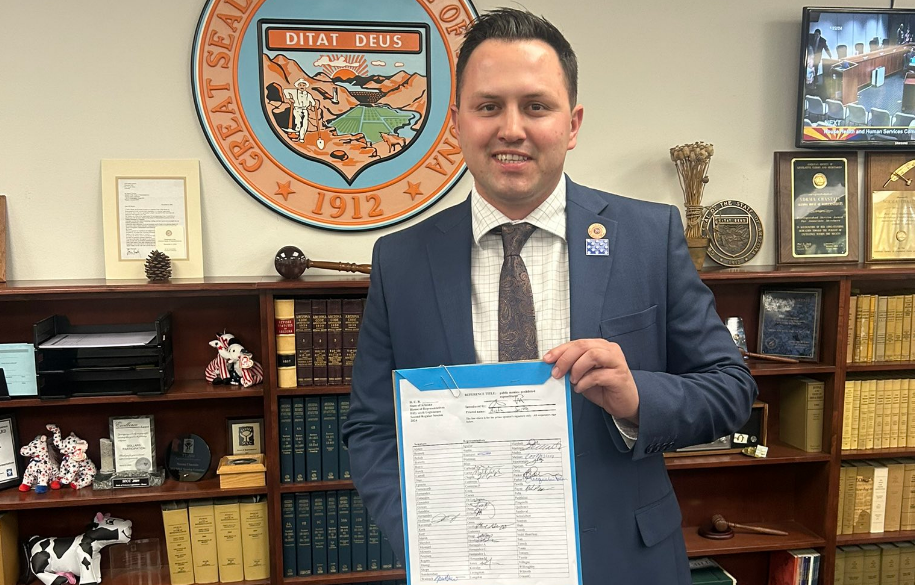
As punishment for forging nomination petition signatures, former lawmaker Austin Smith received probation and a five-year ban on running for office.
Smith received his sentence on Tuesday, which also included a $5,000 fine with a 10 percent surcharge and two years of supervised probation.
The ex-lawmaker entered a plea deal admitting guilt in November to attempted fraudulent schemes, an undesignated offense, and practices and illegal signing of election petitions, a misdemeanor. Smith admitted to forging over 100 signatures.
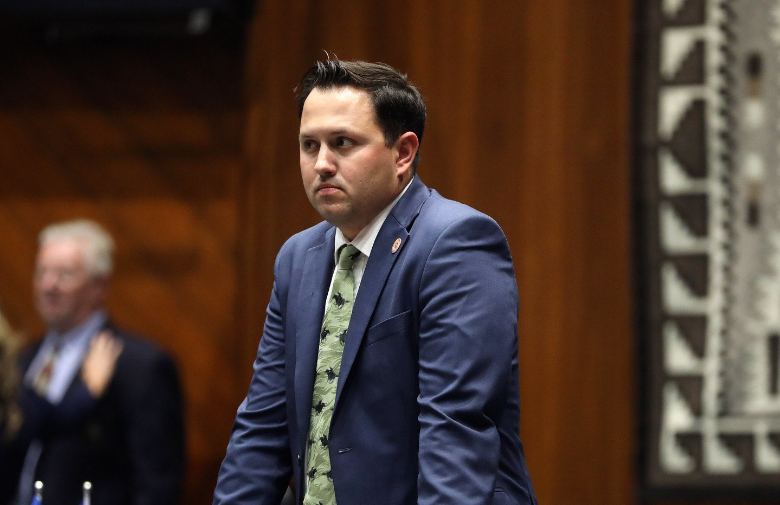
Smith was a state representative for the 29th district from 2023 to 2025. He was also formerly senior director of Turning Point Action and former chairman of Arizona Young Republicans Federation. Smith stepped down from Turning Point Action and suspended his reelection bid in 2024 after the signature forging allegations against him emerged.
It was one of Smith’s constituents, a Democratic voter named James Ashurst, who filed the complaint in the Maricopa County Superior Court in 2024 against the former lawmaker alleging signature forging. Ashurst’s complaint claimed that over a dozen petition sheets bore the same handwriting from purportedly different voters.
The complaint also included declarations from individuals listed on Smith’s petition sheets swearing they never signed the ex-lawmaker’s petition.
Initially, Smith denied wrongdoing in lengthy public statements posted to since-deleted or privatized social media accounts. Smith characterized the allegations against him as “coordinated” inventions of “two Democratic activists” involved in the political groups within his district.
“It seemed ludicrous because Republicans trying to get on the ballot don’t seek Democrat signatures and would have no reason to forge Democrat signatures, since they don’t count,” said Smith at the time.
The complaint didn’t move forward after Smith dropped out of the race. Tuesday’s outcome came out of prosecution from Democrat Attorney General Kris Mayes.
During Tuesday’s sentencing, Smith’s attorney, Kurt Altman, made an unsuccessful petition for Smith’s probation term to be reduced to one year. Altman said Smith was “mortified” by his decision to forge signatures.
“He’s embarrassed by the lapse in judgment and can be assured by this court he’s not gonna be back here, he’s not gonna have any issues with probation and he’s not gonna run for office again,” said Altman.
Altman also described Smith’s finances as incapable of handling a surcharge in addition to the fine, noting that the ex-lawmaker recently launched an agriculture business and had a child.
Tuesday’s sentencing reflected the outcome of a plea deal which dropped most of the charges against him, over a dozen including several felonies. Smith was indicted last summer.
Attorney General Mayes added in a press release announcing Smith’s sentencing that Smith admitted to attempting to deceive the secretary of state’s office.
“If you try to illegally manipulate Arizona’s elections or mislead Arizona voters, you will be held accountable under the law,” said Mayes. “There are real consequences for cheating the system.”
AZ Free News is your #1 source for Arizona news and politics. You can send us news tips using this link.
by Matthew Holloway | Jun 12, 2025 | News
By Matthew Holloway |
Democrat Attorney General Kris Mayes announced on Tuesday the indictment of former Arizona State Representative Austin Smith (R-LD29) by an Arizona Grand Jury on 14 counts related to alleged fraudulent candidate signatures. According to the indictment, Smith faces both felony and misdemeanor counts.
The west valley Republican and former senior director of Turning Point Action served his first term in the Arizona House of Representatives from 2022-24 before withdrawing from the 2024 election when a legal challenge against his petition was filed. He also resigned from Turning Point Action at that time.
According to Votebeat’s Jen Fifield, Smith was still listed on Turning Point Action’s website as a director until Tuesday morning, listing the role on his X profile and now-deleted LinkedIn profile as well.
In a press release, Mayes said, “The defendant has been charged with multiple felonies and misdemeanors, including deceiving the Secretary of State’s office with petitions containing forged elector signatures and signing names other than his own to the nominating petition.”
He is charged with one count of Fraudulent Schemes and Practices, a Class 5 Felony, three counts of Presentment of False Instrument for Filing, Class 6 Felonies, and ten counts of Illegal Signing of Election Petitions, Class 1 Misdemeanors. Under ARS 13-702 and 13-802, Smith could face a maximum of 5.5 years in prison if found guilty on all four felony counts, and a fine of up to $2,500 per count for the ten misdemeanors totaling $25,000.
In a two-page statement posted to X, Smith described the allegations against him as being “alleged by two Democrat activists who were officers in the District 29 Democratic organization.” He added, “It seemed ludicrous because Republicans trying to get on the ballot don’t seek Democrat signatures and would have no reason to forge Democrat signatures, since they don’t count.”
He also characterized the allegations as a “coordinated attack,” that “included press releases and social media activity and other things that made it clear that this was a well-organized effort.”
He also made it clear at the time that he expected an indictment to come, writing, “This was a very intense effort to ‘get me’ and I needed to be prepared to spend tens of thousands of dollars to defend myself, not only against the civil elections matter, but most likely against some sort of criminal investigation that would be launched by those on the left who are unhappy with my politics.”
After Smith dropped out of the 2024 election, the lawsuit against him did not move forward according to Votebeat.
However, an investigation launched by Mayes against one of her most vocal critics in the Arizona legislature, resulted in the June 2nd indictment just over a year later.
Matthew Holloway is a senior reporter for AZ Free News. Follow him on X for his latest stories, or email tips to Matthew@azfreenews.com.
by Terri Jo Neff | Jul 27, 2022 | News
By Terri Jo Neff |
A judge will decide next week whether Arizona voters will see an initiative on the Nov. 8 General Election ballot to approve what the Arizona Free Enterprise Club calls “radical” election procedure changes.
Judge Joseph Mikitish of the Maricopa County Superior Court has set Aug. 5 for a hearing on an Order to Show Cause as to why he should not grant a request by the Arizona Free Enterprise Club (AFEC) to invalidate more than half the signatures submitted earlier this month on initiative petitions for the proposed Arizonans for Free and Fair Elections Act (AFFE Act).
Mikitsh’s hearing stems from a lawsuit filed July 22 by AFEC, which argues the AFFE Act would upend Arizona’s election administration and voter registration laws, curtail current safeguards with the initiative and referendum process, and reduce candidate contribution limits while promoting more taxpayer subsidies to certain ‘Clean Elections’ candidates.
According to AFEC’s lawsuit, the political committee Arizonans for Free and Fair Elections (ADRC Action) filed an application in February with Arizona Secretary of State Katie Hobbs for a serial number necessary to commence a petition drive in hopes of getting the Arizonans for Free and Fair Elections Act on the statewide ballot for the 2022 General Election.
Then on July 7, Hobbs was presented with nearly 52,000 petitions sheets containing a purported 475,290 signatures of qualified electors, of which at least 237,645 must be deemed valid to get the AFFE Act on the general election ballot.
But state law requires that all circulators who are not Arizona residents along with all paid circulators regardless of residency must register as circulators before they may begin collecting petition signatures. The circulators must also affix their unique circulator registration ID number to each petition they circulate.
AFEC contends, however, that more than 1,000 of the circulators who collected signatures for the AFFE Act initiative were non-compliant with at least one state election law. Some of the compliance issues involved incomplete registration forms while other circulators allegedly did not write their “full and correct registration number on both sides of the sheet,” as required by law.
The lawsuit seeks a court order requiring Hobbs to disqualify all petition signatures obtained by circulators who were not registered in compliance with state law. It also asks Mikitish to bar the state’s 15 county recorders from verifying any signatures on petitions in which the circulator’s registration number was not properly affixed.
“Petition signatures obtained by individuals who failed to strictly comply with
one or more provisions of applicable law are legally insufficient,” the lawsuit states. “Injunctive remedies are necessary to prevent irreparable injury to the
Plaintiffs and to ensure that the Defendant fully and effectively discharges the duties imposed upon her by state law.”
The lawsuit does not supply a tally of the disputed signatures, but AFEC’s Executive Director Scot Mussi said Monday that well over half of the signatures submitted by ADRC Action were collected in violation of Arizona law.
“That should be more than enough to invalidate this initiative,” Mussi said.
Among the provisions of the Arizonans for Free and Fair Elections Act is one which would restrict legislative election audits such as the one Senate President Karen Fann approved last year. It would also allow same-day voter registration
In addition, it would prohibit any law being enacted calling for voters to show identification when dropping off a mail-in ballot at a polling station or election center.
Another provision of the Act is a requirement that elections officials accept tribal IDs when registering voters and confirming their voting eligibility, even though county recorders do not have access to tribal membership databases.
Election-related legal challenges are heard by the courts on an expedited basis. Mikitish’s show cause hearing comes more than three months before the Nov. 8 election, but the case must be resolved by the end of August to ensure the counties have sufficient time for printing and delivery of early ballots and ballots which are sent to voters under the Uniformed and OverseasCitizens Absentee Voting Act.
Even if the AFEC legal challenge fails, many elections observers doubt that voters will approve the initiative. The problem, they note, is that the Act includes so many different provisions that voters will find enough objectionable that they will reject the whole initiative.
Co-plaintiffs in the case are AFEC’s Mussi and Aimee Yentes, both of whom are registered voters in Arizona. Meanwhile, Arizonans for Free and Fair Elections (ADRC Action) has been named as a Real Party in Interest in the lawsuit.
AFEC is an Arizona nonprofit corporation organized and operated for the promotion of social welfare, within the meaning of IRS Code of 1986, section 501(c)(4). The organization engages in public education and advocacy in support of free markets and economic growth in the State of Arizona.