by Ethan Faverino | Apr 1, 2026 | Economy, News
By Ethan Faverino |
Arizona House Majority Whip Julie Wiloughby (R-LD13) praised a recent Trump administration decision recognizing the significant impact of internal emissions on Arizona’s ability to meet federal air quality standards.
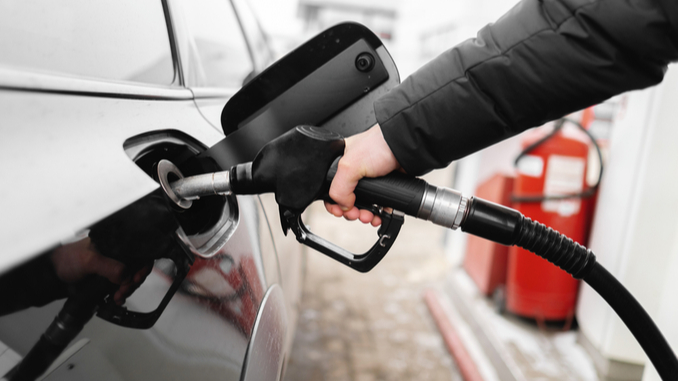
The ruling grants the Phoenix metropolitan area relief from stricter federal requirements, opening the door for potential long-term reforms to the state’s expensive summer gasoline blend mandated in Maricopa and Pinal Counties.
The decision, issued last week by the U.S. Environmental Protection Agency (EPA), found that the Phoenix-Mesa nonattainment area would have met the 2015 ozone National Ambient Air Quality Standards (NAAQS) if not for emissions originating outside the United States. This finding, under Section 179B of the Clean Air Act, prevents reclassification to a more severe status. It acknowledges that a major share of emissions affecting Arizona is beyond the state’s control.
For months, Willoughby has collaborated with local and federal officials to pursue reforms addressing Arizona’s higher summer fuel costs. In January, she sent a letter to the EPA initiating discussions on permanent changes to lower costs for families while maintaining compliance with air quality standards.
“The main reason drivers in Maricopa and Pinal counties pay more for gas in the summer is that these areas are forced to use a special boutique blend made only for Arizona,” explained Willoughby. “It costs more to produce, limits supply, and leaves our state more vulnerable to price spikes. The question is whether this requirement is still doing anything meaningful to improve air quality. If it is not, then Arizona families are being forced to pay more for little to no benefit.”
Willoughby noted that industry operations are cleaner and national fuel standards have evolved since Arizona’s blend was last updated. “Industry is cleaner today than it was when Arizona’s blend was last updated, and fuel standards nationwide have changed significantly since then. There is a strong possibility that Arizona can move to a lower-cost fuel option without sacrificing air quality. If the evidence supports that conclusion, we should act immediately.”
To advance the issue, Willoughby introduced a package of five measures aimed at lowering fuel costs, evaluating compliant fuel options, and requiring the state to adopt a lower-cost fuel once federally approved.
“In order to change the blend, Arizona must submit a request to the EPA to revise our State Implementation Plan and show that we can still meet federal air quality standards with the new blend,” added Willoughby. “The modeling used to make that demonstration must take into account the fact that a major share of the emissions affecting our state comes from outside our borders and is beyond Arizona’s control. The Trump Administration’s recent decision recognizing international transport acknowledges this impact and gives Arizona more room to reevaluate whether our current fuel requirements are still justified. With the federal government signaling openness, this may be our best and only opportunity to get this done.”
In February, Willoughby requested that the Maricopa Association of Governments (MAG) model the impacts of switching from Arizona’s current boutique gasoline blend (Reid Vapor Pressure of 7.0 psi) to a more widely available, lower-cost blend with an RVP of 7.4 psi.
Preliminary modeling completed in March showed that the switch would increase the maximum ozone concentration in the Phoenix metropolitan area by between zero and 0.01 parts per billion.
“That is a negligible impact and more than enough reason to move this conversation forward,” continued Willoughby. “Just as important, Governor Hobbs’ administration already has these results. MAG provided the modeling to her Department of Environmental Quality, which means the Governor could begin acting on this now if she wanted to. She does not need to wait. She does not need more excuses. If Governor Hobbs is serious about lowering fuel costs, she should direct her agency to act immediately.”
In a follow-up letter to MAG Director of Environmental Planning, Matt Poppen, Willoughby highlighted the positive results from the Comprehensive Air Quality Model with Extensions (CAMx v7.32) and Community Multiscale Air Quality (CMAQ v5.5) analyses. The CAMx results showed no changes in the 2023 design value attainment at any monitoring site, while CMAQ predicted a maximum impact of just 0.01 ppb at three sites.
Willoughby also requested additional modeling for a Federal Reformed Gasoline blend with an RVP of 7.8 psi, used in some other western states, and discussions on next steps for a State Implementation Plan revision.
“The modeling is favorable. The facts are lining up in Arizona’s favor. We should seize this opportunity and make the case for lasting gas affordability now,” concluded Willoughby.
Ethan Faverino is a reporter for AZ Free News. You can send him news tips using this link.
by Matthew Holloway | Mar 25, 2026 | News
By Matthew Holloway |
Maricopa County officials announced that a recent determination from the Environmental Protection Agency (EPA) will not trigger additional air quality regulations for the region, maintaining its current “moderate” nonattainment classification under federal ozone standards.
According to Maricopa County, it remains designated as a “moderate” nonattainment area under the 2015 8-hour ozone National Ambient Air Quality Standards (NAAQS), meaning ozone levels in parts of the region continue to exceed federal limits. However, the county has avoided a “serious” classification, which would increase regulatory burdens on industry.
The Clean Air Act requires areas that exceed those standards to implement measures to reduce ozone-forming pollutants such as nitrogen oxides (NOₓ) and volatile organic compounds (VOCs).
The EPA had been evaluating whether to reclassify the Phoenix-Mesa area since at least 2024. The agency has now issued its final determination that the region would have met federal standards if not for emissions originating outside the United States and other uncontrollable factors, allowing Maricopa County to avoid additional mandates. As a result, the county will continue operating under its current regulatory framework.
“For years, Maricopa County has taken significant steps to reduce air pollution through outreach programs and practical compliance tools for businesses. But we don’t think we should face further regulations that harm business for the types of pollution we can’t control,” Board of Supervisors Chair Kate Brophy McGee stated. “I’m pleased the EPA agrees with our position. We remain committed to pursuing programs and initiatives that improve air quality in Maricopa County.”
County officials said the decision reflects years of local mitigation efforts, including outreach programs, compliance tools for businesses, and coordination with regional and state air quality agencies.
The announcement follows a series of state and federal actions related to air quality policy that Arizona leaders have closely monitored.
Then-Congresswoman Debbie Lesko and other officials pushed back in late 2024 against a potential EPA reclassification of Maricopa County, warning that stricter standards could have economic and national security implications.
In December 2025, the EPA moved to vacate a contested Biden-era air quality rule as part of a multi-state legal challenge, signaling a shift in federal regulatory posture.
Arizona lawmakers have also raised concerns at the federal level. Earlier this year, State Sen. Frank Carroll (R-LD28) urged Congress to clarify the EPA’s authority over air quality standards, warning that regulatory uncertainty could impact economic growth in the state.
“Americans deserve clean air, land, and water, but they also deserve an economy that can grow without unnecessary federal interference,” Carroll said in a statement at the time. He added, “While the Clean Air Act allows for specific emissions regulations, the EPA must not exceed its authority or violate fundamental principles of separation of powers. By preventing bureaucratic overreach, we can protect both the environment and the economic opportunities Arizona families and businesses rely on.”
The issue has also intersected with Arizona’s economic development efforts, with Congressman Abe Hamadeh (R-AZ08) highlighting the importance of regulatory stability in May 2025 as major employers, including semiconductor manufacturer TSMC (Taiwan Semiconductor Manufacturing Co.), continue to invest billions of dollars in facilities in the Phoenix area.
Air quality regulations tied to ozone nonattainment status can influence permitting requirements, industrial expansion, and transportation planning, making federal classification decisions a key factor in long-term economic planning.
Maricopa County was reclassified from “marginal” to “moderate” nonattainment status in 2022 according to the Arizona Department of Environmental Quality (ADEQ) after failing to meet federal ozone standards, triggering additional planning requirements under the Clean Air Act.
County officials said they will continue pursuing strategies to reduce emissions and improve air quality while working within the existing regulatory framework.
Philip McNeely, Director of the Maricopa County Air Quality Department, said, “By maintaining moderate nonattainment status, Maricopa County can continue to focus on reducing pollution and finding solutions specific to our area. These include outreach, incentive programs for residents, practical compliance tools for business, and the pursuit of innovative emission-reduction credit rules. We are committed to clean air initiatives that make Maricopa County a healthier place to live.”
Matthew Holloway is a senior reporter for AZ Free News. Follow him on X for his latest stories, or email tips to Matthew@azfreenews.com.
by Matthew Holloway | Feb 1, 2026 | Economy, News
By Matthew Holloway |
Arizona Senate Majority Whip Frank Carroll (R-LD28) introduced a measure on Tuesday, urging the U.S. Congress to clearly define and limit the Environmental Protection Agency’s (EPA) regulatory authority. Carroll and his cosponsors argue that ambiguous federal power threatens jobs and economic growth in Arizona. The proposal, SCM 1004, was advanced by the Arizona Senate Republican Caucus earlier this week.
Carroll’s measure calls on Congress to affirm its role in setting national environmental policy and to draw explicit boundaries around the EPA’s authority under federal law. The memorial highlights that, under the Clean Air Act, the EPA is charged with setting and reviewing National Ambient Air Quality Standards (NAAQS) every five years to protect public health and welfare, but argues that compliance requirements have grown burdensome for businesses and workers.
“Americans deserve clean air, land, and water, but they also deserve an economy that can grow without unnecessary federal interference,” Carroll said in a statement distributed by the Arizona Senate Republican Caucus. He added that the measure urges Congress to ensure EPA regulations are “grounded in law and sound science” and do not impose undue economic restrictions.
In additional remarks included in the memorial, Carroll said he is seeking to define the limits of EPA authority to prevent what he described as regulatory overreach.
“I am working to clearly define the EPA’s powers to prevent regulatory overreach that negatively impacts Arizona’s economy,” Carroll said. “While the Clean Air Act allows for specific emissions regulations, the EPA must not exceed its authority or violate fundamental principles of separation of powers. By preventing bureaucratic overreach, we can protect both the environment and the economic opportunities Arizona families and businesses rely on.”
SCM 1004 directs the Arizona Secretary of State to transmit copies of the memorial to leadership in both chambers of Congress and all members of Arizona’s federal delegation. The measure notes that while the EPA’s mission is to enforce environmental laws as intended by Congress, concerns over overreach have prompted states to call for clearer statutory limits on the agency’s powers.
Carroll’s push reflects broader national debates over the scope of federal environmental regulation. Critics of recent EPA proposals have warned that aggressive regulatory action could affect industries including agriculture, energy production, and water resources. Such debates have included congressional hearings examining the consequences of EPA actions on sectors like American agriculture and rural economies.
The memorial challenges key assumptions underlying EPA policies formulated under Democratic administrations and proponents of policy such as the ‘Green New Deal’, stating:
- “Greenhouse gases like CO2 and methane are not acutely toxic like other hazardous pollutants and have no direct impact on human health;”
- “There is no consensus as to whether global warming is a problem or a benefit or how current temperatures fit into the broader climate context;”
- “Global temperatures, droughts, floods and hurricanes have not increased with increasing global CO2 emissions;”
The memorial further refutes the EPA’s authority regarding greenhouse gas emissions, stating directly: “The EPA has no explicit statutory authority to regulate greenhouse gases.”
The memorial comes amid ongoing statewide discussions about the balance between environmental protection and economic growth, with Arizona lawmakers questioning the appropriate reach of federal agencies in areas ranging from air and water quality to land use and energy development.
SCM 1004 was co-sponsored by a group of Republican Arizona Senators, including Hildy Angius (R-LD30), David Gowan (R-LD19), Kevin Payne (R-LD27), Janae Shamp (R-LD29), and Thomas “T.J.” Shope (R-LD16).
Matthew Holloway is a senior reporter for AZ Free News. Follow him on X for his latest stories, or email tips to Matthew@azfreenews.com.
by Matthew Holloway | Dec 1, 2025 | News
By Matthew Holloway |
The U.S. Environmental Protection Agency (EPA) has filed a motion in a federal appeals court to vacate a Biden-era rule on fine particulate matter air quality standards, which was set to affect air quality regulations in Arizona.
In the motion filed in the U.S. Court of Appeals for the D.C. Circuit, Department of Justice attorneys representing the EPA told the D.C. Circuit that the agency’s 2024 rule change on fine particulate pollution standards is both legally and scientifically flawed and must be vacated. The motion noted that the “supplement” to the EPA’s 2019 Assessment of the NAAQS, or National Ambient Air Quality Standards, for particulate matter, “did not represent [a] full multidisciplinary evaluation of evidence’ for the underlying air quality criteria.” It added that the agency “lacks statutory authority to revise standards absent a thorough review.”
The PM 2.5 rule, finalized on December 15, 2024, was purported to strengthen protections against fine particulate matter pollution, which the EPA stated was linked to respiratory and cardiovascular health risks. Implementation was set to begin in 2025, with full compliance deadlines extending to 2031. The final rule revising the NAAQS lowered the annual primary PM 2.5 standard from 12.0 micrograms per cubic meter to 9.0 micrograms per cubic meter. The rule also established a new 24-hour PM 2.5 standard of 35 micrograms per cubic meter. The rule remains in effect until the court comes to a decision.
The consolidated lawsuits involved petitioners including the Commonwealth of Kentucky, et al., the Arizona Legislature, and the Arizona Chamber of Commerce, along with 21 other states and business groups against the U.S. Environmental Protection Agency, et al. The states and business groups challenged the rule, arguing it would impose billions in compliance costs on states like Arizona, potentially halting construction projects and job growth in areas struggling to meet the stricter standards.
The petitioners contended that the new limits would classify more areas as being in a state of nonattainment, leading to economic restrictions under the Clean Air Act. Oral arguments in the case were heard on December 16, 2024.
Arizona Senate President Warren Petersen hailed the EPA’s motion on X on November 26, 2025, crediting EPA Administrator Lee Zeldin with what he called a “BIG WIN FOR ARIZONA!” He added that the EPA, “just filed a motion in federal court to throw out Biden’s unlawful PM 2.5 rule that made it nearly impossible for parts of Arizona to ever meet clean-air standards — a rule that would have crushed jobs, construction, and our economy with billions in costs. The AZ Legislature & the AZ Chamber sued the Biden admin to stop this job-killing regulation. Our lawsuit helped bring about this reversal. Thank you, President Trump, for keeping your promise to cut red tape and protect Arizona families!”
Adam R.F. Gustafson, Principal Deputy Assistant Attorney General, and Sarah I. Zafar, Trial Attorney in the DOJ Environment and Natural Resources Division, filed the EPA’s motion for vacatur. They wrote in part, “Implementation of the NAAQS is a complex process, which generates significant costs and reliance interests among States, local governments, and regulated parties.”
The DOJ attorneys also argued that the EPA, “should at least have considered the distinct costs associated with revising the NAAQS mid-cycle. EPA’s disregard of this relevant factor was arbitrary and capricious because it was unreasonable for EPA to read an exercise of discretionary authority as an invitation to ignore a relevant factor like cost.”
The case remains ongoing in the U.S. Court of Appeals for the D.C. Circuit.
Matthew Holloway is a senior reporter for AZ Free News. Follow him on X for his latest stories, or email tips to Matthew@azfreenews.com.
by Staff Reporter | Apr 10, 2025 | News
By Staff Reporter |
The Environmental Protection Agency (EPA) will no longer penalize Arizona and other states for foreign air pollution affecting state levels.
The EPA decision follows local and statewide efforts by Arizona’s elected and grassroots leaders in recent years to toss this regulation.
Among those engaging with the EPA was the Arizona Free Enterprise Club (AFEC). The grassroots organization’s president, Scot Mussi, commended the EPA decision.
“Due to this regulation from the Biden Administration, Arizona was being forced to adopt radical control measures, like banning gasoline-powered vehicles, which still would have left our state short of meeting the ozone standard,” said Mussi. “Yet again, the left’s environmental policies have proven to be disastrous and unworkable. For the good of our state and country, we must never repeat these mandates.”
EPA Administrator Lee Zeldin announced on Monday it would rescind the Guidance on the Preparation of Clean Air Act Section (CAA) 179B Demonstrations for Nonattainment Areas Affected by International Transport of Emissions.
The EPA published a press release, also on Monday, detailing the changes to air pollution regulations. The rescinded guidance effectively penalized states for air pollution caused by other countries.
“This guidance made it unnecessarily difficult for states to demonstrate that foreign air pollution is harming Americans within their borders,” stated the EPA. “States should not be penalized for air pollution beyond their control, including pollution crossing international borders into the United States.”
In a statement, Zeldin said U.S. citizens shouldn’t be held responsible for other nations’ air pollution failures.
“Americans should not be harmed by other countries that do not have the same environmental standards we have in the United States,” said Zeldin. “Not only are we eliminating cumbersome red tape that placed an excessive burden on states to prove emissions were from an international source, but we are also helping states across our nation prosper while ensuring they continue to provide clean air for their residents.”
The EPA said it would work with state and local air agencies to secure regulatory relief under the rescinded guidance.
The guidance emerged in December 2020 during the last month of the first Trump administration. The guidance was intended to assist state, local, and tribal air agencies with developing a demonstration on how a nonattainment area would be able to attain or would have attained relevant National Ambient Air Quality Standard if not for other countries’ air pollution.
Last month, the EPA agreed to reconsider its determination that the Northern Wasatch Front in Utah failed to attain the 2015 Ozone National Ambient Air Quality Standards.
This latest policy change aligns with the Trump administration’s designs for the EPA under Zeldin outlined in his Powering the Great American Comeback initiative. Zeldin declared in his announcement of the initiative that conservation was inherently a core principle of conservatism.
This initiative announced in February proposes five new pillars of guidance for the EPA’s work over the first 100 days and throughout the next four years, all centered around American independence and dominance: securing clean air, land, and water for all Americans; restoring American energy dominance; permitting reform, cooperative federalism, and cross-agency partnership; making the U.S. the artificial intelligence capital of the world; and protecting and bringing back American auto jobs.
In a joint press release issued on Monday, Maricopa County Chairman Thomas Galvin and Supervisor Debbie Lesko said they made the case in a meeting last month with the EPA of the difficulty for states to prove certain air pollution impacts. The stance from current county leadership marks a departure from past leadership, which advanced measures to meet EPA compliance on ozone standards.
“At that meeting, county leadership demonstrated how difficult it has been for states like Arizona to prove the impact of air pollution from international transport, and as a result, we risk more regulation,” said Galvin and Lesko. “As Administrator Zeldin said, today’s announcement is a step in the right direction for states looking to balance the need for clean air with the importance of economic development.”
Galvin and Lesko also thanked Senator Mark Kelly for providing assistance on the issue.
AZ Free News is your #1 source for Arizona news and politics. You can send us news tips using this link.