by Ethan Faverino | Jul 22, 2025 | News
By Ethan Faverino |
The Arizona Republican Assembly (AZRA) has released its Final Legislative Scorecard for the 2025 Arizona State Legislative Session.
This scorecard evaluates Arizona State Senate and House of Representatives members based on their voting records and alignment with AZRA’s core principles of limited government, individual liberties, and fiscal responsibility.
As primary elections approach, this scorecard is a critical tool for voters to distinguish authentic conservatives from those who merely claim the label.
The AZRA Legislative Scorecard is the only one, not only in Arizona but in the nation, where a committee of twelve members from across the state invest thousands of hours analyzing over 1,800 bills annually, rating more than 250 bills.
AZRA then publishes these bill ratings before legislative votes, notifying every legislator in advance and inviting feedback to ensure fairness. To maintain integrity, AZRA contracts a national data firm that receives daily voting data from the Arizona Legislative Council, updating results without manipulation or bias.
The scorecard lists 30 State Senators and 60 State Representatives, providing numerical scores out of 100 based on weighted votes on key bills. Scores are presented alphabetically by last name for letter grades, in descending order, along with party affiliation and legislative district.
Among senators, Senate President Warren Petersen (R-LD14) earned the highest score of 98.5, followed by Senator Wendy Rogers (R-LD7) at 96.9, Senator David Farnsworth (R-LD10) at 95.9, and Senator Timothy Dunn (R-LD25) at 95.5.
The highest-ranking Democrats were Senator Brian Fernandez (D-LD23) at 40.5 and Rosanna Gabaldón (D-LD21), at 34.1. The lowest scoring Democrats were Lauren Kuby (D-LD8) at 25.4 and Priya Sundareshan (D-LD18) at 23.8.
Representative Selina Bliss (R-LD1) led the House with a score of 96.8, followed by a four-way tie at 96.1 among Majority Leader Michael Carbone (R-KD25), John Gillette (R-LD30), Quang Nguyen (R-LD1), and James Taylor (R-LD29).
Rep. Bliss recognized AZRA’s Scorecard saying, “It is an honor to be recognized, along with seatmate Quang Nguyen, by the Arizona Republican Assembly for our work at the Capitol!”
Out of the Democrat Representatives, Alma Hernandez (D-LD20) scored the highest with a 49.4 and Consuelo Hernandez (D-LD21) with a 48.8. The lowest ranked Democrats are Quantá Crews (D-LD26) with a score of 26.6 and Mariana Sandoval (D-LD23) with a 25.5.
The AZRA scorecard reveals a significant divide in voting patterns between Republican and Democratic legislators in the Arizona State Senate and House, with Republicans ranging from 78.7 to 98.5 and Democrats scoring from 23.8 to 49.4.
Correction: This story originally stated that there are 50 State Representatives. The story has been updated to reflect the correct number at 60 State Representatives.
Ethan Faverino is a reporter for AZ Free News. You can send him news tips using this link.
by Matthew Holloway | Jul 10, 2025 | News
By Matthew Holloway |
Joining KFYI’s Conservative Circus host James T. Harris on Monday, Arizona House Majority Leader Michael Carbone doubled down on comments he made to the Arizona Daily Independent (ADI) on Saturday. Carbone offered the outlet a sound condemnation of Arizona Attorney General Kris Mayes for her lawsuit against the Trump administration’s efforts to end discriminatory marketing of affordable housing.
As reported by ADI, Mayes and a coalition of 21 Democrat attorneys general have launched their legal action after Secretary of the U.S. Department of Housing and Urban Development Scott Turner announced that HUD is “examining ways to slash burdensome regulations that stifle the private sector’s ability to innovate and build much-needed housing supply.”
Among the reforms Mayes and her fellow leftist AG’s voiced opposition to is a proposed rule that would end fair housing regulations that required targeted marketing of affordable housing based on race.
“We’re never going to fix the affordable housing crisis by pushing radical left-wing identity politics,” Carbone told the Daily Independent. “Taxpayer-funded programs should serve all Americans fairly—not pick winners and losers based on race, ethnicity, or national origin. The Trump administration is right to stand up for equal treatment under the law. It’s shameful that Attorney General Mayes would rather play politics and protect discrimination than fight for real solutions that help everyone.”
Speaking with James T. Harris on Monday, Carbone explained, “It’s really a leftist idea what they’re doing. You know, when we create rules, they create behaviors. And all what Trump is trying to do is look at these bad rules. We should let the free market take place, do what it does fast, and then you know… then everything will work itself out, right? No other country in the world can show that, but the America can show that.”
When asked why Mayes is campaigning to keep the affordable housing marketing mandates in place, the Majority Leader answered that Mayes is “flaky to her base #1″ and “these leftists always want to create rules to change the behaviors. And they actually go backwards. They take us backwards.”
He added, “And I said, you go anywhere in the world. When you see the free market here in America, it works the best. We have the best results to show that compared to any country in the world…There’s a reason why President Trump won by a landslide victory, right? He won every class, every race, every group…he killed it. Because people, I think, are getting wind and are tired of the same old crap that the Democrats are playing.”
Carbone, a Chicago-native went on to elaborate on his statement that AG Mayes would “rather protect discrimination” by HUD, explaining, “Look, I grew up in Chicago. I grew up in a three flat with my mom, a single mom with me, my two brothers. And, and you know, we weren’t… we didn’t have a lot of money.
“But I’ll tell you right now where I looked, I was one of the fewest white people around. And you know, when you look at projects, that was a… that was created by the government, by local and federal government projects. And you have to ask the question. I mean, go back, why do you have to create these things? Why do we have to get $30,000, Governor Hobbs’ $30,000 down payment assistance to people?
“And when you fill out that application, it asks you, not who you are, what do you do and who are you? Ethnicity, what group or background you have? Why is that important? And I think people realize we all want to be treated equally. We do. When you do this, you go into a pivot of focusing on certain classifications. And this is what the democratic mantra has been for the last 40 years. They’ve been very good at it. And I think the American people are now woken up and are tired of it.”
Harris replied, saying of Mayes, “It’s like she’s weaponizing taxpayers, wag(ing) a political war against the Trump administration. I mean, is this becoming a pattern with her?”
To which Carbone answered, “OK, this is not only a pattern with her, JT, it’s a pattern with the Democratic machine. Let’s go back to Obama. Obama did this. If people remember, Obama tried doing this, this pilot program where if you had wealthy neighborhoods and you had rent that was probably five times higher than the average rent down the street, which might have been a lower class of income, that those people should have a right to live in those and our tax dollars should pay for that. I’m going back about 15 years. I don’t know if you remember that, but that was a pilot program. I don’t know if it still exists. But the thing is: that’s not how, that’s not how the world works. That’s socialism. That’s a different class of government, different types of economics.”
Matthew Holloway is a senior reporter for AZ Free News. Follow him on X for his latest stories, or email tips to Matthew@azfreenews.com.
by Jonathan Eberle | Jun 29, 2025 | News
By Jonathan Eberle |
After weeks of political brinkmanship and competing proposals, Arizona lawmakers have approved a bipartisan state budget that combines Democratic Governor Katie Hobbs’ “Arizona Promise” priorities with over $100 million in conservative-driven spending cuts secured by House Republicans. The compromise averted a potential government shutdown.
The $16 billion spending package reflects a rare show of collaboration in a divided government, incorporating elements from both the governor’s agenda—focused on opportunity, affordability, and social services—and Republican demands for fiscal restraint, public safety funding, and government accountability.
“I am thrilled that the legislature passed the bipartisan and balanced Arizona Promise budget to expand opportunity, security, and freedom in our state,” Hobbs said in a statement. “We showed Arizonans what is possible when we are willing to reach across the aisle and deliver common sense solutions for the people of our state.”
House Republicans, meanwhile, emphasized that the final deal bears the mark of tough negotiations, resulting in meaningful structural reforms and a $100 million reduction in planned spending compared to earlier drafts.
“This revised budget isn’t the one we would have written,” said House Speaker Steve Montenegro. “But with time running out and the risk of a shutdown increasing, we fought for and secured serious improvements. We cut spending, added strong transparency requirements, and locked in public safety pay raises. Those changes matter.”
The final package maintains many of Hobbs’ original proposals while adopting Republican-backed amendments. “This was not a blank check,” said House Majority Leader Michael Carbone. “We held the line on conservative principles, cut unnecessary spending, and demanded accountability. This budget is better because of our efforts.”
While the Arizona Promise budget may carry the governor’s name, its final version reflects the realities of a politically split state government. The result is a package that funds long-term priorities across education, health care, infrastructure, and public safety, while also maintaining fiscal discipline and Republican values like limited government and transparency.
“We’ve led responsibly in a divided government,” Speaker Montenegro said. “We held the line, improved the bill, and protected the priorities of our voters.”
Jonathan Eberle is a reporter for AZ Free News. You can send him news tips using this link.
by Jonathan Eberle | Jun 16, 2025 | News
By Jonathan Eberle |
The Arizona House of Representatives passed a structurally balanced, conservative budget on Thursday, advancing a financial plan that focuses on strengthening public safety, reducing costs for families, and increasing government accountability.
Speaker Steve Montenegro (R-LD29) called the budget a reflection of voter priorities. “This budget delivers safe communities, strong families, and a government that works for the people — not the other way around,” he said. “It cuts tuition, raises pay for law enforcement, fixes critical roads, and reins in waste — all without raising taxes.”
Key components of the budget include a 5% pay raise for Department of Public Safety and corrections officers, $94 million for repairs to major highway infrastructure, and a 2.5% in-state university tuition reduction alongside a freeze for the subsequent two years. The budget also fully funds school choice programs and clears a backlog of Empowerment Scholarship Account applications.
Additional funding is designated to keep voter rolls accurate and up to date, fully fund payments for parents acting as caregivers, and provide developmental disability services. An expanded adoption tax deduction is also included.
“The House-passed budget puts the House Majority Plan into action,” Majority Leader Michael Carbone said. “We’re protecting opportunity by lowering costs for students and parents. We’re backing public safety with strong support for our law enforcement officers. And we’re holding government accountable by cutting waste and demanding better results — this is the kind of leadership Arizona voters asked for.”
Speaker Pro Tempore Neal Carter stressed the budget’s potential for boosting small business. “The House-passed budget gives long-overdue relief to Arizona’s small businesses by eliminating the administratively burdensome business personal property tax under the $500,000 threshold,” Carter said. “This helps local job creators grow, hire, and invest in their communities — and makes Arizona a more competitive place to do business.”
The budget package — HB2945 through HB2961 — now moves to the Senate for consideration.
Jonathan Eberle is a reporter for AZ Free News. You can send him news tips using this link.
by Jonathan Eberle | May 31, 2025 | News
By Jonathan Eberle |
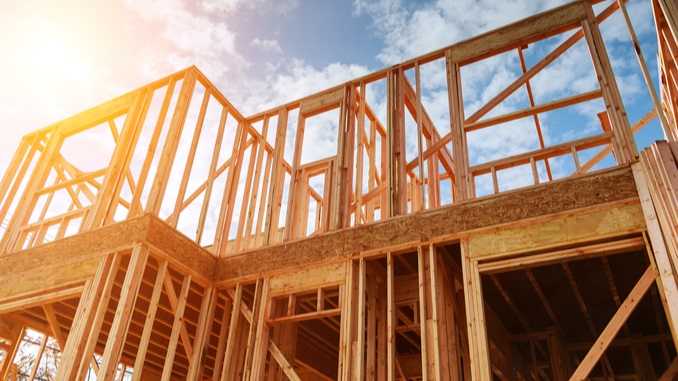
Arizona homeowners will soon have greater freedom to add accessory dwelling units (ADUs) to their properties, thanks to a new law aimed at easing housing constraints and expanding property rights across the state.
House Bill 2928, signed into law last week, was spearheaded by House Majority Leader Michael Carbone. The legislation establishes statewide rules that limit local governments’ ability to restrict ADUs—also known as casitas or guest houses—on lots zoned for single-family homes.
“Arizona homeowners should be able to use their property without being buried in red tape,” said Carbone. “Whether it’s for an aging parent, a young adult, or a rental opportunity, ADUs are a practical solution—and it’s time the law recognized that.”
Under HB 2928, counties must adopt consistent standards by January 1, 2026, or default provisions outlined in the law will automatically take effect. The bill bars local governments from imposing strict design standards, excessive parking requirements, or costly infrastructure upgrades that have historically made ADUs difficult to build.
Key provisions of the law include prohibiting rules that require a preexisting relationship between homeowners and ADU occupants; limiting fees and setback requirements that raise construction costs; and allowing both attached and detached ADUs by right on single-family lots.
The legislation includes carveouts for tribal lands, military zones, high-noise areas, and utility easements. It also permits counties to require septic evaluations where appropriate.
Supporters argue the measure is a meaningful step toward addressing Arizona’s housing affordability challenges. By enabling more flexible use of existing properties, lawmakers say the bill will help ease pressure on housing supply without large-scale development.
“This law gives homeowners more freedom, cuts through bureaucracy, and ensures Arizona families can thrive,” Carbone said.
The reform aligns with broader goals outlined in the House Republican Majority Plan, which emphasizes reducing government intervention and promoting individual rights.
As Arizona continues to experience rapid population growth, lawmakers on both sides of the aisle have expressed interest in finding creative housing solutions. ADUs—long used in other states as a way to increase density without altering neighborhood character—are increasingly seen as a tool to meet that demand.
With HB 2928 now law, the focus shifts to implementation, as counties work to meet the 2026 deadline for adopting the required rules.
Jonathan Eberle is a reporter for AZ Free News. You can send him news tips using this link.