by Daniel Stefanski | Jan 30, 2025 | Education, News
By Daniel Stefanski |
Arizona Republicans are reacting to a financial crisis involving a local school district and calling for serious investigations into the developing matter.
This week, a number of Republicans in both the Arizona House of Representatives and Senate released statements about the situation surrounding Isaac Elementary School District being placed in receivership by the Arizona State Board of Education. Some legislators are even looking to the Maricopa County Attorney to investigate the school district if the state’s attorney general does not spring into action.
House Speaker Steve Montenegro said, “Our sympathies begin and end with the students, faculty, and parents of Isaac. At the heart of this crisis are more than 4,800 students and hundreds of employees who have been abandoned by failed district leadership. The falsification of financial records and the mismanagement of public funds are a betrayal of trust and must be investigated immediately. The people of Arizona deserve to know how this happened, and those responsible must be held accountable.”
Senator David Farnsworth, the Chair of the Education Committee, added, “I’m incredibly concerned by what’s transpired within the Isaac Elementary School District. My colleagues in both the Senate and House are investigating what led to the tremendous overspending and what legislative reforms we need to adopt to make certain a similar situation doesn’t happen in the future. What the State of Arizona won’t do is provide this school district a financial bailout without implementing any corrective policies. Doing so would only be a Band Aid on the wound and most certainly do more harm than good.”
Senator Carine Werner, a first-term legislator and the Vice Chair of the Education Committee, wrote, “My heart goes out to the teachers and staff of Isaac Elementary School District, many of whom are already living paycheck to paycheck and are now fearing the money isn’t going to hit their bank accounts come pay day because of the gross financial mismanagement by administrators within this district. We are working on solutions to ensure the children of these schools are not disrupted in their learning environments and those responsible are held accountable.”
Arizona House Majority Leader Michael Carbone stated, “Since taking office, Mayes has shown zero interest in tackling corruption in school districts. Instead, she has used her office to attack parents who use Empowerment Scholarship Accounts to seek better opportunities for their children. This is the same Attorney General who dropped all felony charges against a former Scottsdale Unified Superintendent engaged in a laundry list of fraudulent schemes at multiple school districts. Amazingly, Mayes only required the former administrator to pay income taxes on illegal kickbacks the administrator received – a sweetheart settlement for the ages. The students in Isaac deserve better.”
In their letter sent to Maricopa County Attorney Rachel Mitchell, Arizona House Republican leadership wrote, “In late December, the Arizona Auditor General sounded the alarm over the possibility of a receivership and noted that the Isaac Elementary School District has been identified as one of Arizona’s highest-risk districts since December 2020. The Auditor General has also reported that ‘[t]hroughout FY 2024, the District failed to report expenditures in the appropriate funds throughout the year and submitted a misleading and inaccurate FY 2024 annual financial report’ to the Arizona Department of Education. And in another report documenting multiple deficiencies in Fiscal Year 2023, the Auditor General noted potential conflict of interest issues, miscoded financial transactions, incomplete financial records and documentation, failures to deposit cash in a timely manner, and failures to provide training and guidance related to restrictions on accepting gifts or benefits.”
The House Republicans asked Mitchell to confirm an investigation into the Isaac Elementary School District matter because they lack confidence that Mayes would “fully and fairly investigate the school district’s leadership over these serious issues.”
Daniel Stefanski is a reporter for AZ Free News. You can send him news tips using this link.
by Daniel Stefanski | Jan 19, 2025 | News
By Daniel Stefanski |
Arizona Republicans were excited to return to work at the state legislature for another year.
Earlier this week, the Arizona Legislature restarted its engines for the beginning of the 57th Regular Session, commencing the third year of a divided state government between Republicans in the House of Representatives and Senate and Democrat Governor Katie Hobbs.
State Representative Quang Nguyen posted, “Getting ready for the opening day, AZ Legislature.”
Nguyen also said, “I look forward to this 2025 session as Chairman of Judiciary Committee. Nothing radical will survive my shredder.”
Senate President Pro Tempore T.J. Shope added, “Happy Opening Day Arizona!”
Representative Rachel Jones shared the oath of office with a picture of her being sworn into the new term: “I do solemnly swear that I will support the Constitution of the United States and the Constitution and laws of the State of Arizona, that I will bear true faith and allegiance to the same and defend them against all enemies, foreign and domestic, and that I will faithfully and impartially discharge the duties of the office of House Representative according to the best of my ability, so help me God.”
Senator Janae Shamp was honored with the position of her chamber’s Majority Leader, becoming the third female in that role in the state’s storied history. The X account for the Arizona Senate Republicans wrote, “Today, Senator Shamp made history as only the third female Majority Leader of the Arizona Senate! At the Senate Opening Day Ceremony, Majority Leader Shamp had the distinct honor of introducing State Treasurer Kimberly Yee, formerly known as Senate Majority Leader Yee from 2017-2019. Majority Leader Shamp joins the ranks of Kimberly Yee and the legendary Sandra Day O’Connor as just one of three women to serve as the Arizona Senate Majority Leader in Arizona history. This achievement marks a significant step forward for women in political leadership positions, setting the stage by inspiring future generations of women in leadership.”
State Treasurer Kimberly Yee shared praise for Shamp, saying, “It was an honor to recognize Senator Shamp as the 3rd female Senate Majority Leader in Arizona’s history. As the 2nd female Senate Majority Leader, I was honored to congratulate Leader Shamp on this accomplishment and offer her words of wisdom as she begins this important role.”
Senator Shawnna Bolick posted, “Earlier today, I took my oath to uphold our state’s and US Constitution and laws governing us against foreign and domestic enemies. It is an honor to serve my second term in the State Senate representing District 2. Thank you to everyone who helped us retain this legislative seat.”
Representative Michael Carbone added, “Honored to be sworn in as Majority Leader in the State House this past Monday, along with these fellow State Representatives and Senator. We’re ready to get to work!”
State Representative Michele Peña wrote, “I’m privileged and honored to have been sworn in last Monday to represent LD 23 for two more years. Thank you to my constituents, friends and family for your support. I’m ready to continue working hard for you.”
Representative Justin Olson stated, “It was an honor to be sworn in to the 57th Arizona State Legislature today! I look forward to serving my constituents while working to protect and preserve the conservative principles of our country’s founding. We are so blessed to live in a land where freedom reigns!”
These Republicans – and the others in their caucuses – will be counted upon to hold the line against their Democrat counterparts and Governor Katie Hobbs in, what will certainly be, another contentious installment of an Arizona state government.
Daniel Stefanski is a reporter for AZ Free News. You can send him news tips using this link.
by Daniel Stefanski | Nov 17, 2024 | News
By Daniel Stefanski |
Arizona House Republicans have chosen their new leadership team for the upcoming term of office.
Last week, Arizona House Republicans met to elect their new team of leaders for the next two years. Representative Steve Montenegro received enough votes to become the next Speaker of the House, replacing outgoing leader Ben Toma. Representative Michael Carbone was elected as Majority Leader, and Representative Julie Willoughby as Majority Whip.
In a statement to accompany the announcement of his victory for Speaker, Montenegro said, “I am deeply honored by the trust my colleagues have placed in me to serve as Speaker of the Arizona House of Representatives. Together, we have a strong mandate from Arizonans to advance policies that uphold our principles, promote economic growth, and protect the freedoms and values that define our great state. This opportunity to lead is one I take with great respect for the role and with determination to address the challenges ahead. Our commitment to conservative principles will guide us as we work to secure a bright, prosperous future for every Arizonan.”
Representative Matt Gress posted a picture with the incoming leadership team, writing, “Congratulations to the next Speaker of the Arizona House, Steve Montenegro, along with our new party leaders, Republican Majority Leader, Michael Carbone, and Republican Majority Whip, Julie Willoughby. Under their leadership, the House will deliver common sense solutions for Arizonans. Let’s GOOOO!!”
Unlike the largely unified process and result in the Arizona Senate for Republicans this time around, their legislative allies in the state House of Representatives will have to heal from a speaker’s election that was divided and extremely competitive. To illustrate that point, at least one Arizona House Republican took to X in the aftermath of the speaker’s election to publicly decry the consequences of the result. A unified caucus will be critical to joining with Senate Republicans to stand against Democrat Governor Katie Hobbs’ continued attempts to advance her left-wing priorities in the state over the final two years of her first term in office.
Daniel Stefanski is a reporter for AZ Free News. You can send him news tips using this link.
by Daniel Stefanski | May 31, 2024 | Economy, News
By Daniel Stefanski |
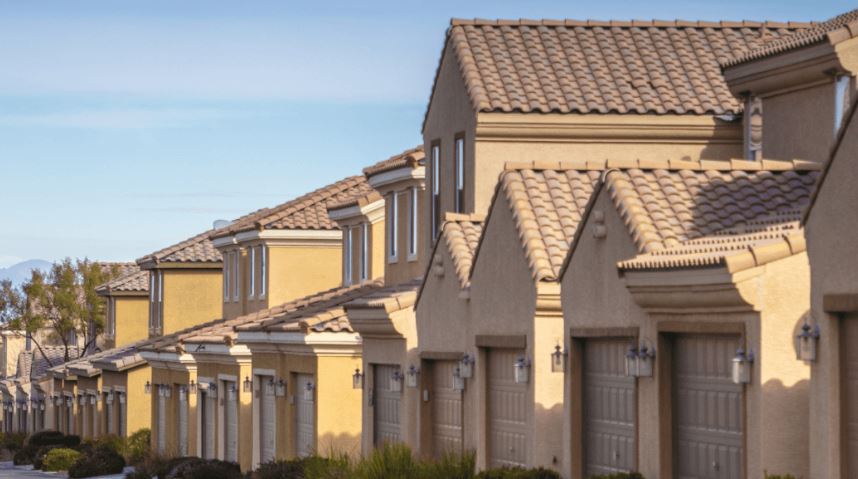
Two Arizona Republican bills to tackle the state’s deepening housing crisis were recently signed into law.
Last week, Governor Katie Hobbs signed HB 2720 and HB 2721. HB 2720 “establishes requirements relating to accessory dwelling units” – according to the overview from the Arizona House of Representatives. HB 2721 “adopts requirements for middle housing development” – also according to the overview from the state House.
In a statement that followed the governor’s signature of his bills, State Representative Michael Carbone, a Republican, wrote, “It’s the goal of Republicans in the Legislature to make life more affordable for everyday Arizonans by addressing the urgent need for more diverse housing options. I’m pleased to have the Governor sign my two bills into law, which will help mitigate the effects of rising housing costs and ensure that our teachers, nurses, firefighters, police officers, and families can live in the communities they serve and love.”
Carbone added, “Importantly, the legislation reinforces a homeowner’s right to use their property as they see fit which, for some, may include adding accommodations for multigenerational housing or to generate additional income. The enactment of this legislation is a significant step toward solving the state’s housing crisis, and I am proud of the bipartisan effort that made it possible.”
Hobbs also released a statement to mark her signature on these two proposals, saying, “I’m glad the legislature heard my calls to come to the table to pass common sense, bipartisan legislation that will expand housing options and help mitigate the effects of rising costs to make life more affordable for everyday Arizonans. And today, I’m proud to sign bills into law that will expand access to ADUs and missing middle housing.”
The governor continued, “I was born and raised in an Arizona where a middle-class family could buy their own home. In the past year alone we have made dramatic strides towards making that the reality again for the next generation. …Moving forward, I hope we can work together to address short term rentals that displace long-term community residents, and crack down on speculation by out-of-state real estate investors that drives up the cost of housing for Arizonans.”
Both bills will go into effect 90 days after the conclusion of the 2024 Arizona Legislative Session.
Daniel Stefanski is a reporter for AZ Free News. You can send him news tips using this link.
by Daniel Stefanski | Apr 9, 2024 | News
By Daniel Stefanski |
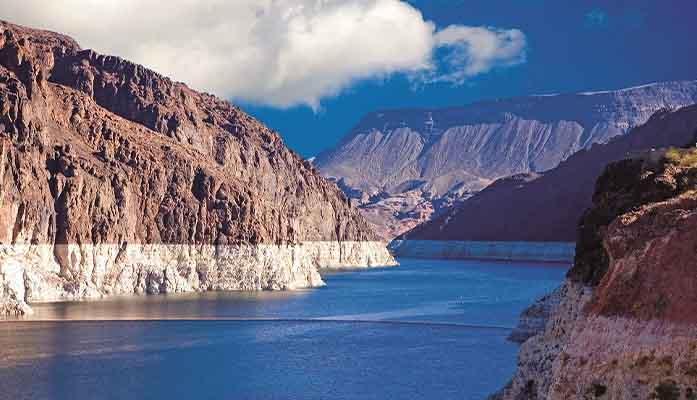
A joint Arizona legislative committee hearing made some discoveries about the state governor’s water policies in juxtaposition with the reality of housing affordability and supply.
Last week, both the House Natural Resources, Energy & Water Committee (NREW) and the House Commerce Committee held a joint hearing “to hear testimony from experts on the current state of water policy and its impact on housing supply and affordability in Arizona.”
State Representative Gail Griffin, the Chairwoman of the House NREW Committee issued a statement following the hearing, saying, “Good news! Updated groundwater modeling conducted in 2024 shows Arizona has water. According to independent hydrologists at Matrix New World, the comprehensive groundwater model that was released in June 2023 does not actually describe the amount of groundwater that is available in the basin. The Arizona Department of Water Resources decided unilaterally to model certain wells under the assumption that they would be placed on the side of a mountain rather than in the heart of the aquifer. In addition, the June 2023 model substantially over-estimated groundwater demand while substantially under-estimating future supply to reflect current best practices in water management or the fact that it is currently illegal to build residential subdivisions in the Phoenix metropolitan area without replenishing groundwater.”
“Clearly, this administration is targeting single-family homes and the American way of life,” said NREW Vice Chairman Austin Smith. “Some members of the Governor’s Water Policy Council have an issue with single-family homes and want to see future suburban development come to an end across the state. Governor Hobbs’s water policy and moratorium on new housing development has effectively put urban growth boundaries around the largest cities in our state. These policies didn’t work in states like Oregon and Washington and have only made housing affordability worse. What we’re seeing is a rogue administration that is attempting to use the power of the executive branch to circumvent the legislature and implement illegal housing and population control in Arizona.”
“Arizona is one of the fastest growing states in the nation and relies on new home construction to maintain an affordable housing supply and low-cost standard of living for millions of people,” added Commerce Committee Chairman Justin Wilmeth. “Home ownership is also one of the most effective ways to build generational wealth and lift future generations out of poverty. Bad water policies that prevent the development of new homes directly conflicts with our ability to ensure that first-time homebuyers can purchase at a price that they can afford. If the Department doesn’t change course, millions of people will be excluded from the opportunity to experience home ownership and be forced to pay rent forever.”
“Arizona’s regulatory environment is premised on the foundation that a person who submits an application for a regulatory approval under one set of rules will be entitled to have their application reviewed under that same set of rules,” said Commerce Committee Vice Chairman Michael Carbone. “Arizona water policy under the current administration, however, is the only place where the government has said that the rules can change at any time without notice, even if a developer has already submitted an application under the old set of rules. This is simply irresponsible – no matter how laudable the cause – and has impacted several major housing developers in Arizona who had invested hundreds of millions of dollars in capital improvements to bring thousands of new single-family homes online. These developers played by the rules and did everything they were supposed to do, yet they were denied due process of law in the handling of their applications. The Department must update the June 2023 groundwater model with the latest science and well placement data and lift the moratorium on new housing development without further delay.”
Daniel Stefanski is a reporter for AZ Free News. You can send him news tips using this link.