On Sunday, Maricopa County used its official social media accounts to tell residents to educate themselves about the LGBTQ+ history. The post comes midway through what some of the country recognizes to be Pride Month, acknowledgment and celebration of LGBTQ+ lifestyles.
During #PrideMonth, take time to educate yourself and others about the history of LGBTQ rights in America. @mcldaz has a collection of books sharing the history and experiences of people in the LGBTQ community to get you started: https://t.co/aDCfCMr2rBpic.twitter.com/qwu8ogtVeO
The county directed residents to utilize resources from the Maricopa County Library District (MCLD). The district organized adult, teen, juvenile, and children reading lists as well as film and TV suggestions for Pride Month.
For those under 10 years old, the picture books were “Strong” by Eric Rosswood, about the world’s only openly-gay powerlifter; “The Rainbow Parade” by Emily Neilson, about a lesbian couple who help their little girl work past her nerves to attend her first Pride parade; “Twas the Night Before Pride” by Joanna McClintick, about families preparing for a Pride parade; “My Moms Love Me” by Anna Membrino, and “Plenty of Hugs” by Fran Manushkin, about children raised by lesbian couples; “What Are Your Words” by Katherine Locke, about gender identity pronouns; “Two Grooms on a Cake” by Rob Sanders, about the first wedding between two gay men before it was legalized; “Sam is My Sister” by Ashley Rhodes-Courter, about a family encouraging their gender-confused little boy to become a transgender girl; “Daddy & Dada” by Ryan Brockington, about a little girl raised by two gay men; “It Feels Good to Be Yourself” by Theresa Thorn, about gender identity and transgenderism; “Kind Like Marsha” by Sarah Prager, about historic LGBTQ+ individuals; and “Cinderelliot” by Mark Ceilley, a retelling of Cinderella but with two gay men.
Most reactions to the post were negative. Residents asked why the county was advocating for certain ideologies over others.
“I don’t think government-run institutions should be telling citizens what they should ‘accept and affirm,’ much less celebrate,” replied one Twitter user.
“I wonder, you push ‘Pride Month,’ do you present ‘heterosexual’ lifestyles by offering book readings from the Bible?” replied one Facebook user. “And, in the same book, you can find our creator’s thoughts on LGBTQ+ — since LGBTQ+ isn’t new, it has been around since the earliest times of history (refer to Genesis 19).”
Other residents lamented that the county was focused on social justice agendas instead of issues plaguing the city like the homelessness and violent crime surges.
“This is why Maricopa County must be broken up. Get busy and stop crime. Help with the homeless problem,” replied another Twitter user.
Pride Month originated from the Stonewall Riots, or Stonewall Uprising, in June 1969. The six days of riots were in response to a police raid on a gay bar in Manhattan, New York. At that time, homosexual relations were illegal. A year later, LGBTQ+ activists commemorated the riots with gay pride marches in Chicago, Los Angeles, New York, and San Francisco.
Corinne Murdock is a reporter for AZ Free News. Follow her latest on Twitter, or email tips to corinne@azfreenews.com.
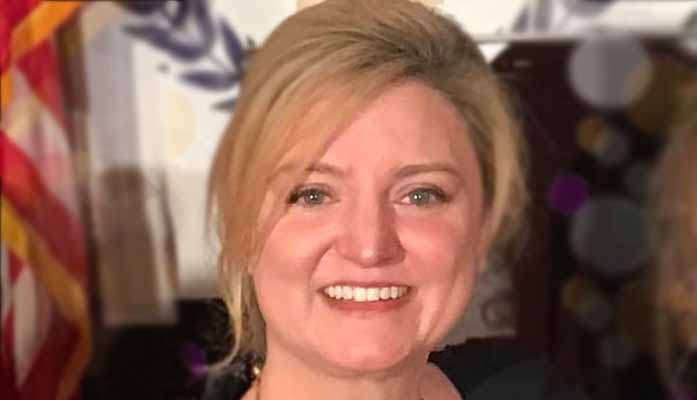
An outpouring of condolences continues in response to the announcement that former Maricopa County Attorney Allister Adel died Saturday due to unspecified health complications.
“How very tragic. The hearts and prayers of Arizonans are with Allister’s family, colleagues and close friends,” Gov. Doug Ducey stated after Adel’s death was revealed. “May she Rest In Peace.”
I’m shocked and devastated to learn that my friend, Allister Adel, passed away earlier today. My heart is broken for her husband and two young children that she leaves behind. Please join me in praying for the family as they grieve during this difficult time. RIP Allister. 💔 pic.twitter.com/TDcbZJ5ZFF
Similar sentiments were shared on Twitter by Arizona LD28 Republicans.
“We grieve the loss of our fellow member Allister Adel and pray for her family and friends who stood beside her,” the group tweeted. “She will be remembered as a caring mother, first female elected Maricopa County attorney, a loyal friend and party member. She wished only to do good in her life.”
Adel is survived by her husband, David DeNitto, and two children. DeNitto serves a senior vice president and investment officer for Wells Fargo Advisors.
“My family and I are utterly heartbroken by this unimaginable loss. We are so very proud to call Allister wife and mom,” DeNitto said Saturday in a released statement. “We are asking that the press and the public honor her, her legacy, and our family by respecting our privacy at this difficult time.”
Adel, a Republican, was appointed as Maricopa County Attorney in 2019 when then-County Attorney Bill Montgomery joined the Arizona Supreme Court. She was the first woman to hold the office, to which she was elected by voters in November 2020.
Unfortunately, Adel spent election night in the hospital where she underwent emergency surgery for a head injury suffered when she fell at home. She remained in the hospital for several weeks and even after being discharged Adel spent much of early 2021 recuperating at home.
In August 2021, Adel admitted herself to a rehabilitation facility for several weeks for treatment of anxiety, an eating disorder, and alcohol abuse. However, her frequent absences from the office were not disclosed to the board supervisors or other elected county officials until September when Sheriff Paul Penzone became concerned with who was signing off on various legal advice to his office.
Those absences also raised further questions about who was managing the 1,000 employees of the Maricopa County Attorney’s Office and its $115 million budget. It also led to revelations that Adel had little direct involvement in strategizing many major Maricopa County legal decisions, including multiple lawsuits related to the Senate’s 2020 election audit.
Further scrutiny into how decisions were made by the criminal division in several high-profile controversies led in February to five of Adel’s chiefs asking her to resign. Their letter was shared with the State Bar of Arizona, the board of supervisors, and the media.
That resignation finally came as of March 25 when it was apparent Adel’s personal issues were distracting from the daily work of her office. It was later confirmed she was receiving in-patient treatment at the time her resignation was announced.
“I am proud of the many accomplishments of the Maricopa County Attorney’s Office during my tenure, including policies that seek justice in a fair and equitable manner, hold violent offenders accountable, protect the rights of crime victims, and keep families safe,” Adel stated in a news release at the time.
Anni Foster, general counsel for the Arizona Attorney General’s Office, tweeted that she was heartbroken for Adel’s family.
“I had prayed for a miracle for her,” Foster said. “Hoping she can now rest in peace and that everyone can let her family grieve in private.”
For Phoenix City Councilman Sal DiCiccio, Adel’s sudden death serves as a reminder to remember others who may be going through difficult times.
“We never know the struggle the person next to us is going through,” he tweeted. “Today we should pray for her soul and for her family. We should also be praying for those having difficulties in their lives.”
Adel was a 2004 graduate of the Sandra Day O’Connor College of Law at Arizona State University. She held a number of legal positions, including as a deputy county attorney for Maricopa County before serving as the chief administrative law judge for the Arizona Department of Transportation and then becoming general counsel for the Arizona Department of Child Safety.
Monday’s scheduled Senate committee meeting to look into requested Maricopa County records from the 2020 election was canceled after the county’s Board of Supervisors complied with Attorney General Mark Brnovich’s subpoena, following State Senator Kelly Townsend’s (R-Mesa) pushes to have them to respond to her records requests echoing those made in Brnovich’s subpoena. Townsend’s efforts were to assert the will of Arizonans, she said in a press release, noting that she took action when the supervisors didn’t comply with Brnovich’s requests at the beginning of this month.
“I am pleased to report that Maricopa County has complied with the legislative subpoena commanding fulfillment of the Attorney General’s request dated March 9, 2022. The Government Committee scheduled for later today is therefore no longer necessary, as its intended objective has been achieved. The County’s acknowledgement of its duty to timely account for election administration activity is a laudable victory in our pursuit of accountability to Arizona voters,” wrote Townsend. “While the Maricopa County Chairman defends the delay in their response to the Attorney General with indeterminate case law and timelines set by courts, our subpoena conveyed the will of Arizonans, from the branch most representative of the statewide electorate, that the County make election integrity requests a top priority, rather than place them in a public records queue.”
However, Townsend noted that her job wasn’t done. She promised that she and a number of unnamed colleagues would ensure that Maricopa County officials carried out their compliance to the end.
“While I am encouraged by Maricopa County’s evolving attitude towards transparency and compliance, I will be closely following the Attorney General’s ongoing investigation and will be following up with additional inquiries to answer further questions I have as Government Committee Chairman,” stated Townsend. “I stand with my colleagues as we remain committed to engage again when it is necessary for the Legislature’s plenary authority over statewide elections to be exercised.”
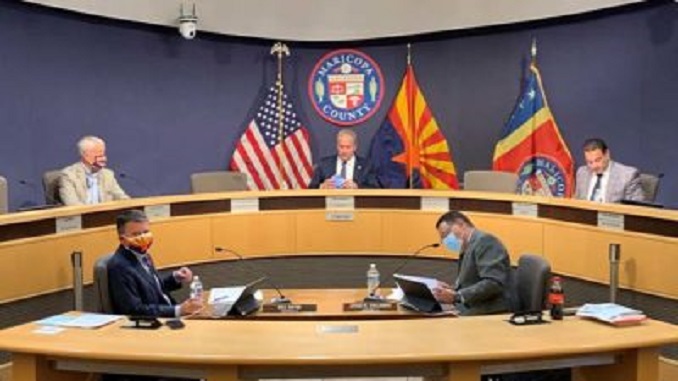
Townsend issued her subpoena last Monday. In response, Maricopa County Board of Supervisors Chairman Bill Gates claimed it wasn’t necessary to show up to Monday’s scheduled hearing because they already submitted requested records to Brnovich. Gates added that Townsend may not have authority to subpoena their board without permission of Senate President Karen Fann (R-Prescott).
Townsend responded by citing Arizona code, which allows committee chairmen to subpoena individuals.
As an educational opportunity, @billgatesaz remarks that I did not get permission from the Senate President, however may we all learn statute and see that A.R.S. 41–1151 allows for any Chairman to issue a subpoena w/o permission. A.R.S. 41–1153 requires that it be complied with. pic.twitter.com/gjnpktAHdZ
Gates reasserted to KJZZ several days after Townsend’s remarks that the board wouldn’t respond. Instead, the county’s attorney, Ed Novak, was slated to appear at the meeting.
Corinne Murdock is a reporter for AZ Free News. Follow her latest on Twitter, or email tips to corinne@azfreenews.com.
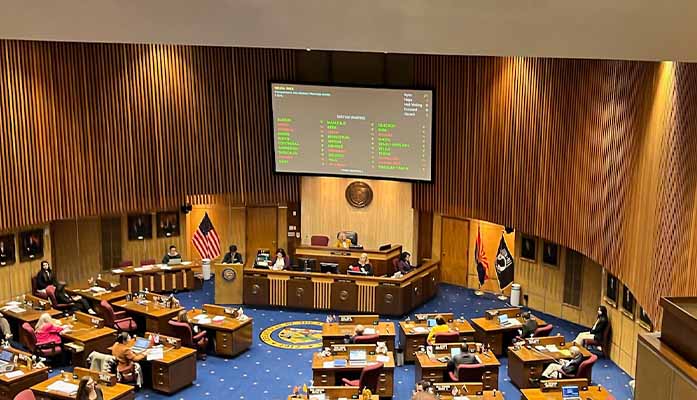
In a rare split, nine Republican Senators voted Wednesday against a bill sponsored by a member of their own caucus, with one senator calling on Gov. Doug Ducey to veto the bill if it hits his desk.
Voters approved the one-half cent sales tax for transportation funding back in the early 1980s and again in 2004 as Proposition 400. It is set to expire at the end of 2025 unless voters approve an extension that will general billions over the course of the proposed new extension.
To understand the money at play, the Joint Legislative Budget Committee projects the current Maricopa County transportation tax will generate in $754 million in annual revenue in 2025 alone.
Senate Bill 1356 was introduced in January by Sen. Tyler Pace as the vehicle to get the choice in front of voters. It contains an emergency clause, so if signed into law by Gov. Doug Ducey then the extension option will appear on the 2020 General Election ballot.
Voters in Maricopa County would then have a chance to say aye or nay to another extension. They will also have a good idea for how the tax revenue would be spent during the next two decades thanks to a draft spending plan from the Maricopa Association of Government.
But it appears the rush to get the matter on the ballot this year was more of an objection to those senators voting against the bill than the extension itself.
For Sen. Michelle Ugenti-Rita, putting the matter before voters in 2022 does not make sense considering the sales tax extension can go on the 2024 ballot.
“We have some members that are requesting that we suspend the 18 cents gas tax,” she said in explaining her no vote. “We’re sending mixed messages. There’s no reason we need to do it now. We can do this in 2024.”
Ugenti-Rita pointed out that Republicans have been touting tax cuts the last several years and are now asking voters in Maricopa County to approve a tax increase that cannot be undone for 25 years.
“Coming up on an election, this is the worst thing Republicans can do, is mandate a historic tax increase be placed on the ballot,” she added while calling on Ducey to veto the bill if it gets that far.
Joining Ugenti-Rita in voting against SB1356 were Senators Nancy Barto, Sonny Borrelli, David Gowan, Vince Leach, JD Mesnard, Warren Petersen, Wendy Rogers, and Kelly Townsend.
For Mesnard, the inclusion of funding for “intolerable” light rail projects was the primary reason for his no vote even though he applauded Pace for the effort put into the legislation.
“The thing that I have just wrestled over is when I look now down 25 yeas in the future, what is transportation going to look like?” Mesnard said on the floor. “And so I have been uncomfortable with the idea that we would spend what I think is hundreds of millions, billions of dollars, on light rail.”
SB1356 also makes several changes to the distribution of the tax revenues, while modifying the budgeting process for the Maricopa Association of Governments which will have to create a Transportation Tax Plan. And it increases the tax period from 20 to 25 years.
Gowan explained his no vote is also tied to the inclusion of so much money for light rail projects, saying he thought the money would be better spent on the construction of freeways and maintenance of existing highways and streets.
“I think it is a better fit for those dollars that we would get for light rail to actually go into the roads…the highways that we all travel,” Gowan said Wednesday. “I do believe, no pun intended, it’s a bridge too far to go with the light rail. And that is why you see me voting no today, Madame President.”
SB1359 still passed out of the Senate on a 21 to 9 vote, securing the two-thirds votes required of an emergency clause. It has been transmitted to the House where its passage is not assured due to the two-thirds requirement of the 60 representatives.
The Arizona House Government and Elections Committee approved State Representative Jake Hoffman’s (R-Queen Creek) bill to split Maricopa County into four separate counties. The four new counties would be Maricopa, encompassing central Phoenix, Tempe, and Tolleson; Mogollon, encompassing north Phoenix, Scottsdale, and Cave Creek; O’odham, encompassing Buckeye, Peoria, and Surprise; and Hohokam, encompassing Gilbert, Mesa, and Chandler. If signed into law, the current Maricopa County officials would continue jurisdictional operations until boards of supervisors could be established in those three counties. The committee approved the bill along party lines, meaning it barely passed with a 7-6 majority.
Hoffman stated during committee that this would be a fairer representation of current Maricopa County residents, and that any attempts to characterize this bill as a response to a dispute over the 2020 election results was a conspiracy theory. Arizona House Democrats insisted otherwise.
Rep. Jake Hoffman's big-government punishment for Maricopa County not going along with overturning the 2020 election for Trump is up in Gov. and Elex committee. #HB2787 would split Maricopa County 4 ways. Includes his personal gerrymander, so 1 big Dem county, three smaller GOP.
Gubernatorial candidate Steve Gaynor testified during committee that Maricopa County threatened to overtake Arizona the way that similarly-dominant counties in other states have, such as Los Angeles County, California.
“The two largest counties by population in the country, Los Angeles and Cook, are examples of what Maricopa will likely become if action is not taken,” Gaynor testified. “Their governments are wasteful and unresponsive to citizen needs, and they are unpleasant places to live.”
Today I told the Legislature to BREAK UP MARICOPA COUNTY.
We don't want a liberal, terribly-run megacounty like Los Angeles or Cook County here in AZ, so we need to act now on Rep. Jake Hoffman's HB 2787. #AZGovpic.twitter.com/Qje84R5CSB
— Steve Gaynor for Arizona Governor (@gaynorforgov) February 16, 2022
Los Angeles County has a population of over 10 million, while the second-largest county, San Diego County, has over 3.3 million. Similarly, Maricopa County is by far the largest county in Arizona at around 4.5 million residents. The next-largest county, Pima County, doesn’t come close in terms of population count: a little over 1 million. The federal government estimated Arizona’s total population last summer to be around 7.3 million citizens, meaning Maricopa County contains around 62 percent of the state’s population.
Considering the size of its constituency, Maricopa County has only five supervisors, and one of other county officials like sheriff, secretary, and recorder. By comparison, Greenlee County, the least-populous county at under 10,000 residents, has just two less supervisors and the same number of other county-wide officials.
President Joe Biden eked out a victory in Arizona thanks to Maricopa County, earning over 10,400 more votes in the state than former President Donald Trump. Biden won just over 50 percent of the vote in Maricopa County, or over 1.04 million votes, while Trump won over 48 percent of the vote, or 995,000.
Corinne Murdock is a reporter for AZ Free News. Follow her latest on Twitter, or email tips to corinne@azfreenews.com.