For the third year in a row, the Arizona governor made a bold statement for Pride Month.
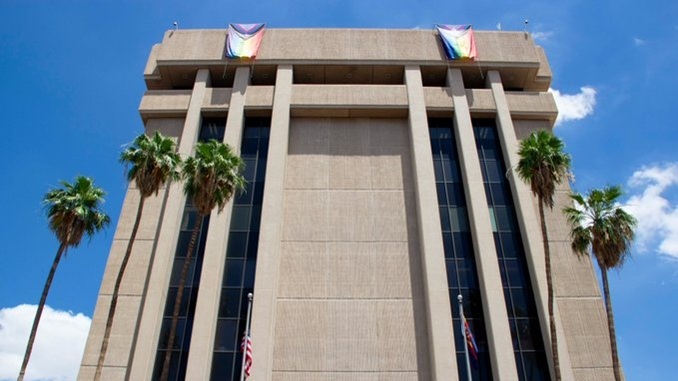
Governor Katie Hobbs again raised the Pride flag stories above the American flags on the Executive Tower on Monday in recognition of Pride Month. Hobbs pledged her loyalty to advancing and protecting LGBTQ+ ideologies.
“I’m proud to fly the Pride banner from the Executive Tower in celebration of Pride Month,” said Hobbs. “I will always stand for the freedom of Arizonans to be who they are, love who they love, and live with dignity and without fear.”
I'm proud to fly the Pride banner from the Executive Tower in celebration of Pride Month. I will always stand for the freedom of Arizonans to be who they are, love who they love, and live with dignity and without fear. pic.twitter.com/kqMYEcSaky
— Governor Katie Hobbs (@GovernorHobbs) June 2, 2025
These flags are technically an expansion of the original rainbow-based Pride flag because they include the colors light pink, light blue, and white to represent transgenderism as well as black and brown to represent people with brown or black skin tones.
Pride Month was first officially recognized by the federal government in 1999 under President Bill Clinton, initially called “Gay and Lesbian Pride Month.” Then, in 2011, President Barack Obama expanded Pride Month recognition into what it consists of today.
During his first term in 2017, President Donald Trump didn’t offer federal recognition of Pride Month.
However, the first Pride Parade in Arizona took place in Phoenix in 1981 — about a decade after the first pride marches occurred in response to the 1970 Stonewall Riots in New York. The riots erupted following a police raid on a gay bar in Manhattan and lasted nearly a week.
Hobbs has continued her commitment to Pride Month despite the growing reluctance of other major cultural players to continue doing so. A frequent supporter of LGBTQ+ ideologies, Google, announced earlier this year it would no longer highlight Pride Month by default on Google Calendar. The corporation said the continued recognition of Pride Month wasn’t “scalable or sustainable,” citing the burden of recognizing the ever-increasing number of “cultural moments” globally.
Hobbs has flown the Pride flags above the American flags every summer since taking office.
During last summer’s Pride Month, Hobbs vetoed legislation guaranteeing equality of care for gender transition reversals, dubbed the “Detransitioner Bill of Rights.” This year, Hobbs vetoed bills limiting school locker room usage by gender, barring gender changes on birth certificates, preventing any funding to higher education institutes teaching students about gender identity, and precluding legal recognition of gender transitions.
During her first Pride Month as governor, Hobbs used an Arizona Department of Transportation (ADOT) drone to film the Pride flags. Reporting on the matter was delayed until the following year because it took the governor’s office nine months to respond to public records requests.
As reported initially, ADOT drone usage is intended for inspections and surveys of work concerning state infrastructure.
Hobbs also used state time to hold several ceremonies to watch the unfurling of the flags from the balcony and then admire the flags from the ground below, followed by an hour-long “Pride Roundtable” with those same guests.
Hobbs’ first executive order expanded discrimination protections to include prohibitions against “gender identity” discrimination in state employment and contracts.
AZ Free News is your #1 source for Arizona news and politics. You can send us news tips using this link.
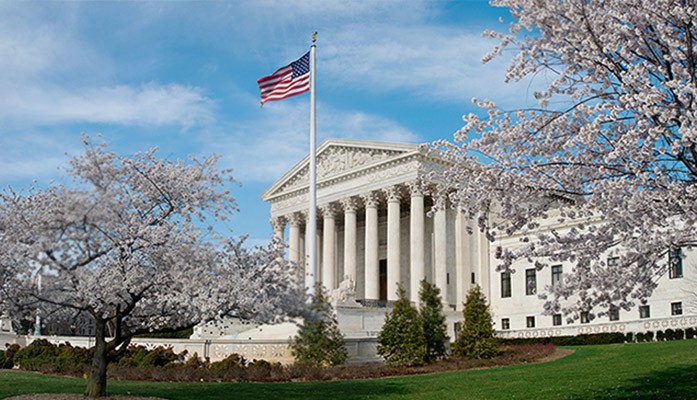
Attorney General Kris Mayes pledged to ignore the Supreme Court’s (SCOTUS) recent decision in the case 303 Creative v. Elenis.
SCOTUS ruled last month that Colorado’s anti-discrimination law that would punish a Christian wedding website designer for declining to make a same-sex wedding website violated the First Amendment. The Scottsdale legal nonprofit Alliance Defending Freedom (ADF) represented the website designer.
The Supreme Court’s decision in 303 Creative reaffirms a bedrock principle: the government cannot force us to say something we don’t believe.
Equal treatment under the law requires protecting everyone’s right to free speech.
— Alliance Defending Freedom (@ADFLegal) July 5, 2023
Colorado anti-discrimination law added sexual orientation and gender identity to the list of traditional Civil Rights protections: race, religion, color, and national origin.
In a press release, Mayes encouraged individuals to continue to file complaints of discrimination concerning LGBTQ+ identity.
“Despite today’s ruling, Arizona law prohibits discrimination in places of public accommodation, including discrimination because of sexual orientation and gender identity,” said Mayes. “If any Arizonan believes that they have been the victim of discrimination on the basis of race, color, religion, sex (including sexual orientation and gender identity), national origin, or ancestry in a place of public accommodation, they should file a complaint with my office. I will continue to enforce Arizona’s public accommodation law to its fullest extent.”
The Arizona Civil Rights Act (ACRA) doesn’t list either sexual orientation or gender identity as protected classes. ACRA only recognizes race, color, sex, religion, national origin, age, physical or mental disability, and genetic testing results as protected classes.
Mayes’ interpretation of ACRA could come from the arguments presented by former attorney general Mark Brnovich. Mayes’ predecessor interpreted anti-discrimination protections to include both sexual orientation and gender identity in a 2020 filing for Bruer v. State of Arizona. His filing followed the Bostock v. Clayton County decision prohibiting employers from discriminating based on sexual orientation or gender identity.
At the time, Brnovich stated that the state legislature would have to amend the Arizona Civil Rights Act to exclude sexual orientation and gender identity if they disagreed with his interpretation.
Also in her press release, Mayes called the SCOTUS majority “woefully misguided.” Mayes added that she agreed with Justice Sonya Sotomayor’s dissent.
“Today, a woefully misguided majority of the United States Supreme Court has decided that businesses open to the public may, in certain circumstances, discriminate against LGBTQ+ Americans,” stated Mayes.
Today, a woefully misguided majority of the United States Supreme Court has decided that businesses open to the public may, in certain circumstances, discriminate against LGBTQ+ Americans.
— AZ Attorney General Kris Mayes (@AZAGMayes) June 30, 2023
Sotomayor’s dissent argued that the wedding website designer wasn’t protected by the First Amendment because her refusal to validate a same-sex wedding should be considered an act, not protected speech. Sotomayor further argued that individuals should be compelled to act contrary to their personal beliefs if they’re wishing to participate in the economy at all.
“[I]f a business chooses to profit from the public market, which is established and maintained by the state, the state may require the business to abide by a legal norm of nondiscrimination,” stated Sotomayor.
In her first executive order issued in January, Gov. Katie Hobbs added gender identity to the list of anti-discrimination protections concerning state employment and contracts. Hobbs expanded on the anti-discrimination precedent of her Democratic female predecessor, Janet Napolitano, who issued an executive order prohibiting discrimination based on sexual orientation.
Corinne Murdock is a reporter for AZ Free News. Follow her latest on Twitter, or email tips to corinne@azfreenews.com.
The Maricopa County Public Library is stocking up on controversial LGBTQ+ and anti-racist children’s books.
Children’s books put on display at the libraries included those that teach that systemic racism is real, and that LGBTQ+ lifestyles and ideologies are healthy and cause for celebration.
Several of the LGBTQ+ and anti-racist books offered were board books: thick, durable picture books intended for infants through children up to four years old.
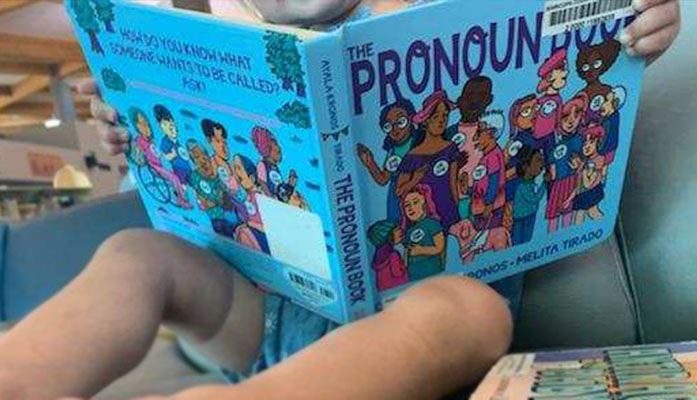
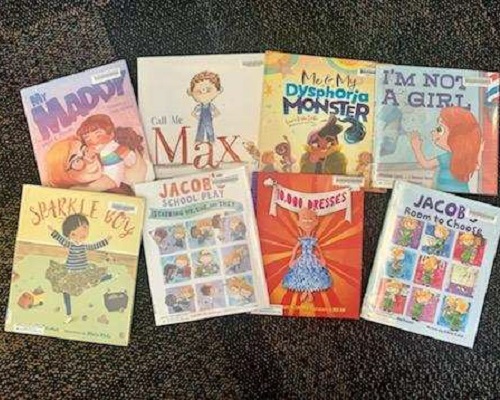
The controversial children’s books included the “Pronoun Book,” “My Two Dads,” “I’m Not a Girl,” “Antiracist Baby,” “Me & My Dysphoria Monster,” “My Maddy, “Call Me Max,” “Sparkle Boy,” “Jacob’s School Play: Starring He, She, and They” “10,000 Dresses,” “Jacob’s Room to Choose,” “Stella Brings the Family,” “Love Makes a Family,” “Lovely,” “Grandad’s Camper,” “What Riley Wore,” “My Rainbow,” “Prince & Knight,” “And Tango Makes Three,” “Mommy, Mama, and Me,” “Julian is a Mermaid,” “King & King,” “One Family,” “In Our Mothers’ House,” “Happy in Our Skin,” “Morris Micklewhite and the Tangerine Dress,” “Jacob’s New Dress,” “Uncle Bobby’s Wedding,” “Home at Last,” “This Day in June,” “Fred Gets Dressed,” “When Aidan Became a Brother,” “My Shape is Sam,” “Adventures With My Daddies,” “Papa, Daddy, 7 Riley,” “Except When They Don’t,” “Jack (Not Jackie),” “Mr. Watson’s Chickens,” “Old MacDonald Had a Baby,” “Rainbow: a First Book of Pride,” “One of a Kind, Like Me,” “Sam is My Sister,” “A Plan For Pops,” “From Archie to Zack,” “Bye Bye, Binary,” “My Shadow is Pink,” “It Feels Good to Be Yourself,” “The Truly Brave Princesses,” “The Bread Pet,” “Peanut Goes For the Gold,” and “Patrick’s Polka Dot Tights.”
LGBTQ and anti-racist children’s board books featured in a Maricopa County Public Library.
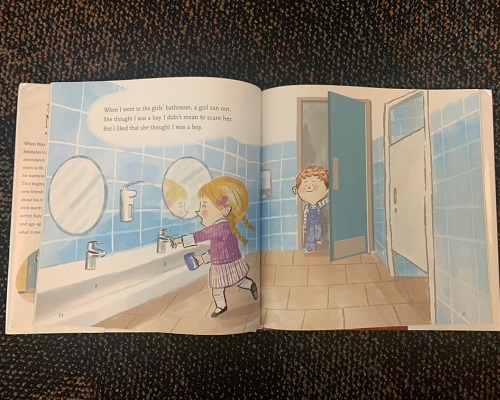
In “Call Me Max,” a little girl dressed like a boy scares another little girl as she enters the bathroom; her peer believes the little girl is actually a boy.
“When I went to the girls’ bathroom, a girl ran out,” read the book. “She thought I was a boy. I didn’t mean to scare her. But I liked that she thought I was a boy.”
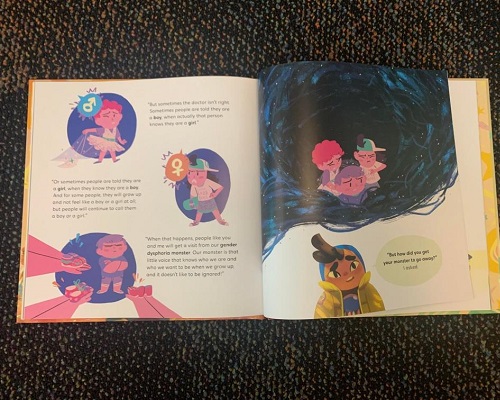
In “Me & My Dysphoria Monster,” the protagonist grapples with his gender identity.
“Sometimes people are told they are a boy when actually that person knows they are a girl,” stated the book. “Or sometimes people are told they are a girl when they know they are a boy.”
The book then advises the reader that a “gender dysphoria monster” may visit, and warns that it “doesn’t like to be ignored.” The book teaches the reader that children who ignore this gender dysphoria monster will only result in it growing bigger, and that the only remedy for it is to identify as the opposite gender. The moment of triumph between the little boy and the “gender dysphoria monster” was when he was allowed to join the girls’ soccer team.
In “Antiracist Baby,” children are taught that they must see other people’s races rather than be “color-blind,” that not every race is treated equally in society, and that they should always be watching out for instances of racism. It also included depictions of same-sex couples, teaching that no lifestyles are better or worse.
Some of these controversial books were declared “award-winning” works at one point by the American Library Association’s (ALA) Stonewall Book Awards. The award-granting organization has issued awards for LGBTQ+ works since 1971, but only began issuing awards to children’s and young adult books since 2010.
Awards were granted to: “10,000 Dresses” (2010), “Mommy, Mama, and Me” (2010), “Morris Micklewhite and the Tangerine Dress” (2014), “This Day in June” (2014), “Julian Is a Mermaid” (2019), “When Aidan Became a Brother” (2020), and “Grandad’s Camper” (2022).
Some of the younger children’s books were given special recognition with their inclusion on the 2023 Rainbow Book List, organized by the ALA’s Rainbow Round Table. The list includes nearly 200 books discussing LGBTQ+ ideology published between 2021 to present.
“The importance of this list (and others like it) cannot be understated, especially in a time when we are seeing a record number of efforts to ban both materials and support for LGBTQIA+ young people and their families,” stated the ALA. “The suppression of these books is a detriment to all youth, and we cannot ignore the damage these challenges are having on the young people in our society.”
In addition to the ALA’s Stonewall Book Awards and Rainbow Book List, there’s the Walter Dean Myers Award and the Lambda Literary Award.
Click an image in the gallery below for more images:
Corinne Murdock is a reporter for AZ Free News. Follow her latest on Twitter, or email tips to corinne@azfreenews.com.