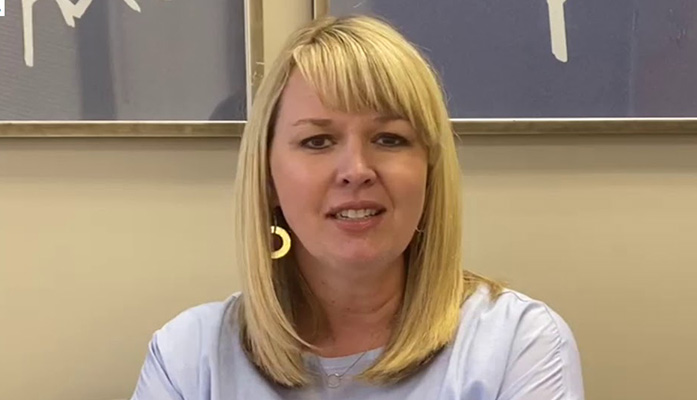
Recent filings show Mesa City Councilwoman Julie Spilsbury raising $94,207 for her November 4 recall defense, including several Democratic donors and aligned figures.
Spilsbury, a two-term council member, entered the reporting period with a remaining balance of $1,631 from January filings before piling on over $90k in donations. Her total raised now exceeds her 2023 re-election campaign by nearly $30,000. She has reportedly spent $32,866 during the period, including $28,700 on consultant services.
Among Spilsbury’s donors are Tim Stringham, a Tempe Navy veteran and unsuccessful Democratic candidate for Maricopa County Recorder; Jennifer Pawlik, former Chandler Democratic state representative; and other individuals with Democratic ties.
Stringham contributed an unspecified amount, Pawlik gave $100, and former Maricopa County Recorder Stephen Richer gave $1,000, as reported by The Mesa Tribune.
Spilsbury also received $1,500 from the John Giles for Mayor Committee. Giles served as Mesa mayor for a decade before leaving office in January 2024 and has vocally supported both former President Joe Biden and former Vice President Kamala Harris in their presidential campaigns.
In addition to the others named, Councilwoman Spilsbury’s donor list includes: Colleen Wheeler, a Mesa healthcare executive ($4,250); Yasser Sanchez, a Gilbert immigration attorney ($3,500); David Johnson, a Mesa real estate broker ($2,500); David Stahle, a Mesa financial consultant ($2,500); Mary “Marcie” Hutchinson, Mesa Public Schools Governing Board member ($1,000); Stan Barnes, Mesa Republican political consultant ($500); Sean Lake, Mesa land-use attorney ($500); Dennis Kavanaugh, former Mesa councilman ($100); Dr. Andi Fourlis, former Mesa Public Schools superintendent ($100); Lacy Chaffee, Mesa Public Schools Governing Board member ($100); and Richard Humpherys, husband of Gilbert Public Schools Governing Board member Jill Humpherys ($50).
The councilwoman also received $17,300 from political action committees, including $6,750 from United Mesa Firefighters, $6,750 from Moms Fed Up, and $2,500 from Country First.
Taylor, a political newcomer, reported expenditures of $5,717, including $4,072 to Mesa Sign Shop and $900 to Moir & Associates for consulting.
Taylor’s donors include: Earl Taylor, a Mesa retiree and founder of Heritage Academy charter school ($3,200); Scott Grainger, a Mesa forensic engineer ($2,000); David Winstanley, a Mesa retiree ($1,042); David Cummard, a Mesa insurance CEO ($1,000); Joseph Hughes, a Gilbert retiree ($1,000); and Melody Whetstone, who ran against Spilsbury in the 2023 primary ($105).
Taylor received $5,500 from PACs, including $5,000 from the Arizona Free Enterprise Club’s Freedom Club and $500 from the Home Builders Association of Central Arizona.
The recall petition, initiated by a resident with assistance from Turning Point USA, gathered 5,235 signatures, of which Maricopa County verified 3,858. The petition accuses Spilsbury of using her office to advance private interests, citing her votes in favor of a temporary homeless shelter in District 2, a council pay raise, and increases in residential and commercial utility rates. The shelter vote passed 4-3; the pay raise and utility rate increases passed unanimously 7-0.
The @TPAction_ East Valley #ChaseTheVote team is in your local neighborhood to FINISH what we started.
We RECALLED Spilsbury, and now we’re going to REPLACE her.
Spilsbury’s support for an anti-discrimination ordinance extending protections to groups, including gender identity, has also been referenced in the recall effort. Taylor has connected Spilsbury’s shelter vote to homelessness issues in Mesa.
In December 2023, residents at a council meeting criticized Spilsbury and former Mayor John Giles for supporting Vice President Kamala Harris and other Democratic candidates in the presidential election. The Republican committees of Legislative Districts 9 and 10 passed resolutions censuring Spilsbury for campaigning on behalf of multiple Democrats.
In the July 2023 primary for District 2, Spilsbury received 8,120 votes, or 65.91%, out of 12,322 total votes cast. District 2 has 49,329 registered voters, according to the Mesa City Clerk.
Spilsbury and her supporters have canvassed neighborhoods every Saturday since early September. Taylor has conducted door-to-door outreach and met with voters in the district.
The city estimates the special election will cost at least $104,577. The winner will take office the day after the vote count. If Spilsbury retains her seat, she will serve through January 2029; if Taylor wins, she will complete the remainder of the term.
During a city council meeting this week, Mayor John Giles and the Mesa City Council voted to approve across-the-board increases in the city’s utility rates and fees covering solid waste removal, electricity, gas, water, and wastewater. Over two-dozen Mesa citizens spoke during the meeting, which stretched over two-hours. Mesa, lacking a primary property tax, derives much of its funding from utility rates and fees.
The city is facing increases in electric rates of up to 39% for Winter Tier 2 usage charges for residents and a $2.75 per month service charge increase according to the council report. Non-residential users will face increases from 2-6 percent. Solid waste residential barrel rates will increase 5.5%, with commercial roll-off rates jumping 6.5%. Gas rates are increasing 6-15% for residences and from 9-25% for non-residential users. Water rates are increasing 4-9% for residents, 5.5% for non-residential, 8.5% for commercial users, and 19.5% for large commercial or industrial users. Finally wastewater service and usage components charges will increase by 7.5% for residents and 8.5% for non-residential.
City staffers told The Mesa Tribune that the typical residential bill for water, wastewater, and solid waste will see an increase of about $5.60, from the current average of $100.21 to $105.81
As reported by the Tribune, Giles answered criticism at a meeting in late November telling the frustrated residents, “This proposed water-rate increase of less than 5% in Mesa is dramatically less than you see in every other community,” said Giles, zeroing in on the water utility increase.
“Cities around the Valley are increasing water 25%, talking about increasing wastewater charges 95%. We’re not doing anything remotely like that in the City of Mesa.“
“So if you’re upset about the increasing price of water, I’m with you. But if you want to vent those feelings, probably every other city council in the state would be a more appropriate place to do that because the increases are less than what you’re seeing in other cities.”
Kevin Medema, a Mesa resident who led the organization of a petition opposing the utility increases reportedly signed by 2,000 people, stressed, “We have citizens that are hurting financially. The city shoots for that 20% reserve (in the utility accounts). Well, you know a lot of residents won’t have that in themselves. So, please consider voting ‘no.’’’
Medema suggested that residents have offered to help the city find ways to reduce spending.
During the November 18th meeting, one Mesa resident, Lynda Patrick-Hayes poignantly called upon the council to “entertain the idea of cutting the utility rates and encourage the city manager to eliminate government waste. The City of Mesa has no revenue problems. It has a spending problem.”
Citing the city’s reliance on utility charges and sales tax due to lacking a property tax, Giles told the citizens, “There’s not an apples-to-apples comparison because the City of Mesa has a different model. We’re going to use utilities to help subsidize city services.”
Multiple attempts to reinstate a primary property tax, eliminated in 1945, have failed over the years.
“Now if you don’t like that model…the answer is not to come to the City of Mesa and say, ‘We don’t want you to raise utilities because that’s denying the reality of math.’”
Responding to calls to reduce city spending, Giles told the gathered objectors, “What your proposal is, you’re saying, ‘I want to dramatically cut spending on public safety in the City of Mesa.’ That’s what you’re asking us to do.”
Republican State Representative Barbara Parker spoke on behalf of her constituents in the area and told the council, “They call me when they lose their homes. They call the state when they can’t afford their insurance. And on behalf of them, I am telling you they are hurting and even one dollar makes a huge difference.”
Parker castigated the mayor and council for suggesting the city cut public safety spending, “The fact that we use the threat of fear and emotion that we are going to cut police and fire is so disingenuous and inappropriate. And to all the gentlemen and women in uniform tonight: I am one of you and I have trained many of the firefighters, and I want you to know we have your backs. And we need to elect people who will fund you first and then find funding for everything else. We are never going to cut funding to police and fire. That is always a tactic. It’s disingenuous, it is inappropriate, it lacks accountability, it is intellectually dishonest, and they are not pawns and you deserve better. Don’t let them use you as a pawn police and fire. It’s inappropriate to have a bond and then immediately after that election to suddenly have a tax increase or a rate payers increase.”
She concluded, “One of the things I was able to communicate to the legislature as a member of the Appropriations Committee is that: EVERY. SINGLE. DOLLAR. IS. SACRED. Every single penny is sacred. And when I’ve asked the citizens would they rather have one more penny in their pocket than have it go to waste or redundancies or excesses. Absolutely they say yes. I hope you’ll have the courage to do the right thing tonight. I can tell you on behalf of the state: we were able to cut budget, balance our budget, give money back to the taxpayers and fund every single program. And if the state of Arizona can do it, Mesa can do it better.”
The rate increases were passed by the city council unanimously with Giles stating, “I know all of that is not appreciated by this crowd to the extent that we’d like it to be, but it’s the facts. For those reasons I am compelled by math and the reality of the situation to support this increase.”
An Arizona lawmaker is pushing back against the City of Mesa’s continued plans to address homelessness within its jurisdiction.
State Representative Barbara Parker released a statement on Tuesday, condemning what she labeled as “the City of Mesa’s misguided and controversial plan to purchase a hotel to house homeless individuals against the wishes of residents.”
✅FOR IMMEDIATE RELEASE✅ State Representative Barbara Parker Denounces City of Mesa’s Controversial Homeless Housing Plan
"The proposed acquisition of the Grand Hotel to house homeless individuals is a clear violation of the trust placed in our local government by our citizens… pic.twitter.com/t7vRhNpa15
The hotel Parker referred to was the acquisition of a property by the Mesa City Council earlier this year with funds allocated by the American Rescue Plan Act. The Council’s vote was 4-3, and the amount for the hotel was $7.4 million. The city is moving to repurpose the hotel to assist with its Off the Streets program, which is “a first step on Mesa’s Housing Path providing immediate shelter with strong support services for Mesa’s most vulnerable including seniors, Veterans, families with young children and single women.”
Representative Parker echoed the concerns of some Mesa residents as their city’s plan nears fruition, saying, “In an alarming display of disregard for the well-being and concerns of the hardworking residents of Mesa, the City Council is pushing forward with its poorly conceived project. The proposed acquisition of the Grand Hotel to house homeless individuals is a clear violation of the trust placed in our local government by our citizens and is a sad failure by Councilmembers to listen to the voices of their constituents. These property owners in Mesa have voiced their legitimate concerns over neighborhood safety, property values, the use of taxpayer funds, and the role of government in addressing homelessness.”
The East Valley legislator also linked the issues of illegal immigration with homelessness in disparaging Mesa’s plan of action. She said, “The City Council’s plan to house the homeless in our community comes at a time when our state is facing significant challenges. The ongoing crisis of illegal immigration, with nearly 10,000 illegal immigrants crossing into Arizona every day, poses a severe threat to our safety and security. This influx brings with it illegal narcotics, weapons, and human trafficking, further straining public resources and contributing to the homelessness issue.”
In April, Mesa Mayor John Giles penned an opinion piece for the Arizona Capitol Times, entitled “City and State Leaders Can Tackle Housing Crisis Together.” He exhorted Arizona officials to adopt “a holistic approach … to address this crisis,” encouraging “state leaders …to work with cities to find real-world solutions by providing funding, creating pragmatic policies and increasing tax credits and vouchers.” Giles highlighted his city’s Off the Streets program as “helping residents navigate to support systems and stable housing.”
Giles ended his piece with a call to proactively address homelessness, writing, “In recent years, I’ve been quoted as saying, homelessness is not AN issue, it is THE issue. I encourage our legislators to partner with local community leaders to turn this around before it’s too late.”
Earlier this month, the Mesa Mayor again championed the Off the Streets program on social media, stating, “Mesa’s Off the Streets Program helps get those experiencing homelessness on a path to stable housing and has a 75% success rate. We appreciate the many community partners who help connect those in need with housing, food, and medical care.”
Mesa’s #OffTheStreets Program helps get those experiencing homelessness on a path to stable housing and has a 75% success rate. We appreciate the many community partners who help connect those in need with housing, food, and medical care. @CityofMesa 👉 https://t.co/RWTaC0pxI2
According to the city’s website, “more than 1,700 individuals and families have been served” under the program as of May 2023.
Representative Parker, however, is not on board with the City’s and the Mayor’s plans. She asserted that “the City Council’s approach fails to address the critical issues of drug addiction and behavioral health that plague our homeless population. The so-called ‘housing-first’ strategy, as adopted by the City of Mesa, has failed time and again in other cities, proving to be a costly and ineffective solution.”
She added, “It is abundantly clear that the City Council is adopting misguided policies without considering the well-being and safety of our community. This action mirrors the failed policies of larger cities like Phoenix and Tucson, policies that have only exacerbated the problems they aimed to solve.” The legislator’s statement ended with a call for the Mesa City Council to “halt this terrible project.”
Daniel Stefanski is a reporter for AZ Free News. You can send him news tips using this link.