America’s carmakers face an uncertain future in the wake of President Donald Trump’s signing of the One Big Beautiful Bill Act (OBBBA) into law on July 4.
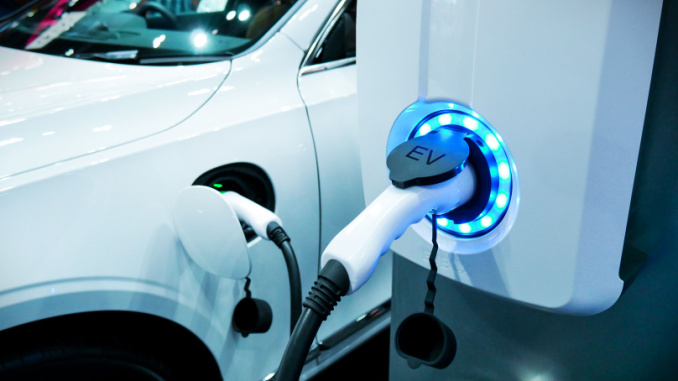
The new law ends the $7,500 credit for new electric vehicles ($4,000 for used units) which was enacted as part of the 2022 Inflation Reduction Act as of September 30, seven years earlier than originally planned.
The promise of that big credit lasting for a full decade did not just improve finances for Tesla and other pure-play EV companies: It also served as a major motivator for integrated carmakers like Ford, GM, and Stellantis to invest billions of dollars in capital into new, EV-specific plants, equipment, and supply chains, and expand their EV model offerings. But now, with the big subsidy about to expire, the question becomes whether the U.S. EV business can survive in an unsubsidized market? Carmakers across the EV spectrum are about to find out, and the outlook for most will not be rosy.
These carmakers will be entering into a brave new world in which the market for their cars had already turned somewhat sour even with the subsidies in place. Sales of EVs stalled during the fourth quarter of 2024 and then collapsed by more than 18% from December to January. Tesla, already negatively impacted by founder and CEO Elon Musk’s increased political activities in addition to the stagnant market, decided to slash prices in an attempt to maintain sales momentum, forcing its competitors to follow suit.
But the record number of EV-specific incentives now being offered by U.S. dealers has done little to halt the drop in sales, as the Wall Street Journal reports that the most recent data shows EV sales falling in each of the three months from April through June. Ford said its own sales had fallen by more than 30% across those three months, with Hyundai and Kia also reporting big drops. GM was the big winner in the second quarter, overtaking Ford and moving into 2nd place behind Tesla in total sales. But its ability to continue such growth absent the big subsidy edge over traditional ICE cars now falls into doubt.
The removal of the per-unit subsidies also calls into question whether the buildout of new public charging infrastructure, which has accelerated dramatically in the past three years, will continue as the market moves into a time of uncertainty. Recognizing that consumer concern, Ford, Hyundai, BMW and others included free home charging kits as part of their current suites of incentives. But of course, that only works if the buyer owns a home with a garage and is willing to pay the higher cost of insurance that now often comes with parking an EV inside.
Decisions, decisions.
As the year dawned, few really expected the narrow Republican congressional majorities would show the political will and unity to move so aggressively to cancel the big IRA EV subsidies. But, as awareness rose in Congress about the true magnitude of the budgetary cost of those provisions over the next 10 years, the benefit of getting rid of them ultimately subsumed concerns about the possible political cost of doing so.
So now, here we are, with an EV industry that seems largely unprepared to survive in a market with a levelized playing field. Even Tesla, which remains far and away the leader in total EV sales despite its recent struggles, seems caught more than a little off-guard despite Musk’s having been heavily involved in the early months of the second Trump presidency.
Musk’s response to his disapproval of the OBBBA was to announce the creation of a third political party he dubbed the American Party. It seems doubtful this new vanity project was the response to a looming challenge that members of Tesla’s board of directors would have preferred. But it does seem appropriately emblematic of an industry that is undeniably limping into uncharted territory with no clear plan for how to escape from existential danger.
David Blackmon is a contributor to The Daily Caller News Foundation, an energy writer, and consultant based in Texas. He spent 40 years in the oil and gas business, where he specialized in public policy and communications.
Trump’s One Big Beautiful Bill (BBB) that passed the House of Representatives last month contained numerous wins for the American people: permanent tax relief, funding for border security, an expansion of Health Savings Accounts, and even a new program to expand school choice. But arguably the most impactful accomplishment in the BBB was their success in taking a machete to the labyrinth of green new scam tax subsidies created by Joe Biden and the Democrats through the inflation-creating Inflation Reduction Act (IRA). That alone makes it the most beautiful feature of the Big Beautiful Bill.
The House’s version included key provisions sunsetting some of the worst subsidies authorized under the IRA, including:
Ending the Clean Electricity Production Tax Credit (PTC) and the Clean Electricity Investment Tax Credit (ITC) for any project that doesn’t start within 60 days of the enacting legislation and isn’t in service by 2028;
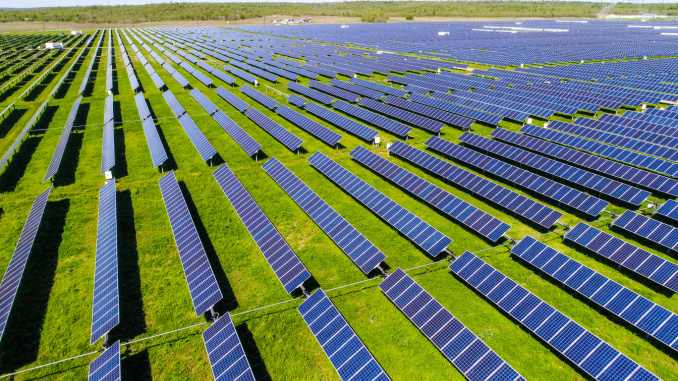
Ending the Clean Electricity Investment Credit and Transferability of Tax Credits for Wind and Solar;
Eliminating the Tax Credit for Residential Solar and Rebates for “Green” Products;
Repealing the Electric Vehicle Credit designed to Force Manufacturers to Abandon Gas Powered Vehicles.
The rollback of these subsidies in the House BBB was a monumental feat, especially given the army of lobbyists hired by the green energy grifters to defend these subsidies on Capitol Hill. In fact, the big spenders in the GOP caucus almost succeeded in stopping the subsidy rollback. If not for the stalwart efforts of the House Freedom Caucus and the White House stepping in at the last minute of negotiations, the green scam subsidies would not be on the chopping block.
But now the bill is in the Senate, and the initial draft released of the revised Big Beautiful Bill by Senate Finance Chair Mike Crapo is anything but big or beautiful…
“Rust Belt city benefits from Bidenomics” headlined an article last month in the Wall Street Journal, detailing the economic rebound being experienced by Terre Haute, Indiana, a former manufacturing center in decline for many decades.
Suddenly, due to an infusion of stimulus funding from the 2021 American Rescue Plan Act and the 2022 Inflation Reduction Act, this community is experiencing such a windfall that the mayor is “running out of room on his whiteboard” tracking infrastructure projects. New factories are being built, new home starts have tripled, long vacant properties are rehabbed. The venerable Charlie’s Pub and Grub will get a new roof and awnings.
The new initiatives in Terre Haute are part of the hundreds of billions of dollars in federal subsidies supporting manufacturing, housing, and clean energy ventures doled out during the Biden administration.
But one question was never asked. Where is all this money coming from? You might think “taxpayers,” but the truth is that we spend $2 trillion more every year than we take in. There are no available tax-derived funds available to distribute.
Instead, we spend fantasy money, loans charged off to future generations who don’t vote yet. We really do love them, just not as much as the luxury of getting to have things that we don’t have to pay for.
The Terre Haute story, just one of thousands like it, contains several insights into why spending cuts are so difficult and rare. The public habits of mind we have developed about the role of government and the responsibility of government to live within its means are the ultimate reason we have fallen into such fiscal danger.
Earlier generations of Americans would have been alarmed, not heartened, at the gigantic unfunded Biden spending surge. We instead assume that none of us should endure hardship or decline and that if we do, it is the duty of government to rescue us. Personal responsibility is outmoded.
Government has never been known for its efficiency, so all these “free” things are actually quite expensive. The good news is we still have a productive economy that has generated 1.4% revenue growth, net of inflation, since 2001, the last year the budget was balanced. Reasonably prudent governance would have achieved budget surpluses.
But that’s not what happened. Politicians spent so much feeding our welfare addiction that spending grew by an inflation-adjusted 3.0% annually, creating the true crisis we now face. Present projections by the Congressional Budget Office indicate spending will continue to outpace revenues, absent reform. Our national debt stands at an unimaginable $36 trillion, while borrowing costs are rising.
We’re in deep trouble. It may well be too late to avoid fiscal collapse. Interest on the national debt, the only truly non-negotiable item in the budget, tripled during the Biden years. It now exceeds total defense spending.
Interest payments amount to half of the total amount borrowed We are borrowing money to pay interest on the growing sums already borrowed, with no plan in place to reduce the debt amount, the dreaded Doom Loop.
Yet at this point, millions of families and seniors, businesses and governments manage their finances based on the expectation of federal subsidies, without which they presumably would be bereft. Over 75% of the federal budget goes to support these private expenditures.
Can Trump be the white knight who rescues us from fiscal doom? The logistics aren’t all that ominous (e.g., raising the retirement age of Social Security by two years would help), and Trump has generated more support for cost-cutting than any politician in memory. But it’s a matter of simple arithmetic. We can never balance the budget without addressing entitlements. That’s where the money is.
Entitlements are termed “mandatory” spending, but they are really just creations of Congress which can legally amend them at will, if they have any.
Unfortunately, Trump so far shows more interest in the low hanging fruit (Department of Education, USAID, obvious fraud) than in the hard work of convincing the American people that substantial entitlement reform is risky but necessary. Without him, Social Security and Medicare will remain No-Go zones even for budget hawks.
The task only gets harder as time passes. We’ll see soon.
Dr. Thomas Patterson, former Chairman of the Goldwater Institute, is a retired emergency physician. He served as an Arizona State senator for 10 years in the 1990s, and as Majority Leader from 93-96. He is the author of Arizona’s original charter schools bill.
People in states that have signed on to the EPA/ State Climate Action Plan program can no longer say, “it’s only happening in California” because California is the United Nations blueprint for the entire United States.
On September 20, 2023, the Biden administration met at the Sustainable Development Summit in New York with the goal of recommitting to the [United Nations] 2030 Agenda for Sustainable Development and the Sustainable Development Goals—SDGs. A White House fact sheet stated, “The United States is committed to the full implementation of 2030 Agenda and the SDGs, at home and abroad. At their core, the SDGs seek to:
Expand economic opportunity – This means public-private partnerships, which is crony capitalism. In this scheme there are winners and losers, where profits are privatized, and losses are socialized on the backs of middle-class Americans.
Advance social justice – This means placating and advancing people based on their skin color. At its core it is discriminatory.
Promote good governance – This skirts our elected form of government and injects unelected special interest initiatives into our lives, where no one gets to vote.
Ensure no one is left behind – This means catering to protected classes and minorities in order to create “capacity building” for initiatives and redistributive wealth schemes. Under Diversity and Inclusion (DEI), these classes are awarded “equity” and “inclusion” based on their skin color.
The Biden administration hired people from California and put them into positions in all federal agencies relating to climate change in order to fulfill his Green New Deal plan. Therefore, the plan mirrors what California has done at the national level.
The EPA/State Climate Action Plan program are through cooperative grants, (Climate Pollution Reduction Grants, CPRG) which have “take it or leave it” terms and conditions. These agreements bind states and local jurisdictions into creating GHG inventories to reduce GHG emissions, which eventually wind their way into administrative law, constraining property and individual rights. These grants force United Nations style Sustainable Communities Strategies (SCS) that addresses the U.N. 2030 Agenda for Sustainable Development Goals (SDGs), which the Biden administration has committed to.
The EPA pitches climate action plans as voluntary. This is not true. Once a state agrees to take grant money, they sign on to mandatory elements in the grant terms and conditions contract — They are now in the United Nations/California club.
The EPA/State Climate Action Plan program is between the federal EPA, a “Partner” and unelected state agencies, boards, bodies, or commissions. Therefore, the entire process is being implemented without the consent of citizens and oversight of state legislatures – no one gets to vote. In essence, most states, including so-called conservative states, are selling out for bribes, aka grant money.
According to the EPA, states submitted Priority Climate Action Plans (PCAPs) under President Biden’s Inflation Reduction Act. The EPA/State Climate Action Plan program was hurried into place because there was concern that there could be a Republican change in the November 2024 election, which could jeopardize the program; hence, the name “priority” climate action plan in the first phase of the plan.
In 2023, under the first phase of the $5 billion program, the EPA made a total of $250 million in grants available to states, the District of Columbia, Puerto Rico, 80 MSAs, four territories, and over 200 Tribes and Tribal consortia to develop ambitious climate action plans that address greenhouse gas emissions. 45 states are now covered by a climate action plan. 5 states: Florida, Iowa, Kentucky, South Dakota and Wyoming decided not to participate.
The program is a two-phase federal grant program that allows the state to develop and implement ongoing community-driven projects that reduce ambient air pollution.
Phase I provided $250 million for noncompetitive planning grants, of which states were eligible for $3 million each to support the development of a climate action plan.
Phase II includes $4.6 billion in competitive implementation grants to execute the projects identified in the climate action plan.
The deadlines for submission of PCAPs are:
Priority Climate Action Plan – Creates an inventory of the state’s primary GHG generators. Due March 1, 2024 (states and Metropolitan Statistical Areas (MSAs) and due April 1, 2024 (tribes, tribal consortia, and territories)
Comprehensive Climate Action Plan – A plan to cut that pollution statewide. Due two years after planning grant award, or approximately mid-2025 (states and MSAs) and due at the close of the grant period (tribes, tribal consortia, and territories)
The EPA/State Climate Action Plan program seeks to create arbitrary greenhouse gas (GHG) emission reductions in order to install unconstitutional hidden fees and taxes on hard working Americans. This is accomplished by doing a greenhouse gas inventory for carbon (CO2) and methane.
Once inventories for GHGs have been established, reduction goals can be set by States and local jurisdictions. Taxes and fees follow: GHG pricing mechanisms like cap and trade programs for energy producers; congestion pricing and vehicle mileage taxes for cars and trucks; mandatory retrofitting of commercial and existing residential homes to “green” building standards; zero emission vehicle requirements; increased gasoline, natural gas, and heating oil prices. For example, categories for emission controls include:
Transportation
Electricity Generation
Industry
Agriculture
Commercial and Residential Buildings
Waste and Materials Management
Wastewater
Land Use, Land Use Change, and Forestry
The EPA provided states with an outline template to follow in the development of their PCAPs called the, Priority Climate Action Plan Guidance: An Outline for States and MSAs. Therefore, the State PCAPs are very similar in their presentation. For example, PCAP lists required elements:
GHG Emissions Inventory,
Priority Measures and Reduction Estimates,
Benefits Analysis,
Low-Income and Disadvantaged Communities (LIDAC) Benefits Analysis,
Review of Authority to Implement,
Intersection with Other Funding Availability, and
Coordination and Engagement.
State legislatures did not pass PCAPs. It all happened through interagency coordination: EPA and state agencies, which are under the control of Governors.
Arizona State University and Northern Arizona University for the Arizona Governor’s Office of Resiliency were the lead players in The Clean Arizona Plan: Priority Climate Action Plan State of Arizona. They coordinated the obligatory public outreach required by EPA grants, which included feedback from numerous special interest stakeholders who directly benefit from environmental initiatives, while hard working residents are relegated to answering simple questions on outcome-based online surveys — All of this is at the detriment to Arizona’s residents.
People need to contact their state’s Governor and condemn them for signing on and creating commissions and task forces while utilizing faux stakeholder consensus to justify existing PCAPs and Comprehensive Climate Action Plans already in the works. They need to notify their state legislatures that this is happening and ask them if they know about this EPA program.
Also, people need to remind elected officials of their constitutional oaths to protect individual property rights, as evidenced in a Paramount Network’s “Yellowstone” season one episode: Patriarch John Dutton is confronted by a group of Communist Chinese tourists who are trespassing on his land. He demands that they leave and when he explains that he owns the land, one trespasser states, “It is wrong for one man to own all this.” Dutton responds, “This is America, we don’t share land here!”
People in states that have signed on to the EPA/State Climate Action Plan program can no longer say, “it’s only happening in California” because California is the United Nations blueprint for the entire United States.
Dan Titus is affiliated with the American Coalition for Sustainable Communities (ACSC). Their mission is sustaining representative government; not governance, by collectivist-oriented unelected agencies and commissions.
The Biden administration and his liberal allies have been moving at warp speed to impose their radical agenda on the American people. From banning gas cars and gas stoves to adopting race-based DEI programs in our schools, proposals that would have seemed preposterous just 5 years ago have now become mainstream positions within the Democrat party.
Nothing appears to be off limits, and that even includes our ability to travel in our automobiles without having the government monitor, limit, and tax our vehicle miles traveled (VMT).
All throughout the country, there are efforts by government bureaucrats and climate change zealots to adopt these authoritarian VMT tax schemes. They are all motivated to eliminate carbon emissions and create a new revenue stream for expensive and rarely used transit projects.
For instance, tucked in the Inflation Reduction Act passed by the Biden administration was a pilot program for a VMT tax that would monitor your miles traveled in your vehicle while charging you a fee for any miles you do travel. And if you’re driving a gas-powered car, buckle up because now you’ll get to pay two taxes…