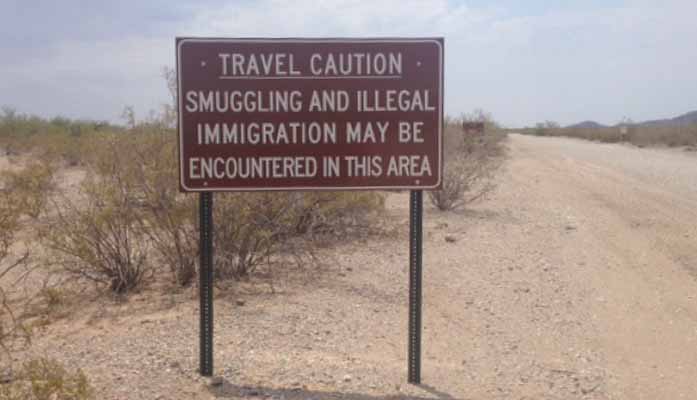
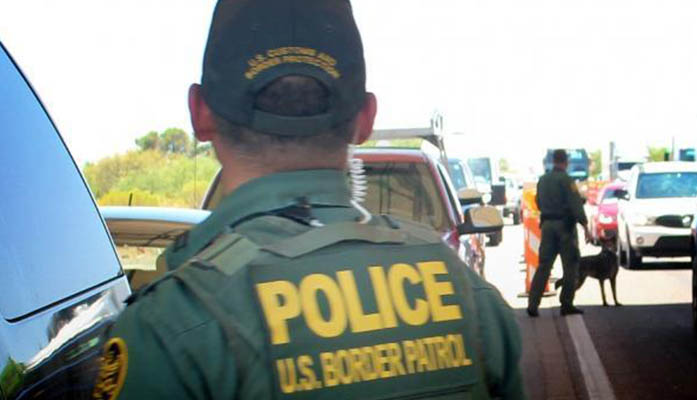
According to the latest data released by the U.S. Customs and Border Protection (CBP), law enforcement encountered nearly 154,000 illegal immigrants crossing the Southwest border. This number doesn’t include those illegal immigrants who evaded apprehension, known as “gotaways”: different than those who evade encounters entirely, or go through the catch-and-release process.
According to CBP data obtained through Border Patrol and by Townhall, CNN, and The Washington Postcompiled by the Republican National Committee (RNC), over 504,600 estimated gotaways have occurred since President Joe Biden was sworn in. Former and current border officials clarified that those estimates are conservative. National Border Patrol Council’s Rio Grande Valley Chapter Vice President and Spokesman Chris Cabrera told Senator Marsha Blackburn (R-TN) that the actual number of gotaways is likely “twice, if not three times” the Biden Administration’s November estimate of around 400,000 — which would be around 1.2 million.
As evidenced by the CBP chart “Southwest Land Border Encounters by Month,” encounters remain far above those over the last three years. Unlike the last three years, however, there’s been a sharp downturn in encounters from December to January. Similar sharp downturn trends occurred in 2016 and 2017. Overall, Southwest border encounters dropped about 14 percent from December to January: 19 percent for the Office of Field Operations (OFO) and nearly 14 percent for U.S. Border Patrol.
CBP’s latest numbers come nearly a month after the Department of Homeland Security (DHS) toldReuters that the country should expect the border crisis to worsen throughout 2022. A majority of Arizona law enforcement expressed support for mitigation efforts proposed by Governor Doug Ducey: federal legislation to increase border security through completing border wall, physical barriers, and virtual surveillance; requiring asylum seekers to show proof of attempt to claim asylum prior to crossing and at a port of entry; increasing the number of immigration judges; and increasing funding for local law enforcement and humanitarian efforts.
Corinne Murdock is a reporter for AZ Free News. Follow her latest on Twitter, or email tips to corinne@azfreenews.com.
The House Government and Elections Committee passed a bill prohibiting illegal immigrants from voting, HB2492, on Wednesday. The bill would require those registering to vote to prove their residential address, date and place of birth, and affirmation that they are a citizen using a U.S. Election Assistance Commission form.
If an applicant fails to offer satisfactory proof of citizenship, then the county must attempt to verify the applicant’s citizenship status within 10 days using, at minimum, information from the Department of Transportation (ADOT), Social Security Administration (SSA), U.S. Citizenship and Immigration Services Systematic Alien Verification for Entitlements Program, National Association for Public Health Statistics and Information Systems Electronic Verification of Vital Events, and any other databases that the elections official has access to within the state, city, town, county, or federal government.
Election officials that refuse to reject a registration form would be subject to a class six felony. If officials find proof that the applicant isn’t an American citizen, then they must notify the applicant of their rejection and refer the case to both the county attorney and attorney general for further investigation. However, if an election official can’t find any citizenship information whatsoever, then they will only notify the applicant of their rejection and offer them 30 days to respond with evidence of citizenship.
The bill would impact federal-only voters — those who made a substantial impact in the 2020 election — because applicants without satisfactory citizenship proof wouldn’t be qualified to vote in federal elections. Exemptions would be carved out for those under the Uniformed And Overseas Citizens Absentee Voting Act (UOCAVA), such as military members.
Furthermore, the bill requires that county officials make records of all their efforts to verify an applicant’s citizenship status. They must also present a list of all individuals who registered to vote and haven’t provided satisfactory evidence of citizenship by Halloween of this year. At that point, the attorney general would have until the end of next March to determine each applicant’s citizenship status and submit a report to the secretary of state, senate president, and house speaker.
The legislation sponsor, State Representative Jake Hoffman (R-Queen Creek), explained that the number of individuals who hadn’t shown Documentary Proof of Citizenship (DPOC) went from 1,700 in 2018 to over 11,000 in 2020.
Hoffman worked with the Arizona Free Enterprise Club to draft the bill, whose deputy director, Greg Blackie, offered testimony to the committee recounting Arizonans’ history of supporting citizenship requirements for voting, citing the state’s approval of Prop 200 in 2004: the Arizona voter-approved initiative that made citizenship a qualification to register to vote.
Both the federal and state government worked to undermine Prop 200. Although the National Voter Registration Act (NVRA) requires states to use its federal form for voter registration, Blackie explained that the Election Assistance Commission (EAC) must consult with each state to include tailored instructions on that state’s voter qualifications; however, the EAC hasn’t included Arizona’s requirement of proof of citizenship. In 2013, the Supreme Court overturned Prop 200, ruling that the NVRA preempted Arizona’s proof of citizenship requirement. In 2018, Arizona’s secretary of state and the Maricopa County recorder agreed to a consent decree ignoring Prop 200.
“The result has been the complete proliferation of the federal-only voters list,” stated Blackie. “This bill really is necessary to safeguard our voter rolls, ensuring only qualified applicants are properly registered and voting in our elections, restoring confidence and ensuring in Arizona it’s easy to vote, hard to cheat.”
In announcing her vote against the bill, State Representative Sarah Ligouri (D-Phoenix) argued Arizona’s voter registration processes and ID processes are “completely secure.” Liguori said that Arizona should strike down this bill, as Kansas and Alabama did for similar bills.
“I think this legislation is unnecessary and impunitive to newly-registered and new citizen voters,” said Liguori.
The bill passed 7-6 on party lines.
Corinne Murdock is a reporter for AZ Free News. Follow her latest on Twitter, or email tips to corinne@azfreenews.com.
More illegal immigrants from Uzbekistan were discovered crossing the Yuma, Arizona border.
Townhall reporter Julio Rosas discovered this less-common variant of illegal immigrant while visiting the Yuma border on Thursday.
“This family that just crossed the Colorado River told me they’re from Uzbekistan, that’s a first one for me,” wrote Rosas. “Three adult males who illegally crossed into the US here in Yuma showed me their Uzbekistan passports. They turned themselves in to the BP [border patrol] agent who was by the gap in the border wall.”
This family that just crossed the Colorado River told me they’re from Uzbekistan, that’s a first one for me. pic.twitter.com/YPzfQdcP87
A small portion of Uzbekistan is bordered by Afghanistan in the south, while a majority of the country is bordered by Kyrgyzstan, Tajikistan, Kazakhstan, and Turkmenistan. A majority of the population are Uzbek, nearly all of whom are Sunni Muslim. The Taliban are also considered Sunni Muslim.
Reportedly, the Uzbek government has kept up strict border policies with Afghanistan historically. The Taliban’s advances leading to the takeover in August caused Uzbekistan and neighboring countries to increase their border security greatly.
It is unclear why there would be an influx of Uzbek illegal immigrants. Uzbekistan is one of the more prosperous and safe countries in Central Asia. From November to early spring of this year, protests broke out across the country as it faced power supply shortages aggravated by intense winter storms. However, these protests didn’t reach the severity of the 2005 Andijan Massacre, in which hundreds were shot to death during a protest to release 23 businessmen imprisoned over accusations of Islamic extremism.
Uzbek illegal immigrants aren’t an entirely new development for the border crisis. Customs and Border Protection (CBP) reported in January an uptick in Uzbek illegal immigrants. CBP officials explained that those caught earlier this year were escaping persecution for homosexuality. Uzbeks that engage in homosexual relations can face up to three years in prison.
Under the Taliban, punishment for homosexuality includes being stoned to death, crushed under a wall, or thrown off a tall building.
Arizona’s Refugee Resettlement Program doesn’t have any data on Uzbek resettlement since 2015.
Corinne Murdock is a reporter for AZ Free News. Follow her latest on Twitter, or email tips to corinne@azfreenews.com.
On Monday, the Arizona House passed Senate Concurrent Resolution 1044. The resolution allows voters to decide if students who are in the country illegally but have attended for two years and graduated from an Arizona high school can be eligible for in-state college tuition.
SCR 1044 also exempts post-secondary education from the definition of a state or public benefit. Currently, Arizona residents who do not have legal immigration status do not qualify to receive those benefits.
Last week, Republican State Reps. Michelle Udall and Joel John forced a vote on the resolution by joining all House Democrats. Republicans Rep. David Cook and Rep. Joanne Osborne joined the group later and voted in favor of the matter. The move shifted power away from the Republican Caucus momentarily, but left a deep division.
Speaker Rusty Bowers expressed his disappointment in the tactic employed by Udall and John before casting his vote against the measure:
The measure will now go before the Arizona voters on a ballot in 2022.
The ballot initiative would repeal a 15-year-old ban on in-state tuition for undocumented high school graduates, including about 2,000 Dreamers per year. Voters created that ban in 2006 when they approved Proposition 300, which denies public benefits to those not in the country legally, including reduced cost tuition.