by Staff Reporter | Sep 29, 2025 | Economy, News
By Staff Reporter |
A series of new laws taking effect are anticipated to raise Arizona’s economic competitiveness.
The Arizona Chamber of Commerce & Industry (Arizona Chamber) highlighted six new laws as giving the state a beneficial boost in economic performance against other states.
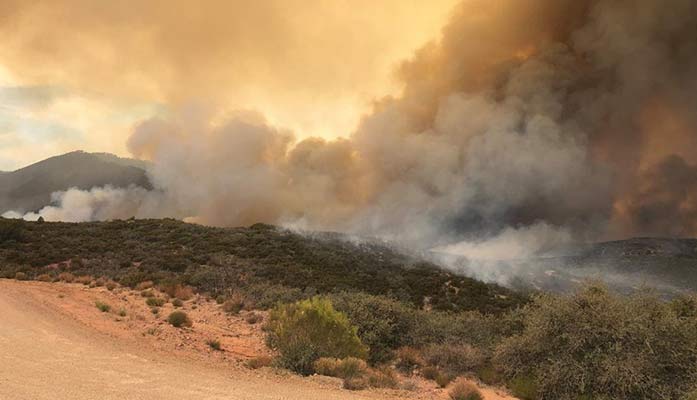
These laws aim to make it feasible for international headquarters to build on-site workforce housing and support services (Senate Bill 1543), permit utilities to refinance infrastructure investments through securitization (House Bill 2679), allow Chase Field renovations without increasing taxes (House Bill 2704), make it feasible for advanced air mobility systems such as drone deliveries and air taxis (Senate Bill 1307), require utilities and public power entities to implement wildfire mitigation plans (House Bill 2201), and bars foreign entities from funding lawsuits while limiting outside funding to third-party litigation (Senate Bill 1215).
Dozens of states are working together to create a uniform approach to allowing advanced air mobility, along with the Federal Aviation Administration. Over 30 states are members of the Advanced Air Mobility Multistate Collaborative (AAMMC), formed in 2023 with eight to 10 member states. Arizona is member to the organization leading AAMMC, the National Association of State Aviation Officials.
In addition to raising awareness of the new laws it backs, the Arizona Chamber also releases public reports of failed bills it believed would harm the state’s economy. The chamber announced their 2025 report is forthcoming.
Arizona Chamber President and CEO Danny Seiden stated that the six featured laws would retain corporate interest in the state by implementing necessary reforms and new pathways to growth.
“As these laws take effect, Arizona employers can count on policies that reflect their priorities,” said Seiden. “From keeping vital economic drivers in Arizona, to passing commonsense energy reforms that will deliver long-term stability and affordability, to supporting global companies, these are the kinds of policies that keep Arizona competitive and attractive for investment.”
The legislature also passed other laws anticipated to boost the economy, some of which Governor Katie Hobbs also approved from the Republican-controlled legislature despite a historic veto record (nearly 200 bills this year, compared to her previous historic record of over 140 in 2023).
One such law promises to further protect Arizona from regulatory capture by monopoly-controlled utilities (House Bill 2518). The legislation prohibits Arizona Corporation Commission (ACC) members from accepting employment with the utilities under their regulation. Not all ACC members were pleased with the legislation, namely ACC Chairman Kevin Thompson.
Chair Thompson was the subject of an ethics claim filed by the Energy Policy Institute earlier this year, as first reported by the Arizona Republic. The institute alleged a conflict of interest regarding the relationship between Thompson’s consulting firm and utilities.
Another law will ensure construction crews may work in the early morning hours in the summers by prohibiting municipalities and counties from enacting or enforcing noise ordinances, rules, or regulations prohibiting general construction activities during certain summertime hours (Senate Bill 1182).
And another law requires municipalities to give affected businesses at least 60 days’ notice before voting on tax increases (House Bill 2119).
The legislature also chose to sunset the Low Income Housing Tax Credit program rather than renew. Critics of the program blame lax policies and procedures for the Department of Housing’s loss of around $2 million to a wire fraud scam in 2023.
AZ Free News is your #1 source for Arizona news and politics. You can send us news tips using this link.
by Daniel Stefanski | Feb 7, 2025 | News
By Daniel Stefanski |
A coalition of Arizona legislators are taking steps to improve the state’s wildfire mitigation efforts.
This week, State Representative Lupe Diaz, the Chairman of the House Committee on Land, Agriculture, and Rural Affairs, updated constituents on the progress of bills in the Arizona Legislature, which are meant “to protect lives, property, and communities from the growing threat of catastrophic wildfires.”
Those bills include:
- HB 2201, which was sponsored by Representative Griffin. The bill “requires utilities to develop and submit biennial Wildfire Mitigation Plans, which include clearing hazardous vegetation around power lines to prevent utility-caused wildfires.”
- HB 2219, which was sponsored by Representative Marshall; HB 2395, HB 2398, and HB 2400, which were sponsored by Representative Blackman; and HB 2694, which was sponsored by Representative Griffin. These bills “allocate funding for fire contingency planning and wildland firefighting efforts in Arizona’s high-risk areas.”
- HB 2456, which was sponsored by Representative Marshall. This bill would “establish fire incident management grants to assist districts across the state.”
- HB 2577, which was sponsored by Representative Griffin. The bill “cuts red tape to give the State Forester more flexibility to protect communities.”
- HB 2639, which was sponsored by Representative Griffin. This bill “extends the ‘healthy forest’ tax incentive to encourage responsible forest thinning and prevent catastrophic fires.”
In a statement, Representative Diaz said, “Public safety is more than law enforcement and border security – it means defending our communities from preventable disasters. Arizona has seen what happens when wildfires are mismanaged in places like California. We refuse to let that happen here. Our plan prioritizes proactive fire mitigation efforts, responsible forest management, and ensuring that Arizonans are protected when disaster strikes.”
Diaz added, “Preventing wildfires means enacting responsible management before disaster strikes. We are working with state agencies, local officials, and private utilities to get boots on the ground, clear hazardous areas, and stop wildfires before they start. This is what leadership looks like, and it’s exactly what Arizonans expect from us.”
Governor Katie Hobbs did not mention plans to address wildfire mitigation efforts in her State of the State address to the Arizona Legislature at the beginning of the 57th Regular Session last month. Chairman Diaz’s release highlights that the Democrat governor’s “proposed budget offers zero funding for hazardous vegetation removal or forest thinning despite recognizing that wildland fire costs have been ‘much higher in recent years’ due to neglected forest maintenance.”
Daniel Stefanski is a reporter for AZ Free News. You can send him news tips using this link.
by Corinne Murdock | Feb 29, 2024 | News
By Corinne Murdock |
State Rep. Alex Kolodin (R-LD03) is urging the Arizona Senate to do away with a bill allowing the export of the Valley’s emergency water reserve.
The bill, HB2201 sponsored by State Rep. Tim Dunn (R-LD25), passed the House with bipartisan support, 33-23, on Monday. Kolodin said that such a measure would inevitably raise utility bills.
“HB2201 allows part of Scottsdale’s emergency water supply to be transferred to out-of-county users, raising our utility bills,” said Kolodin. “I voted no. Needs to die in the Senate!”
Kolodin told AZ Free News that HB2201 will serve as a detriment to suburban ratepayers and force cities to compete for the dwindling supply.
HB2201 enables the interbasin transport of cities’ emergency groundwater supply from within the Harquahala Irrigation Non-expansion Area (INA) to any location within La Paz County. Dunn explained during last month’s hearing on the matter in the Natural Resources, Energy, & Water Committee that the bill would allow La Paz County to grow their existing water resources.
The Harquahala INA covers approximately 766 square miles within La Paz and Maricopa counties in the west-central portion of the state. Currently, Harquahala INA water supply may only be withdrawn and transported by the state and political subdivisions to the following initial Active Management Areas (AMAs): Phoenix, Tucson, Santa Cruz, Pinal, and Prescott.
AMAs rely heavily on mined groundwater and therefore come with higher levels of management than INAs. INAs regulate wells in rural farming areas where groundwater overdraft — the removal of too much water — is less severe. There are two other INAs in the state: Hualapai Valley and Joseph City.
These distinctions are outlined by Arizona’s Groundwater Management Act (GMA), passed over 40 years ago, which restricts interbasin water transportation for the state’s 51 groundwater basins in order to ensure AMAs maintain a 100-year water supply, also known as an assured water supply.
Healthy interbasin water transport hinges on a concept known as safe-yield: ensuring a safe balance between groundwater withdrawals and the natural and artificial recharging of water to AMA aquifers. Overdrafting can damage aquifer structure and limit future water storing capacity, increase the costs of drilling and pumping, and reduce the water quality.
Harquahala INA is considered an emergency savings account of sorts for water, saved in the event of prolonged drought: no groundwater has been transported out of the basin since 1990, according to the latest report from the Arizona Department of Water Resources (ADWR), the authority on water management. Yet, ADWR also reported that in almost all years from 2004-2022, the Harquahala INA had more water leaving the basin than entering mainly due to agriculture, which have made up 98 percent of the INA’s demand.
ADWR projected that annual supply would be insufficient for annual demand under any projected scenario over the next 50 years.
Corinne Murdock is a reporter for AZ Free News. Follow her latest on Twitter, or email tips to corinne@azfreenews.com.